Art as Face Slap and Middle Finger

Bad Bunny, Green Day, and the rebellious tradition of American art

The Super Bowl halftime hullabaloo is as American as it gets. President Trump called Bad Bunny’s show a “slap in the face to our country.” Another critic, Megyn Kelly, said, “To get up there and perform the whole show in Spanish is a middle finger to the rest of America!” Trump said, “Nobody understands a word this guy is saying.” Conservatives further complained that Bad Bunny’s lyrics and dance moves were obscene. Trump said the halftime was “an affront to the Greatness of America.”
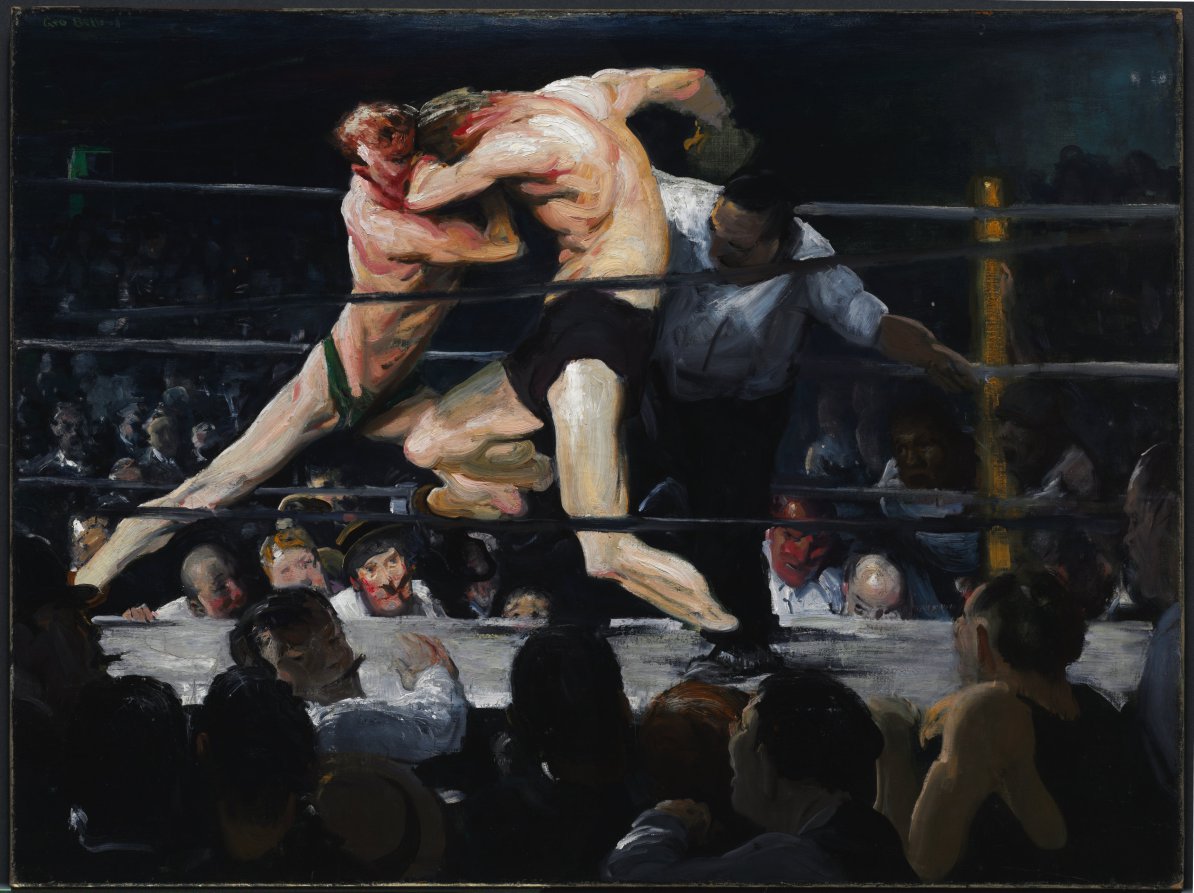
But American art is rough, rebellious, and free. The arts do not exist to provide gilded decoration on the project of national greatness. Great American art has often been a slap in the face. And American pop culture is more middle finger than patriotic pablum.

While Bad Bunny’s Spanish party music received most of the reactionary condemnation, Green Day’s opening Super Bowl set growled out rebellion in English. They sang “American Idiot,” railing against “mind-fuck America.” That lyric made it past the censors, even though the band omitted lyrics that denounce “the MAGA agenda.” Some fans claimed this lyrical omission meant the band had sold out. But Bad Bunny and Green Day still served up a musical slap in the face.

This Substack is reader-supported. To receive new posts and support my work, consider becoming a free or paid subscriber.

Our Cultural Crisis

President Trump seems to have understood the point. But he is wrong to think that pop culture is somehow supposed to celebrate the mythic “greatness” of America. American art has often mocked that myth while revealing deep cracks in the American edifice.

In my recent newspaper column, I discussed recent cultural clashes involving the Super Bowl halftime show, Melania Trump’s vain documentary, and Bruce Springsteen’s protest song, “The Streets of Minneapolis.” I argued that art and culture have existential and political power:

Songs and images expose our humanity, our beauty as well as our ugliness. Powerful art demands that we question our values and decide where we stand… The existential import and political impact of the arts should not be underestimated. When conflicts of culture are as glaring as they are today, we are forced to consider what we love and who we are.

I quoted James Baldwin, whose life and art are instructive. Baldwin was a gay Black man who suggested that artists are often at war with society. This means, of course, that artists will provoke a backlash. Baldwin noted, in “The Creative Process,” that artists are often “despised while living and acclaimed when safely dead.” He explained:

I am really trying to make clear the nature of the artist’s responsibility to his society. The peculiar nature of this responsibility is that he must never cease warring with it, for its sake and for his own.

Baldwin referred to artists as “disturbers of the peace.” Building upon this idea, I argued, “Art can be propaganda. Art can also pacify, and entertainment can distract us from reality. But the best art provokes by illuminating the fissures of this broken world.”

Propaganda, Power, and Protest

The idea that art should celebrate American greatness imagines art as political propaganda. Governments often use art as propaganda. Authoritarian regimes seek to control the arts as a way of consolidating power. Tyrants build monuments to themselves. And American democracy celebrates itself with icons like the Statue of Liberty.

Art functions as propaganda when it aims to ‘propagate’ a message or idea. George Orwell once said, “Every writer, especially every novelist, has a ‘message’, whether he admits it or not, and the minutest details of his work are influenced by it. All art is propaganda.”

If this is true, the crucial question is about the kind of ‘message’ motivating the work of art. Art can be used by reactionaries or by revolutionaries. Art can praise the powerful and amplify authority. Or it can express solidarity with the powerless, and seek their emancipation.

Some memorable works of art blatantly celebrate power and authority. The pyramids proclaimed Pharaoh’s divinity. The monuments of the ancient world commemorated the glory of Greece and Rome. And the cathedrals of medieval Europe manifested the power of the church.

But there has always been a different kind of art, which protests power and gives voice to the powerless. Greek drama functioned in this way. The tragedies of Sophocles mocked tyranny, while the comedies of Aristophanes lambasted the “ignoramuses and rogues” who ruled Athens.

Or consider opera. Opera is often viewed as stuffy and conservative. But it could be revolutionary. Mozart’s Don Giovanni poked at the pretensions of the aristocracy, while Beethoven’s Fidelio features a political prisoner who sings from the dungeon, “I dared to speak the truth boldly, and chains are my reward.”

The Rebellious American Tradition

In the American tradition, art has been used to celebrate national greatness in the Trumpian sense. Mount Rushmore is an obvious example. But critical themes are more common. This nation began, after all, as a slap in the face to British power.

During the American revolution, arts and culture were employed to drum up support for the American cause. But as the new nation grew, the heroes of American letters were often more interested in criticizing American power than in celebrating it.

Emerson and Thoreau condemned conformity, slavery, and militarism. Mark Twain denounced American imperialism. Hemingway, Fitzgerald, Steinbeck and other modern authors offered critical reflection on the decadent and disconsolate lives of Americans. And the Black literary tradition viewed the American dream as either “a dream deferred” (in Langston Hughes) or as “something much more closely resembling a nightmare,” as James Baldwin put it in The Fire Next Time.

The pop music of the Super Bowl’s halftime show has almost always been counter-cultural. Blues, jazz, and rock were invented by dispossessed Black Americans. The genre was developed further by hippies and counter-cultural icons like Bob Dylan and the Grateful Dead. Even country music has its “outlaws” like Willie Nelson and Johnny Cash. One of the most iconic images of American music is Johnny Cash flipping off the camera when he played at San Quentin.

Art can be protest or propaganda. Artists can sell out, or they can sing truth to power. Authoritarians want art that flatters their egos. But art does not exist only to gratify the powerful or commemorate mythic greatness. It also disturbs the peace. And in America, art has often been a middle finger and a slap in the face.
Seeing through the Tyrant's I

How the grammar of tyranny helps explain Trump’s conception of power

Tyrants rule in the first person. The tyrant sees the world as the product of his all-powerful “I.” The tyrant says “I alone decide,” “L’état, c’est moi,” or “I am the state.”

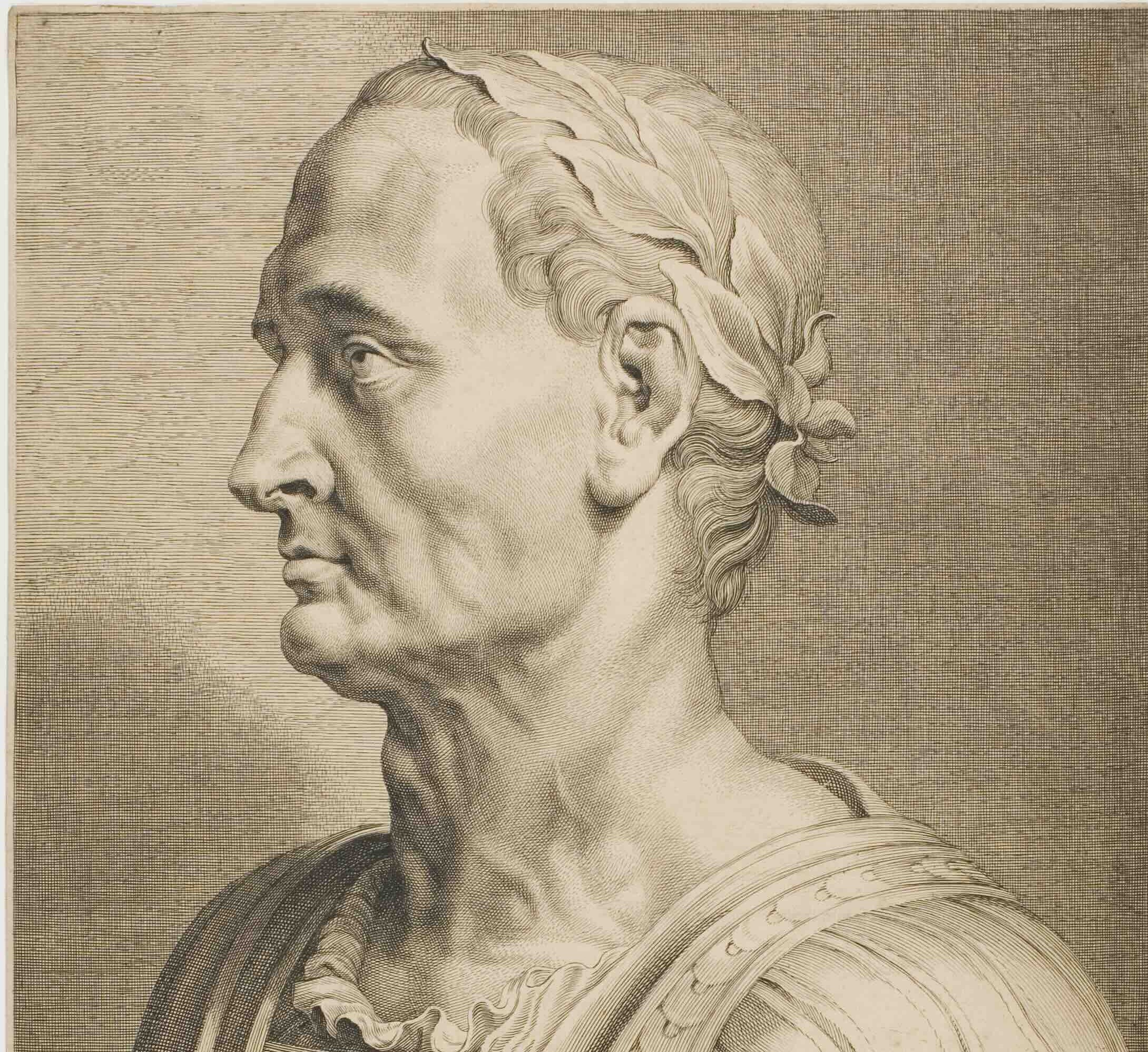
There is no “we, the people” or “rule of law” in tyranny. Rather, the tyrant imposes his will as an act of self-assertion. As the tyrant Creon says in Sophocles’ Antigone, “The law rules; but I decide the law.” Or consider Julius Caesar. He defied the Senate when he crossed the Rubicon. And he spoke of power in the first person, saying, “I came. I saw. I conquered.”

This Substack is reader-supported. To receive new posts and support my work, consider becoming a free or paid subscriber.

The grammar of tyranny is pre-modern and un-American. Thomas Jefferson explained, “Law is often but the tyrant’s will, and always so when it violates the right of an individual.” And the American libertarian author Lysander Spooner warned, “The single despot stands out in the face of all men, and says: I am the State: My will is law: I am your master.”

The Trumpian “I”

One of Donald Trump’s linguistic quirks is his tendency to speak in the first person when talking about matters of state. Trump often talks as if he alone controls the nation and decides the fate of the world. In a notorious recent interview with the New York Times Trump said that the only thing that limits him is, “My own morality. My own mind. It’s the only thing that can stop me.”

Consider Trump’s remarks about invading Greenland at the World Economic Forum in Davos:

We probably won’t get anything unless I decide to use excessive strength and force, where we would be, frankly, unstoppable. But I won’t do that. Okay? Now everyone’s saying, ‘Oh, good.’ That’s probably the biggest statement I made, because people thought I would use force. But I don’t have to use force. I don’t want to use force. I won’t use force.

People were relieved to hear Trump say “I won’t use force.” But the autocratic grammar is disturbingly capricious. Apparently, the President simply decides this stuff, without consulting Congress. Perhaps a few sycophants whisper in his ear. But decisions of global import are a matter of his mercurial will.

Consider, for example, how tariffs on foreign nations come and go according to the President’s mood. He explained recently that tariffs imposed on Switzerland were the result of a testy conversation he had with Switzerland’s president. He said, “She just rubbed me the wrong way.”

This first-person linguistic habit is linked to Trump’s jokes about being a dictator. After his official Davos speech, Trump spoke to members of the ruling elite, bragging about how much he has benefited the oligarchic class. That’s where he said, “Sometimes you need a dictator.”

He seemed to imply that this was all a joke. But Thomas Jefferson would not be laughing.

A Smug Savior

Perhaps Trump fancies himself a benevolent despot. He explains his fantasy about the Nobel Peace Prize by appealing to his own benevolent power. At a recent press conference, the President bragged about saving millions of lives by resolving wars across the globe. He said, “I saved millions and millions of people… I saved probably tens of millions of lives in the wars.” And, “I saved millions of people. So that, to me, is the big thing.”

It is absurdly grandiose to claim that he alone saved millions of people. And it is terrifying to think that the lives of millions depend upon his benevolent will.

Trump appears to believe a self-aggrandizing narrative in which he is kind of savior. In his January 2025 inauguration speech, the President said (referring to a failed assassination attempt), “My life was saved for a reason. I was saved by God to make America great again.” He has repeated this point several times, including in a speech to a joint session of Congress in March, 2025.

The same theme appears in a notorious tweet from early 2025: “He who saves his country does not violate any law.”

Trump is clearly fascinated with his own power. He often brags about how he imposes his will on the world. For example, in a rambling press conference, the President joked about renaming the Gulf of Mexico as the Gulf of Trump.

I was going to call it the Gulf of Trump, but I thought that I would be killed if I did that. I wanted to do it. I wanted to… I’m joking, you know, when I say that… The Gulf of Trump, that does have a good ring, though. Maybe we could do that. It’s not too late.

Trump is intoxicated with his power to name things after himself, as I argued in another column. Even if the Gulf of Trump idea is as much of a joke as his claim about being a dictator, these wisecracks disclose the smug hubris of Trump’s tyrannical “I.”

The Alarming Hubris of the Tyrannical I

It’s frighteningly absurd that decisions of global import are subject to the President’s hubristic whims. Sophocles warned that it is hubris that breeds the tyrant. The tyrannical “I” is hubris made manifest in grammar.

Several implications follow.

The tyrant’s “I” is supposed to be absolute. This means that those who oppose his will are guilty of treason. As Creon explains in Antigone, “Disobedience is the worst of evils.” This explains why Trump frequently accuses his opponents of treason, including Barack Obama, Nancy Pelosi, James Comey, and Mark Kelly. He conflates opposition to his will with treason to the state.

The tyrant’s “I” replaces reason with whim. Such puerile imperiousness is unmoored from reality. Tyrants make up their own facts because they can. The tyrannical manipulation of truth helps shore up the chaos generated by the tyrant’s arbitrary will. Consider for example, Trump’s absurd justification for renaming the Gulf of Mexico: “It’s the Gulf of America because we have 92 percent of the shoreline.” In truth, the U.S. has less than half of the coastline of the Gulf.

Not only is the tyrannical “I” divorced from truth but it is also untethered from the spirit of democracy. Our nation began with Americans denouncing the tyrannical and arbitrary will of King George in the Declaration of Independence. The Constitution’s separation of powers is supposed to limit the arbitrary caprice of the executive branch. Our government is supposed to be of the people, by the people, and for the people—not the willful imposition of one man’s mood.

Trump has not yet crossed the Rubicon. As I argued in my book on Trump and tyranny, our Constitutional system is strong enough to ensure that Trump remains merely a would-be tyrant, But under Trump, “we, the people” has increasingly become “me, myself, and I.”

This Substack is reader-supported. To receive new posts and support my work, consider becoming a free or paid subscriber.

The abominable hubris of Donald Trump

Trump’s claim of moral authority is an abomination

President Trump recently claimed that God was proud of him, and that his own morality was the only thing that can stop him. This is hubris, as I explained in my recent newspaper column. The Bible provides a warning: “Everyone that is proud in heart is an abomination to the Lord” (Proverbs 16:5). Trump’s inane moral rhetoric also degrades the inspiring moral tradition of the American presidency.

Trump’s Assertion of Moral Authority

In a recent interview with the New York Times, the President was asked whether there were any limits on his power, such as international law. He said, “I don’t need international law.” He explained that there is “one thing” that limits him: “My own morality. My own mind. It’s the only thing that can stop me.”

This Substack is reader-supported. To receive new posts and support my work, consider becoming a free or paid subscriber.

In a follow up interview with CBS, the President said something similar.

I’m a moral person. I don’t like seeing death. I don’t like seeing our people hurt. I don’t like seeing the other side hurt either. You know, when we went into Venezuela, we lost nobody, but a lot of people on the other side were, were killed. I don’t like that. Somebody else would say, “Oh, that’s wonderful.” I don’t like that. So yeah, it’s limited by my morality and I have a very high grade of morality. So, therefore, it’s limited.

An authentic moral thinker would never speak of himself as having a “very high grade of morality.” Humility is a key feature of morality, along with deference to moral (and legal) authority, rules, and traditions. Even if one rejects these sources of morality, a careful thinker needs to make an argument. But Trump makes no arguments. Nor does he recognize his own flaws, even as his whims shake markets and destroy international alliances. The claim that he does not like seeing people hurt rings hollow, as federal forces employ violence, and the President demonizes those who dare to question his authority.

Trump rarely speaks of justice or human rights, love or the golden rule. He does not cite any moral idea, tradition, or thinker. Nor does he appeal to anything other than himself as a source of moral authority. This leads to his most abominably hubristic recent claim, “I think God is very proud of the job I’ve done.”

No morally articulate person would ever say such a thing.

Trump’s way of speaking is arrogant and imbecilic. When he said in the CBS interview, “I don’t like seeing death,” he avoided the word “killing,” thereby also avoiding the question of who is responsible for these deaths. And he only emphasizes the impact of “death” on him, aesthetically and emotionally. He doesn’t like seeing it. But he never says its “wrong” or “evil.” He offers no sympathy for the victims or their loved ones. Nor does he offer any argument about whether these killing are justified. Morally articulate people make arguments using abstract moral concepts. Trump says, as a child might, “I don’t like it.”

Trump’s “Values” in Context

In my book Tyranny From Plato to Trump, I showed that Trump lacks fluency in the language of ethics. I concluded that he is “morally inarticulate” and that he lacks a “moral vocabulary.” I also showed that Trump’s moral imbecility is an anomaly in the often inspiring tradition of the American presidency. Our greatest leaders were fluent in the language of morality. They spoke of values in inspiring ways.

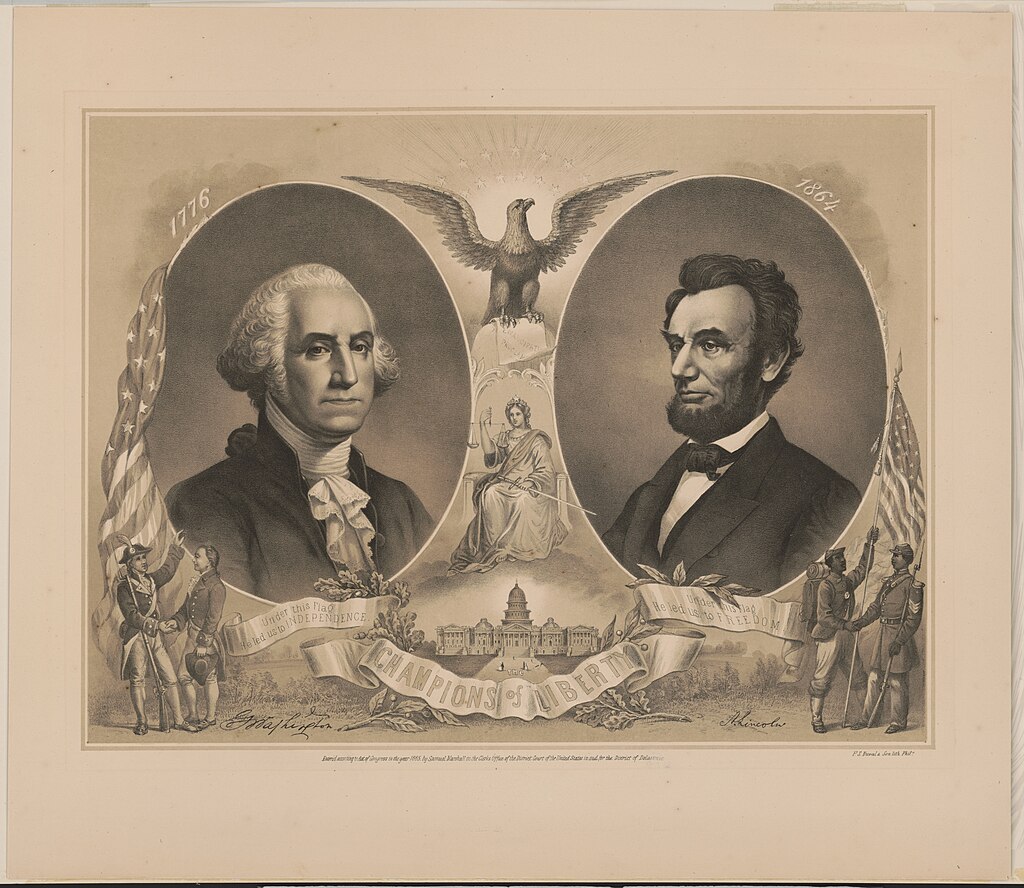
In his Farewell Address, George Washington linked American greatness to magnanimity, justice, and benevolence:

Observe good faith and justice towards all Nations; cultivate peace and harmony with all… It will be worthy of a free, enlightened [and] great Nation, to give to mankind the magnanimous and too novel example of a people always guided by an exalted justice and benevolence.

In the darkness of the Civil War, Abraham Lincoln spoke of the need for humility and penitential prayer:

When our own beloved Country, once, by the blessing of God, united, prosperous and happy, is now afflicted with faction and civil war, it is peculiarly fit for us to recognize the hand of God in this terrible visitation, and in sorrowful remembrance of our own faults and crimes as a nation and as individuals, to humble ourselves before Him, and to pray for His mercy.

Barack Obama and George W. Bush also spoke in morally elevating ways. Whatever you think of Bush, he often spoke morally and with conviction. In a speech in honor of Ronald Reagan (July 11, 2004), Bush said:

Reagan believed that the gentleman always does the kindest thing. He believed that people were basically good, and had the right to be free. He believed that bigotry and prejudice were the worst things a person could be guilty of. He believed in the Golden Rule and in the power of prayer. He believed that America was not just a place in the world, but the hope of the world.

Obama spoke often and eloquently of empathy and the Golden Rule. Indeed, there is an entire website dedicated to Obama’s thinking about empathy. In his book The Audacity of Hope, Obama said:

A sense of empathy… is one that I find myself appreciating more and more as I get older. It is at the heart of my moral code, and it is how I understand the Golden Rule—not simply as a call to sympathy or charity, but as something more demanding, a call to stand in somebody else’s shoes and see through their eyes.

It is difficult to imagine Trump saying anything like this. He does not speak of empathy, magnanimity, justice, or humility. And for Trump, the Golden Rule is the punchline of a joke he is fond of saying: “The golden rule of negotiation = He who has the gold makes the rules.”

The Egoistic Abomination

Trump appears to view life in terms of power and leverage, as a Hobbesian battle of egoists seeking advantage. In such a world, there are no promises that must be kept, duties that must be upheld, or loyalties that endure. This way of thinking represents a degradation of morality, and of Presidential rhetoric. Trump’s “values” also run afoul of ancient wisdom that warns against hubris, cruelty, and foolish self-regard. Let’s conclude by returning to the book of Proverbs.

These seven things are an abomination to the Lord:
A proud look,
A lying tongue,
Hands that shed innocent blood,
A heart that devises wicked plans,
Feet that are swift in running to evil,
A false witness who speaks lies,
And one who sows discord among brethren.
(Proverbs 6:16-19):

This Substack is reader-supported. To receive new posts and support my work, consider becoming a free or paid subscriber.

Dr. King and Nonviolence in Violent Times

Learning lessons on nonviolence from Martin Luther King, Jr. and the nonviolent tradition

As we celebrate the legacy of Dr. Martin Luther King, Jr., it is worth reflecting on the strategic power and moral necessity of nonviolence. This is especially important as violence plagues the word. In Iran, thousands have been killed by government forces. And the President threatens to invoke the Insurrection Act in Minnesota.

The brutality of governments may seem insurmountable. But in a struggle against a government’s monopoly on violent force, nonviolence is both strategically useful and morally necessary. If you seek justice, freedom, and a world without violence, you should avoid using violence and brutality in pursing the end that you seek. Nonviolence is the proper and necessary tool of democratic movements.

This Substack is reader-supported. To receive new posts and support my work, consider becoming a free or paid subscriber.

One of the ways this works is by creating “tension in the mind” by deliberately exposing the brutality of repressive violence. As King explained in the letter he wrote while in jail in Birmingham, this is “a type of constructive, nonviolent tension which is necessary for growth.” He saw Socrates and Jesus as models. Today, the “tension in the mind” is caused by a Minnesota mom being shot dead by an ICE officer who called her a “fucking bitch.”

Against such brutality, nonviolence is understood as mobilizing the active power of love. In “Pilgrimage to Nonviolence” King explained Gandhi’s notion of satyagraha as “love force.” King said, “the Christian doctrine of love operating through the Gandhian method of nonviolence was one of the most potent weapons available to oppressed people in their struggle for freedom.”

I discuss nonviolence in more detail in my book, Nonviolence: A Quick Immersion. Here I want to emphasize the variety of nonviolent actions. King’s heroic model of going to jail in an act of civil disobedience is merely one possibility. Scholars of nonviolence, such as Gene Sharp, have identified nearly 200 different nonviolent actions, organized in three general categories:

  • Symbolic protest and efforts at public persuasion (for example, letter writing or standing/marching with signs);

  • Non-cooperation (for example, work slow-downs, boycotts, or tax-strikes); and

  • Direct intervention (for example, civil disobedience such as sit-ins or “occupations” of public space that result in arrest).

The study of nonviolence involves trying to understand how and why these actions can be effective. In my book I explained some of this in more detail:

These are the methods of noncooperation including: staying home from work and school, boycotting businesses and events, work slow-downs, tax resistance, and so on. These methods can be very effective, when employed broadly and strategically… Active nonviolent protest is more assertive, involving mass demonstrations, picket lines, and other public and symbolic activities.

The heroes of nonviolence take a step beyond merely refusing to cooperate. They engage in active nonviolence and in some cases civil disobedience. A step beyond noncooperation takes us to active public protest: marching in demonstrations and picket lines, writing editorials and making public speeches, and so on. As step beyond that occurs when protesters put their bodies on the line in confronting violent opposition, including in some cases the police. Finally, the last step is to put oneself in opposition to unjust authority by breaking the law and publicly challenging the legitimacy of the law and its authorities.

History shows that the tactics and strategies of nonviolence can be effective. There are no guarantees however. State-centered monopolies of violence are durable and brutal. But the hope is that with patience, tenacity, creativity, and hope, nonviolence can be employed to produce a better world. In my book, I conclude:

In its broadest sense, the work of nonviolence is oriented toward developing what is called “positive peace.” In the short term, the pragmatic methods of nonviolent protest can be effective. But the nonviolent imagination extends toward the creation of a world in which there is solidarity, justice, compassion, truth, and love. The proponents of nonviolence maintain that in order to create that world, we must employ means and methods that embody what we imagine. It is only by using the methods of nonviolence that we can hope to convert, transform, and build.

Nonviolence is not quick or easy. State violence can be brutal. And political leadership is often stupid and sometimes wicked. But the hope is that in the long-run human beings are better than this. The hope is that we can build a better world by creatively employing the power of love, intelligence, and nonviolence. Let’s conclude with the words of Dr. King, written in his cell in Birmingham Jail:

Human progress never rolls in on wheels of inevitability; it comes through the tireless efforts of men willing to be co-workers with God, and without this hard work, time itself becomes an ally of the forces of social stagnation. We must use time creatively, in the knowledge that the time is always ripe to do right.

This Substack is reader-supported. To receive new posts and support my work, consider becoming a free or paid subscriber.

Moral Courage: Existing in the Face of Adversity

Dr. King and other moral heroes: On finding the “courage to be” in dark times

Life can be disappointing. History and politics are often ugly. Current events are disturbing. Good people suffer. Our bodies decay. And those we love eventually die. Despite the darkness, it is possible to embrace the world with tenacity and joy. It is essential in these troubled times to find the courage to be.

In my recent Bee column, I argued that courage is required in dark times:

Thanks for reading! Subscribe for free to receive new posts and support my work.

In tragic circumstances your virtue will be tested. Will you live as a citizen of a better world, or will you give in to cynicism and despair? In confronting this choice, you discover what you value and who you really are.

This is not easy. And it may often seem that life is not fair. But no one ever promised that a good life was easy. Life is tragic. Courage demands that we confront reality as it is, and find the strength to endure.

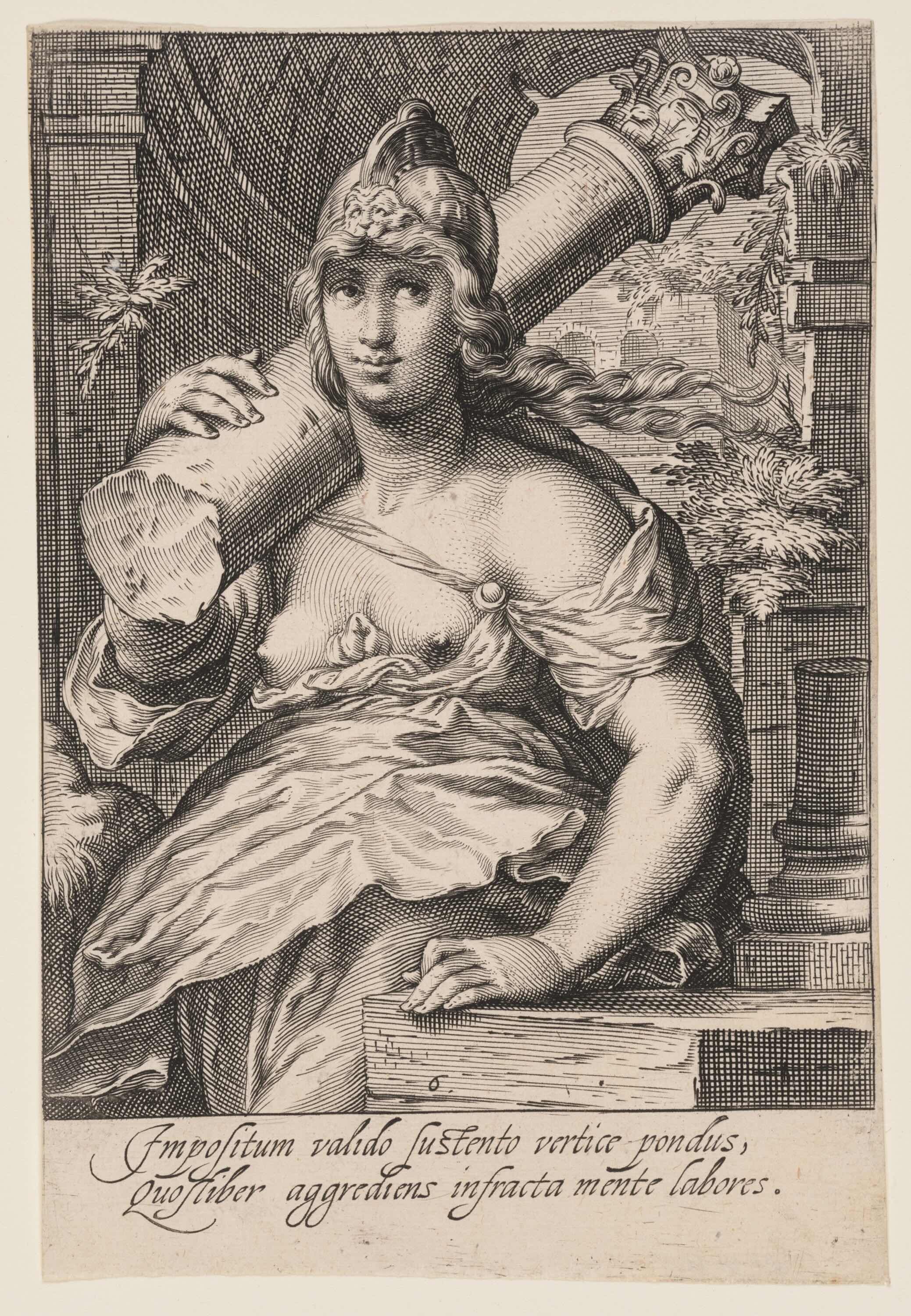
The virtue of Fortitude is often portrayed as a woman holding a broken column. In the image included here, she appears with a modest smile, nonchalantly accepting the ruined world that rests upon her shoulders. The inscription says, “Bear heavy burdens and labor with an unbroken spirit.”

Each of us will eventually be asked to carry a heavy load. We should hope to bear our burdens with grace and that we can find the strength to carry this broken world a bit further.

Moral Heroes

When things look bleak, it is helpful to consider moral heroes like Socrates or Jesus. Life was not easy for them. Adversity made them who they were. Socrates died in prison. And the cross is a reminder of how Jesus lived and died.

In my column I explained:

Moral heroes inhabit a different realm: They live in accord with another, better set of values than those of this rotten world.

I borrowed this idea from James Lawson, a leader of the American Civil Rights movement, who suggested that moral courage can be found in trying to live “as a citizen of a country that does not yet exist.”

This is not easy. Those who struggled for civil rights suffered profoundly. This includes Martin Luther King, Jr., whose house was bombed, and who was murdered at age 39. But King left a legacy of tenacity and fortitude.

In a speech in 1960, King explained that it is essential to have “faith in the future.” He linked this to faith in God: “A creative force in this universe seeking at all times to bring down prodigious hilltops of evil and pull low gigantic mountains of injustice.”

Whatever you believe about the Creator, you ought to struggle onward. King said, “If you can’t fly, run; if you can’t run, walk; if you can’t walk, crawl; but by all means keep moving.”

Existential Courage

King’s Christian faith was informed by the existential “courage to be.” In his book, Strength to Love, King discusses theologian Paul Tillich, who understood courage as joyful affirmation that occurs “in spite of” negativity, death, and “nonbeing.” Tillich suggests in his book, The Courage to Be, “Joy is the emotional expression of the courageous Yes to one’s own true being.”

You have a choice. You can view life either as an opportunity or a disaster. You can give up. Or you can say “Yes!” and confront the darkness as a provocation, a test, and a call to action.

In my recent column, I quoted the Roman philosopher Seneca, who suggested that if life was easy, virtue would never be tested.

Seneca said, “Calamity is virtue’s opportunity.” If you never confront misfortune, your strength and goodness will never be challenged. Seneca explained, “If a man is to know himself, he must be tested.”

Each difficulty gives you a chance to be, an opportunity to exist—despite evil, death, and suffering. If you embrace the possibility of being, you can discover joy and courage, in spite of the darkness.

Tillich and King understand Christian faith as believing “in spite” of everything. But humanists can also understand joyful courage as essential for living well in the face of adversity.

Artists and writers must have the courage to create, despite critics, censors, and public indifference. Lovers must find the courage to love, despite the risk of loss and grief. And every political act depends upon courage, in spite of a world that is often violent and unjust.

Bearing Adversity With Grace

We are fortunate if things go well for a few weeks, a few months, or a few years. But good fortune ends. Cities burn and civilizations collapse. Our lives eventually end. Our actions will be forgotten. And those we love will fade into the dust.

But while you live, you have the chance to do, to act, to love, and to be. You have a choice in how you respond to adversity. You can ask “What’s next?” instead of “Why me?” And you can say “Yes” instead of “Woe is me.”

Heroes inspire. Great exploits produce energy and delight. But even modest activity can be a source joy and inspiration. When things look bleak, imagine your heroes—their strength, and their joy. And then keep moving. If you are forced to bear a ruined world upon your shoulders, you can grimace and complain. Or you can smile and say “Onward.”

Read more at: https://www.fresnobee.com/opinion/readers-opinion/article314249834.html#storylink=cpy

Thanks for reading! Subscribe for free to receive new posts and support my work.