Hubris and the Donroe Doctrine

Tragic Themes in the Trump Opera

When the Trump presidency becomes the subject of some future tragic opera, hubris will be a common theme. Hubris is unbridled ambition or pride run amok. This is the fatal flaw of the tyrannical characters in Greek tragedies, where it is linked to violence and political disaster.
Thanks for reading! Subscribe for free to receive new posts and support my work.

The Trump opera might highlight the events of January 6, while featuring the attack on Venezuela (and perhaps even Greenland) in the second act. The third act is yet to be written. But the stage will no doubt be gilded. And Trump’s name will be plastered everywhere.

Perhaps the opera will contain an aria quoting Shakespeare:

He that is proud eats up himself: pride is his own glass, his own trumpet, his own chronicle; and whatever praises itself but in the deed, devours the deed in the praise.

From Monroe to Donroe

There are strategic concerns at play in recent events. But Trumpian hubris is also a key theme in American policy. This conflation of concerns is what makes it difficult to understand what’s going on in the world. Is it “America First” or “Trump First” that is driving things?

Consider the attacks on Venezuela. Trump suggests that this has something to do with the drug trade. But he also seems to say that it is about the oil. Or is the rationale that Venezuela’s Maduro was a tyrant? Or maybe it is about “spheres of influence,” dividing the world up between Russia, China, and the U.S., as Anne Applebaum and Michael Ignatieff have each suggested.

The National Security Strategy of the United States touts the “Trump Corollary” to the Monroe Doctrine, asserting the desire “to restore American preeminence in the Western Hemisphere.” The Trump Corollary has now become the Donroe Doctrine. As Trump explained in his press conference about Venezuela, “The Monroe Doctrine is a big deal, but we’ve superseded it by a lot. By a real lot. They now call it the Donroe document” (sic).

The original Monroe Doctrine was articulated during the presidency of James Monroe. As originally expressed, it was an anti-colonial doctrine demanding that European powers end their colonial interventions in the Americas.

President Monroe did not name the policy after himself. It was retrospectively called the Monroe Doctrine and was eventually understood to mean that the U.S. should control the Western hemisphere. The Trump Corollary and the Donroe Doctrine follow this line of reasoning, but with a Trumped up flourish.

The Naming Game

The President’s self-aggrandizing designation of his policy and his bizarre affirmation of the ridiculous “Donroe” name is a sign of hubris. This strange neologism appears to be a mocking nickname, like “Obamacare” or “Bidenomics.” But Trump seems to like it, as he does anything with his name on it.

The Trump opera ought to feature Trump’s appetite for renaming things. This has been a common theme from the beginning of Trump’s second term, as I discussed elsewhere, which began with Trump renaming the Gulf of Mexico as the Gulf of America and Denali as Mt. McKinley. More recently Trump has put his name on the Kennedy Center, and the “Donald J. Trump U.S. Institute of Peace.”

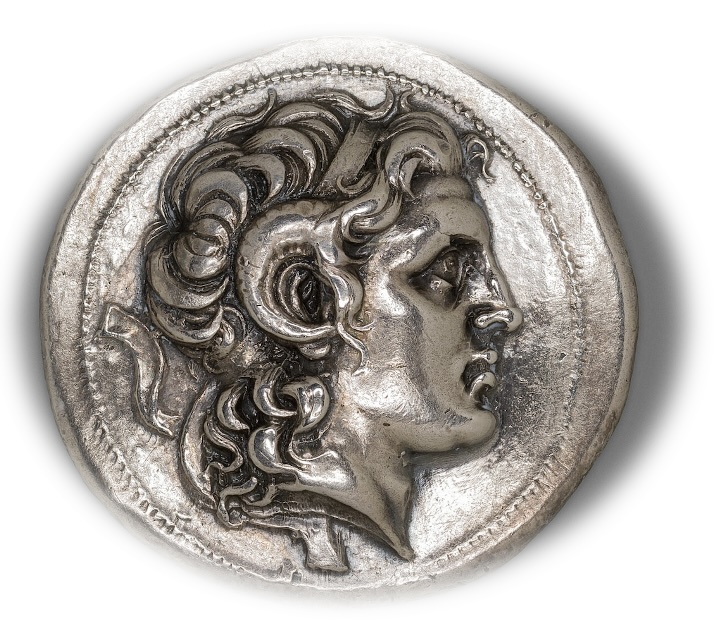
These adventures in Trumpian nomenclature are linked to a proposal to put Trump’s image on a new one dollar coin. Each of these things may seem innocuous. But when combined, we see a pattern of hubris. The issue involving Trump’s image on the coinage may seem trivial. But there is a model for this in monarchies, which typically issue new currency featuring the image of a newly crowned king.

Hubris: A Vice of the Heights

These symbolic acts may offer some support for the idea that we are in an age of “neo-royalism.” This idea, as described by Goddard and Newman, is that the era of modern states is giving way to a world in which ruling “cliques” use political power to advance their own interests. These cliques, like the royal families of yore, are oriented vertically “around dense social ties that create personal loyalty and connections.” This hierarchic structure, according to Goddard and Newman, provides a key to understanding neo-royalism: “The purpose of neo-royalist orders is to develop rules that allow a small clique to maintain dominance in both material and symbolic goods.”

This is a useful analysis that reminds us that symbols have material implications. I would add that vertically oriented structures of this sort are often tyrannical and suffer from the fatal flaw of hubris.

As I argued in my book, Tyranny from Plato to Trump, “Hubris is a vice of the heights.” It is a kind of “superiority complex” that is the result of what Shakespeare called “vaulting ambition.” This explains why in the Bible’s book of Proverbs (16:18) it is said that “pride goes before the fall.” The higher you place yourself above others the more precarious your perch.

This perennial lesson is a common theme in Greek tragedy. The chorus in Oedipus the Tyrant declares that hubris gives birth to tyranny. But the tyrant eventually falls. Similar themes can be found in Shakespeare, and in tragic opera. The humanities teach us valuable lessons about human foibles.

The Third Act?

We can also learn from the Greek philosophers. Plato teaches that politics is ultimately about the human soul. The soul of the tyrant is corrupted by hubris and the desire for godlike power. Plato would not be surprised that Trump wants to put his name on everything and to transform the world in his own image. The power to name things is a royal prerogative. But tragedy ensues, when tyrannical men view justice and truth as mere ‘names’ that they can manipulate to suit their desires.

The dispute about names thus conceals deeper dangers. Aristotle understood that the toolbox of tyranny includes the use of war. Aristotle said, in his Politics, “The tyrant is a stirrer-up of war, with the deliberate purpose of keeping the people busy and also of making them constantly in need of a leader.” This reminds us that tyrannical hubris is linked to violence and war. It also suggests that war and aggression are useful political tools that keep the people distracted, while the tyrant aggrandizes himself.

The Trump opera is certainly not boring. It is difficult to ignore the name of Trump. There is no doubt that Trump is audacious. To rename established entities and to go to war in the name of something like the Donroe doctrine is daring and bold. The Trump opera should explore Trump’s audacity with bright chords in major keys. It should feature the boldness of the main character in its overture. Indeed, it is his brashness that Trump’s fans adore.

But beneath the daring boldness, another theme appears. The orchestra should strike a dissonant chord, that signals hubris as a tragic flaw, which may yet lead to a fall.

We don’t know what the third act will hold. But it will likely echo perennial themes. Perhaps the opera will conclude with an plaintive chorale that echoes the wisdom of Sophocles:

There is no happiness where there is no wisdom;
No wisdom but in submission to the gods.
Big words are always punished,
And proud men in old age learn to be wise.

Thanks for reading! Subscribe for free to receive new posts and support my work.

Toward a Wiser New Year

We can do better in 2026

Resolve to do better. Review what went right and what went wrong. Release resentment. Let go of regret. Renew a commitment to virtue and wisdom. When things look dark, anticipate the dawn.

That was the gist of my New Year’s column for the Fresno Bee, which was about the importance of seeking wisdom in a world that is often bleak:

Thanks for reading! Subscribe for free to receive new posts and support my work.

A good life requires a sustained pursuit of wisdom. Wisdom begins with self-knowledge. We also need to understand the world and the way things work. Unfortunately, we can get lost in illusion or become beguiled by bull. It is easy to fall prey to wishful thinking, conspiracy theories and other malarkey.

2025 generated quite a bit of nonsense and for many of us a sense of despair. There is a lot of hogwash to wade through in order to find clarity, truth, and wisdom. An example is the “six-seven” meme that entertained kids in 2025. It is fun and meaningless. Kids love it. But it is a symbol of how stupid junk goes viral.

It is OK to “have a little fun folks.” This is especially true when the dismal darkness looms. But fun is no substitute for wisdom. And these days, many adults appear to be stuck in a juvenile doom loop. We are laughing ourselves stupid and goofing ourselves to death, as bullshit flows from high places.

Our leaders fail to inspire. True leaders should remind us of virtue. They should model intelligence. And they should demonstrate compassion. But often they don’t. The sordid mess of the Epstein files is an illustrative example of profound failure—in politics, the legal system, and our broader culture. The Epstein affair expoxes ugliness of oligarchy and crony capitalism, the filth of sexual exploitation, and a corrupt system of legalistic and political cover-ups.

It wasn’t all bad in 2025. But even the good news seemed tainted. The AI revolution made it easier than ever to learn. But as professors and teachers are now well aware, AI also makes it much easier for students avoid learning. Or consider the energy of the “no kings” rallies. It is great that people took to the streets to affirm that there should be “no kings.” But it should not be necessary to say this, as we approach the 250 anniversary of the American republic.

There is still too much evil, stupidity, and incompetence. This includes ongoing wars and extra-judicial violence. Among the worst ideas at large in the world is the idea that violence makes things better: whether this is terrorism, assassination, or state-sponsored attacks. Similarly troubling is racism, xenophobia, anti-Semitism, Islamophobia, and all kinds of other intolerance. People continue to deny science and reality. There is general contempt for expertise and experience. And corruption, nepotism, and cronyism are shamelessly on display. Worst of all is rising authoritarianism. Power has a dangerous tendency to run amok.

None of these are new problems. But in 2025, evil, stupidity, and incompetence were interwoven in ugly and mutually reinforcing ways. One commentator, Susan Glaser, has suggested that 2025 was a “golden age of awful.” What is especially worrisome is that as things get worse, some people zealously maintain that this is a new golden age, and that the world is getting better. Others simply shrug. Meanwhile suffering and injustice continue.

The way forward is to find our way back to the philosophical insight that “the unexamined life is not worth living.” And to re-affirm the Greek wisdom that says “know thyself” and “nothing in excess.” We also need to celebrate the modern world and its project of enlightenment. We can improve our lives. And we have. Modern technology has defeated diseases and delivered knowledge to the computers in our homes and in our pockets. Modern secular democracies allow us to live together in peace despite our differences. And we know now how to live happy and healthy lives—by eating well, exercising our bodies, and developing our brains. We also know that justice and compassion are necessary for well-being the body politic.

We can improve ourselves in 2026. But improvement depends upon the will to do better. We can’t simply shrug. Nor should we pretend that it is “all good.”

We already know the recipe for living well and doing better. We should moderate our appetites. We should seek the truth. We should stand up for justice and offer compassion. And we should affirm the value of science, secularism, and democracy. There should be “no kings” but also no greed, no sexual exploitation, no racism, no violence, no lies, and no more bullshit.

I concluded my Bee column with a hopeful exhortation:

In a sense, the world begins again every morning. Each day is an opportunity to grow wiser and do better. But our lives will not improve unless we choose to make them better. And they won’t improve if we wallow in malarkey.

Nor can we improve if we drown in denial or delusion. Some unwise souls blame everything on someone else. Or they put lipstick on a pig, insisting that everything is great. It is tempting to duck responsibility or to pretend that you are already wise and virtuous, but this is merely another form of ignorance.

The turn of the new year is an opportunity to take stock of what we value, to let go of bad habits and to begin again. The process of reviewing, releasing and renewing is essential for living well. May you find wisdom in the new year, along with a few moments of clarity, inspiration and joy.

Best wishes for a wiser new year.

Thanks for reading! Subscribe for free to receive new posts and support my work.

On Giving Birth to Hope at Christmas

Humanistic lessons from the Nativity

Christianity is a tragic religion. Unlike the sunny confidence of modern thought, and the affirmative fortitude of Greek humanism, Christianity offers a story that begins in humility and ends on the cross. Life is tragic. And even if we don’t think the story continues after the cross, the Christmas narrative remains instructive.

Thanks for reading! Subscribe for free to receive new posts and support my work.

Christian and Greek Tragedy

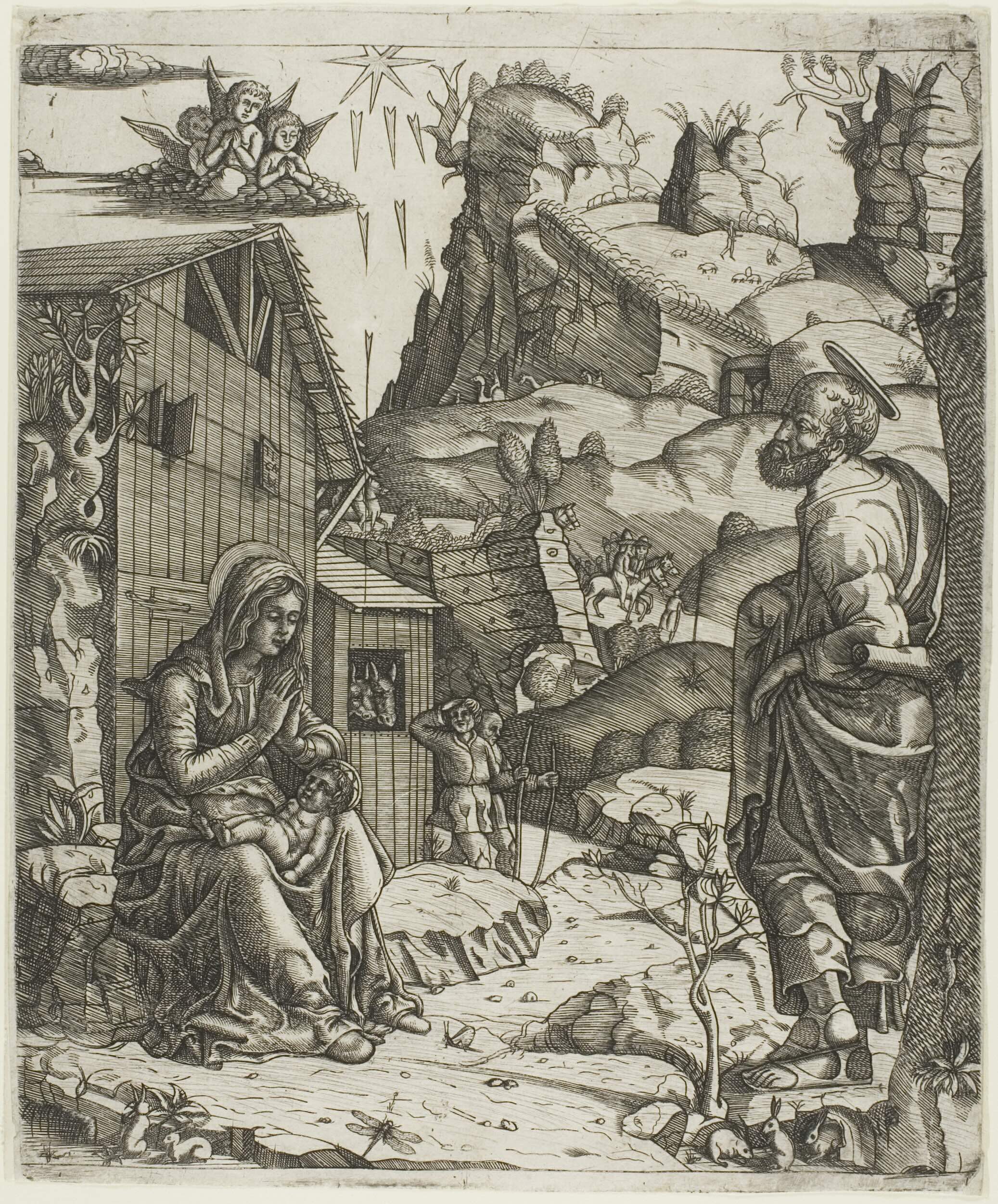
The birth of Jesus occurred in the midst of terror and oppression. The humble manger is a metaphor of modesty and failed hospitality. The land of the Jews was under Roman occupation. The holy family fled to Egypt out of fear of Herod—at least in Matthew’s version of the tale. The nativity is merely the opening chapter of a story that culminates in death on the cross. There is an epilogue, of course, promising eternal life. But from the beginning in Bethlehem, this is a tale of fear and trembling. The hope of Christmas is haunted by tragedy.

Humanistic worldviews such as Epicureanism and Stoicism teach that virtue and practical wisdom provide an earthly path to happiness. The Greeks do not promise immortality. They knew that life is hard and that even demigods such as Achilles died young. The Greek worldview is built upon a tragic foundation. But they teach that we can control our own virtue and achieve excellence within this mortal life. For the Greeks, tragic wisdom involves seizing the day. Mortal happiness is fleeting. But it is real and virtuous people can achieve it.

Christianity is different. It emphasizes the via doloroso, a sorrowful path that leads to another much better life. That better life is not fleeting. But it is only found through a leap of faith that aims beyond the present. That faith requires us to believe that the pain and pathos of the life of Jesus is the necessary unfolding of God’s benevolent grace. Christian tragedy offers happiness, but primarily in the epilogue. The path to redemption from sin involves a long walk through the valley of the shadow of death. The joy of resurrection only occurs after a sorrowful journey through this vale of tears.

The tragedy woven into the nativity is easy to overlook amid all of the talk of wonder and joy during the Christmas season. And in contemporary yuletide celebrations, the joy of making merry is more pagan than Christian. We party and play, enjoying happiness here and now.

Of course, the headlines continue to tell of violence, stupidity, corruption, and evil. Refugees struggle. Poor people too. And imperial forces gather power. So there is tragedy lurking in the shadows beyond the yuletide glow.

Modern hope

The nativity story inspires because it reminds us that despite the darkness, there can be light. Modern humanism offers a further response, which is that if we want there to be light, we should invent lightbulbs. As I explained in the concluding chapter of a recent book on hope, light in the darkness is not simply found, it is kindled or created. We give birth to hope ourselves by creating better systems of science, technology, and politics.

The idea that hope is in our hands, is more humanistic than Christian. It is more modern and American than Greek. Modernity encourages us to build a better world. When children are born homeless or in poverty, we ought to create social support systems and build them homes. When imperial powers oppress, we ought to oppose them and create democracies.

Modern technology, science, and democratic politics show that we can make life better. Modernity does not promise immortality. But modern humanism improves life for billions of people. The problem for modernity is finding a way to extend the promise of humanism to everyone, or as many people as possible.

The nativity narrative contains an implicit moral lesson that should inspire modern humanists. It reminds us to make room in the inn. Or better, it reminds us to build more inns and hospitals, so that birth and life are better. We should aid refugees, struggling families, and poor children. And we should remain critical of unjust political and military power, such as caused the dislocation of the holy family in their escape to Egypt. And we should liberate women from old-fashioned cultural forms that insist that mothering and childbirth are the pinnacle of a woman’s life.

Wonder and Joy

The Christmas narrative is also a reminder to seek out wonder and joy. Birth and vitality are profound sources of hope. There is something magical, joyful, and wondrous in the very idea that new life unfolds from the womb. Each new generation somehow emerges, grows, and thrives. The brute fact of our birthiness provides a source of hope that things can be different and that we can begin again.

Hannah Arendt called this “natality.” She explained: “The miracle that saves the world… from its normal, ‘natural’ ruin is ultimately the fact of natality… the birth of new men and the new beginning, the action they are capable of by virtue of being born.”1

For Christians, the virgin birth is a miracle. This miracle extends beyond life itself toward a new birth in the kingdom of God. But even humanists can understand the power of the Christmas story: that in the darkness, new life can be born. An Epicurean might say, “evil can be endured” and “good can be obtained.” A modern humanist may add, let’s create new systems and new technologies that make it easier to endure suffering and to obtain happiness.

There is, to be sure, a fundamental dispute between Christians and humanists. Humanists affirm the joy and wonder of the present world, offering only a finite kind of hope grounded in earthly happiness. Christianity suggests that earthly delight and finite hope are a pale reflection of the true joy and wonder of eternal life.

This metaphysical dispute runs deep. But let me return to the idea of giving birth to hope as an activity. Whether one leaps all the way to the infinite or merely finds a way to keep a candle burning in the darkness, the choice is ours. Hopeless and joyless souls lack vitality. They are bereft, deprived of light, and wallowing in the darkness. The turn to hope, joy, and wonder requires engagement, movement, and natality. We must be open to possibility. It is active vigor that brings forth newness and transformation.

Singing with the angels

The wonder and joy of Christmas can inspire. But the moral lessons are complex. Christians may suggest that we cannot cure ourselves of sin and sadness, claiming that the mystery of grace is a necessary part of the story. Ancient Greeks would counsel wisdom and virtue as the path to mortal happiness. Modern humanists will say that modern science, politics, and technology can help us live better lives.

The disputes run deep. But we can find sources of inspiration that are useful in dark times. The nativity narrative is one of those. It won’t cure us. But it can inspire. In the dark of winter, when things look bleak and the forces of the world conspire against us, it may still be possible to hear the angels sing.

But the angels will not save us unless we take up the song ourselves.

1

Hannah Arendt, The Human Condition (Univ. Chicago, 1958), 247.

My new blog on Substack

I’m “moving” my blog to Substack, where I will continue to write about ethics, religion, and politics, while offering insight from the world’s wisdom tradition.

I’ve been posting on andrewfiala.com for many years. My website includes some of my newspaper columns, academic articles, links to books I’ve published, lecture pdfs, and the like. I will still post there. But in 2026, I’m going to post original content on Substack, along with links to my newspaper columns and other stuff.