
Tragic Themes in the Trump Opera
When the Trump presidency becomes the subject of some future tragic opera, hubris will be a common theme. Hubris is unbridled ambition or pride run amok. This is the fatal flaw of the tyrannical characters in Greek tragedies, where it is linked to violence and political disaster.
The Trump opera might highlight the events of January 6, while featuring the attack on Venezuela (and perhaps even Greenland) in the second act. The third act is yet to be written. But the stage will no doubt be gilded. And Trump’s name will be plastered everywhere.
Perhaps the opera will contain an aria quoting Shakespeare:
He that is proud eats up himself: pride is his own glass, his own trumpet, his own chronicle; and whatever praises itself but in the deed, devours the deed in the praise.
From Monroe to Donroe
There are strategic concerns at play in recent events. But Trumpian hubris is also a key theme in American policy. This conflation of concerns is what makes it difficult to understand what’s going on in the world. Is it “America First” or “Trump First” that is driving things?
Consider the attacks on Venezuela. Trump suggests that this has something to do with the drug trade. But he also seems to say that it is about the oil. Or is the rationale that Venezuela’s Maduro was a tyrant? Or maybe it is about “spheres of influence,” dividing the world up between Russia, China, and the U.S., as Anne Applebaum and Michael Ignatieff have each suggested.
The National Security Strategy of the United States touts the “Trump Corollary” to the Monroe Doctrine, asserting the desire “to restore American preeminence in the Western Hemisphere.” The Trump Corollary has now become the Donroe Doctrine. As Trump explained in his press conference about Venezuela, “The Monroe Doctrine is a big deal, but we’ve superseded it by a lot. By a real lot. They now call it the Donroe document” (sic).
The original Monroe Doctrine was articulated during the presidency of James Monroe. As originally expressed, it was an anti-colonial doctrine demanding that European powers end their colonial interventions in the Americas.
President Monroe did not name the policy after himself. It was retrospectively called the Monroe Doctrine and was eventually understood to mean that the U.S. should control the Western hemisphere. The Trump Corollary and the Donroe Doctrine follow this line of reasoning, but with a Trumped up flourish.
The Naming Game
The President’s self-aggrandizing designation of his policy and his bizarre affirmation of the ridiculous “Donroe” name is a sign of hubris. This strange neologism appears to be a mocking nickname, like “Obamacare” or “Bidenomics.” But Trump seems to like it, as he does anything with his name on it.
The Trump opera ought to feature Trump’s appetite for renaming things. This has been a common theme from the beginning of Trump’s second term, as I discussed elsewhere, which began with Trump renaming the Gulf of Mexico as the Gulf of America and Denali as Mt. McKinley. More recently Trump has put his name on the Kennedy Center, and the “Donald J. Trump U.S. Institute of Peace.”
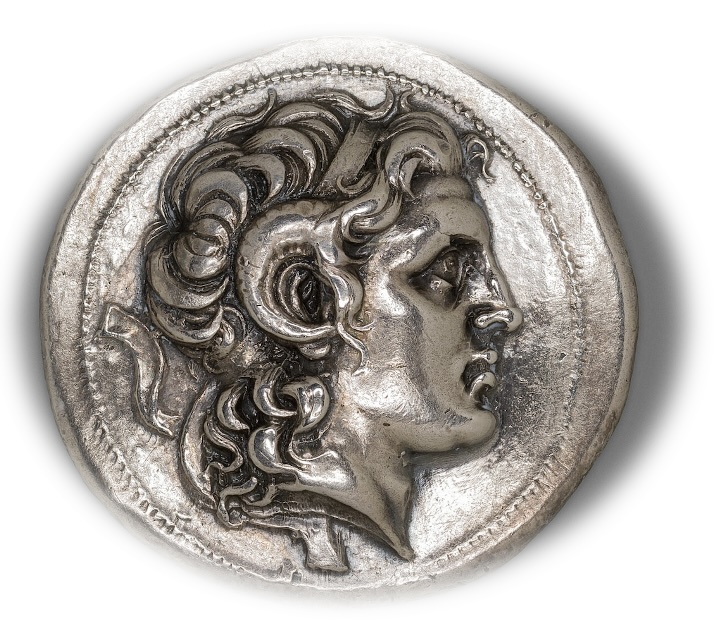
These adventures in Trumpian nomenclature are linked to a proposal to put Trump’s image on a new one dollar coin. Each of these things may seem innocuous. But when combined, we see a pattern of hubris. The issue involving Trump’s image on the coinage may seem trivial. But there is a model for this in monarchies, which typically issue new currency featuring the image of a newly crowned king.
Hubris: A Vice of the Heights
These symbolic acts may offer some support for the idea that we are in an age of “neo-royalism.” This idea, as described by Goddard and Newman, is that the era of modern states is giving way to a world in which ruling “cliques” use political power to advance their own interests. These cliques, like the royal families of yore, are oriented vertically “around dense social ties that create personal loyalty and connections.” This hierarchic structure, according to Goddard and Newman, provides a key to understanding neo-royalism: “The purpose of neo-royalist orders is to develop rules that allow a small clique to maintain dominance in both material and symbolic goods.”
This is a useful analysis that reminds us that symbols have material implications. I would add that vertically oriented structures of this sort are often tyrannical and suffer from the fatal flaw of hubris.
As I argued in my book, Tyranny from Plato to Trump, “Hubris is a vice of the heights.” It is a kind of “superiority complex” that is the result of what Shakespeare called “vaulting ambition.” This explains why in the Bible’s book of Proverbs (16:18) it is said that “pride goes before the fall.” The higher you place yourself above others the more precarious your perch.
This perennial lesson is a common theme in Greek tragedy. The chorus in Oedipus the Tyrant declares that hubris gives birth to tyranny. But the tyrant eventually falls. Similar themes can be found in Shakespeare, and in tragic opera. The humanities teach us valuable lessons about human foibles.
The Third Act?
We can also learn from the Greek philosophers. Plato teaches that politics is ultimately about the human soul. The soul of the tyrant is corrupted by hubris and the desire for godlike power. Plato would not be surprised that Trump wants to put his name on everything and to transform the world in his own image. The power to name things is a royal prerogative. But tragedy ensues, when tyrannical men view justice and truth as mere ‘names’ that they can manipulate to suit their desires.
The dispute about names thus conceals deeper dangers. Aristotle understood that the toolbox of tyranny includes the use of war. Aristotle said, in his Politics, “The tyrant is a stirrer-up of war, with the deliberate purpose of keeping the people busy and also of making them constantly in need of a leader.” This reminds us that tyrannical hubris is linked to violence and war. It also suggests that war and aggression are useful political tools that keep the people distracted, while the tyrant aggrandizes himself.
The Trump opera is certainly not boring. It is difficult to ignore the name of Trump. There is no doubt that Trump is audacious. To rename established entities and to go to war in the name of something like the Donroe doctrine is daring and bold. The Trump opera should explore Trump’s audacity with bright chords in major keys. It should feature the boldness of the main character in its overture. Indeed, it is his brashness that Trump’s fans adore.
But beneath the daring boldness, another theme appears. The orchestra should strike a dissonant chord, that signals hubris as a tragic flaw, which may yet lead to a fall.
We don’t know what the third act will hold. But it will likely echo perennial themes. Perhaps the opera will conclude with an plaintive chorale that echoes the wisdom of Sophocles:
There is no happiness where there is no wisdom;
No wisdom but in submission to the gods.
Big words are always punished,
And proud men in old age learn to be wise.