

Humanistic lessons from the Nativity
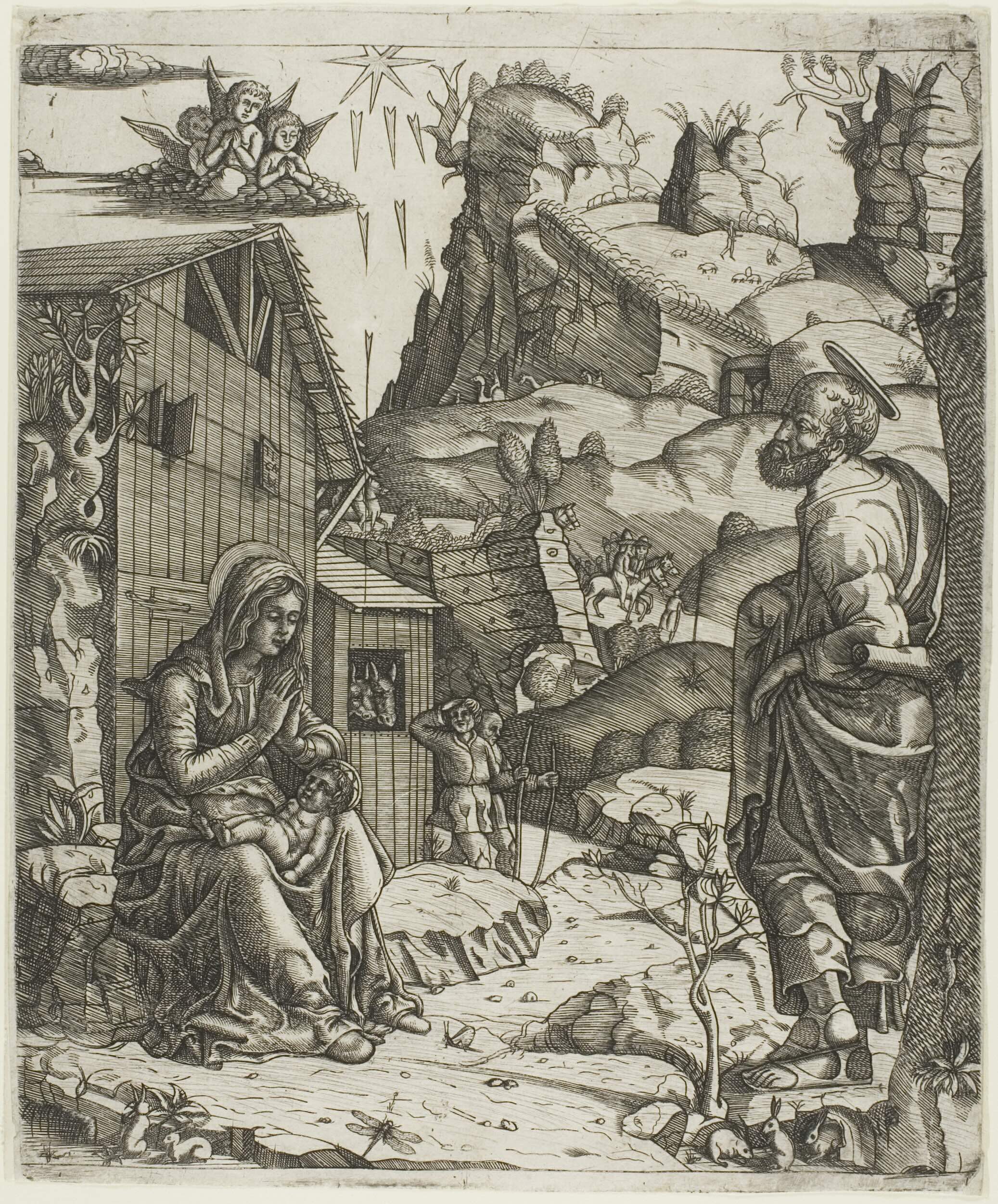
Christianity is a tragic religion. Unlike the sunny confidence of modern thought, and the affirmative fortitude of Greek humanism, Christianity offers a story that begins in humility and ends on the cross. Life is tragic. And even if we don’t think the story continues after the cross, the Christmas narrative remains instructive.
Christian and Greek Tragedy
The birth of Jesus occurred in the midst of terror and oppression. The humble manger is a metaphor of modesty and failed hospitality. The land of the Jews was under Roman occupation. The holy family fled to Egypt out of fear of Herod—at least in Matthew’s version of the tale. The nativity is merely the opening chapter of a story that culminates in death on the cross. There is an epilogue, of course, promising eternal life. But from the beginning in Bethlehem, this is a tale of fear and trembling. The hope of Christmas is haunted by tragedy.
Humanistic worldviews such as Epicureanism and Stoicism teach that virtue and practical wisdom provide an earthly path to happiness. The Greeks do not promise immortality. They knew that life is hard and that even demigods such as Achilles died young. The Greek worldview is built upon a tragic foundation. But they teach that we can control our own virtue and achieve excellence within this mortal life. For the Greeks, tragic wisdom involves seizing the day. Mortal happiness is fleeting. But it is real and virtuous people can achieve it.
Christianity is different. It emphasizes the via doloroso, a sorrowful path that leads to another much better life. That better life is not fleeting. But it is only found through a leap of faith that aims beyond the present. That faith requires us to believe that the pain and pathos of the life of Jesus is the necessary unfolding of God’s benevolent grace. Christian tragedy offers happiness, but primarily in the epilogue. The path to redemption from sin involves a long walk through the valley of the shadow of death. The joy of resurrection only occurs after a sorrowful journey through this vale of tears.
The tragedy woven into the nativity is easy to overlook amid all of the talk of wonder and joy during the Christmas season. And in contemporary yuletide celebrations, the joy of making merry is more pagan than Christian. We party and play, enjoying happiness here and now.
Of course, the headlines continue to tell of violence, stupidity, corruption, and evil. Refugees struggle. Poor people too. And imperial forces gather power. So there is tragedy lurking in the shadows beyond the yuletide glow.
Modern hope
The nativity story inspires because it reminds us that despite the darkness, there can be light. Modern humanism offers a further response, which is that if we want there to be light, we should invent lightbulbs. As I explained in the concluding chapter of a recent book on hope, light in the darkness is not simply found, it is kindled or created. We give birth to hope ourselves by creating better systems of science, technology, and politics.
The idea that hope is in our hands, is more humanistic than Christian. It is more modern and American than Greek. Modernity encourages us to build a better world. When children are born homeless or in poverty, we ought to create social support systems and build them homes. When imperial powers oppress, we ought to oppose them and create democracies.
Modern technology, science, and democratic politics show that we can make life better. Modernity does not promise immortality. But modern humanism improves life for billions of people. The problem for modernity is finding a way to extend the promise of humanism to everyone, or as many people as possible.
The nativity narrative contains an implicit moral lesson that should inspire modern humanists. It reminds us to make room in the inn. Or better, it reminds us to build more inns and hospitals, so that birth and life are better. We should aid refugees, struggling families, and poor children. And we should remain critical of unjust political and military power, such as caused the dislocation of the holy family in their escape to Egypt. And we should liberate women from old-fashioned cultural forms that insist that mothering and childbirth are the pinnacle of a woman’s life.
Wonder and Joy
The Christmas narrative is also a reminder to seek out wonder and joy. Birth and vitality are profound sources of hope. There is something magical, joyful, and wondrous in the very idea that new life unfolds from the womb. Each new generation somehow emerges, grows, and thrives. The brute fact of our birthiness provides a source of hope that things can be different and that we can begin again.
Hannah Arendt called this “natality.” She explained: “The miracle that saves the world… from its normal, ‘natural’ ruin is ultimately the fact of natality… the birth of new men and the new beginning, the action they are capable of by virtue of being born.”1
For Christians, the virgin birth is a miracle. This miracle extends beyond life itself toward a new birth in the kingdom of God. But even humanists can understand the power of the Christmas story: that in the darkness, new life can be born. An Epicurean might say, “evil can be endured” and “good can be obtained.” A modern humanist may add, let’s create new systems and new technologies that make it easier to endure suffering and to obtain happiness.
There is, to be sure, a fundamental dispute between Christians and humanists. Humanists affirm the joy and wonder of the present world, offering only a finite kind of hope grounded in earthly happiness. Christianity suggests that earthly delight and finite hope are a pale reflection of the true joy and wonder of eternal life.
This metaphysical dispute runs deep. But let me return to the idea of giving birth to hope as an activity. Whether one leaps all the way to the infinite or merely finds a way to keep a candle burning in the darkness, the choice is ours. Hopeless and joyless souls lack vitality. They are bereft, deprived of light, and wallowing in the darkness. The turn to hope, joy, and wonder requires engagement, movement, and natality. We must be open to possibility. It is active vigor that brings forth newness and transformation.
Singing with the angels
The wonder and joy of Christmas can inspire. But the moral lessons are complex. Christians may suggest that we cannot cure ourselves of sin and sadness, claiming that the mystery of grace is a necessary part of the story. Ancient Greeks would counsel wisdom and virtue as the path to mortal happiness. Modern humanists will say that modern science, politics, and technology can help us live better lives.
The disputes run deep. But we can find sources of inspiration that are useful in dark times. The nativity narrative is one of those. It won’t cure us. But it can inspire. In the dark of winter, when things look bleak and the forces of the world conspire against us, it may still be possible to hear the angels sing.
But the angels will not save us unless we take up the song ourselves.
Hannah Arendt, The Human Condition (Univ. Chicago, 1958), 247.