
Trump’s claim of moral authority is an abomination
President Trump recently claimed that God was proud of him, and that his own morality was the only thing that can stop him. This is hubris, as I explained in my recent newspaper column. The Bible provides a warning: “Everyone that is proud in heart is an abomination to the Lord” (Proverbs 16:5). Trump’s inane moral rhetoric also degrades the inspiring moral tradition of the American presidency.
Trump’s Assertion of Moral Authority
In a recent interview with the New York Times, the President was asked whether there were any limits on his power, such as international law. He said, “I don’t need international law.” He explained that there is “one thing” that limits him: “My own morality. My own mind. It’s the only thing that can stop me.”
In a follow up interview with CBS, the President said something similar.
I’m a moral person. I don’t like seeing death. I don’t like seeing our people hurt. I don’t like seeing the other side hurt either. You know, when we went into Venezuela, we lost nobody, but a lot of people on the other side were, were killed. I don’t like that. Somebody else would say, “Oh, that’s wonderful.” I don’t like that. So yeah, it’s limited by my morality and I have a very high grade of morality. So, therefore, it’s limited.
An authentic moral thinker would never speak of himself as having a “very high grade of morality.” Humility is a key feature of morality, along with deference to moral (and legal) authority, rules, and traditions. Even if one rejects these sources of morality, a careful thinker needs to make an argument. But Trump makes no arguments. Nor does he recognize his own flaws, even as his whims shake markets and destroy international alliances. The claim that he does not like seeing people hurt rings hollow, as federal forces employ violence, and the President demonizes those who dare to question his authority.
Trump rarely speaks of justice or human rights, love or the golden rule. He does not cite any moral idea, tradition, or thinker. Nor does he appeal to anything other than himself as a source of moral authority. This leads to his most abominably hubristic recent claim, “I think God is very proud of the job I’ve done.”
No morally articulate person would ever say such a thing.
Trump’s way of speaking is arrogant and imbecilic. When he said in the CBS interview, “I don’t like seeing death,” he avoided the word “killing,” thereby also avoiding the question of who is responsible for these deaths. And he only emphasizes the impact of “death” on him, aesthetically and emotionally. He doesn’t like seeing it. But he never says its “wrong” or “evil.” He offers no sympathy for the victims or their loved ones. Nor does he offer any argument about whether these killing are justified. Morally articulate people make arguments using abstract moral concepts. Trump says, as a child might, “I don’t like it.”
Trump’s “Values” in Context
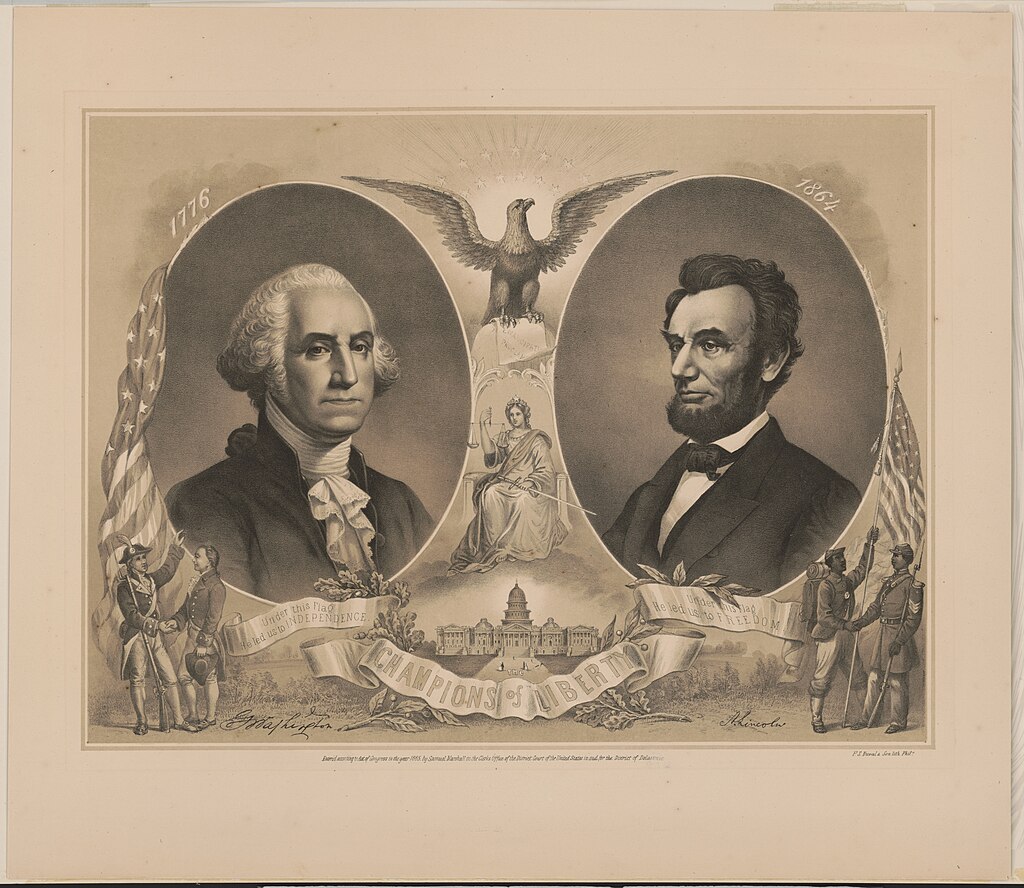
In my book Tyranny From Plato to Trump, I showed that Trump lacks fluency in the language of ethics. I concluded that he is “morally inarticulate” and that he lacks a “moral vocabulary.” I also showed that Trump’s moral imbecility is an anomaly in the often inspiring tradition of the American presidency. Our greatest leaders were fluent in the language of morality. They spoke of values in inspiring ways.
In his Farewell Address, George Washington linked American greatness to magnanimity, justice, and benevolence:
Observe good faith and justice towards all Nations; cultivate peace and harmony with all… It will be worthy of a free, enlightened [and] great Nation, to give to mankind the magnanimous and too novel example of a people always guided by an exalted justice and benevolence.
In the darkness of the Civil War, Abraham Lincoln spoke of the need for humility and penitential prayer:
When our own beloved Country, once, by the blessing of God, united, prosperous and happy, is now afflicted with faction and civil war, it is peculiarly fit for us to recognize the hand of God in this terrible visitation, and in sorrowful remembrance of our own faults and crimes as a nation and as individuals, to humble ourselves before Him, and to pray for His mercy.
Barack Obama and George W. Bush also spoke in morally elevating ways. Whatever you think of Bush, he often spoke morally and with conviction. In a speech in honor of Ronald Reagan (July 11, 2004), Bush said:
Reagan believed that the gentleman always does the kindest thing. He believed that people were basically good, and had the right to be free. He believed that bigotry and prejudice were the worst things a person could be guilty of. He believed in the Golden Rule and in the power of prayer. He believed that America was not just a place in the world, but the hope of the world.
Obama spoke often and eloquently of empathy and the Golden Rule. Indeed, there is an entire website dedicated to Obama’s thinking about empathy. In his book The Audacity of Hope, Obama said:
A sense of empathy… is one that I find myself appreciating more and more as I get older. It is at the heart of my moral code, and it is how I understand the Golden Rule—not simply as a call to sympathy or charity, but as something more demanding, a call to stand in somebody else’s shoes and see through their eyes.
It is difficult to imagine Trump saying anything like this. He does not speak of empathy, magnanimity, justice, or humility. And for Trump, the Golden Rule is the punchline of a joke he is fond of saying: “The golden rule of negotiation = He who has the gold makes the rules.”
The Egoistic Abomination
Trump appears to view life in terms of power and leverage, as a Hobbesian battle of egoists seeking advantage. In such a world, there are no promises that must be kept, duties that must be upheld, or loyalties that endure. This way of thinking represents a degradation of morality, and of Presidential rhetoric. Trump’s “values” also run afoul of ancient wisdom that warns against hubris, cruelty, and foolish self-regard. Let’s conclude by returning to the book of Proverbs.
These seven things are an abomination to the Lord:
A proud look,
A lying tongue,
Hands that shed innocent blood,
A heart that devises wicked plans,
Feet that are swift in running to evil,
A false witness who speaks lies,
And one who sows discord among brethren.
(Proverbs 6:16-19):