
Learning lessons on nonviolence from Martin Luther King, Jr. and the nonviolent tradition
As we celebrate the legacy of Dr. Martin Luther King, Jr., it is worth reflecting on the strategic power and moral necessity of nonviolence. This is especially important as violence plagues the word. In Iran, thousands have been killed by government forces. And the President threatens to invoke the Insurrection Act in Minnesota.
The brutality of governments may seem insurmountable. But in a struggle against a government’s monopoly on violent force, nonviolence is both strategically useful and morally necessary. If you seek justice, freedom, and a world without violence, you should avoid using violence and brutality in pursing the end that you seek. Nonviolence is the proper and necessary tool of democratic movements.
One of the ways this works is by creating “tension in the mind” by deliberately exposing the brutality of repressive violence. As King explained in the letter he wrote while in jail in Birmingham, this is “a type of constructive, nonviolent tension which is necessary for growth.” He saw Socrates and Jesus as models. Today, the “tension in the mind” is caused by a Minnesota mom being shot dead by an ICE officer who called her a “fucking bitch.”
Against such brutality, nonviolence is understood as mobilizing the active power of love. In “Pilgrimage to Nonviolence” King explained Gandhi’s notion of satyagraha as “love force.” King said, “the Christian doctrine of love operating through the Gandhian method of nonviolence was one of the most potent weapons available to oppressed people in their struggle for freedom.”
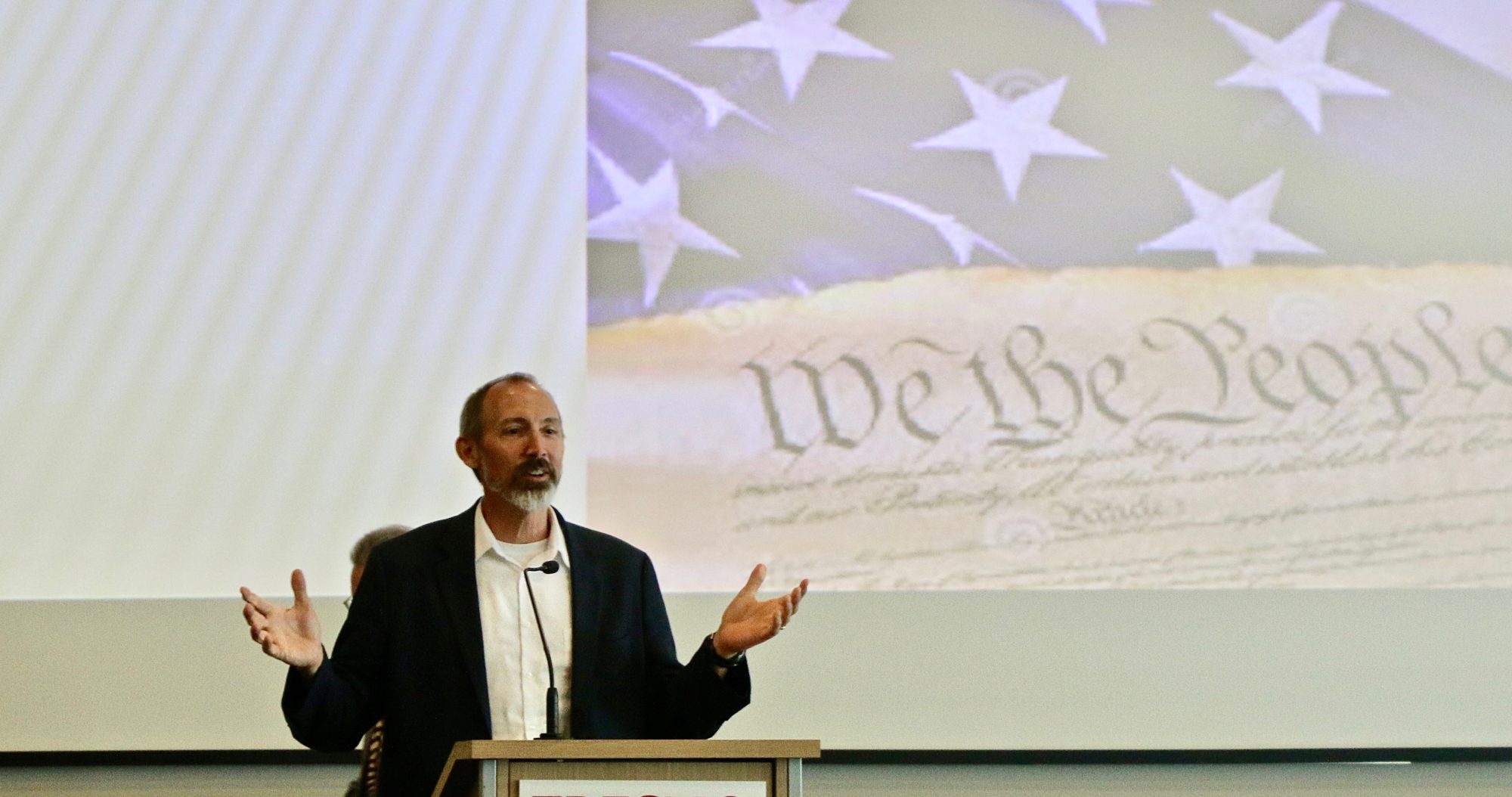
I discuss nonviolence in more detail in my book, Nonviolence: A Quick Immersion. Here I want to emphasize the variety of nonviolent actions. King’s heroic model of going to jail in an act of civil disobedience is merely one possibility. Scholars of nonviolence, such as Gene Sharp, have identified nearly 200 different nonviolent actions, organized in three general categories:
Symbolic protest and efforts at public persuasion (for example, letter writing or standing/marching with signs);
Non-cooperation (for example, work slow-downs, boycotts, or tax-strikes); and
Direct intervention (for example, civil disobedience such as sit-ins or “occupations” of public space that result in arrest).
The study of nonviolence involves trying to understand how and why these actions can be effective. In my book I explained some of this in more detail:
These are the methods of noncooperation including: staying home from work and school, boycotting businesses and events, work slow-downs, tax resistance, and so on. These methods can be very effective, when employed broadly and strategically… Active nonviolent protest is more assertive, involving mass demonstrations, picket lines, and other public and symbolic activities.
The heroes of nonviolence take a step beyond merely refusing to cooperate. They engage in active nonviolence and in some cases civil disobedience. A step beyond noncooperation takes us to active public protest: marching in demonstrations and picket lines, writing editorials and making public speeches, and so on. As step beyond that occurs when protesters put their bodies on the line in confronting violent opposition, including in some cases the police. Finally, the last step is to put oneself in opposition to unjust authority by breaking the law and publicly challenging the legitimacy of the law and its authorities.
History shows that the tactics and strategies of nonviolence can be effective. There are no guarantees however. State-centered monopolies of violence are durable and brutal. But the hope is that with patience, tenacity, creativity, and hope, nonviolence can be employed to produce a better world. In my book, I conclude:
In its broadest sense, the work of nonviolence is oriented toward developing what is called “positive peace.” In the short term, the pragmatic methods of nonviolent protest can be effective. But the nonviolent imagination extends toward the creation of a world in which there is solidarity, justice, compassion, truth, and love. The proponents of nonviolence maintain that in order to create that world, we must employ means and methods that embody what we imagine. It is only by using the methods of nonviolence that we can hope to convert, transform, and build.
Nonviolence is not quick or easy. State violence can be brutal. And political leadership is often stupid and sometimes wicked. But the hope is that in the long-run human beings are better than this. The hope is that we can build a better world by creatively employing the power of love, intelligence, and nonviolence. Let’s conclude with the words of Dr. King, written in his cell in Birmingham Jail:
Human progress never rolls in on wheels of inevitability; it comes through the tireless efforts of men willing to be co-workers with God, and without this hard work, time itself becomes an ally of the forces of social stagnation. We must use time creatively, in the knowledge that the time is always ripe to do right.