
Bad Bunny, Green Day, and the rebellious tradition of American art
The Super Bowl halftime hullabaloo is as American as it gets. President Trump called Bad Bunny’s show a “slap in the face to our country.” Another critic, Megyn Kelly, said, “To get up there and perform the whole show in Spanish is a middle finger to the rest of America!” Trump said, “Nobody understands a word this guy is saying.” Conservatives further complained that Bad Bunny’s lyrics and dance moves were obscene. Trump said the halftime was “an affront to the Greatness of America.”
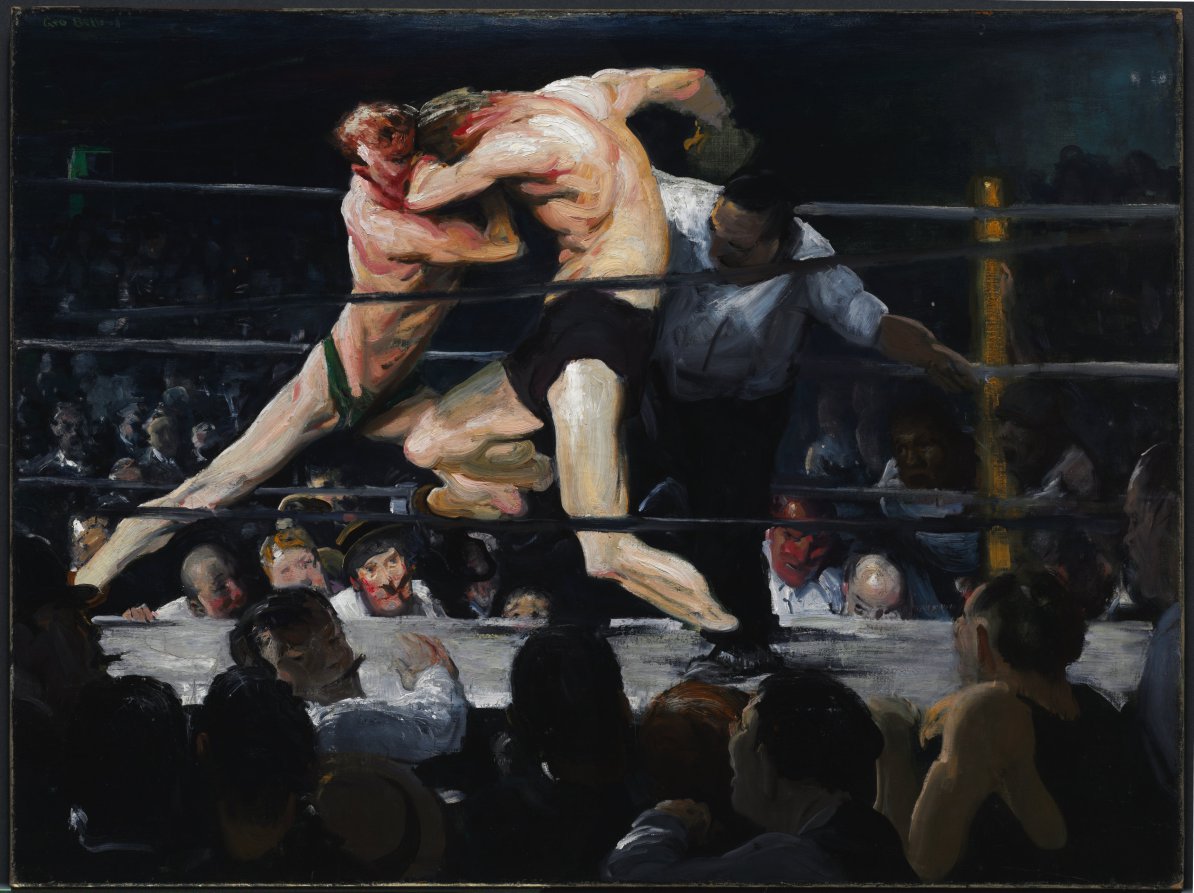
But American art is rough, rebellious, and free. The arts do not exist to provide gilded decoration on the project of national greatness. Great American art has often been a slap in the face. And American pop culture is more middle finger than patriotic pablum.
While Bad Bunny’s Spanish party music received most of the reactionary condemnation, Green Day’s opening Super Bowl set growled out rebellion in English. They sang “American Idiot,” railing against “mind-fuck America.” That lyric made it past the censors, even though the band omitted lyrics that denounce “the MAGA agenda.” Some fans claimed this lyrical omission meant the band had sold out. But Bad Bunny and Green Day still served up a musical slap in the face.
Our Cultural Crisis
President Trump seems to have understood the point. But he is wrong to think that pop culture is somehow supposed to celebrate the mythic “greatness” of America. American art has often mocked that myth while revealing deep cracks in the American edifice.
In my recent newspaper column, I discussed recent cultural clashes involving the Super Bowl halftime show, Melania Trump’s vain documentary, and Bruce Springsteen’s protest song, “The Streets of Minneapolis.” I argued that art and culture have existential and political power:
Songs and images expose our humanity, our beauty as well as our ugliness. Powerful art demands that we question our values and decide where we stand… The existential import and political impact of the arts should not be underestimated. When conflicts of culture are as glaring as they are today, we are forced to consider what we love and who we are.
I quoted James Baldwin, whose life and art are instructive. Baldwin was a gay Black man who suggested that artists are often at war with society. This means, of course, that artists will provoke a backlash. Baldwin noted, in “The Creative Process,” that artists are often “despised while living and acclaimed when safely dead.” He explained:
I am really trying to make clear the nature of the artist’s responsibility to his society. The peculiar nature of this responsibility is that he must never cease warring with it, for its sake and for his own.
Baldwin referred to artists as “disturbers of the peace.” Building upon this idea, I argued, “Art can be propaganda. Art can also pacify, and entertainment can distract us from reality. But the best art provokes by illuminating the fissures of this broken world.”
Propaganda, Power, and Protest
The idea that art should celebrate American greatness imagines art as political propaganda. Governments often use art as propaganda. Authoritarian regimes seek to control the arts as a way of consolidating power. Tyrants build monuments to themselves. And American democracy celebrates itself with icons like the Statue of Liberty.
Art functions as propaganda when it aims to ‘propagate’ a message or idea. George Orwell once said, “Every writer, especially every novelist, has a ‘message’, whether he admits it or not, and the minutest details of his work are influenced by it. All art is propaganda.”
If this is true, the crucial question is about the kind of ‘message’ motivating the work of art. Art can be used by reactionaries or by revolutionaries. Art can praise the powerful and amplify authority. Or it can express solidarity with the powerless, and seek their emancipation.
Some memorable works of art blatantly celebrate power and authority. The pyramids proclaimed Pharaoh’s divinity. The monuments of the ancient world commemorated the glory of Greece and Rome. And the cathedrals of medieval Europe manifested the power of the church.
But there has always been a different kind of art, which protests power and gives voice to the powerless. Greek drama functioned in this way. The tragedies of Sophocles mocked tyranny, while the comedies of Aristophanes lambasted the “ignoramuses and rogues” who ruled Athens.
Or consider opera. Opera is often viewed as stuffy and conservative. But it could be revolutionary. Mozart’s Don Giovanni poked at the pretensions of the aristocracy, while Beethoven’s Fidelio features a political prisoner who sings from the dungeon, “I dared to speak the truth boldly, and chains are my reward.”
The Rebellious American Tradition
In the American tradition, art has been used to celebrate national greatness in the Trumpian sense. Mount Rushmore is an obvious example. But critical themes are more common. This nation began, after all, as a slap in the face to British power.
During the American revolution, arts and culture were employed to drum up support for the American cause. But as the new nation grew, the heroes of American letters were often more interested in criticizing American power than in celebrating it.
Emerson and Thoreau condemned conformity, slavery, and militarism. Mark Twain denounced American imperialism. Hemingway, Fitzgerald, Steinbeck and other modern authors offered critical reflection on the decadent and disconsolate lives of Americans. And the Black literary tradition viewed the American dream as either “a dream deferred” (in Langston Hughes) or as “something much more closely resembling a nightmare,” as James Baldwin put it in The Fire Next Time.
The pop music of the Super Bowl’s halftime show has almost always been counter-cultural. Blues, jazz, and rock were invented by dispossessed Black Americans. The genre was developed further by hippies and counter-cultural icons like Bob Dylan and the Grateful Dead. Even country music has its “outlaws” like Willie Nelson and Johnny Cash. One of the most iconic images of American music is Johnny Cash flipping off the camera when he played at San Quentin.
Art can be protest or propaganda. Artists can sell out, or they can sing truth to power. Authoritarians want art that flatters their egos. But art does not exist only to gratify the powerful or commemorate mythic greatness. It also disturbs the peace. And in America, art has often been a middle finger and a slap in the face.