Leap Year: Make Meaning Out of Time

Fresno Bee, March 1, 2020

Leap year reminds us of the importance of science and math. It is also an opportunity to ponder the meaning of time.

Our calendars don’t line up with the way the solar system works. We divide the year into 365 days. But our journey around the sun takes approximately 365.25 days.

So we add a day every four years. And since the discrepancy is not precise, we make further adjustments. 2000 was a leap year. But 2100, if we live that long, will not be.

Time measurement was originally a political and religious prerogative. The calendar reflects ancient religious ideas. The days of the week are named after pagan gods. Sunday belongs to the Sun. Saturday is for Saturn. Wednesday is Wotan’s day. Thursday is Thor’s day.

Political meaning is also woven in. July is named for Julius Caesar. August is named for Augustus. The holiday calendar is both religious and political. It includes President’s Day as well as Easter. These are days for civic duty and worship.

But religious and political authority give way to science when it comes to leap year. We trust that the astronomers did the math right. Maybe we should trust science on other issues—such as climate change and public health.

But science can only observe and calculate the passage of time. It cannot determine its meaning. What is the point, after all, of measuring time?

We measure to make meaning. Quantity matters. We ask how much, how many, and how long? The sciences are useful here. Economics quantifies time and money. Medical science advises about how much to eat and how long to exercise.

But science cannot answer the questions of why and what for. These are questions of quality. The doctors can help us live longer. But what is the point of a long life? The economists can help us make money. But what should we buy?

Eventually, the question of quality overshadows the question of quantity. We know that our days are numbered. But what shall we do with those days to make them worth living?

Science cannot say. To find an answer we turn to politics and religion, as well as poetry and philosophy. The question of quality takes us far beyond science.

Perhaps we should fill our time with love and beauty. Some argue that love transcends time. Shakespeare said that love is “not time’s fool.” It remains like a fixed star across the tempest of time.

Shakespeare saw time as a “bloody tyrant.” “Time’s pencil” scribbles on our faces. “Devouring time” makes war on beauty. Summer fades, roses die, and youth succumbs to “swift-footed time.”

For Shakespeare, love and art provide a glimpse of immortality, lifting us out of the flow of time. Art preserves youthful beauty in the eternal present, forever young and glowing. What should we do with our time? Shakespeare suggests we make love and make art.

A different suggestion is found in Plato and in Aristotle. They say that wisdom lifts us beyond the ravages of time. When we contemplate truth, we touch the eternal. What should we do with our time, according to the philosophers? They suggest we pursue wisdom.

Other poets and philosophers tell us that since our days are numbered, we should seize the day. Thoreau said that killing time does injury to eternity. We should make no compromise with time but live fully in each precious moment. To be here, now, immersed in nature’s wonder is another way to savor our constantly dwindling supply of days.

We seem to have wandered far from leap year. But we have actually circled back. When we discover that the calendar is a man-made, a kind of liberation dawns. If the year can be made to leap, then so can we.

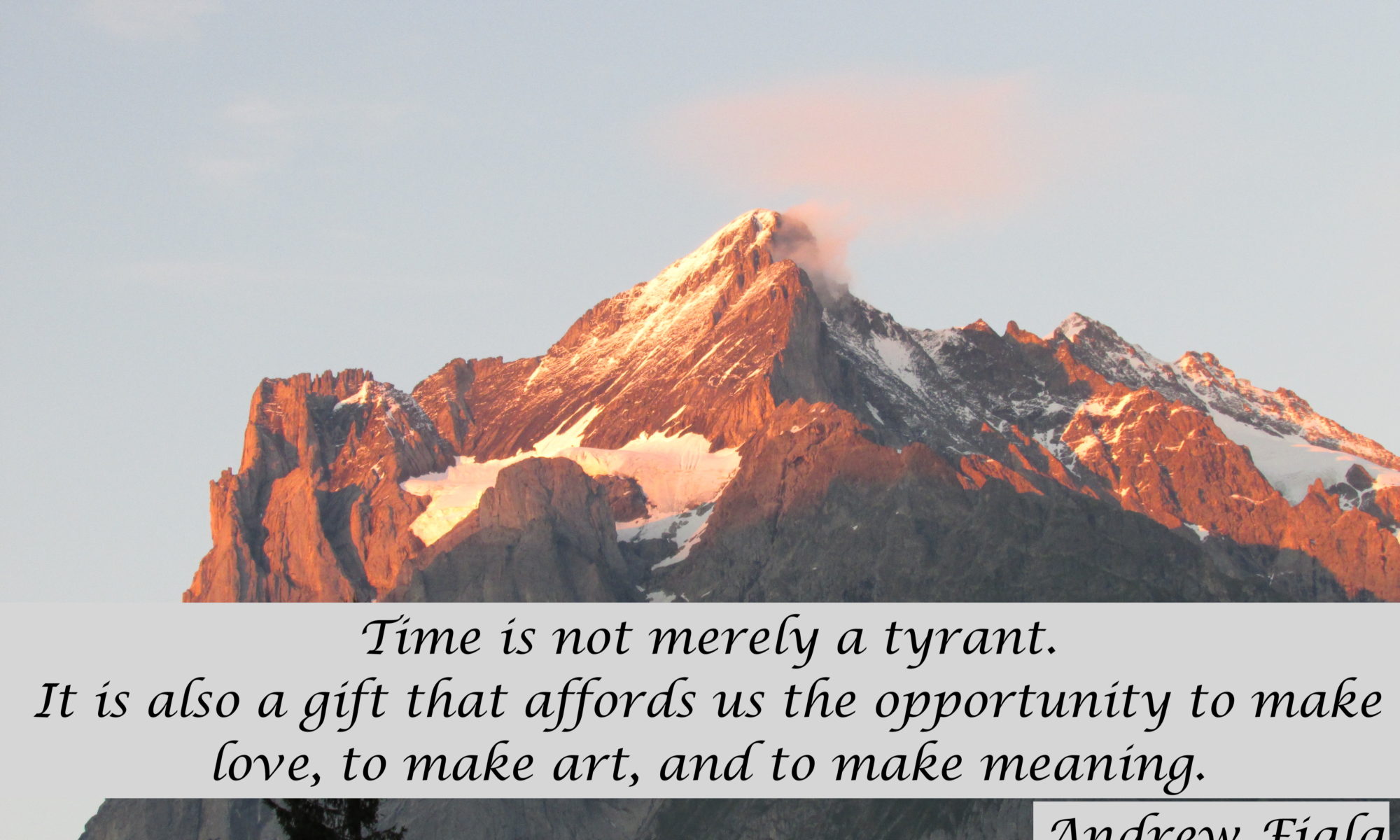
Leap year reminds us that time is something we measure for our own purposes. Science shows that the sun and the seasons are fixed by natural laws. But the poets and philosophers teach that time is ours to enjoy. It is not merely a tyrant, as Shakespeare warned. It is also a gift that affords us the opportunity to make love, to make art, and to make meaning.
Trump and the Social Construction of Crime

Fresno Bee, February 23, 2020

Crime is a social construction. While this point has often been made by left-wing scholars, President Donald Trump has brought this idea to life.

The president has accused the criminal justice system of bias. He suggests that prosecutors and judges are engaged in a process that is arbitrary and subjective. The president denounces legal inquiries as witch hunts and hoaxes.

He also calls things he does not like criminal. When Nancy Pelosi ripped up his State of the Union speech, the president said that that was “actually very illegal.” It wasn’t. He routinely suggests that some people should be in jail, chanting “lock her up.”

At the same time, he lets others out. The president called the prosecution of his friend Roger Stone “ridiculous.” He has pardoned white collar criminals, tax evaders and supporters such as sheriff Joe Arpario. Last year, he pardoned a Navy Seal for war crimes.

But before Trump, the social construction of crime had already become obvious. Marijuana and homosexuality were decriminalized. Sentencing reform changed punishments. The death penalty fell out of favor (although Trump wants to bring it back). And sanctuary cities have refused to cooperate with federal immigration authorities.

Some claim a higher power defines crime and punishment. But there has always been a disconnect between moral law and criminal law. And those supposedly transcendent sources of moral law have been reinterpreted.

Jesus was among the re-interpreters. He refused to stone the woman taken in adultery. He offered a radical revision of the old “eye for an eye” punishment scheme, advocating that we turn the other cheek instead.

Not only do the punishments change; what counts as a crime also changes. For a very long time it was not a crime for a husband to rape his wife. It was not until the 1970s that marital rape was considered a crime. Nor was it a crime for a slave owner to rape a slave.

Speaking of slavery, the Bible permits it, as did the U.S. In the American slave system, it was legal to kill your slave. The colony of Virginia passed a law in 1705 acquitting slave owners who kill their slaves, “as if such incident had never happened.” If the law permits rape, slavery and murder, that makes you wonder about the moral basis of the law.

Now, we might protest, those were the bad old days. Our laws are better today. But are they? And how would we know?

Crime and punishment are malleable. They depend upon historical context, geography and jurisdiction. In some countries, blasphemy is illegal, along with homosexuality and abortion. At one point these things were also illegal in the United States. But some Americans argue that abortion is murder. They want to re-criminalize it.

Crime and punishment are defined by the law. But the laws are made by human beings. Over time, the laws change. We hire human beings to enforce these changing laws. Even within the criminal justice system there is room for discretion. And in the case of pardons, the executive power can overrule the justice system.

This may cause us to throw up our hands in confusion and despair. But it can also be empowering. The system of crime and punishment is entirely up to us. Society defines what counts as a crime. Society also determines how crime will be discovered, prosecuted, and punished. We, the people, have the power to determine all of this.

This means that we can get creative, if we want to. Some activists have called for prison abolition. Others are advocating for restorative justice and other alternatives to incarceration. What about using brain science and creative chemistry to deal with deviance?

It’s difficult to imagine what the future might look like. But the history of crime gives us a clue. We can predict that the future will be different. And the president’s attacks on the whole system of crime and punishment makes one wonder whether it’s time to put everything on the table and think it all through again. If crime is a social construction, then it is up to us to figure out how we want to define it and how we want to punish it.

Gandhi, Judgment, and Truth

Fresno Bee, February 14, 2020

One local effort to dig deeper deserves our attention. The “Interfaith Scholar Weekend” (ISW) is an ongoing attempt to think critically about religion. This effort began in 1998. It has grown into an annual crosstown collaboration of religious and educational organizations.

The subject this year is Mahatma Gandhi. From February 21-23, the ISW will host Gandhi’s grandson, Rajmohan Gandhi, a professor from the University of Illinois. Professor Gandhi will speak at events at Fresno City College, Fresno State, Temple Beth Israel, and Wesley United Methodist Church (the Fresno State Ethics Center is a co-sponsor).

Jim Grant, the ISW chair and director of social justice ministry for the Diocese of Fresno, explained that the Central Valley has a robust and growing interfaith community. He shared stories with me of a number of examples of how people from different local religious communities have worked together to defuse religious tension, injustice, and hate.

The impetus for this year’s visiting scholar is the 150th anniversary of Gandhi’s birth. Gandhi is revered as a “mahatma”—a great soul or saint. Gandhi helped to liberate India. He developed strategies of active nonviolence that were employed in the American Civil Rights movement.

But Gandhi has his critics. Some say he did not speak out forcefully enough about racism and India’s caste system. Others blame him for not preventing the partition of India and ensuing violence among Hindus, Sikhs and Muslims.

In light of this, it is worth noting that local Sikhs and Muslims are among those sponsoring the visit of Gandhi’s grandson. The point of this event is to think critically. What we might learn is that no one is perfect.

Gandhi’s grandson makes this point in his recent book, “Why Gandhi Still Matters,” where he describes his grandfather as a “fallible” man. But he points out that the Mahatma is held to a higher standard. Gandhi is blamed for not overcoming the challenges of his own time and for “not solving all of the problems of our age.” But his grandson reminds us that no one can solve all of our problems. Perfection is too high of a standard.

This message is important, I think, for efforts to develop tolerance. We often give our own preferred saint the benefit of the doubt, while leaping to condemn the heroes of the other side. This is a truism of the history of religious conflict.

It is also a feature of our fractious political life. Some applaud Pelosi. Others cheer on Trump. Some love Rush Limbaugh. Others hate him. Each side vilifies the other.

The philosopher Immanuel Kant once said that nothing straight can be built from the crooked timber of humanity. Gandhi might agree. With regard to religion, the Mahatma said, “I hold that all religions are true but imperfect inasmuch as they are presented through human agency and bear the impress of the imperfections and frailties of the human being.” In simpler terms he explained, “All religions are true; all religions have some error in them.”

The problem, of course, is that we are quick to see the errors in other people’s religions while remaining blind to faults in our own. The solution is to look more carefully, dig more deeply, and think more critically. Gandhi gives us another clue. He said, “I claim no perfection for myself. But I do claim to be a passionate seeker after truth, which is but another name for God.”

We are all flawed. If Gandhi wasn’t perfect, then neither are we. But like him, we can seek truth by trying to learn more, think better, and judge less.

IF YOU GO

The Fresno Interfaith Scholar Weekend will be held Feb. 21-23. The opening event is a free lecture, “Truth in an Age of Untruth,” and it starts at 7:30 p.m. in the Old Administration Building at Fresno City College, 1101 E. University Ave. For the full schedule and to learn more about the featured speaker and activities, go to http://interfaithscholar.org/.

Quarantine Ethics

Fresno Bee, February 9, 2020

Coronavirus quarantines are spreading. Fifty million people have been quarantined in China. Hong Kong has quarantined people from the Chinese mainland. A cruise ship remains quarantined in Japan. The U.S. banned entry for people traveling from China while slapping a 14-day quarantine on Americans returning from China.

The Chinese government has warned of fear-mongering. But a pandemic is a scary thing. Contagion conjures images of the Black Death and the zombie apocalypse. But quarantines are also frightening. Imagine desperate people pounding on the gates that lock them in with the disease.

Quarantines may not seem controversial, when viewed from the standpoint of public health. The goal is to prevent infected people from spreading the disease. To defend the majority, some people’s liberty is limited.

China, a country of 1.4 billion people, may not be overly concerned about violating the rights of 50 million. But it would be difficult to imagine this happening in the U.S. If the disease spreads here, would we be willing to restrict the liberty of 50 million Americans?

One concern is people in the quarantine zone who are not yet infected. A quarantine that puts healthy people at risk seems to violate the basic principle of medical ethics that demands that we “do no harm.”

Some may simply bite the utilitarian bullet and say that in the name of the greater good, some healthy people’s rights may be violated. But the healthy person may disagree. Would a healthy person in quarantine be wrong to try to escape? And if they got infected, would they have a right to sue for damages?

Quarantines are not as easy to justify as we might think. Bioethicist George Annas has argued that quarantine is an “arbitrarily draconian” measure and a “relic of the past that has outlived its usefulness.”

The practice has medieval roots. Centuries ago, plague prevention required 40 days of isolation. The name “quarantine” comes from the Italian word for forty. But why 40 days? Well, in the Bible, the number is connected to a mystical process of purification. It rained for 40 days and nights during Noah’s flood. Moses wandered for forty years in the desert. And Jesus fasted for 40 days.

We no longer believe in supernatural numerology. The proposed quarantine for coronavirus is based upon a 14-day incubation period. But scientific and political judgment can be influenced by cultural factors.

Consider the exotic source of recent pandemic threats: Ebola comes from Africa; coronavirus from China. Racial and cultural assumptions may make us think in terms of preventing “them” from infecting “us.” Quarantine can reinforce discrimination and prejudice.

A long-run solution to pandemic threats must work in the opposite direction. We ought to improve the sanitary conditions and general health of people in the developing world — and here at home. If people everywhere had access to adequate health care, the risk of contagion would be minimized. Quarantine is a short-term solution to a problem that is ultimately about global justice in health care.

A related consideration is science education. In the background is the anti-vaccination crowd. An outbreak of measles that killed at least 63 people last year in Samoa was blamed on anti-vax messaging. A prominent anti-vaxxer was arrested. In the U.S., the First Amendment would seem to prevent the arrest of those who dispute the science of public health. Nonetheless, science literacy and education about preventive health care are essential.

Finally, it is worth considering whether we have an obligation to give special care to those who are quarantined. It would be wrong to shut the gates and leave people in quarantine to suffer. In fact, since we are violating their liberty and putting them at risk for our benefit, we may even owe them special compensation.

Critical thinking about all of this is made more difficult by panicked responses. Unfortunately, these are reactionary times. Fear of contagion is exacerbated by zombie movies and rising animosity toward immigrants. Feverish overreaction must be moderated by common sense and careful consideration of medical ethics.

A quarantine is a morally problematic emergency last resort. We should work harder to prevent those emergencies in the first place. We ought to care for the sick. And we must address the long-term challenges of global public health.

Impeachment and Corruption

Fresno Bee, February 2, 2020

Our constitutional crisis is also a moral one. The impeachment saga shows us deep-seated corruption. One side must be lying. That means that half of the political establishment is fundamentally flawed.

Either the Democrats are engaged in “demented hoaxes, crazy witch hunts and deranged partisan crusades,” as President Donald Trump said. Or the president has “betrayed the nation by abusing his high office to enlist a foreign power in corrupting democratic elections,” as Adam Schiff put it.

Something is rotten in America. We disagree about the source of the stench. But after this is all over, no one will be satisfied. Most will continue to believe that something stinks.

The accusation of corruption flows freely in both directions. The Trump camp accuses Joe Biden of nepotism. Biden’s son got a high-paying job in Ukraine, where the taint of corruption is especially pungent. But power and money infect the whole system. Ivanka Trump and Jared Kushner parlayed their connections to move from Manhattan to D.C.

Nepotism and cronyism infect everything. The Republican leader of the Senate, Mitch McConnell, is married to a Trump cabinet member, Elaine Chao, the Secretary of Transportation. The senator declared in December, “I’m not an impartial juror.”

This admission reinforces what many Americans think about the legal system anyway: that it is rigged. The powerful get away with stuff and the powerless get stuffed away.

Or consider John Bolton. If he has information relevant to Trump’s impeachment, he should just speak up. If a kid knows something, teachers and parents encourage him to spill the beans. Law enforcement says, “if you see something, say something.” But that does not apply in Washington, where what you say depends upon personal and political advantage.

We hold our children to a higher standard than our leaders hold themselves. But shouldn’t it work the other way around? Shouldn’t there be a higher standard for those who are entrusted with power and authority?

During Bill Clinton’s impeachment, the late Sen. John McCain said that if a military officer were caught doing what Clinton did, that officer should resign. He explained, “I do not hold the president to the same standard that I hold military officers to. I hold him to a higher standard.” He continued, “Presidents are not ordinary citizens. They are extraordinary.”

McCain’s point echoes a proverb made famous by Spiderman: “with great power comes great responsibility.” This idea sounds naïve today. After Bill Clinton and Donald Trump it is difficult to believe that anyone lives according to a higher standard. Priests mess with kids. Sports heroes cheat. Politicians lie. And no one seems worthy of our respect.

That lesson can be liberating. If everyone is corrupt, then there is no reason to feel guilty or inferior. But the liberation of lowered standards is dangerous, if it gives us a license to sin. If our leaders lie and cheat, why can’t we?

The value of a moral life persists, of course, despite what the powerful do. We know that truth and integrity matter in family life, in school, and in professional life. And at the end of the day, you have to live with yourself. The powerful may not be worthy of our respect. But you should want to respect yourself.

To teach our children to live well, we ought to encourage them to do the opposite of what they see in Washington. To find moral models, we should look in another direction. Let’s celebrate the unsung people in the moderate middle of things. Nurses, teachers and all kinds of ordinary people do their jobs every day with honesty, integrity and compassion. We learn to be moral by watching grandmothers, coaches, scientists and neighbors – not by watching the political class.

Good people tell the truth. They strive to be impartial. They work hard. They care for their families and help their neighbors. Good people do not live according to a calculus of personal advantage.

Ordinary moral decency may not help you in politics. But it will help you live a life that you can be proud of. In the end it is important to hold yourself to a higher standard, even if the powerful live according to a lower one.