The Power of Truth

As the doctors and scientists struggle to contain the coronavirus, there has been confusion and disinformation coming out of the White House. And still the partisanship and polarization regarding truth continues.

They say this is a post-truth era.  But the truth is that human beings have never really been fond of truth.  When was the “truth era,” exactly?  During the “good” old days of racism, sexism, and colonialism?  And what about the long history of religious superstition and scientific ignorance?  Truth has usually been in short supply.

Given the long history of untruth, it is not really surprising that the Washington Post reports that President Trump has made over 16,000 false or misleading statements since taking office three years ago.  He is not the first liar to live in the White House, only the greatest.  The President, of course, claims that the Post is fake news.

But so what?  We’ve got other things to worry about.  For many of us, life is good.  We’ve got smartphones and Youtube, Instagram and all-star games.  The consumer society is pleasant.  We even get a perverse thrill watching the outrage flow from Washington.

Or at least we did, before the coronavirus. Maybe we are ready to return to truth, to a view that is informed by science instead of partisan spin.

But let’s face it, when it comes to truth, we mostly don’t care.  If you put together a wish list of the things you want in life, would truth make the list?  My guess is that for most people, truth would not make the list.  We are mostly content to live with white lies, unproven superstitions, and unfounded ideologies.  Very few feel compelled to challenge powerful lies or the lies of the powerful.

It is not that truth is somehow weaker than falsehood.  Rather, the issue is that truth and falsehood are usually less important to us than other things.  Mostly we want love, friendship, money, and peace of mind.  A few idealistic people want justice or universal harmony. 

But even the idealists will accept a few lies on their way to utopia.  Many people are simply not motivated by the love of truth.  And others subordinate the love of truth to their love of other things.

I have been thinking about truth, while re-reading Vaclav Havel’s essay “The Power of the Powerless,” which is about dissent under totalitarianism.  Havel was a Czech dissident.  He was imprisoned for his views.  But he went on to become the President of post-Soviet Czechoslovakia. 

Havel advocates for living within the truth.  But he explains how easy it is to live within a lie.  While his focus is on Soviet-bloc totalitarianism, he offers a prescient warning about the combination of totalitarianism and consumerism.  Over forty years ago, in 1978, he called out “the omnipresent dictatorship of consumption” fueled by advertising and a “flood of information.” 

He also understood that most people simply play along with the prevailing ideology.  Under old-school totalitarian regimes, the dissidents were jailed, tortured, and worse.  But Havel points out that mostly, people play along because everyone else is playing along.  We find a sense of belonging and purpose in joining with others under an ideological umbrella. 

Havel explains, ideology as “a veil behind which human beings can hide their own fallen existence, their trivialization, and their adaptation to the status quo. It is an excuse that everyone can use.” 

This explains much about the power of partisanship and the failure of truth to capture our attention.  We sense that life is out of balance.  But rather than confronting our dis-ease directly, we retreat to a familiar ideology and find comfort within it.  Truth is irrelevant when what we seek is security and a sense of belonging. 

But Havel also gives us hope.  At some point, people simply stop playing along.  They stop repeating the party line.  Someone points out that the emperor has no clothes on.  And soon those who played along look like fools.  Living within a lie only works if the lie is universally accepted. 

The voices and symbolic gestures of the dissidents draw attention to the lies.  Those dissidents will be punished, attacked, and suppressed.  But in the long run, Havel’s own story reminds us that there is hope that the dissident can disrupt the system with the power of truth.  And the present crisis reminds us that truth is often a matter of life and death.
Imagining a better economy after the Covid crisis

Imagine kinder future

Fresno Bee, March 27, 2020

The president wants to resurrect the economy by Easter. The scientists say it is too soon to get back to normal. But is getting back to normal really the solution?

Easter is a celebration of transformation. Maybe we should imagine a transformed economy on the other side of the corona crisis. We could even imagine the kind of economy that Jesus would hope for: an economy that prioritizes caring for the poor, the sick and the downtrodden.

The government is going to give direct handouts to people and extend unemployment benefits. Now is a good time to consider the idea of universal basic income. The stock market collapse is killing people’s retirement savings. Now is a good time to imagine how we might ensure a decent retirement for everyone. The pandemic also gives us a reason to consider disparities in public health and access to health care. And social distancing is an opportunity to rethink making a living and living well.

Henry David Thoreau said that there was more to life than making a living. He asked us to imagine “how to make getting a living not merely honest and honorable, but altogether inviting and glorious.” It may be too much to ask for an economy that is honest, honorable, and glorious. But we could benefit from a less materialistic approach to life.

The frantic pace of consumer society helped propel the pandemic. In a simpler time, people lived in small towns and villages, more in tune with nature, more connected to friends and family. A more localized economic model might impede future pandemics.

But reverting to pre-industrial life is not a viable solution. Instead of going back, let’s imagine how we might leap forward. A new vision of human life is made possible by the infrastructure that is helping us through this crisis.

People have rapidly shifted to working remotely. A generation ago, this would not have been possible. Universities have quickly gone online. Students have vacated dorms and professors teach from home. People don’t waste time commuting. Pollution is down as a result. Perhaps we have stumbled upon a new paradigm in business and education.

We are adapting in other ways. This week a couple in Green Bay, Wisconsin got married. Because of social distancing they had to invite their friends to participate via Facebook Live. That’s a cool idea, facilitated by technology. We are rapidly evolving how we work, play, learn, and love.

Or consider shopping and entertainment. The home delivery economy is thriving. There is a surge in grocery deliveries and restaurant carry-out. Movie theaters are closed. But we’ve got big TV’s and streaming content. Perhaps we’ll exit this crisis with new habits of consumption and amusement.

We may also reconsider the extent to which shopping and entertainment drive our economy and daily lives. This viral sabbatical provides an opportunity to spend more time with family, to re-learn the art of conversation, and to rediscover simpler pastimes, such as reading and playing cards. In my neighborhood, more people are taking walks with their families. It would be great if some of these new habits hung around.

But long walks and card games are not the only solution. The younger generation already spends a lot of time online chatting and gaming. Old folks have been forced to join in. Vulnerable and isolated oldsters need to turn to technology to keep in touch with friends and family. Social distancing will drive us further toward electronic social networking.

These are interesting times. Crises create opportunities for innovation. We need a vision of a post-corona economy that is not simply a return to normal. A new normal can build upon what we’ve discovered under quarantine about making a living and living well. Let’s imagine a new economy that conserves earth resources, avoids future pandemics, and enhances spiritual and mental health.

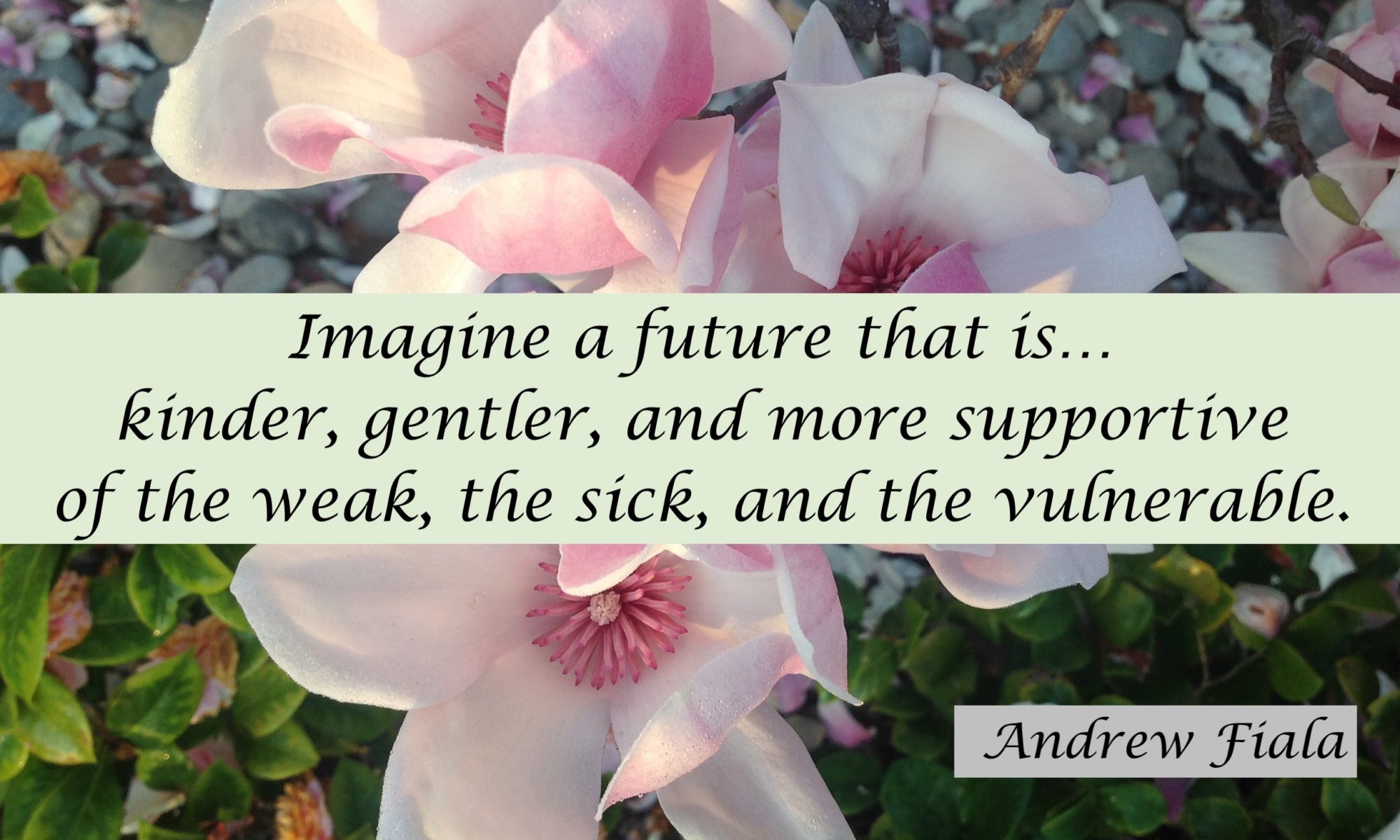
It may seem too soon to talk about life after corona. The scientists tell us it is too soon to reopen the economy. But now is the time to imagine a post-corona future that is kinder, gentler, and more supportive of the weak, the sick, and the vulnerable. Let’s not resurrect bad habits. Instead, let’s seek transformation and renewal.

Compassion, Simplicity, and Patience during Quarantine

Tao Simplicity Compassion Patience

Fresno Bee, March 20, 2020

In times of crisis it is natural to reassess and reprioritize. Once the initial panic subsides, let’s use our time sheltering in place as an opportunity to seek wisdom.

First and foremost, let’s learn compassion. The sick and suffering need our support, as do the isolated and afraid. This is always true. While COVID-19 clogs the headlines, cancer and other diseases have not gone away. Loneliness, depression, and other maladies may be exacerbated by C-19 restrictions. Compassion brings us together in our distress. It takes us beyond narrow self-interest. It helps us grow as we give it away.

Let’s also learn simplicity. We must find joy in living a bit closer to the ground. This is an involuntary sabbath, a sabbatical from consumer culture. A sabbatical is a time of renewal and regeneration. Let’s use this is an opportunity to learn to live a life that is simple, plain and true. Life is good, even without the chaos of consumer society.

Finally, we must learn patience. We are all anxious to get back to our lives. But anxiety undermines well-being. Let’s urge on the scientists and doctors. But a vaccine will take some time. We have to wait for the disease to run its course. While we wait, let’s cultivate the virtue of patience. We’ve lived for too long in a world of instant downloads and fast food. Patience is the ability to defer gratification and endure hardship. This is a life skill. It is closely connected to courage, perseverance, and even to love.

Compassion, simplicity, and patience were celebrated as the “three treasures” of Taoism. This ancient Chinese philosophy is useful in times of crisis. The wisdom of Taoism teaches us to be yielding, flexible, and resilient. One translation of the three jewels calls them mercy, moderation, and humility. Another translation speaks of love, unpretentiousness, and modesty.

Whatever we call them, these three virtues are essential in a time of crisis. And even in ordinary times, it is wise to be merciful, mellow, and moderate.

Without compassion, we end up isolated and alone. In a crisis, there is a tendency to think that it is “every man for himself.” But this only makes things worse by increasing loneliness, conflict, and fear. Compassion is the root of human connection. Others need our support just as we need theirs. We are all in this together.

If we do not value simplicity, we will bristle at the restrictions imposed upon us in this crisis. Anger and resentment are not helpful. Even in times of crisis, plain and primary goods can be found. Without simplicity, we fail to find contentment in what we have. Right now we can enjoy humor and friendship, natural beauty and art, music and knowledge.

Finally, patience allows us to endure hardship without losing hope. Without patience, we act rashly and without foresight. In a crisis, quick decisions are important. But quick action must not lose sight of the long run. Panicked reactions make things worse. Fortitude, persistence, and hope makes things better.

These three treasures are always valuable. But they are easily forgotten in the frantic pace of what we call ordinary life. Our culture encourages individualism at the expense of solidarity. It glorifies consumption and wealth. It teaches us to be intolerant and unkind.

Let’s learn from the present crisis to live better when things get back to normal. Or better yet, let’s imagine a new normal. For a while now, it has seemed that our way of life has been unbalanced. For too long, we have lived at a furious pace. The planet is groaning under the weight of human consumption. Our social lives have become fragmented. Our political life is polarized. The truth has been lost under blizzards of bull. Our physical and mental health suffers from a life out of balance.

This mandatory pause in ordinary life—our viral sabbatical—is an opportunity to re-balance things and build better habits. Let’s learn to enjoy simple goods and reduce over-consumption. Let’s work to develop patience and forbearance. Let’s learn to care better for the sick and the suffering. And let’s view this crisis as an opportunity to unearth the treasures of wisdom.

Critical Thinking in Time of Crisis

Fresno Bee, March 15, 2020

Coronavirus uncertainty leaves us wondering what we should believe and who we should trust. This is made more difficult by partisan division and a general distrust of authority. Many authorities think that this illness is serious. Some countries have implemented drastic measures. Businesses and campuses are preparing contingency plans. Events have been canceled.

But the president suggests that this is fake news. On Monday, he tweeted, “The Fake News Media and their partner, the Democrat Party, is doing everything within its semi-considerable power to inflame the CoronaVirus situation, far beyond what the facts would warrant.”

But how do we know what the facts warrant? This question holds for a variety of issues: from climate change and the stock market to the threat of terrorism and dietary guidelines. Beyond these contemporary questions, there are deep questions about history, religion and the meaning of life. Did Jesus really walk on water? Did Shakespeare himself really write all of those plays and poems? Is there a soul that survives death?

In many cases, we lack direct access to the facts. Miracles happen far away and long ago. Historical facts rest on fragile threads of evidence. And death remains an undiscovered country from which no traveler returns.

Layers of secrecy and confidentiality in government and business make it difficult for ordinary people to judge. Even when we have evidence, we lack the expertise to evaluate it. The facts about climate change and the coronavirus have been published by scientists. But you need substantial training to understand these facts and assess the risks.

Given this problem, it is often wise to say “I don’t know.” Philosophers have routinely called for intellectual humility. Socrates famously said that the only thing he was certain of was that he lacked certainty.

But intellectual humility doesn’t help in an emergency. Acknowledging your lack of certainty doesn’t help you decide whether to avoid crowds, cancel a trip or stockpile toilet paper.

Intellectual humility should not be a recipe for inaction. Nor is it the same as lazy indifference. To say you don’t know is not the same as saying you don’t care. Nor does it mean that you should give up on the quest for certainty.

Prudence tells us to work diligently to get the facts and learn how to interpret them. One obvious method involves checking multiple reliable sources. But, of course, we disagree about what counts as a reliable source, which is the present predicament.

The president tells us not to trust the news media. But is the president trustworthy? The Washington Post reports that President Trump has made over 16,000 false or misleading statements since taking office. Trump calls that fake news. The polarization of information makes critical thinking more difficult.

This is not a new problem. There never was a time when people agreed about the facts or about who counts as an expert. The apostles believed Jesus was a resurrected messiah. Others thought this was fake news. And the Bible’s doubting Thomas demanded direct evidence.

In addition to gathering evidence and gaining expertise, we need to think about the burden of proof. The more the risk, the more the need for proof. If there is a risk of a deadly disease, you ought to take precautions, especially if those precautions are minimally invasive. If more hand washing prevents a pandemic, then let’s all wash our hands. But when it comes to cancellations and quarantines, the risk assessment becomes complicated. At some point, a leap of faith is required.

This is difficult and frustrating. But life is a series of decisions made without certainty. And at least we are free to make these decisions for ourselves. It’s a sign of our freedom that even the authorities disagree with each other. In ancient Athens, they killed people like Socrates who questioned authority.

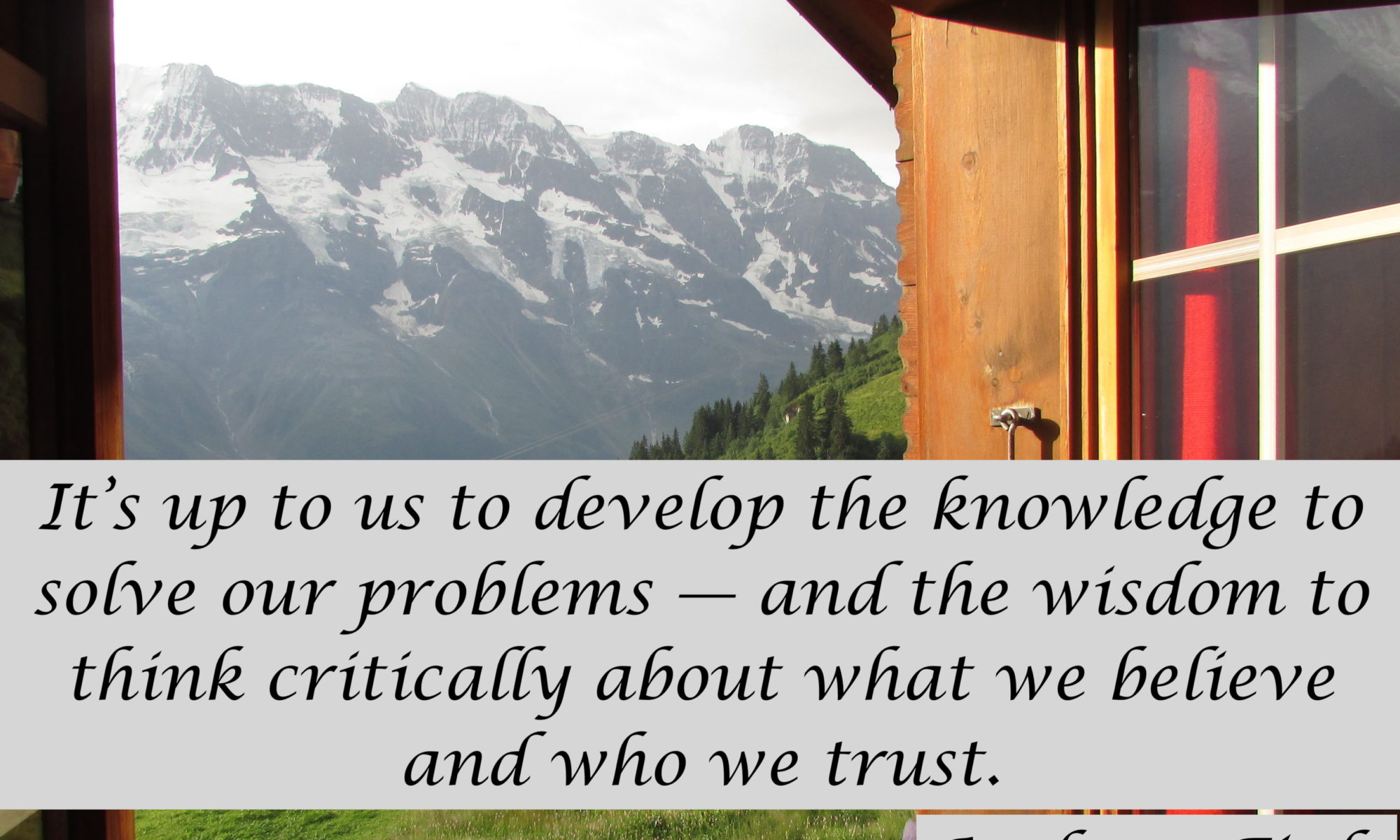
Today, there are no undisputed authorities, in politics, religion, love, or life. There is no secret revelation that will cure a doubting Thomas. And there is no magic safety net to save us from bad decisions. We are on our own. It’s up to us to develop the knowledge to solve our problems — and the wisdom to think critically about what we believe and who we trust.

Don’t Panic

Fresno Bee, March 8, 2020

A virus spreads. The stock market tumbles. Store shelves clear. People are freaking out. The best advice for times like this is: don’t panic.

Panic undermines clear thinking and makes things worse. Luckily, the cure is well known. Get the facts. Seek a broader perspective. Focus on what is under your own control. Develop habits of calmness and self-control. And acknowledge that sickness and death are part of life.

The word “panic” comes from the name of the Greek god Pan, a feral god who haunted the wild places. Pan was the god of the nightmare and the uncanny. Pan would terrify and possess people, causing panic.

One solution is to stop believing in such superstitions. The wilderness is not haunted. Gods cannot possess us. Nor is the coronavirus sign of the Apocalypse, as some preachers have suggested. And while some Christians called for a global day of prayer to stop the coronavirus, what we really need is a vaccine, better hygiene, and a robust system of public health.

The ancient philosopher, Epicurus, offered a simple cure for panic. He told us not to worry about the gods. They are busy keeping the universe in motion. They have no interest in harming us.

But if we are going to pray, we might pray for wisdom and tranquility. This is what Socrates would have prayed for. In fact, at one point Socrates offered a prayer to Pan himself. He asked the god for integrity of soul. As Socrates put it, “grant me a beautiful soul in which the inner and outer self are united as one.”

A beautiful soul is stable and secure. It is at one with itself. It dwells in the company of truth. It is moderate and self-possessed. And it is resistant to panic.

The philosopher Seneca said the best way to prevent panic is to understand it. You need to understand that when “the habit of blind panic” takes over, the mind runs away with itself.

When we are not prepared for fear and hardship, panic strikes. Seneca explains, “the unprepared are panic-stricken even at the most trifling things.” And when uncontrollable and “witless” panic arrives, things get worse. Seneca’s solution is to adopt a larger point of view that puts life, death, and panic itself in proper perspective.

It is uncertainty that keeps us on edge. The fear that occurs out in the wilderness is like the fear of the dark. We’re not sure what’s lurking out there. That’s why knowledge helps. There is nothing in the dark that is not also there in the light.

It also helps to understand that fear is natural and has a purpose. There is a tightness in the belly and shallow breathing. We scan the environment looking for threats. This is the flight or fight instinct ready to go. If a threat emerges, the body is ready to react.

But this can get out of control, especially when everyone else is on edge. Panic is contagious. We sense the anxiety of our neighbor. If even a minor spark lights the fuse of anxiety, the herd erupts into a frenzied stampede.

This is why solitude is helpful. Peace of mind is easier to find if you keep your distance from the crowd. One easy way to prevent panic is to turn off your television and stay off social media.

But for some people, solitude causes panic. There is the fear of missing out and the depressing dread of loneliness. True solitude is not lonely. It is peaceful and centered, a way of finding yourself at home in the world.

Finally, the philosophers teach that we must understand that death, loss, and injury are common. Tornadoes, earthquakes, and deadly diseases have always existed. They always will. Something will eventually kill each of us. No one gets out of this life alive.

When we come to terms with our own mortality, panic gives way to acceptance. To live well is not to fearfully cling to life. This moment will not last long. So why waste it on worry? Life is not measured in length but in depth. The shallow panting of panic prevents us from breathing deeply and living well.