
Living In the Shadow of Doomsday

Fresno Bee, September 11, 2022

Down in Antarctica, a massive glacier is rapidly melting. The media have dubbed this 80-mile-wide ice sheet “the doomsday glacier.” Reporters warn that when the glacier collapses, it could raise global sea level by 2 feet. The collapse could happen as soon as 2031.

We are a long way from Antarctica. But it’s easy to picture the ice melting during our roasting September heat wave. My car thermometer hit 117 the other day.

It does seem like our “house is on fire,” as Greta Thunberg put it in a speech at the World Economic Forum in Davos, Switzerland a couple of years ago. Thunberg said, “I want you to panic.” She continued, “And then I want you to act. I want you to act as you would in a crisis. I want you to act as if our house is on fire. Because it is.”

When speaking to the elites at Davos it might help to ring the alarm bells loudly. Our leaders are currently throwing a few buckets of water at an advancing wildfire. They need some political heat to get them moving.

But what about the rest of us? Should we panic? Eco-anxiety is a serious problem, as I discussed in a previous column. Nihilism and despair are as deadly as the rising heat. If doomsday really is right around the corner, we might be inclined to crank up the AC, pull down the blinds and abandon hope.

Doomsday is pretty depressing, after all. But let’s think critically about our language for a moment. Words like “doomsday” cause panic and despair. Two feet of sea level rise is bad. But the world won’t end. Media literacy can help prevent overreaction. Doomsday is just a word. It was chosen by the headline writers to capture your attention.

It also helps to recall that human beings are adaptable and inventive. We likely won’t prevent climate change from re-shaping civilization. But human beings change and adapt. The history of civilization is a story of our adaptability and inventiveness. The future won’t be easy. And there will be pain. But it’s better to embrace the inevitability of change than to hide in the closet.

We had some practice in dealing with radical change during the COVID-19 pandemic. Things fell apart for a time. Remember the fear? The uncertainty? The toilet paper shortages? But we adapted. The response wasn’t perfect. Many people died. Political life became polarized. And we’re still recovering. But here we are. Life goes on. It’s different today than it was a few years ago. But each dawn is different.

We need to develop a kind of Stoic resolve, leavened with creativity, humor, love, and joy. One of my mentors, the philosopher John Lachs, described this as “Stoic pragmatism.” He encourages us to confront tragedy with “equanimity born of joy.”

We need endurance and acceptance but also good humor and energy. When things get rough, as they always do, it helps to smile into the pain. Shake off the suffering and keep going. That’s what marathon runners do. It’s what inventors, entrepreneurs, and artists do when they hit a roadblock. Make a joke, suck it up, and get back to work.

We have strayed pretty far from the doomsday glacier. But the end is never really far away. On any given day, millions of people experience their own private doomsdays. Loss is inevitable. Everyone you know and love eventually ends up dead. And no civilization lasts forever.

In admitting our mortality, there is the risk of despair. But it is better to look into the abyss with open eyes than to live in denial. And once you accept the inevitable, you can discover acceptance and even joy. John Lachs put it this way in a book he wrote about death and dying: “Of course we die, but why should that spoil breakfast?”

That cheerful nugget of wisdom is helpful. This doesn’t mean that we should just smile and wave without taking action. The house is on fire. There’s work to be done. And we’re going to have to adapt. But freaking out doesn’t help. When doomsday arrives, it’s better to greet it with creative good humor than with anxiety and despair.

Read more at: https://www.fresnobee.com/opinion/readers-opinion/article265519076.html#storylink=cpy
Teaching and learning require love and play

Play learning

Fresno Bee, August 21, 2022

The headlines talk of failing schools, teacher shortages and lost students. There are controversies about religion, race, gender and sexuality in the schools. In the background is anxiety about violence. Education has become a battleground.

One solution is to simply ban controversy. In Texas, a school district removed controversial books from the library, including “Anne Frank” and the Bible. In Wisconsin, a school board banned flags, badges and slogans, including Pride flags, Black Lives Matters banners, and We Back the Badge signs. And here in Fresno, Bullard High School is planning to ban cell phones. An article in The Bee connected the cellphone ban to the controversy about racist photos taken on phones at Bullard High last year.

Schools have become a breeding ground for controversy. But let’s not turn schools into spiritless places where burned out teachers and disengaged kids go through the motions of education. That old Pink Floyd video comes to mind, in which students plod into a meat grinder.

We are so focused on controversy that we often miss the good news. So here’s a bit of good news. A recent study by Paul E. Peterson and M. Danish Shakeel concludes that kids are learning more now than they did 50 years ago. They analyzed data stretching back to 1971 that shows improvement since then in math and reading. This echoes the fact that IQ scores have also improved over time.

Their study notes that this improvement is true across demographic categories. The researchers admit that COVID was a recent setback. But they conclude, “Contrary to what you may have heard, average student achievement has been increasing for half a century.”

And yet the prevailing image is demoralizing. Perhaps we are too focused on nitpicking diminishing returns. As things generally improve, you start to freak out about small setbacks and minor blips. But all of this nitpicking can be disheartening.

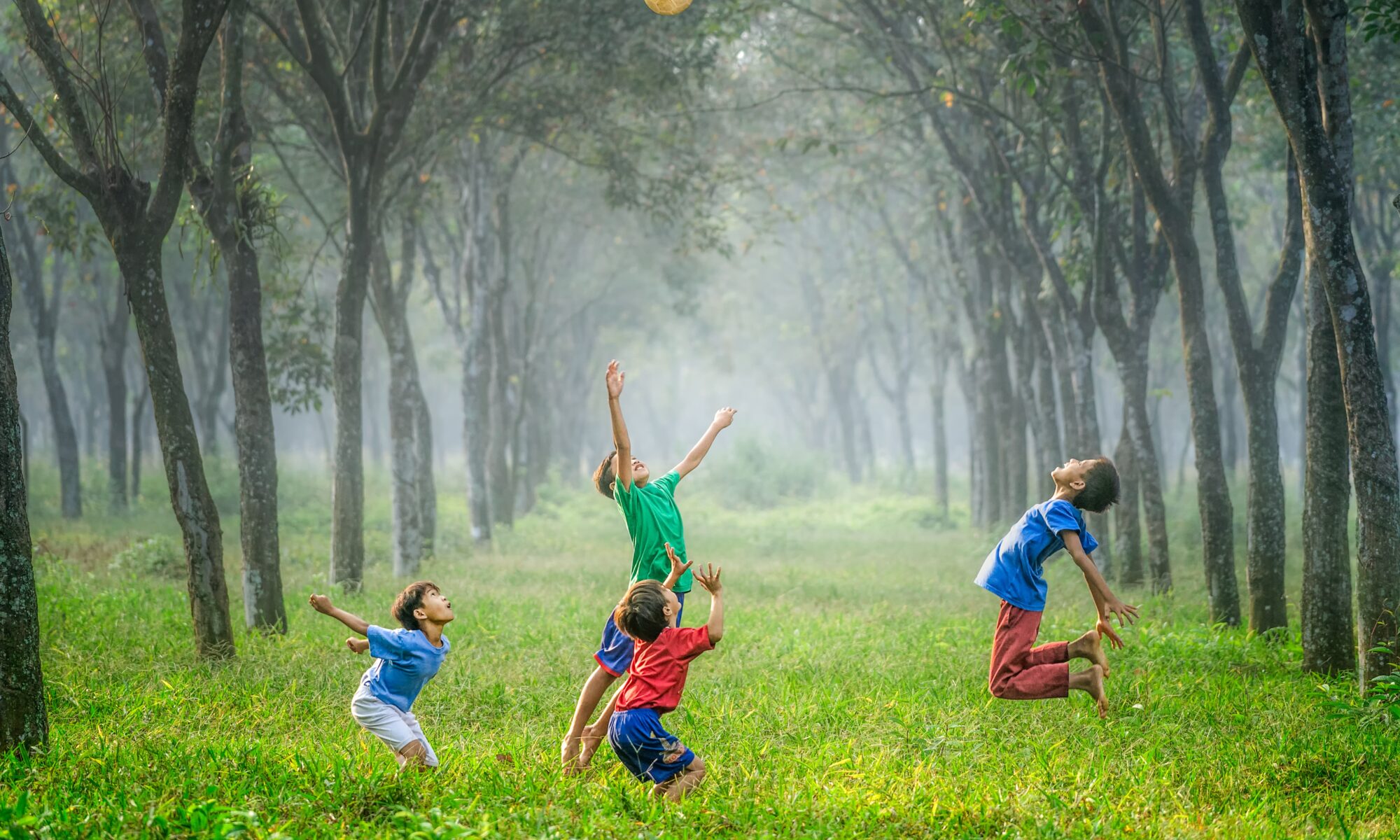
It might help to remind ourselves that kids are innately curious and that teachers love to help them learn. The culture war approach to school misunderstands teaching and learning. War destroys things. It doesn’t build them up. Teaching and learning come from a place of love, empathy, creativity and play.

This is an ancient truth about teaching and learning. Socrates thought love was the guiding spirit of education. He challenged his students to think about difficult things. And he chastised them when they went astray. But he also loved them and believed that his students had the potential to improve.

Teaching and learning require a playful spirit. Mechanical and compulsory training may work for animals and for human beings forced to master monotonous tasks. But human beings learn the best and highest things through play and exploration. Plato thought that we are most fully human when we are free and at play.

Only humans engage in sports, games, drama, storytelling, art, and music. These are all forms of play. They require practice and discipline — but they are supposed to be fun. Scientific exploration and philosophical speculation are similar. They are ways of playing with concepts, ideas, and with the world itself.

Play involves intense concentration focused on activities we love for their own sake. Genuine play is not done in order to produce some external result or because some coach forces us to do it. Rather, authentic play is self-motivated and free. We play with ideas and explore the world because we are curious and because exploration and creativity are enjoyable. Playing and learning are ends-in-themselves. We do these things because we love them.

That’s the key to teaching and learning. Teachers love teaching because they enjoy playing with ideas and sharing their love of learning with their students. And students learn best when they fall in love with a subject that inspires their curiosity and their innate desire to explore.

The good news is that kids are learning better now than they were a half century ago. Of course, there is more work to be done. But let’s stop freaking out and turning schools into battlefields. It’s impossible to learn or teach in a war zone. Education occurs best under conditions of peace, when playful and curious spirits are given the freedom to question, create, and think.

Read more at: https://www.fresnobee.com/opinion/readers-opinion/article264669234.html#storylink=cpy

The Ethics of Fatherhood: On Rights, Responsibilities, and Abortion

Fresno Bee, June 19, 2022

Since this is Father’s Day weekend and our country is expecting a U.S. Supreme Court decision about abortion, let’s consider how the ethics of fatherhood connects to the ethics of abortion. Abortion is a matter of women’s rights. But as they say, it takes two to tango.

The Roe v. Wade decision briefly mentioned the ancient idea that abortion violated a “father’s right to his offspring.” In the old days, husbands and fathers controlled the reproductive lives of their wives and daughters. But Roe v. Wade established a woman’s right to decide for herself, within limits, about terminating a pregnancy. Subsequent decisions, such as Planned Parenthood v. Danforth, clarified that when there was a conflict between mother and father about abortion, the mother’s right should prevail.

And yet, fathers may want a say in the matter. There are two very different ways this might occur. Some fathers may want the mother to keep the child. Other fathers may want the mother to abort.

This last kind of case has led some men to seek a so-called “financial abortion.” The idea here is that if a mother remains pregnant against the father’s wishes, he should not have to pay child support. So far, there is no legal basis for financial abortion. Instead, if paternity is established, fathers are liable for child support.

I suspect that if more men understood the obligation of child support, they would be more responsible about birth control. If you dance without protection, you may have to pay the piper.

This points us toward the importance of responsibility. It is not only the woman who is responsible for avoiding pregnancy. She didn’t dance alone. And when a child is born, both parents are responsible to care for the child.

Responsibilities are different from rights. Discussions of rights are typically about what we are free to do without interference. If you have a right to dance, you are free to dance with whomever you want, without the government preventing you. The right to an abortion is similar, as a kind of freedom from interference. Rights give us permissions, while responsibility gives us duties.

Responsibilities are harder to enforce. You are free to tango. But no one can force you to dance well. Nor can anyone force you to use protection when you dance. That area of responsibility is left up to the dancers.

Ethical men behave well before, during, and after the tango. They are respectful of the women they dance with. They are not selfish or cruel when they dance. And after the dance is over, they take responsibility for the outcome.

Of course, in our libertarian society, you are free, within limits, to be a bad father. “Dead beat dads” and abusive fathers can be punished. But apart from those extreme cases, there is no legal obligation to be a good dad.

And what do good dads do? Well, they love their children. This means that they are responsible and caring, compassionate and supportive. This lovingkindness extends throughout a child’s life.

One way that paternal love unfolds is through a kind of identification. Paternal love is like the Golden Rule but more intimate. We love our children as ourselves because they remain a part of us. A father’s love is both selfish and selfless. There is no room in paternal love for jealousy, resentment, or cruelty.

Good fathers also respect the autonomy of their children. A father does not own his children. They will transcend him. Good fathers do not impose or command. Rather, they encourage and support, knowing that when the child becomes herself, she will leave him behind.

Again, the metaphor of dancing comes to mind. Dance is responsive. It involves structure. But it also includes freedom. A dance without freedom is a slogging march. But dance without structure is merely a spasm of movement. Somewhere in the middle there is beauty, grace, and joy.

Let’s not forget the importance of paternal love and responsibility as we think about the ethics of abortion in the coming weeks. We have a right to dance. But we also have a responsibility to dance well. And somewhere in all of this, we ought to seek transcendence, joy, and love.

Read more at: https://www.fresnobee.com/opinion/readers-opinion/article262610487.html#storylink=cpy

How much carnage is enough?

Fresno Bee, June 5, 2022

Social policy involves managing risks. But we, the people, are not good at this. We fear some things that are unlikely, while ignoring other very real dangers. In some cases, our fears are irrational. In other cases, our fearlessness is rash and uninformed.

Our track record is not reassuring. Over 1 million people in the U.S. have now died of COVID-19. The Kaiser Family Foundation estimates that 234,000 of the deaths that occurred since vaccines became available could have been prevented by vaccination. But some people are more afraid of the vaccine than the disease.

This makes you wonder whether we will make wise choices with regard to gun violence. The schoolroom massacre in Uvalde, Texas was horrifying. One event like this seems to be too many. The good news is that most schools remain safe. Mass school shootings remain rare. An analysis published in Scientific American reports that since 1966, there have been 13 mass school shootings (with four or more victims). But the carnage is horrific, with 146 people killed.

And many more people die in “ordinary” gun violence and from firearm suicide. The Pew Center reports that in 2020 — the most recent year of complete data — more than 45,000 people were killed by guns. More than half of those deaths (about 24,000) were from suicide.

These numbers are appalling. But how do they compare with other risks? One point of comparison is drug overdose deaths. The National Institutes of Health reports that in 2020, nearly 92,000 people died from drug overdoses. This is another appalling number.

We might also consider traffic fatalities. The California Department of Transportation reports that in 2020, nearly 39,000 people died in car crashes. This means that in 2020, more people died from guns than from car crashes. But more people died from drug overdoses than from car crashes and gun violence combined.

So how do we compare these depressing apples and oranges? Well, the benefits of cars are obvious. We need them to get to work. But are guns such an obvious necessity? Some view them as necessary for self-defense. Others enjoy shooting as a fun hobby. And a few believe that an armed populace prevents the slippery slope toward authoritarianism. Are those supposed benefits worth the annual bloodbath? What level of carnage is acceptable?

Some ask whether any of this is acceptable. Earlier this year, U.S. Secretary of Transportation, Pete Buttigieg, announced the ambitious goal of reducing traffic fatalities to zero. Buttigieg said, “We cannot and must not accept that these fatalities are somehow an inevitable part of life in America.” What if we had a similar goal of zero deaths with regard to COVID-19, drug overdoses, or gun deaths? This seems impossible. But that all depends on what we are willing to trade off and what we accept as inevitable.

Imagine what we’d need to do to eliminate automotive fatalities. We’d need safer cars, better roads, and more enforcement. Drivers would need better training. We’d need to eliminate drinking and driving, as well as cell phone distraction. And we might have to change the speed and size of our vehicles.

A similar comprehensive agenda would be needed to reduce gun violence and drug overdose death. Are we willing to make those kinds of changes? Or are we willing to tolerate all of this misery and death?

Some gun control measures seem blatantly obvious. One step would be to coordinate gun ownership with the legal drinking age, as it is in California. The Scientific American analysis indicates that the average age of mass school shooters is 18. The Uvalde murderer bought his weapon legally after he turned 18. It makes little sense for 18-year-olds to be able to purchase assault weapons, as they can in Texas, when they are not old enough to buy beer or cigarettes.

But even that modest proposal is controversial in a world out of whack. I am frankly not very hopeful that we’ll do much to reduce any of this American carnage. Our nation is too polarized. And we are not good at managing risk. But if we are going to move in the right direction, we’ll need to keep asking how much blood and how many tears we are willing to accept.

Read more at: https://www.fresnobee.com/opinion/readers-opinion/article262100462.html#storylink=cpy

Work Hard and Do Well

Work

Fresno Bee, May 22, 2022

Find good work and do it well. That’s useful advice for graduates. Work is an important part of life. This does not mean that you should toil like a slave. But you should avoid the fantasy of living without working.

As with most things, moderation is crucial. Drudgery is dehumanizing. So too is idleness. Our lifelong task is to engage in meaningful activity. We do that by building, learning, and creating.

Our culture confuses us about this. On the one hand, the overachievers brag about how busy they are. They boast of their exhaustion and gloat about their stamina. These folks spin their wheels, making the rest of us feel lazy and incompetent.

On the other hand, the underachievers prefer the sofa to the treadmill. These are the folks who dream of a life of loafing. Some clever slackers manage to make malingering a way of life. Their indolence makes the rest of us wonder why we bother.

Each extreme undermines our humanity. The rat race turns human beings into rodents. And the lazy loafers are called couch potatoes. A good life is lived in the middle, with enough work to provide us with purpose and enough leisure to provide enjoyment.

Inequality can cause us to misunderstand the value of work. The fortunate few live luxurious lives without breaking a sweat. The eager beavers dream of joining that elite. But most will slave away, feeling that the golden ring is just out of reach. Meanwhile, those at the bottom live a precarious existence. There are a few safety nets. But a crisis or emergency can create a vicious spiral that ends in despair.

In the background is advertising that tell us that wealth is about luck rather than labor. Billboards promote casinos. Online betting is common. And every convenience store sells lottery tickets. Casino fantasies fuel the stock market, cryptocurrency, and NFTs (non-fungible tokens). This is a world where wealth is disconnected from work. The recent decline of stocks and the collapse of crypto reminds us that bubbles burst.

The housing crisis reveals a similar problem. The affluent own vacation homes, while the unhoused sleep on the streets. The value of a house is not determined by its usefulness in providing shelter. Rather, it is determined by a market based on borrowed money.

The credit industry loves this, of course. Debt becomes a way of life. And interest payments chain us to the treadmill.

A further problem is the fantasy of “the dream job.” In reality, there is no such thing. Some jobs are better than others. But the grass is always greener somewhere else. It is wiser to stop dreaming. Put down roots and bloom where you’re planted. Unfulfilled desire breeds resentment.

In a way, the animals have it easier. The bee makes its honey without asking questions. The bird builds its nest without complaint. But we compare our lives to others. We want sweeter honey and a bigger nest. And we are quick to complain.

But complaining does not produce happiness. This is a central idea of ancient Stoicism. Everyone has a job to do. Take pride in doing your duty. This is not always pleasant. Rather, the happiness of work comes from a sense of achievement.

The Stoics said that the only bad jobs are those that exploit and degrade humanity. Prostitution comes to mind as an example. Good work, on the other hand, helps us develop our human capacities.

Artists and scientists can easily find meaning in their work. But so too can gardeners, plumbers, and accountants. You don’t have to win the Nobel Prize to live a good life. You only have to contribute to the common good. At the end of the day, you want to be proud of your work. And at the end of your career, you want to be able to say that I did my job and left the world better for my efforts.

The quality of our lives is not determined by how much we earn or what we own. Happiness is not produced by running on the treadmill. Nor does it come from loafing on the couch. Rather, happiness is created when we find good work and do it well.

Read more at: https://www.fresnobee.com/opinion/readers-opinion/article261627322.html#storylink=cpy