Mother’s Love: The Heart of Ethics

Fresno Bee, May 8, 2022

Motherly love is different from other kinds of love. Brotherly love is connected to the Golden Rule. It tells us to love our neighbors as ourselves. Maternal love is stronger and more intimate. It focuses on the unique personality of those we love.

Fraternal love is about reciprocity. It asks us to respect each other’s rights. But maternal love is deeper and more intimate. It is not always reciprocated. It is not about equality. Rather, it is concerned with the concrete needs of the one who is loved.

The language of brotherhood is common in ethics and politics. The French Revolution celebrated liberty, equality and fraternity. The UN Declaration of Human Rights says, “All human beings are born free and equal in dignity and rights. They are endowed with reason and conscience and should act towards one another in a spirit of brotherhood.” Martin Luther King Jr. said, “We must either learn to live together as brothers or we are all going to perish together as fools.”

The language used here is gendered. Perhaps we should also say that there should be a spirit of sisterhood. Some go so far as to talk about “pregnant persons” instead of mothers.

But on Mother’s Day, we celebrate the spirit of motherly love. Motherly love is oriented toward the well-being of each particular child. Rather than treating all children the same, maternal love focuses on the uniqueness of each child.

Motherly love is emotionally stronger than brotherly love. It is also less egalitarian. Brothers are supposed to treat one another fairly and equally. But mothers love their children in a way that is biased and partial.

Mothers have special relationships with their own children that they simply do not have with other children. Of course, that special relationship works both ways. Most of us are biased when it comes to our own mothers. Toddlers seek their mother’s arms for comfort. And adult children give special care to their mothers.

I wrote about motherly love in a blog post last year on Mother’s Day. A friend suggested that this seems a bit sexist and old-fashioned. To say that motherly love is partial and biased may imply that mothers are ethically flawed.

But this only makes sense if we believe ethics is only about impartiality and equality. Motherly love is as important as brotherly love. Brotherly love gives us equality and respect. But motherly love gives us comfort, care and belonging. Each kind of love is needed.

The impartiality of fraternal love responds to inequality and intolerance. But a mother’s personal love helps us thrive in a world that is cold and indifferent. It is sexist to say that maternal love is inferior. The remedy is to understand that motherly love is important and that brotherly love is not the whole of ethics.

The Golden Rule of fraternal love remains a guide for morality. But what if we also said that we should learn to love other people as mothers love their children? That seems to be the heart of an ethic of compassion, to learn to care for others as our mothers cared for us.

And what about fatherly love? Well, our culture imagines a father’s love as that of a strict and dispassionate disciplinarian. Paternal love is the equality and impartiality of brotherly love taken to a higher level. The image of “God the Father” often portrays Him as loving us despite our failures, while reminding us that we need to straighten up and fly right.

But mothers don’t love us despite our failures. They love us because of our flaws, since it is our flaws that make us unique and special. Motherly love is focused on the personality of the one loved, while fatherly and brotherly love emphasizes the abstract personhood behind the personality.

We have to be careful in thinking this through. This gendered language includes stereotypes that can be hurtful and divisive. The truth is that men can love like mothers. And women can be dispassionate and impartial. We all have the capacity for each kind of love.

On Mother’s Day we celebrate motherly love. Let’s reflect on what our mothers taught us about love—and thank them for those lessons.

Read more at: https://www.fresnobee.com/opinion/readers-opinion/article261144842.html#storylink=cpy

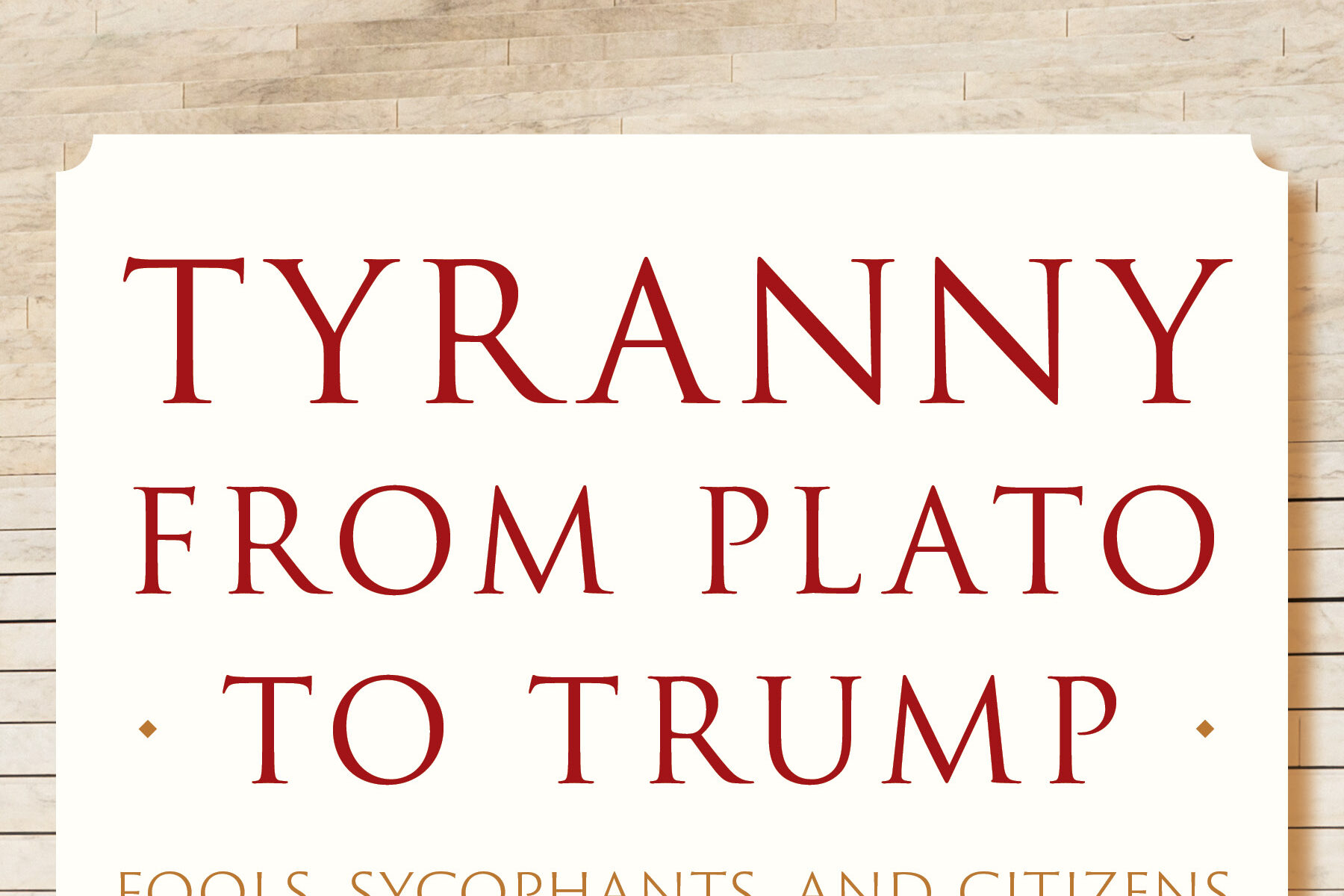
Tyranny from Plato to Trump

I’m pleased to announce the publication of my new book, Tyranny from Plato to Trump: Fools, Sycophants, and Citizens.

The book offers insight into the perennial problem of tyranny. Tyrants seek to grab power. They are supported by sycophants. And cheered on by fools. This is a political problem as well as a social and spiritual problem. There are tyrants in our families and in our businesses. There is also a tyrannical tendency in our souls. The same is true of the tendency to suck up to the powerful. And each of us can behave moronically, more interested in amusement than ethics or truth.

The cure is spiritual and political. We benefit from self-examination. And we need social and political guardrails that prevent tyrants from consolidating power.

Condemning aggressive war: The secular cosmopolitan consensus

Reading Time: 3 minutes

The broad international condemnation of the Russian invasion of Ukraine provides an example of the resilience of moral principles and a source of hope. This assault prompted the world to reassert the importance of a secular cosmopolitan vision of a peaceful, law-governed world. As I have explained in a book on the topic, secular cosmopolitan values affirm diversity and condemn violence. A brief history of this idea can inspire us to expand and solidify the emerging global consensus.

UN resolutions against Russian aggression

A broad coalition of countries has condemned the Russian assault on Ukraine in a Resolution of the UN General Assembly and in a Resolution of the UN Human Rights Council. The General Assembly Resolution had widespread support as did the UNHRC vote. Russia and four other nations—North Korea, Belarus, Eritrea, and Syria—voted against the General Assembly Resolution. Only Russia and Eritrea voted against the UNHRC resolution. In each case, China, India, and a few other nations abstained.

It would be better if those abstaining nations joined the majority. But international politics is not always a moral game. Nonetheless, the majority vote reaffirms basic principles of world peace. 

It is important to note that the coalition opposed to Russia includes countries with different cultural, religious, and ethnic/racial backgrounds: North American and European nations, Israel, Nigeria, Libya, Egypt, Saudi Arabia, Myanmar, Afghanistan, and Japan. Despite their diversity, these countries expressed support for the basic principles of a peaceful cosmopolitan order.

A genealogy of secular cosmopolitanism

One familiar genealogy of cosmopolitan principles governing the morality of war traces the idea through Medieval Christianity. But the idea evolved beyond those Christian roots. Secular just war theory developed along with cosmopolitan principles of international law in the modern era.

We must be careful in reconstructing this story. Non-Christian traditions also provide tools for thinking about the morality of war and international relations. There are resources in Muslim culture, in Chinese thought, and in the religions and philosophies of India, for example. A Eurocentric genealogy can conceal the ugly history of colonialism. But a primer in the European story is useful for those of us in Western nations.

The Christian just war tradition emerged within Christianity out of a dispute between those who thought that Christian morality required pacifism and those who thought it permitted war. A related issue was how Christian values connect with national and political identity.  Were Christians supposed to turn toward “the Kingdom of God”? Or were Christians allowed to fight in allegiance with secular powers?

Christian pacifism typically appeals to the sayings of Jesus in the Gospels—such as “turn the other cheek” and “love your enemies” (Matthew 5). Christian pacifism is also often linked to a cosmopolitan religious vision critical of allegiance to states and armies. As Jesus said, his kingdom was not of this world (John 18:36). 

Christian just warriors look to other texts for inspiration. The Apostle Paul said, for example, that the sovereign is a minister of God who uses the sword to execute wrath on evildoers (Romans 13:4). Christians defended state violence as Christianity gained power in the late Roman Empire. 

Thinkers like Augustine made this argument by appealing to natural law. Augustine explained the idea of justified political violence with an analogy: fathers have a duty to protect their children, while states have a duty to protect their people. 

The dispute within Christianity continued through the Crusades, as Christendom embraced war as a religious pilgrimage, justified in defense of the Holy Land. As the Crusades ended and the Reformation began, Christian pacifism resurfaced as a response to the militancy of the Roman Church. Some Reformers, such as the Anabaptists, called for a return to the original pacifism of the Gospels. 

Christian conquerors engaged in colonial adventures at this time. But critics within Catholicism, such as Bartolomé de las Casas, argued for limits on the use of colonial violence. As colonial Christian powers set out across the globe, European nations went to war and sorted themselves according to their allegiance to the Roman Church.

The modern secular cosmopolitan ideal

The religious wars of early modern Europe led to the development of modern secular theories of morality and law. These theories used reason as a guide, rather than turning to the Bible. These secular theories developed along with the modern system of European nation-states. The idea of non-aggression between sovereign states emerged as an important principle. In the 19th and 20th centuries, international treaties and agencies developed, which sought to regulate warfare and defend state sovereignty. 

This approach failed to prevent the world wars of the 20th century. But the system of international law continued to develop after the Second World War with the creation of war crimes tribunals, the United Nations, and the formation of the International Criminal Court. 

This secular cosmopolitan system aims to establish international peace without invoking any particular religious doctrine or religious texts. The story told here has a Christian and Eurocentric focus. But the system has evolved beyond those roots. The result has been the kinds of resolutions mentioned at the outset.

Reaffirming shared values

The system of secular cosmopolitan law has not eradicated war—as the Ukrainian war shows. But it has created a shared vocabulary for condemning war crimes and aggression. 

This shared vocabulary is inclusive of diverse nations, cultures, and religions. Much more needs to be done to ensure that war is relegated to the history books. One important part of that project is to understand and expand the power of a secular cosmopolitan vision that affirms diversity and condemns violence.

The post Condemning aggressive war: The secular cosmopolitan consensus appeared first on OnlySky Media.

Russian invasion: Does nonviolent resistance have a role to play in Ukraine?

Reading Time: 5 minutes

In a world of rattling sabers, the option of nonviolent resistance is often ignored. As Russian tanks roll into Ukraine, and cluster bombs rain on residential areas, it is natural to think that violence is the only credible response.

But violence is not our only powerful tool.

Even though modern history is rich with examples of nonviolent strategies hindering or defeating violent regimes and systems from the British Raj to Milosovic’s Serbia to racial oppression in the US South, nonviolence continues to be derided as a strategy of “doing nothing.”

It is nothing of the kind.

‘Nonviolence wouldn’t have worked against Hitler’

Perhaps the most common attempt to shut down discussion of nonviolent action is the invocation of Nazi Germany, often phrased as, “Nonviolence wouldn’t have worked against Hitler.”

In fact, nonviolent action played a crucial role in opposing and disrupting Nazi atrocities.

In his book Nonviolent Resistance to the Nazis, author and activist George Paxton describes the widespread use of nonviolent resistance in response to the actions of the Third Reich in Europe. Underground newspapers, graffiti, and anonymous open letters spread messages of support, encouragement, and coordinated actions. Occupiers were shamed and ostracized by courageous citizens (a strategy already at work in Ukraine). Slow-working in factories and economic boycotts. Hiding and smuggling Jews. The White Rose movement in Munich.

A leaflet called “The Ten Commandments for Danes” appeared on the streets of Copenhagen on the first day of the city’s occupation by Germany, outlining principles of nonviolent resistance that became a “revered roadmap for resistance.” These included:

You must not go to work in Germany and Norway.

You shall do a bad job for the Germans.

You shall destroy everything which may be of benefit to the Germans.

You shall delay all transport.

You shall boycott German and Italian films and papers.

You must not shop at Nazis’ stores.

You shall protect anyone chased by the Germans.

In part because of the strong, early support most Danes gave to their Jewish compatriots—protesting anti-Jewish policies, concealing people at risk, and transporting them to safety in Sweden—the Germans made the decision to delay deportation of Danish Jews until after victory so Denmark would be more easily governed during the war. As a result of these nonviolent actions, nearly the entire Jewish population of the country was ultimately spared from the Holocaust.

The US civil rights activist Stokely Carmichael misrepresented nonviolent action as the idea that “if you suffer, your opponent will see your suffering and will be moved to change his heart,” adding, “In order for nonviolence to work, your opponent must have a conscience.” By this reasoning, Putin’s lack of conscience would make nonviolent action in Ukraine pointless.

Paxton challenges this misconception by describing (among many other things) a protest in 1943 Berlin. Non-Jewish wives of Jews assembled in the street near Gestapo headquarters to protest the pending deportation of their husbands. But “fearing that the protests might spread,” the Gestapo not only “did not act against the women,” Paxton says, but suspended the deportations. The women did not inspire a “change of heart” by appealing to the conscience of the Nazis. They made it politically untenable to proceed with the deportation plan.

None of these nonviolent actions amounted to “doing nothing.” All helped to frustrate or mitigate the violent intentions of the Nazi occupiers.

So how might similar strategies be applied to the Russian occupiers of Ukraine in 2022 and potentially beyond?

Economic sanctions and sacrifice

Economic sanctions are an important part of the nonviolent playbook. The Biden Administration announced sanctions against the Russian finance sector immediately after the invasion. But there is a substantial chink in the armor of these sanctions: the energy sphere has been excluded. Russia supplies a significant portion of Europe’s natural gas. A major concern is that cutting off Russian gas and oil would exacerbate inflation and spread harm globally. And so, a powerful nonviolent tool for responding to Russian aggression is off the table.

Perhaps it’s easier to imagine sending arms and troops than it is to imagine driving less, paying more for gas, or shifting away from fossil fuels. This lack of imagination is part of a larger problem. Self-interest is often combined with faith in military power in defense of the status quo.

A lack of imagination is part of a larger problem. Self-interest is often combined with faith in military power in defense of the status quo.

As outrage mounts, we ought to ask ourselves how much we would be willing to sacrifice in the name of peace. It is one thing to encourage Ukrainians to take up arms. It is another thing for comfortable bystanders like the rest of us to consider what we would be willing to sacrifice in the name of peace.

Public protest and solidarity

For bystanders in Europe and other continents further from the fighting, it may seem that there is not much we can do in the face of Russian aggression. But public protests in cities across the globe can play a role. Protests in European and American cities will not end the war. They did not prevent the American invasion of Iraq 20 years ago. But they send a message that can have some impact. Among the important effects of public protests is signaling solidarity and public resolve.

Such protests would send a message to Ukrainians suffering directly from the Russian invasion. It also sends a signal to Russian citizens opposed to Putin’s aggression, as well as American and European politicians attuned to their constituents’ passionate concerns.

There have been protests in Russian cities against the war. The Guardian reports that more than 1,700 have been arrested in Russian anti-war protests. This may be the most effective place to encourage nonviolence. It takes courage to speak out in Putin’s Russia. Russian protesters need to know that they are not alone and that we are watching.

In Ukraine itself, unarmed protesters are obstructing the movement of Russian troops, arms, and supplies, at great risk to themselves, and crucially bringing the eyes of the world to these moments:

Incredible bravery — Ukrainians stopping a Russian convoy, saying “We’re unarmed,” “Occupants!” “Murderers!”pic.twitter.com/8algqeDww2

— Scott Galloway (@profgalloway) March 1, 2022

Religion and peace

Religious organizations can and should be mobilized in opposition to war. Unfortunately, the reporting from Russia is not promising. As was the case in the Third Reich, many prominent religious leaders are meeting Putin’s atrocities and moral outrages with either silence or support. Kirill, the Patriarch of the Russian Church, praised the Russian military for its defense of the “Fatherland” on the day before the invasion. The following day, Kirill issued a statement calling on “all parties” to avoid civilian casualties. He did not condemn the invasion, describing it instead as a “misfortune.” He offered a prayer for peace that did not include a call on Putin to stop his aggression.

Religious leaders in the West ought to reach out to their Orthodox colleagues and demand a more strenuous call for peace on the part of the Russian church. As with other nonviolent techniques, this is not a slam-dunk solution. But it can be part of a coordinated nonviolent campaign that could impact domestic support for the Russian war effort.

Secular and religious nonviolence

Secular peacemakers may scoff at this. Churches have often celebrated military power and fatherlands. But the problem in this regard is not religion. Rather, the problem is a culture of violence. Russian history is interesting in this regard. It involves much violence, including Soviet oppression of religion. But in the background is also Tolstoy’s Christian pacifism.

Tolstoy’s words are worth considering today. In “The Law of Love and the Law of Violence,” he condemned the “age-old lie” that violence is “useful and unifying,” adding that this lie predates Christianity. He warns that Christians have often embraced it. His proposed solution is to condemn the lie of violence and those who employ it.

One need not be religious to be inspired by Tolstoy’s message. Nonviolent responses can be imagined to Russian aggression. We must condemn aggression and show solidarity with the peacemakers. And we must work to imagine what it might take to build a better world.

The post Russian invasion: Does nonviolent resistance have a role to play in Ukraine? appeared first on OnlySky Media.
The Wisdom of WTF

Sometimes you just have to say “WTF.”  In an imperfect world there is wisdom in a shrug of indifference.   

I’ve been thinking about this when considering student responses to a scandal that recently rocked my university involving the Chancellor of the California State University, who was our former President.  What’s remarkable is that most of my students don’t seem to care.  When I discussed this in class, most shrugged it off.

Some may think those students are callous and clueless.  But I’m not so sure.  A shrug is a strategy of self-preservation in a world of alienation.  To say “WTF” is to express disbelief at how stupid things are.  Sometimes it is an outburst of anger.  Sometimes it is a cry of despair.  Almost always it is an expression of alienation.

The world is too big for us to comprehend.  The forces that buffet us are beyond our control.  The omnipresence of alienation poses a challenge for the human spirit.

One of my mentors, the philosopher John Lachs, describes this in a recent book as the peculiar unhappiness of the modern world:

Huge institutions surround and engulf us: we feel powerless to influence their course… We are lost in their bowels and experience much social life as a sort of homelessness.  The devastating sense of the meaninglessness of what we do and of our own unimportance moves us alternately to shoulder-shrugging indifference and to personal despair. 

An obvious solution is to reform our institutions and make them more friendly and transparent.  But even that work is mostly beyond our control.  It also helps to understand that alienation is, as Lachs puts it, “the cost of comfort.”  Even though we are alienated, the modern world provides us with previously unimaginable health, wealth, and power.

And so we take the good with the bad.  And on occasion we sigh and say, “WTF.” 

Outrages abound.  Powerful leaders make huge mistakes.  Democracies elect buffoons.  Ecosystems are in crisis.  War is on the horizon.  Poverty continues.  And the pandemic plods along.

We fret and fume about all of this.  And our anxiety increases.  There is mostly nothing any individual can do solve these problems.  So there is wisdom learning to say “WTF.”

Alienation has a long history.  Karl Marx thought capitalism was built upon alienation.  The existentialist of the 20th Century saw it everywhere.  Human beings do not feel at home in the world.  We are estranged from one another and even from ourselves. 

Alienation is a common theme in literature and film.  In The Catcher in the Rye, Holden Caulfield thinks everyone around him is phony.  In The Matrix Morpheus tells Neo, “You are a slave.  Like everyone else you were born into bondage. Into a prison that you cannot taste or see or touch. A prison for your mind.” 

Alienation appears when we are stuck in traffic.  We experience it when prices rise and paychecks shrink.  It occurs when we work on our tax returns.  The world’s systems are indifferent to us.  We are cogs in a machine over which we have no control.

Alienation gives birth to resentment and anger.  It is part of the discontent fueling “the great resignation” (as I discussed in a recent column).  It fuels suicide and addiction. 

It even helps explain conspiracy theories.  The conspiracy believer is trying to make sense of a world that makes no sense.

And so instead of beating your head against the wall, learn to shrug it off.  We say “WTF” because we know we deserve better; but also, because we know there’s not much we can do about any of this.

Sometimes “WTF” is a cynical abdication of responsibility.  Imagine, for example, saying “WTF” as you jump off a cliff.  So we must be careful not to let “WTF” give rise to nihilism.

To avoid that we should recognize solidarity in the shrug of indifference.  You and I both know that the world is out of joint.  But at least we’re in this together.  The process of making meaning often begins when we look at our neighbor and say “WTF.”  From there we can begin to make things better, one shrug at a time.