How old is too old? The promise and perils of gerontocracy

Fresno Bee, Nov. 27, 2022

Is Joe Biden getting too old to be president? There is wisdom in a gracious exit

How old is too old? After Nancy Pelosi announced she was stepping down, at age 82, as the leader of House Democrats, people wondered whether President Biden should follow her lead. Biden turned 80 this week. He is the oldest president we’ve ever had. If he runs for re-election, he would be 86 at the end of a second term.

Some pundits asked whether Biden’s age would affect his ability to do the job. It is natural to wonder about the vitality of octogenarians. We should also consider the question of fairness and the importance of generational shifts. It is wise for older folks to prepare to pass the torch.

There is some truth to the claim that age is just a number. Some 90-year-olds are healthy, smart and engaged. Aging is a matter of probabilities. The odds stack up against us as the years pass. Good genes and good habits can change those odds. There is no on/off switch that suddenly clicks at 80. But vision, hearing, mobility and memory do tend to decline over time.

And yet, there is also some truth to the idea that we gain wisdom as we age. This is not true of everyone. But we can learn from experience. The passage of time provides a sense of perspective and proportion. What appears as a novel crisis for a 20-year-old is “more of the same” for someone who is 80.

Most traditions imagine that wisdom and old age are connected. Plato suggested that as the burning desires of youth are quenched, the mind is set free to focus on higher things. Confucius said something similar. According to Confucius, it is not until we reach 70 that virtue and desire come together. The sages of the ancient world were old folks with a faraway look in their eyes.

Some cultures also value “gerontocracy,” which is a fancy word for rule by elders. This may work well, if our elders are wise and civic-minded. But gerontocracy may also create a system in which crabby old geezers cling to power, refusing to make way for new ideas.

Aristotle was critical of gerontocracy for that reason. He criticized the idea of lifetime tenure for judges, for example. He said, “there is old age of mind as well as of body.” He suggested that some people may be too old to judge wisely. A

nd what about fairness? If one generation dominates leadership positions, is that fair to those in other generations? When Nancy Pelosi announced she was stepping down, she said, “the hour has come for a new generation to lead.”

This is a nice way of putting it. There comes a time, when elders need to make way for the next generation. There is no alarm clock that tells us when that moment has arrived. But it is wise to keep the succession process in mind and to plan for passing the torch.

One rationale for this generational hand-off has to do with creativity and innovation. Human beings are creatures of habit. We tend to prefer the stability of well-worn ruts. But in politics, business, and art, those ruts can become quagmires. Organizations need fresh ideas and new blood.

And what about the ambitions of those who are waiting in the wings? The understudies need their chance to shine. But when the old guard hogs the limelight, the back-ups never get to learn how to play the lead.

This applies to all fields of human endeavor, including sports. In the NFL, the generation of Aaron Rodgers and Tom Brady is ending. It’s sad to watch former heroes fall into mediocrity. And the second stringers need playing time in order to get good at the game.

Of course, we understand why Brady, Rodgers, Pelosi, and Biden want to stay in the game. It’s fun to play. And they have talents they want to share. There is also a crew of agents and sycophants who have vested interests in keeping the old guard in place.

But as Ecclesiastes puts it, “for everything there is a season.” It is wise to make a graceful early exit than to linger too long at the party, while clinging to fading glory.

Read more at: https://www.fresnobee.com/opinion/readers-opinion/article269144787.html#storylink=cpy

The Folly of Political Violence

Fresno Bee, November 6, 2022

Political violence does not work. And yet some people think it does. Some political violence is the result of delusional people on a rampage. But many sane people still believe in its efficacy.

Consider the appalling case of the attack on House Speaker Nancy Pelosi’s husband in San Francisco. The attacker wanted to send a political message. But he ended up in jail. The real message here is that violence is wrong, and a danger to our democracy.

Or consider any of a long list of examples. The riots of Jan. 6 failed to achieve their objective of overturning the 2020 election. The attacks of 9/11 failed to drive the U.S. out of the Middle East. The assassination of Martin Luther King, Jr. failed to stop the Civil Rights movement.

We could look back further. Lincoln’s assassination failed to stop the abolition of slavery or keep the North from winning the war. And even further back, the assassination of Julius Caesar failed to stop Rome from becoming an empire. The killing of Jesus of Nazareth did not stop Christianity from becoming one of the world’s largest religions. And killing Socrates did not stop philosophy.

I’ve simplified things here, quite a bit. There is often no single motive behind political violence. And sometimes the motive is lost in madness and mystery. We don’t really know why Oswald killed Kennedy, which is why conspiracy theories linger. Surely some of those who murdered Caesar were playing power games. And Socrates was killed by Athenians seeking a scapegoat after losing a war.

But the bottom line is that killing an individual does not stop a movement, a system or an idea. Violence does not change people’s minds about truth, justice, or morality. Minds are changed through education and argument. Substantial changes in law and politics require negotiation and compromise, as well dialogue and deliberation.

The focal point of political violence is on the moment and the act. It is “spectacular,” as I explained in more detail in a book I wrote about nonviolence. Violence attracts our attention. It is an explosive and unexpected outburst that disrupts things. Violent acts provoke responses. But the response rarely unfolds as the attacker wants it to. The attacker controls the moment. But the system and society control the response.

The feverish imagination of violence is episodic and individualistic. The assassin imagines that if he kills person X, everything will change. But that is a misunderstanding of how life and politics work. The daily grind of political life is not spectacular. It does not occur in explosive moments and exciting episodes. Rather, it involves the boring work of persuasion and coalition building.

Ideas, laws, and movements are larger than persons. If person X is eliminated, there will be Y and Z who are committed to the same ideas. And if X is murdered, her followers will be angry and even more committed to the cause.

We forget this because we’ve been taught a version of history that focuses on the biographies of great men and women. We blame Nazism on Hitler, for example. But if Hitler had been killed, the Nazi party would not have crumbled overnight.

The history of Christianity provides an interesting example. The leaders of the Christian movement were murdered by the Romans. Jesus was crucified, as was Peter. And Paul was beheaded. Many martyrs were killed after them. But the movement continued to grow.

Things are more complicated in the case of wars and revolutions. But again, these things rarely work out as planned. The 20-year war in Afghanistan reminds us of that. Violence and war are unpredictable. And it is ideas and systems that matter.

The American revolution is often held up as a paradigm of effective violence. But was it the violence that mattered — or the ideas that were fought for? And would those ideas have endured even if the revolution had failed?

Martin Luther King Jr. said, “in spite of temporary victories, violence never brings permanent peace. It solves no social problem: it merely creates new and more complicated ones.” Human problems need humane solutions. Violence operates in the realm of animal power and physical force. It is subhuman and inarticulate. And it usually makes things worse.

Pondering ghosts and spirits at Halloween

Fresno Bee, Oct. 30, 2022

Halloween is a haunting time. This is the spooky moment when ghosts appear. But ghosts and spirits are always with us, especially for those who grieve and mourn.

Students occasionally ask me if I believe in ghosts. And they have shared their ghost stories with me. I recall getting a chill from a story told by an older woman who said she often saw her dead husband in the room where he used to practice music.

Philosophers have often wrestled with ghosts. As Socrates was preparing for his death, he told a ghost story. He explained that “polluted souls” are unwilling to move on to the next world. These restless shadows haunt graveyards, too in love with their bodies to leave them in the grave.

Most scholars think Socrates was making a point about enlightenment. Virtue and wisdom should teach us to accept death so we can avoid becoming unquiet ghosts. At any rate, this ancient tale reminds us that ghosts have long haunted human experience.

But do ghosts really exist? Well, the seer of ghosts has clearly experienced something. They are not lying. But what is it that they see?

One possible explanation is that ghosts are figments of the mind. For those who grieve, the dead are strangely present. Our dead remain with us. They wait on the edge of consciousness. And then something triggers their appearance — a smell, a song or a familiar place.

Most ghostly apparitions are probably products of memory and imagination. These ghosts don’t conjure themselves. We bring them to life. They are after-images of the dead, which linger with us so long as memory endures.

I heard a talk recently by a philosopher who recounted her mother’s decline into dementia. Her mother’s world was inhabited by hallucinations — spirits, she called them. The philosopher suggested that ordinary reality is only a small step away from the hallucinatory. Could it be that the “reality” we inhabit is actually a hallucination? Our experience is a projection of the mind and an interpretation of the stimuli it receives.

Photons hit our eyes and sound waves tickle our ears. These stimuli are woven together by the brain, which produces an image of the world. That image can be disturbed by other stimuli throbbing through our minds — memories, fear, hopes, and dreams.

Usually, consciousness takes charge of this process, keeping us focused on a stable set of images and appearances. But when consciousness relaxes its grip, things get weird.

This can happen in dementia. It can occur when we drink alcohol or use other drugs. Anxiety and exhaustion can disturb consciousness. And spooky shadows can appear at midnight in October graveyards, when the leaves rustle in the autumn wind.

But do ghosts exist? I suppose that depends on what we mean by existence.

Someone I love died recently. She’s been with me in my thoughts. She “exists” in a sense. Grief does strange things to our experience of reality, time and self. Grief is the presence of an absence. It is a distressing emptiness. That emptiness has a reality of its own. It afflicts us. But we also hate to let it go because it is the place our loved one used to be.

We tend to think that existence is material. Rocks and steel exist. But what about thoughts and dreams and memories? Those things are real, aren’t they?

One of the most famous lines from “Hamlet,” occurs after Hamlet has just seen a ghost. He says, “there are more things in heaven and earth than are dreamt of in our philosophy.” The poet is suggesting that life, experience, and existence are more complex and mysterious than we know.

There is more to life than our bodies. There are memories, dreams and ideas. There is also literature, philosophy and religion. These things free the soul from the body. They allow our minds to wander. They introduce us to ghostly presences such as Hamlet and Socrates. These “people” are, after all, creations of art and literature.

Thinking is an uncanny game of ghosts. Memory and art are conjuring acts that put us in touch with spirits. We might even say that to be human is to be haunted.

Religious Liberty, Modesty, and The Morality Police

Fresno Bee, October 2, 2022

Morality is not external conformity. Let’s keep this in mind when thinking about recent protests in Iran against the “morality police.” Those protests broke out in response to the death of Mahsa Amini, a woman who died after being detained by the morality police for wearing her hijab (a head covering) too loosely.

For Americans of the present generation, the notion of the morality police is hard to fathom. How strange that anyone cares whether women cover their hair.

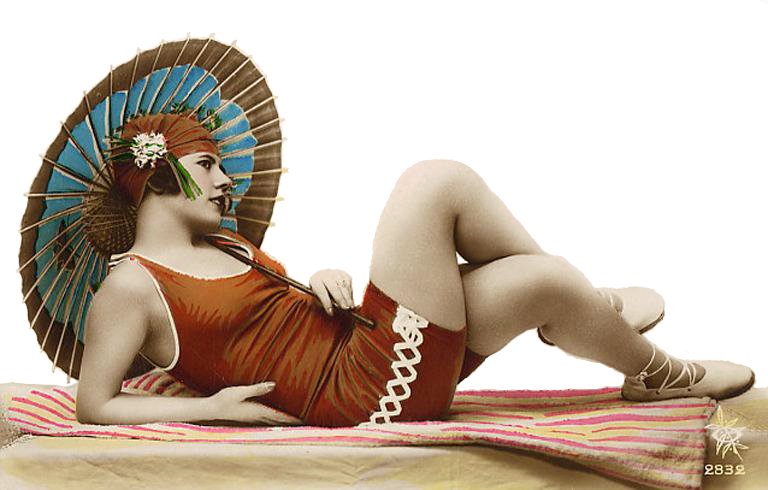
Of course, societies have often attempted to control women’s lives, bodies, and sexuality. A hundred years ago in the United States, swimsuit police tried to prevent women from showing too much skin at the beach.

We’ve come a long way. Thanks to the secular principles found in the First Amendment, we are free to wear what we want. There is no morality police here because we view fashion as a form of free expression.

There are limits, of course. Schoolchildren are not free to wear pornographic or offensive T-shirts. Nudity is prohibited. And in a recent case out of Everett, Washington, the courts upheld a law prohibiting baristas at the Bikini Hut coffee shop from dressing like strippers. The Ninth Circuit Court drew a line at “pasties and a G-string” with your coffee.

But beyond those limits, our secular system holds that fashion, sex, and sexuality are private matters, not subject to policing. This is the result of a long struggle against a more restrictive worldview. And some Americans might prefer a return to modesty and conformity. Until recently, school districts prohibited girls from wearing tight leggings or yoga pants — including here in Clovis, which only changed its policy this year.

So, let’s not take the struggle for liberty and privacy for granted. It’s only been about 20 years since the U.S. Supreme Court overturned laws against sodomy, in Lawrence v. Texas. It’s only been seven years since Obergefell v. Hodges gave same sex couples the right to marry. And challenges remain. The court has called the idea of a “right to privacy” into question with the Dobbs decision that overturned Roe v. Wade earlier this year.

Behind these legal issues is a basic argument about the importance of liberty. This is related to a claim about the futility and absurdity of trying to police fashion, sex, and modesty.

Americans pledge allegiance to the idea of a country founded on the idea of liberty and justice for all. Liberty means that you can wear a hijab or a bikini. The choice is up to you.

And if I don’t like your choice, I can choose not to look. We forget this important point with regard to modesty. Rather than worrying about women flaunting their bodies, why don’t we insist that men stop ogling them?

There is no doubt that state power can dominate people. But police power does not actually create modesty or virtue. It is futile to use police power to enforce external conformity to norms of fashion, virtue, and modesty.

Clothing and hairstyles have nothing to do with the content of your character. It’s what’s inside your head and your heart that counts, not what you wear on the outside. That’s why the idea of fashion police is absurd. It is a meaningless exercise in enforcing conformity that is only skin deep.

Morality is simply not the kind of thing that results from the application of external force. The way to make people moral is to educate them, not to beat them into compliance. External force is useful for animals. We fence them in and leash them. But that’s not how you treat human beings.

Arresting people for what they wear (or don’t wear) also breeds discontent and further nonconformity. Women protested against the swimsuit police in the United States a hundred years ago. They are pushing the limit in the case of bikini baristas. And in Iran, women are burning their hijabs.

To force human beings to conform to some standard of modesty is degrading and ineffective. Secular systems of law respect our freedom to decide for ourselves about what we believe about modesty and how we adorn our bodies. This approach is respectful of our humanity, our rationality and our liberty.

Read more at: https://www.fresnobee.com/opinion/readers-opinion/article266575386.html#storylink=cpy

Religious Switching is a Sign of Freedom

Fresno Bee, September 17, 2022

The religious composition of the United States has changed significantly in the past 50 years. A new report from the Pew Research Center predicts that the Christian population will continue to shrink during the next half century. This is what happens in a world of religious liberty.

In 1972, 90% of Americans were Christian. Today only 64% of Americans identify as Christian. If the rate of change remains steady during the next 50 years, Pew predicts that the Christian population will be 46% in 2070.

Those who have left Christianity have mostly turned away from organized religion. Social scientists call this group “the nones.” When asked about their religious affiliation they say “none.” During the past 50 years, the nones increased from 5% in 1972 to around 30% today. If trends remain the same, five decades from now 41% of the population will be nones.

There are also non-Christian religious affiliations: Jews, Muslims, Hindus, Sikhs, Buddhists, and others. Those folks add up to about 6% of the population today. This combined group of non-Christians may increase to 13% during the next 50 years, if rates remain constant.

The result will likely be a country in which Christianity is no longer the dominant religion. Some may view this as a tragedy, especially those who maintain that America ought to be a “Christian nation.” But proponents of secular social and political systems will suggest that this is just the way that liberty works. If people are given the freedom to choose their own path through life, then we ought to see a profusion of lifestyles, affiliations and identities.

The Pew Center does not offer an explanation as to why all of this change began to occur after the 1970s. But such an explanation might include the fact that liberal interpretations of the First Amendment in the middle of the 20th century fanned the flames of liberty. School prayer was prohibited along with devotional Bible readings in the 1960s. The civil rights movement and changed immigration laws opened doors and eyes. A bigger, freer world emerged.

This does not mean that American secularism is opposed to religion, as some religious folks claim. The First Amendment framework is not antireligious. It protects the free expression of religion while preventing the state from creating an establishment of religion. This framework is good for religious people because it allows them to pursue their own faith in their own way.

But as liberty grows, a world of possibilities unfolds. This includes the likelihood that people will leave old traditions behind in order to make meaning for themselves in new and different ways. Lovers of liberty should celebrate our shifting religious demography. Religious switching is a sign of our freedom.

One of the great defenders of liberty, the philosopher John Stuart Mill, spoke of the importance of “experiments in living.” We need to be free to explore and experiment because no human being has a monopoly on truth. To believe something, we must experience it for ourselves. And if the old traditions no longer make sense, we should be free to create new ones.

Experimentation helps us discover new and better ideas. This process is also good for faith traditions. Competition in the realm of ideas encourages people to think more carefully about what they really believe and why they believe it.

Some people don’t like the marketplace of ideas. If your faith once had a monopoly, you may not welcome challenges to your dominance. You may resent new ideas and the liberty that allows them to be born.

Intolerance is “natural to mankind,” as Mill pointed out. Genuine religious freedom has rarely been practiced in human history. Bigotry and persecution are more common. Socrates and Jesus were both killed for opposing traditional dogma. The Protestants of Europe were persecuted by the old regime. Some fled to America, where they wrote religious tolerance into law.

In a world of liberty, nothing stays the same for long. We are creative and curious beings. Free people explore and innovate. Old traditions get left behind. Or they grow and adapt to the needs of the present. But the future belongs to the vitality of the experimental mind.

Read more at: https://www.fresnobee.com/opinion/readers-opinion/article265910211.html#storylink=cpy