The Secular Declaration of Independence

Fresno Bee, July 6, 2025

“Declaration of Independence was rooted in Enlightenment ideals, not divinity”

Some suggest that the U.S. is a Christian nation.  That claim often rests upon an interpretation of American history that misunderstands the Declaration of Independence.  For example, the Speaker of the House, Mike Johnson, said this week, that that the American Founders’ “creed” is stated in the Declaration.  Johnson believes that Thomas Jefferson was “divinely inspired” to write the Declaration.

Jefferson’s language is worth careful consideration as we celebrate the 249th anniversary of the signing of the Declaration.  The part of The Declaration that has been emphasized by Johnson and others is the following: “We hold these truths to be self-evident, that all men are created equal, that they are endowed by their creator with certain unalienable rights, that among these are life, liberty and the pursuit of happiness.” 

The Founders understood the world as coming from a creator.  They thought that human rights were found in the “laws of nature” and “nature’s God,” to quote another earlier passage from the Declaration. 

But Jesus is not mentioned here.  Nor is the Bible.  Indeed, Jefferson had a decidedly unorthodox understanding of Christianity.  Like Benjamin Franklin, Jefferson was a Deist who understood “nature’s God” as distinct from the God of the Bible.  He rejected the idea that the abstract “creator” could perform miracles.  Jefferson even revised the Bible to eliminate its miracles, including the resurrection of Christ.  Jefferson’s Unitarian colleague John Adams also doubted the divinity of Christ.  To suggest that these authors were inspired to create a Christian nation is simply false, as I discuss in my new book, Christian Nationalism and the Paradox of Secularism.

These Enlightenment-era thinkers were sympathetic to a rational, philosophical reconstruction of ancient revealed religions.  They also understood themselves as doing a very human thing by engaging in political struggle.  Just after that famous statement about the creator and our inalienable rights, the Declaration adds a second self-evident claim: “that to secure these rights, governments are instituted among men, deriving their just powers from the consent of the governed.”

The text says that governments are human constructions.  The legitimacy of governments depends upon democratic consent, not divinely ordination.  Building upon this point, the next self-evident truth of the Declaration is that there is a right to revolt against unjust government and to re-construct government according to our own best judgment. 

This makes the Declaration a secular or humanistic document.  Our rights may come from God, the creator, or the laws of nature.  But government is a human creation.  It is “we, the people” who create governments, and alter or abolish them.

This human process culminated in the creation of the U.S. Constitution.  The Constitution was a second attempt to create a government, which built upon the failure of the Articles of Confederation.  The Constitution was a negotiated document that included the notorious compromise that allowed slavery to exist.  Americans fought a Civil War to further clarify and improve the Constitution.  None of this indicates divine inspiration. 

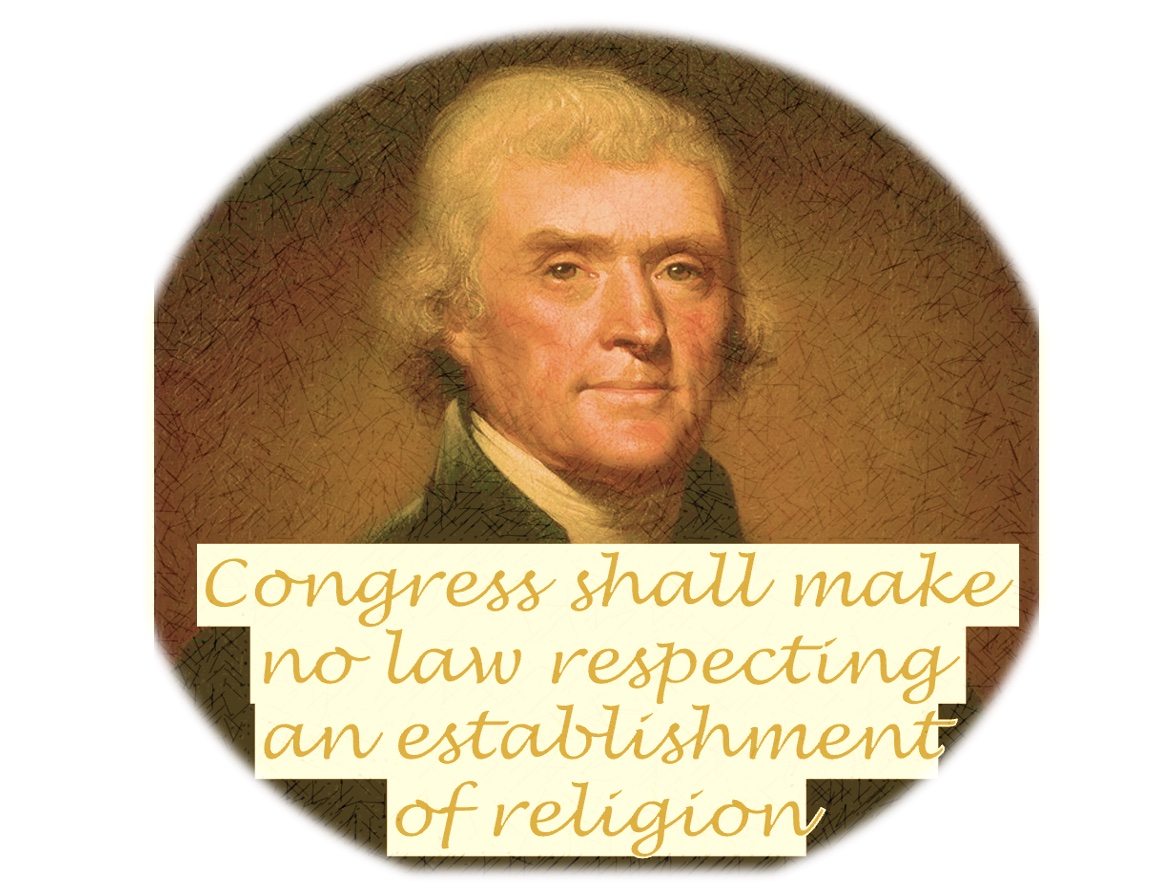
Indeed, the Constitution affirms a secular standpoint.  The only mention of religion in the Constitution itself occurs in Article 6, where religious tests for office are prohibited.  And the First Amendment clearly states, “Congress shall make no law respecting an establishment of religion, or prohibiting the free exercise thereof.”  This means you are free to worship (or not) according to your conscience, and the government is not allowed to erect an official state religion.

This is a radically modern idea that broke away from the traditional way of conceiving church and state.  In England and other European lands, church and state were combined, and often still are.  The King of England is the head of the Anglican church, for example.  In the United States there is no American church.  Nor does the President lead a religious institution. 

The fact that the authors of the Declaration were Deists and Unitarians reminds us why they wanted a new form of government.  In another time or in another country, those men would have been persecuted as heretics.  But they created a country where such persecution no longer occurs.  The legal framework they created was not the result of divine intervention.  Rather, it was the result of human beings daring to imagine a new form of government in which religious liberty was broad enough to include their own unorthodox beliefs.

Read more at: https://www.fresnobee.com/opinion/readers-opinion/article309937295.html#storylink=cpy
American Anti-Tyranny and the Villains of Easter

Fresno Bee, April 20, 2025

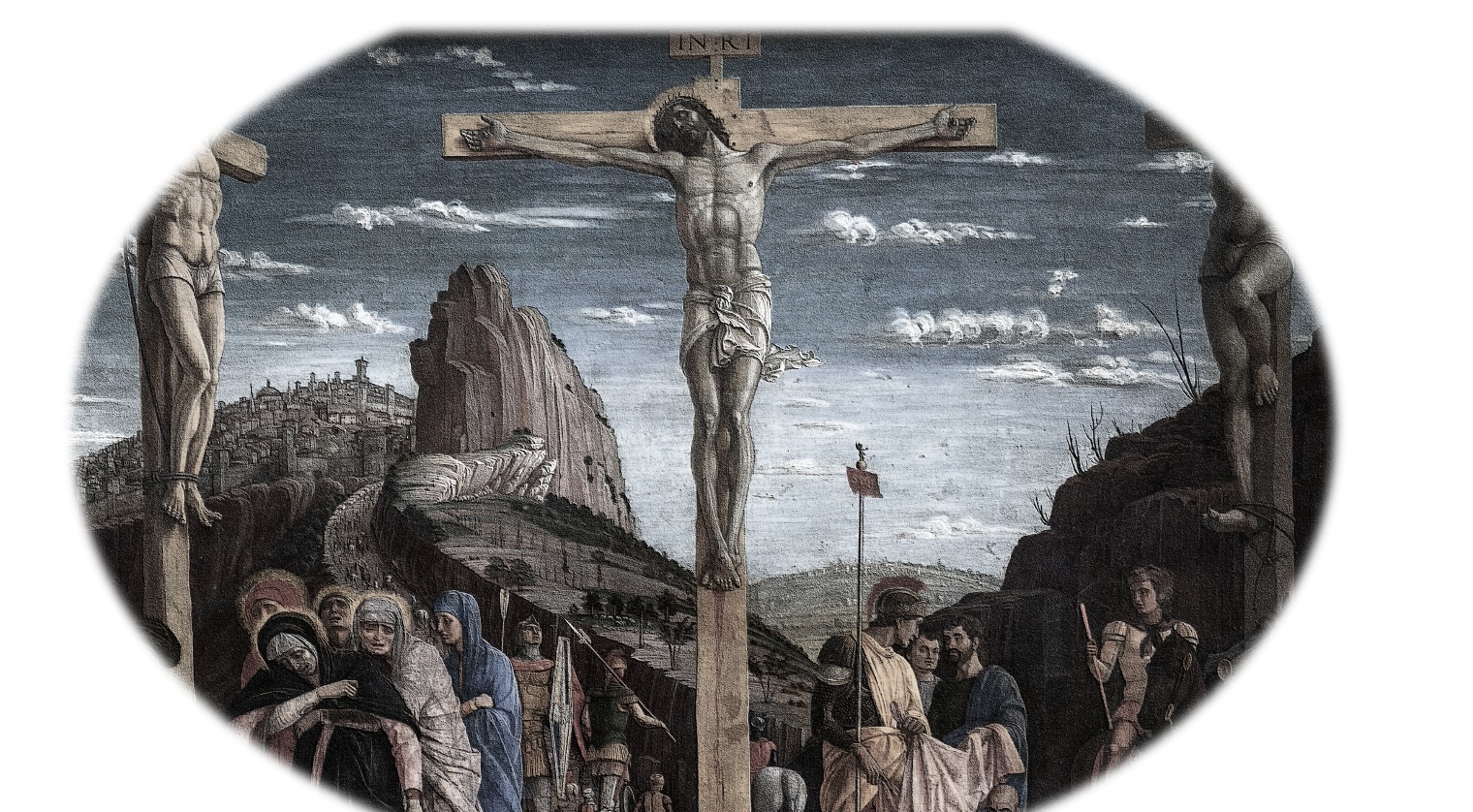
For Christians, Easter is ultimately about the empty tomb and its promise of resurrection. But before the resurrection, there was the cross, which was widely viewed as a symbol of a terrifying system of imperial tyranny, a frequent instrument for executions during the Roman empire. Setting aside the miracles and the metaphysics, Easter offers an anti-tyrannical political message.

The Easter narrative warns against the dangers of greed, complicity and despotic power. It condemns the collusion of sycophants and the callous brutality of the mob. The story of Jesus’ execution exposes an entire system of unjust imperial rule over a subjugated people.

One of the villains of Easter is Judas, a money-grubbing thief who betrayed Jesus to the authorities. Another villain is Herod Antipas, who was also responsible for beheading John the Baptist. But it was Pontius Pilate, the authoritarian Roman ruler of Judaea, who conducted the trial of Jesus and was legally responsible for his crucifixion. That trial involved a bizarre ritual in which the mob was asked who it wanted to save. The mob cried out for Jesus to be crucified, while calling for the release of Barabbas, an insurrectionist.

All of this teaches a lesson about the need for a rules-based system of justice. Such a system would outlaw cruel punishments, such as scourging and crucifixion. It would prevent authoritarian rulers from consolidating the power to convict and punish. It would not defer to the stupid passions of the mob, nor would it depend upon the greed of paid informants. In general, it would avoid the excesses of swift imperial justice in favor of due process and the rule of law.

Such a system would be similar to that which is found in our own beleaguered constitutional system. The American Constitution guarantees freedom of religion, speech and the press, along with the right to assemble and petition. It prohibits unreasonable searches and seizures, requires due process of law and stipulates that those accused of crimes should be able to confront the witnesses against them. It also prohibits excessive fines, and cruel and unusual punishments.

This means that if a Jesus-like figure were to appear on the American scene, he would be free to preach and lead a movement, even if it infuriated religious and legal authorities. His followers would be free to protest, write and criticize the policies of the church and the state. And if this figure or his followers were accused of crimes, they would have basic rights that protect them against arbitrary detention. In our system, prisoners cannot be mocked or manhandled, or cruelly killed.

None of this was true in ancient Roman Judaea. The Roman authorities ruled with an iron fist. Crucifixion was intended to send a message to rebels and rabble-rousers. And while some of the locals may have thought that they could play along with imperial power, the Romans eventually destroyed the Jewish temple in Jerusalem. They also rounded up and killed Peter and Paul, and other Christians.

The American founders understood the dangers of imperial power run amok. In 1775, John Adams claimed that a republic was “a government of laws, and not of men.” He further said, “An empire is a despotism, and an emperor a despot, bound by no law or limitation, but his own will.”

Soon enough, in 1776, the Americans broke with England, claiming that the king had become tyrannical and despotic. The arbitrary and authoritarian application of the power to punish was viewed as a sure sign of tyranny. Among the complaints against King George listed in the Declaration of Independence are depriving people of “the benefits of trial by jury,” and “transporting us beyond seas to be tried for pretended offenses.”

Unfortunately, our own government is now transporting people to foreign countries without due process. We are also threatening to occupy Greenland and annex Canada. Easter provides a cautionary tale for the present moment. It reminds us of the need for due process and the rule of law, and about the dangers of imperial excess.

The Easter narrative also calls for sympathy for the victims of unjust power. If it seems that we are more Roman than Christian these days, it can help to recall that the hero of Easter is Jesus and not Pontius Pilate.

Read more at: https://www.fresnobee.com/opinion/readers-opinion/article304438096.html#storylink=cpy

Trumpian Eroticism and the Politics of Passion

Fresno Bee, March 9, 2025

How Donald Trump and Elon Musk inspire passions feared by America’s Founding Fathers

American politics has become deeply erotic. Often, this manifests as love — as when Elon Musk recently tweeted, “I love Trump, as much as a straight man can love another man.” In his recent address to Congress, President Donald Trump said: “People love our country again, it is very simple.” He extolled the “faith, love and spirit” of the American people, who “will never let anything happen to our beloved country.”

To say that Trump is an erotic leader does not mean he is “sexy.” Rather, the point is that he provokes. Trump inflames the emotions — whether you love him or hate him. He is the kind of person about whom it is nearly impossible to remain indifferent. He arouses rather than enlightens.

The erotic element shows up in various ways. Fealty and devotion of the Muskian sort are obviously forms of love. Nepotism and cronyism are erotic ways of distributing power to faithful friends and family members. In such arrangements, it does not matter whether things are fair or reasonable, nor does it matter whether people are good. Rather, what matters is love and connection.

Trump is making American politics a game of seduction and power — a spectacle driven by passion. Part of this is public performance. As Trump was berating Ukrainian President Volodymyr Zelenskyy the other day, he said, “This is going to be great television.” The play of passion is enthralling and compelling: you can’t look away.

In a comment on the Zelenskyy episode, Canadian novelist Stephen Marche suggested we are witnessing “rule by performers,” and what he calls “histriocracy,” the rule of the “histrionic,” — the melodramatic, theatrical or emotional. Indeed, Trump is a master of spectacles, and he knows how to keep us watching.

The erotic art of arousal can be useful in business and in politics. But it is quite different from a more sober-minded or rational approach to the world.

The distinction between the erotic and the rational is as old as Plato, who worried that unbridled eros (sexual love or desire) would destroy a good city, and that passion would undermine justice. He warned that when eros rules a city (or a soul), it is like being drunk or mad. The rule of the erotic leads to lawlessness, frenzy and tyranny. Plato hoped rationality could control the passions, but he knew that eros was a powerful force.

Sober-minded folks view political discourse as an earnest discussion of justice, virtue and truth. Rational politics is sincere, honest and moderate. In the Platonic government, careful thinkers would deliberate using logical arguments that rest upon a bedrock of first principles and unassailable truths.

Passionate politics is different. It values histrionic performances that elicit emotional responses. Here, the participants seduce and cajole with the goal of achieving popular acclaim — which is, after all, a kind of love. The erotic approach rejects sedate sincerity in favor of impassioned public displays of power and affection. Erotic politics is more interested in glory than in goodness, and it encourages inspiring fantasy rather than dull deliberation.

Political eros is chaotic and unreasonable. Sometimes, it even becomes vulgar and obscene. The risk that passion will become excessive is part of what makes it exciting and fun. That’s why sober-minded rationalists don’t understand its allure and worry that the excitement of eros will lead to dangerous excess.

John Adams once warned about the “overbearing popularity” of “great men.” He said, “Ambition is one of the more ungovernable passions of the human heart. The love of power is insatiable and uncontrollable.”

Adams and the other Founding Fathers created a system of checks and balances to restrain the erotic element. Rationalists like Adams think that laws should rule, rather than love. They view passionate personalities as dangerous, and in need of restraint.

Eroticism sees such sober rationalism as boring and shallow. Typically, devoted lovers remain enamored of their charismatic champion — despite their flaws and lawlessness — and because of his passion. Indeed, those flaws may make this figure more beloved.

In erotic politics, people are wedded to the person of the leader, warts and all. This astounds sober-minded defenders of virtue and the rule of law. But in erotic politics, it makes perfect sense to remain devoted to the beloved, since love is love, no matter what.

Read more at: https://www.fresnobee.com/opinion/readers-opinion/article301565739.html#storylink=cpy

The Ten Commandments and the First Amendment

Fresno Bee, July 7, 2024

The Ten Commandments have long been controversial. So, it’s not surprising that Christians in Louisiana have resurrected this controversy with a law requiring the Ten Commandments to be posted in schools. Oklahoma and Texas are following suit. Donald Trump recently posted, in all caps, “I LOVE THE TEN COMMANDMENTS IN PUBLIC SCHOOLS.”

This appears to violate the Establishment Clause of the First Amendment, which prohibits state entities from propounding religious doctrine. This does not mean, however, that schools and teachers cannot address the controversy.

At best, the text known as the Ten Commandments invites deeper conversations about religion, ethics, and political life. At worst, it becomes a meaningless idol, posted on the wall without thought.

Scholars refer to this text as The Decalogue, which means “ten sayings.” In the Bible, these sayings are not numbered and occur in slightly different forms in Exodus and Deuteronomy. The text has been interpreted in diverse ways. This includes a difference in numbering the commandments. Catholics think the sixth commandment is against adultery, while Protestants count that as number seven. For Catholics, the commandment against murder is number five. Protestants count that as number six.

Beyond the textual details is the deep question of whether morality must be grounded in religion. The first several commandments are religious, which may suggest that faith is before ethics. Does this mean that atheists cannot be ethical?

Another significant question is whether morality is negative, focused only on a few “you shall not” prohibitions. Should we donate to the poor, forgive our enemies, or give special consideration to the disabled?

The Decalogue is silent on these questions. It does not mention abortion, the death penalty, or war. Nor does it celebrate democracy or liberty. The Decalogue has always been the subject of interpretive disputes. When asked about these ancient laws, Jesus offered a succinct interpretation, suggesting that there are only two laws: love God and love your neighbor as yourself.

Of course, this did not settle the matter. Benjamin Franklin suggested the existence of twelve commandments, with the first being “to increase and multiply” and the twelfth demanding us “to love one another.” John Adams and Thomas Jefferson discussed the matter in letters the two ex-presidents exchanged about a German book of Biblical criticism. Adams suggested that the book showed that the Ten Commandments were “not written by the finger of God on tables.” Jefferson expressed doubt about the authenticity of the Decalogue since, as he put it, the history of these texts is “defective and doubtful.”

There are lots of interesting questions here for student research and reflection. Consider the third or fourth commandment—depending on your tradition—which focuses on keeping the sabbath day holy. Does this mean that businesses must close or that it would be wrong to watch football on Sunday? Students might also ask whether Sunday is actually the sabbath. Most Christians think so. But Seventh-Day Adventists maintain that Sunday was imposed on Christians by the Romans. They follow Jewish tradition and view Saturday as the Sabbath.

Critical discussions of the Decalogue should eventually lead to a conversation about the value of the First Amendment as a response to religious diversity. When a state authority picks sides in religious and moral controversies, it ends up violating the Establishment Clause. There is no doubt that the Decalogue is controversial. But does posting the text amount to promoting a religious viewpoint?

If the text were posted alongside similar texts such as Hammurabi’s Code, Buddhism’s Four Noble Truths, or the Five Pillars of Islam, it would be more obviously a stimulus for critical thought and lessons about history. Context matters. As does the intention of those who post such texts.

Christian culture warriors do not seem to engage in critical thinking about the Bible. Here is the irony: If the text isn’t used to spur critical conversations, it appears to violate the First Amendment. But once we engage in a critical conversation about the Decalogue, it becomes obvious that the text is controversial and that the Establishment Clause ought to prohibit it from being posted as an idol in classrooms.

Read more at: https://www.fresnobee.com/opinion/article289743274.html#storylink=cpy

The Wrath of God and the U.S. Constitution

Fresno Bee, March 10, 2024

Alabama has crafted legislation that will allow in vitro fertilization (IVF) to commence again, in response to a February ruling of the Alabama Supreme Court that shut it down. That’s promising for folks who want to use IVF technology to become parents.

But the court’s reasoning reminds us of the need to reaffirm the basic idea of separation of church and state.

In his concurring decision, the chief justice of the Alabama Supreme, Tom Parker, cited the Bible, as well as Thomas Aquinas, John Calvin and other Christian theologians to support his claim that “all human beings bear God’s image from the moment of conception.”

He concluded, “Human life cannot be wrongfully destroyed without incurring the wrath of a holy God, who views the destruction of His image as an affront to Himself.” And “Even before birth, all human beings bear the image of God, and their lives cannot be destroyed without effacing his glory.”

Some Christians will agree. Various Christian communities, including the Roman Catholic church, teach that IVF is wrong, along with abortion. One concern is that IVF results in extra embryos, what the Alabama high court called “extrauterine children.” If they are destroyed, the court suggests that this is murder.

IVF also violates “natural law” teaching about sexual reproduction. Natural law ethics holds that reproduction should only occur within loving, conjugal relations. But IVF involves masturbation and technological manipulation that supposedly violates the nature of sex, love and procreation.

Of course, not every Christian agrees with this moral analysis. Christians are not universally opposed to the procreative use of technology. Nor is every Christian opposed to masturbation, abortion or to methods of birth control that prevent fertilized embryos from implanting in the uterus.

Christians don’t all agree that life begins at conception. Indeed, Thomas Aquinas himself claimed, following Aristotle, that the soul is only present in the embryo at 40 days (for male children) and at 90 days for females.

The world’s diverse religious traditions teach different things about sex, genetic humanity and human reproduction. There is also a sizable and growing number of nonreligious Americans who don’t accept natural law ethics or the idea of a wrathful God.

That’s why invoking the wrath of God in a legal argument seems astonishingly un-American. The American government is the result of a social contract. It is a grand compromise created by “We, the people.”

Moreover, the Constitution’s First Amendment guarantees the right to religious liberty while prohibiting the establishment of an official state religion. The only other mention of religion in the Constitution is found in Article VI, where religious tests for office are prohibited.

But in Alabama things seem otherwise. In a recent interview, Chief Justice Parker said, “God created government.” The founders would disagree. They viewed the government as the result of a social compact that aimed to produce domestic tranquility. John Adams said that the American states were “founded on the natural authority of the people alone, without a pretense of miracle or mystery.”

One important reason to reject Chief Justice Parker’s theopolitics is the fact of religious diversity. This diversity includes a wide variety of Christian faiths. Adams himself had unconventional religious beliefs. He did not accept the doctrine of the trinity and was doubtful about the divinity of Christ. In a letter to his son, he claimed that the idea of an “incarnate God” had “stupefied the Christian world.”

Americans of the 18th and 19th centuries disagreed about religion. These days, Christians disagree about whether “extrauterine children” bear God’s image. And even in Alabama there are non-Christians. According to the Pew Center, 1 % of Alabamans belong to non-Christian faiths and 12% are non-religious. So, it is bizarre to claim, as Justice Parker did, that “the theologically based view of the sanctity of life” ought to guide the law of the land. This is a religiously diverse nation.

The founding social contract created a secular democracy that guarantees religious liberty and seeks to prevent the creation of an established state religion. This idea allows Christians to follow their consciences with regard to IVF, sex, abortion, and everything else. It also ought to prevent the government from imposing a religious doctrine on any one of us.

Read more at: https://www.fresnobee.com/opinion/readers-opinion/article286440505.html#storylink=cpy