
Practice gratitude and live a grateful life

Fresno Bee, December 26, 2021

The holiday season encourages us to practice gratitude. One way to lean into gratitude is to celebrate the lost art of writing thank-you notes. A good thank-you is more than a text message saying “Thanx.”

I learned this from the women in my life who are role models of gracious gratitude. My grandmothers always sent handwritten cards and notes. My mother’s artful cursive gives style to her thank-yous. My wife writes lots of thoughtful thank-you notes.

We forced our children to put pen to paper after Christmas and birthdays. They seem to have learned the art of saying thanks. As young adults, they write heartfelt expressions of gratitude.

This little ritual is an ethical and spiritual practice. It is important to take time out and really think about what you are grateful for.

Gratitude is often in short supply in an impatient world. Envy, anger, and other negative emotions can undermine the spirit of gratitude. And sometimes we get grumpy, even about the need to write a thank-you note.

The good news is that in expressing gratitude, grumpiness dissolves. Positive virtues are often developed by a kind of “fake it until you make it” contrivance. Even if you are not feeling particularly thankful, the emptiness of the blank page forces you to conjure up some gratitude.

Giving thanks is an important social ritual. You are expected to say thanks in certain situations. When the server brings the meal, you say thanks. After a job interview, you ought to write an email saying thanks. And so on.

Parents ask their kids, “What do you say?” in response to Grandma’s gift. The child knows that the correct answer is “Thanks, Grandma.” This compliant response to a parent’s prompting is an important start. But it is not yet gratitude.

Gratitude is deeper than saying thanks.

That’s where a thoughtful thank-you note plays a role. A decent thank-you note should have at least three sentences. First, you say what you are thankful for. Then you explain why you are thankful. Finally, you express good wishes toward the person you are thanking. By the time you’ve written those three sentences, the spark of gratitude may be kindled.

That’s why a hand-written note is better than a texted “Thx.” Mechanical expressions of thanks have little to do with gratitude. Pre-printed thank-yous often arrive in our inboxes, in response to charitable donations, bill payments, and the like. Sometimes they even arrive in response to wedding gifts or graduation gifts.

A mechanical thank-you acknowledges a gift or payment. The note lets you know that the check was not lost in the mail. But acknowledgement is not gratitude.

Gratitude is an expression of heartfelt gladness. It is not simply a receipt. It is also an appreciation. The word “appreciate” has the word “precious” concealed within it. Genuine gratitude involves reflecting on what you appreciate.

Philosophers have thought about gratitude for thousands of years. The Stoic philosopher Seneca suggested that true gratitude is not simply mechanical or self-interested. Ritual thankfulness occurs in religion and in business. This is often a superficial formula without thought.

Even worse, there are people who ingratiate themselves with sweet talk. Gratitude can be used to manipulate and take advantage. Slick salesmen express gratitude while picking our pockets. True gratitude is not like that at all. Rather, it is linked to generosity, friendship, and love.

Seneca also suggested that a good life should be imbued with a spirit of gratitude. He said, “we wish to depart from human life as full of gratitude as possible.”

A good life would be one in which envy and resentment give way to gratitude. To live well is to be grateful for this moment and this life. We should live in such a way that when the end comes, we can be grateful.

In the new year, then, let’s resolve to be less resentful and more grateful. One way to do that is to put pen to paper and write an old fashioned thank-you note. This reminds us of the generosity and good will of our friends and relations. It spreads goodwill by letting other people know that we appreciate them. And it encourages us to count our blessings, even in the dark of winter.

Defusing Covid Anxiety and Climate Worry

Fresno Bee, December 19, 2021

COVID restrictions are coming back. And climate change is wreaking havoc. It is easy to get depressed.

New categories of psychological affliction have appeared. Worries about the climate generate “eco-anxiety” and “ecological grief.” And “COVID anxiety syndrome” has emerged. A recent New York Times column maintains that COVID anxiety is plaguing the globe.

Political dysfunction contributes to despair. The scientists know what we ought to do. But politics prevents us from doing it. Vaccines and masks are refused. And the oil pushers keep us addicted to fossil fuels.

Growing anxiety is especially hard on young people. A new UC Berkeley grad was recently quoted as saying that health crises and climate catastrophes have led her to not want children. She said, “it would be wrong to bring someone into that chaos, without their consent.” I’ve heard similar sentiments from my students.

This is a sad result. Young people are typically a source of optimism and energy. But today’s youth are afraid of the future.

In response, we might point out that the future has always been scary. My generation grew up during the Cold War. Many of us expected nuclear winter to destroy life on earth. Nuclear weapons remain an ominous threat to humanity. But as you grow older, you learn that each generation has its crises.

You also learn that solutions to big problems require painstaking and tenacious effort. Social change does not happen overnight. The American revolution lasted seven years. It took another four score and seven years to abolish slavery. We are still working on racism and inequality.

Realizing that history moves slowly can alleviate angst. A culture of instant gratification fuels anxiety. If we don’t get what we want, we freak out. But history is not like DoorDash. It moves at its own pace.

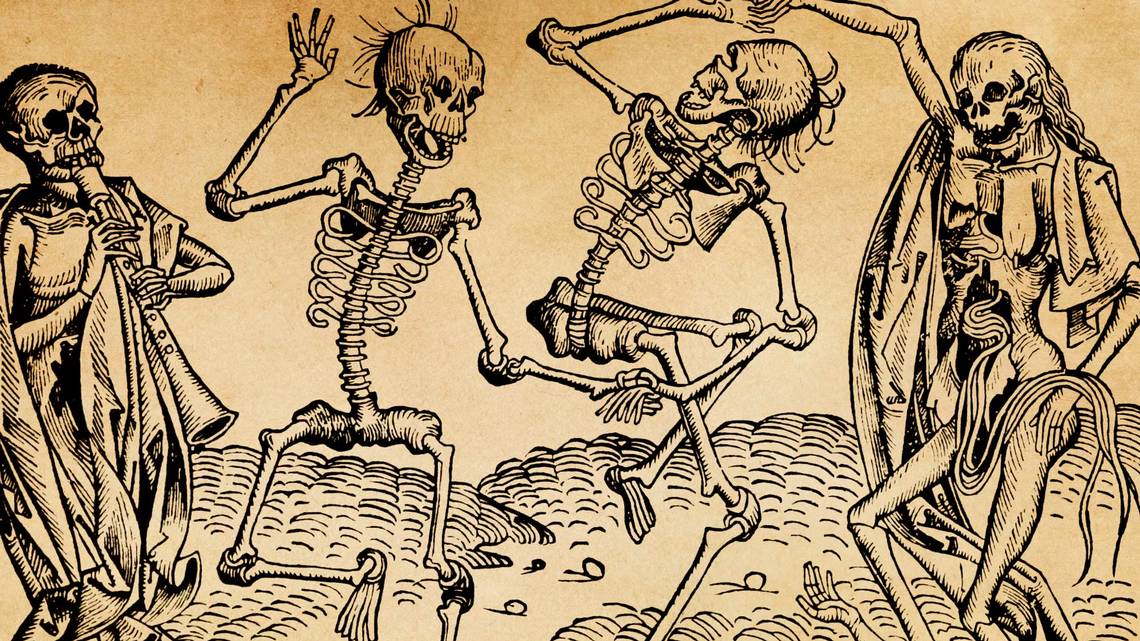
Patience is especially important when dealing with epidemics and diseases. Colds and flus have to run their course. Immunity takes time to develop. It helps to know that prior pandemics were not cured overnight. The Spanish flu epidemic of the early 20th century blazed for at least two years. The Black Plague ravaged humanity for decades in the middle of the 14th century. It continued to recur for centuries.

The Earth’s climate unfolds across even larger time scales. The Earth was once covered with ice. At other times, it was much hotter. What’s “normal” for us is not what’s normal for the Earth.

Humans thrive under present conditions. But homo sapiens only emerged a few hundred thousand years ago. Our species will go extinct, like most other species. That’s just the way it goes. It doesn’t help to fret about it.

But it does help to recall how resilient and adaptable we are. Our ancestors left the warmth of Africa and migrated across the globe. When we encountered cold climates, we invented clothing and furnaces. When we settled in hot, dry places, we invented irrigation and air conditioning. We’ve visited the ocean’s depths, Mount Everest, and the moon. We also invented vaccines and solar panels.

We’ll adapt to COVID-19 and to the changing climate. Yet those adaptations are at the level of the species. Our individual choices matter for our personal survival. But evolution does not care about our individual choices. So don’t waste too much energy worrying about the survival of humanity or civilization.

In general, it’s wise to stop fretting. It is not healthy to dwell on disaster or ruminate on impending doom. The ancient Stoics advise us to stop worrying about things that are not in our control. The climate, the pandemic, the political world, and the course of history are simply not up to me.

This does not mean we should stop being prudent. Choose wisely with regard to your own body and behavior. Wear a mask. And get vaccinated. But stop fretting about other people’s choices. And lower your expectations about a return to “normal,” whatever that is.

The Great Resignation, Growing Resentment, and the American Dream

Fresno Bee, Dec. 12, 20221

People are quitting their jobs. In some industries, it’s difficult to find workers. There are nursing shortages and teacher shortages. Some folks call this “the Great Resignation.”

The pandemic changed the work environment. Some people did not want to risk catching COVID at work. Others were not willing to adapt to remote work or comply with pandemic restrictions. There were government handouts for those at the bottom and a booming stock market for those contemplating retirement.

But the Great Resignation can also be mapped onto the resentment of the working class. This problem predates the pandemic. And it will continue.

Consider two local quitters. Congressman Devin Nunes quit in the middle of his term to become CEO of a Trump company. Fresno State’s football coach, Kalen DeBoer, abandoned his team before the bowl season to become the University of Washington’s head coach. Both are pursuing power and money. DeBoer will double his salary to over $3 million per year. Trump already awarded Nunes a Medal of Freedom. If Trump runs for president again, Nunes will be well-placed.

With these kinds of examples, it’s no wonder that the average schmo is sick of working. The fat cats make millions, while the average worker faces rising gas prices and student loan debt.

This is a system rigged for the rich. The funding priorities of American universities are ludicrous when a coach earns more in a year than a professor earns in a lifetime. And when powerful congressmen jump ship for the private sector, it’s clear why the country is foundering.

We should also consider the way the American Dream has morphed into the desire not to work. The Declaration’s “pursuit of happiness” is interpreted now as a life of leisure without labor. No one seems to believe in a “work ethic.”

Americans dream of making millions on crypto, winning the lottery or becoming online influencers. These dreams imply that hard work is for suckers. The “winners” in our society are those who get rich while doing the least work.

This was not the original American dream. A century ago, the sociologist Max Weber used Benjamin Franklin as an example of the Protestant work ethic. In previous centuries, Americans were suspicious of laziness and profiteering. Work was viewed as the path to salvation, while leisure and luxury were associated with sin. As Weber explained, we once thought, “not leisure and enjoyment, but only activity serves to increase the glory of God.”

Nobody seems to think that way anymore. We see ourselves as consumers instead of workers. We value leisure instead of labor. Nor do we feel loyalty to faceless corporations and heartless industries that show little concern for our well-being. It is no wonder that when the opportunity arises, people quit their jobs. And if people can make millions by jumping ship, we cheer them on rather than questioning their loyalty.

Most of us don’t have the options that Nunes and DeBoer have. And so we dream, while trudging through the motions. Meanwhile, resentment grows.

This is all obviously problematic. If you didn’t work, what then would you do? Good work is needed to make life meaningful. A life without labor can quickly become hollow and boring. At some point, you’ve watched everything on Netflix. Then what?

Human beings are creative, thinking animals. We need problems to solve. That’s one reason that work is good for us. Creative labor exercises the mind. Repetitive and mechanical work deadens the human spirit. The same is true, by the way, of some forms of leisure. The goal is to find meaningful and constructive activity. We need work — and play — that inspires and engages our humanity.

The Great Resignation is an opportunity to rethink our humanity and our economy. The American Dream has narrowed. Inequality is driving resentment. Some jobs remain inhumanly dull and dissatisfying. And our economy does not generate a sense of meaning, belonging or loyalty.

Let’s enliven our workplaces so that work becomes meaningful. Let’s find ways to prevent resentment from festering. Let’s stop idolizing indolent elites who make millions by doing nothing. We should reward loyalty and dedication. And we should remember the virtue of labor and the quiet dignity of a job well-done.

Abortion, Unwanted Pregnancy, and the Really Big Questions

As the Supreme Court revisits the abortion debate with the case of Dobbs v. Jackson Women’s Health Organization, let’s consider a broader and more systematic point of view.  Abortion is not a first choice or a best choice.  No woman gets pregnant intending to have an abortion.  Rather, abortion comes up as a choice only after something else has gone wrong. 

Outlawing abortion is a simplistic solution to a complex problem.  The problem is unwanted pregnancy—and any solution to that problem must involve many significant changes in our social lives that would need to occur to make unwanted pregnancies less likely.  This is related to the idea that abortion should be “legal but rare,” an idea I have discussed in more detail elsewhere.

The legal debate involves complex Constitutional questions.  Was the right to privacy articulated in Roe v. Wade wrongly “invented” by the Court in its 1973 decision, as conservatives argue?  What is the status of Roe as a precedent?   How does the idea of a right to privacy connect with other issues involving sex, marriage, and family law?

Those legal questions are different from the really big moral questions.  A fundamental moral question is “who counts as a moral patient?” This begs us to consider what kind of being a fetus is (and at what stage in its development it attains moral status).  The moral status of a fetus relates to the rights of its mother.  This includes the fact that the fetus is entirely dependent upon her.  I discuss these issues in much more detail in my ethics textbook and in a recent column

Abortion is considered as an exception to the general idea that pregnancy usually is a positive thing.  It is usually good to give birth.  But some pregnancies are unwanted.  One significant issue is pregnancy that results from rape and incest.  Another issue involves pregnancies that can harm a mother.  Another issue involves disabled fetuses.  And then there are cases in which a woman is just not ready—economically or psychologically—to become a mother.  Pregnancy can occur at the wrong time or for the wrong reasons.  And pregnant women can encounter physiological, psychological, economic, and social hardships.

What kind of a social world would we have to create so that unwanted pregnancy could be avoided and those hardships could be ameliorated?

Such a world would involve free and easy access to birth control and sex education—beginning at the age at which conception can occur.  This would empower women to avoid pregnancy in the first place.  A changed world would involve the end of sexual manipulation and deception.  This is not only about rape but also about less violent forms of sexual exploitation and coercion that occur in a world where women are objectified and manipulated by men into having sex.  A world with fewer abortions would be a world in which women had power over their lives, the bodies, and their sexuality.

Other issues arise in relation to fetal abnormality and women’s health.  A world with fewer abortions would include much better healthcare.  This better world would remedy environmental factors that contribute to fetal abnormality and unhealthy pregnancies.  Such a world would also provide substantial supports for disabled children and their families.  And in such a world, women’s health would be prioritized throughout a woman’s life.

Of course, this is not our world.  We live in a world in which women are objectified and manipulated into sex.  We live in a world in which sexual education often fails to enlighten and in which no one really discusses sexual ethics.  In our world, birth control is often not easily available.  We live in a world in which poverty, pollution, and lack of healthcare afflict far too many women and families.   

As the Court revisits Roe v. Wade, let’s also reconsider our social world.  The Court will decide a narrow question of whether states can limit or ban abortion.  This will not make unwanted pregnancies go away.  Even if Roe is overturned, illegal abortions will occur in states that ban it and women who want abortions (and can afford it) will travel to states that are more permissive. 

Meanwhile, in the background are significant social problems that come to a head in the issue of unwanted pregnancy.  Let’s work to solve those problems by empowering women, providing better sexual education (including education about sexual ethics and birth control), and by imagining substantial changes in our economic and healthcare systems. 

Americans Disagree About the Afterlife

That’s why we need religious liberty…

Fresno Bee, November 28, 2021

Most Americans believe there is life after death. A recent survey from the Pew Center reports more than 80% of Americans believe in some form of afterlife. Sixty-one percent believe in traditional accounts of heaven or hell. Others believe in some alternative, such as reincarnation. Only 17% do not believe in an afterlife.

The headline for this report focuses on political differences. Republicans are more likely to believe in a traditional idea of heaven and hell than Democrats. Our polarization seems to extend beyond this world.

One disagreement concerns who gets into heaven. A third of Americans believe that the path to heaven is through “one true faith” (a belief that is more common among Republicans). But many Americans are open-minded about this. A majority of us think that believers of “many religions” can gain eternal life.

Of course, opinion polls are not theology. These questions run deep and the answers are shrouded in mystery. These are things to ponder in the glow of firelight on cold and foggy winter nights. Even the theologians disagree. Some claim the “narrow gate” to heaven is reserved for believers. Others believe in “universal salvation,” which is the idea that everyone goes to heaven.

And what part of you will survive? Some say your body will be resurrected. Others think the soul lives on. Others suggest that even though you die, it is the memory of you that lives on in the mind of God.

Debates about the afterlife are ancient. Socrates said death was either a dreamless sleep or a journey to another world where good is rewarded and evil is punished. In either case, a good person has nothing to fear in death. If death is a dreamless sleep, then we won’t suffer from being dead. And if the religious stories about the afterlife are true, good people will be rewarded.

Plato believed in reincarnation. He suggested that the virtues we develop in this life help us choose our next life wisely. Plato’s elaborate scheme of transmigrating souls was rejected by materialistic philosophers such as Epicurus. Epicurus taught that death really is the end. He suggested that we should stop worrying about the afterlife and focus on happiness in this life.

Christianity rejected Epicurean philosophy by insisting on the importance of resurrection and the idea of divine judgment. One worry is that without the promise of heaven and the threat of hell, we may lack the motivation to be good. There is also the need for consolation in the face of suffering and evil.

Some good people suffer and die miserable deaths. And some evil people get away with murder. The universe does not seem fair if good folks go unrewarded and evil people don’t get punished. Immortality and divine judgment appear to resolve this discrepancy.

As we ponder these issues, it might help to know that Americans have often disagreed about them. One famous disagreement is that between John Adams and Thomas Jefferson.

Jefferson most likely did not believe in personal immortality. Jefferson was a materialist and a deist who was sympathetic to Epicurean philosophy. He seemed to believe that personality was situated in the brain and that the soul disappeared at death. Jefferson also suggested in a letter to Adams that Plato’s account of immortality was “nonsense” produced by Plato’s “foggy mind.”

But Adams believed otherwise. His belief in the immortality of the soul was central to his religious faith. In a letter to Jefferson, Adams said, “If I did not believe in a future state I should believe in no God.” In another letter, Adams said, “A future state will set all right. Without the supposition of a future state, I can make nothing of this universe, but a chaos.”

And so it goes. Adams believed that the afterlife gives meaning to this life. Jefferson thought such ideas were nonsensical.

This leads us, in conclusion, to the need for religious liberty and freedom of thought. Great minds disagree about immortality. And so do we. These questions are not answerable in this life. This means that we should be free to disagree. At some point, we will each confront this mystery directly. In the meantime, let’s leave each alone to ponder the imponderable.