Tyranny and Love

Fresno Bee, February 14, 2021

Love is powerful and perilous. It arouses and inspires, transforms and uplifts. But love can also be manipulated and exploited. Child abuse and domestic violence are appalling perversions of love, as is tyranny.

Love hovers in the background of the Trump impeachment. The violence of Jan. 6 was inspired by a strange love. At the rally that led to the insurrection, Trump thanked the crowd for their “extraordinary love.” The crowd chanted in reply, “We love Trump.” As those chants morphed into, “Fight for Trump,” the erotic became violent.

Trump eventually called for peace in a video where he described his opponents as “so bad and so evil.” He told his followers, “We love you. You are very special.”

This is not, of course, how love is supposed to work. Love is not supposed to look like a violent mob, a battered wife, or a cowering child. Love should make things better, not worse. It ought to be grounded in dignity and truth. It should enrich and include.

Love is easily manipulated. The abuser takes advantage of his lover’s infatuation. The gullible child, the frightened wife, and the devoted loyalist are bewildered by perverted eroticism. The victims of erotic exploitation are confused by lies, threats, and gaslighting. Their trust is twisted, their emotions manipulated.

The Greeks pictured Eros, the god of love, as a mischievous spirit. Eros inspires courage and sacrifice. But this can become fanatical. Eros afflicts us with a kind of madness that connects us to the divine. But love often becomes its opposite.

Freud suggested that eros and aggression are intertwined. Love inspires us to courageously defend those we love against insults and threats. This natural instinct distinguishes friend from foe. When this instinct is perverted, it fuels racism and ethnic violence. In joining together with those we love, we sometimes turn against those we hate.

Love is also connected to power and to madness. Erotic love can make people do crazy things. The sexual appetite destroys common sense.

Plato linked the madness of love to tyranny. He recognized that love empowers the tyrant. The tyrant’s self-love is excessive. Despite his narcissism, his followers love him. Their strange infatuation leads them to do shameful deeds on the tyrant’s behalf.

This happens in politics, in cults, and in families. Sadistic husbands, abusive priests, and vicious politicians remain beloved despite their crimes. This is as irrational as it is dangerous. Misguided love encourages and apologizes for the tyrant’s transgressions. The wife refuses to press charges. The cult closes in to protect the abuser. The partisans rally round the tyrant’s flag.

Despite what he says, the tyrant does not really love his adoring disciples. He loves only himself. When the chance arises, he will throw his devotees under the bus without blinking an eye.

Genuine love is different. The Apostle Paul said that love is patient and kind. It is not aggressive or easily angered. It is not proud or self-serving. It rejoices in the truth. Christians maintain that God is love. The Christian vision of love involves giving and forgiving, mercy and sacrifice.

A similar idea is found in Plato, who suggested that Eros holds the key to virtue and happiness. Tyrannical love closes us off in aggression and violence. Platonic love opens us up to friendship and wisdom.

Love enchants and expands. It leads us beyond the narrowness of ego toward something larger. It widens our circle and enriches the self. Plato said it connects us to eternal truths. Platonic love transforms both self and world. Things become more beautiful and joyful. We are inspired to embrace and to create.

There is energy and light in love. The lover’s flame warms and illuminates. This heat can also burn out of control. Love can sink into possessive jealously. Fanatical desire can become destructive. Tyrants abuse love in families, religions, and states.

The solution is to put Eros on trial. When Eros becomes tyrannical, it must be convicted and corrected. Love ought to help instead of hurt. It ought to decrease violence and build community. It ought to keep us open to the possible. And instead of causing terror and tears, it ought to give us hope.
Sloppy Thinking and the Trump Impeachment

Fresno Bee, Feb. 7, 2021

Sloppy language is a sign of sloppy thinking. Our culture is brimming with slop. Prose piles up. Text scrolls by. Much of this is unedited and unenlightening. We are awash in words. But we are not any wiser.

Good writing and good thinking are undermined by procrastination and lack of focus. I see this in my students’ work. The later the submission, the more likely the typos. This is a distracted age. Hyperlinks open the floodgates of diversion. These flowing tangents impede concentration.

Students can be forgiven for their sloppiness. They are still learning how to think and write. But in the professional world, there is no excuse. We expect precision of language in scientists, doctors, lawyers and political leaders. This expectation of precision helps explain why the typos in Donald Trump’s response to the recent articles of impeachment have been widely mocked.

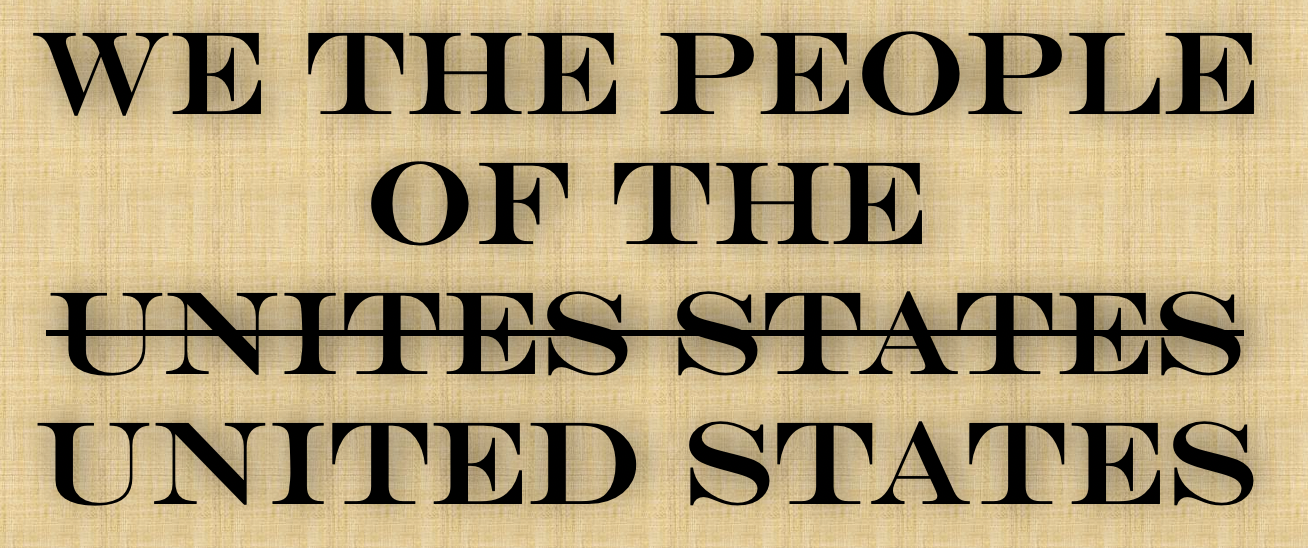
The former president is charged by the House of Representatives with inciting an insurrection. The gravity of this charge is profound. It requires a careful rebuttal. But on the first page of their response, Trump’s lawyers misspell the name of our country. The address line of the memo says “To: The Honorable, the Members of the Unites States Senate.” The same gaffe is repeated on page nine.

This typo is easy to understand. The “s” key is next to the “d” key. “Unites” is a word. So spell-checking software won’t flag it. Proofreaders often overlook titles and italicized words. We also know that Trump struggled to find attorneys willing to defend him. It is easy to imagine these last-minute lawyers frantically typing in the wee hours.

These kinds of mistakes happen when we are rushed or stressed. We’ve all been there. A deadline looms. You work hard to meet it. You hit send. Only later do you notice your linguistic blunders.

Often this is no big deal. The importance of spelling and grammar depends on the context. An occasional “covfefe” in a tweet only makes us human.

But there are moments when the text needs to be perfect. A typo in your resume can lose you the job. Grammatical ambiguity in contracts and laws cause legal battles.

Some documents have profound historical and legal import. Scholars quibble over commas and word choice in ancient religious texts. Disputes about the Constitution concentrate on textual subtleties. This linguistic quibbling is part of the current Trump impeachment.

The question about whether a former president can be impeached depends upon how you read the word “and” in the Constitution’s description of impeachment. The Constitution states, “Judgment in Cases of Impeachment shall not extend further than to removal from Office, and disqualification to hold and enjoy any Office of honor, Trust or Profit under the United States.”

Does this mean, as Trump’s defenders argue, that impeachment is no longer valid once the office holder’s term is completed? Trump’s attorneys say that removal from office is “a condition precedent which must occur before, and jointly with” disqualification.

On the other hand, the brief against Trump claims that the placement of the word “and” suggests that impeachment can also extend to disqualification from future office. The House impeachment managers argue, “The Framers then provided two separate remedies, both focused on an offender’s ability to seek and exercise government power: removal from office and disqualification from future officeholding.”

In the impeachment trial, in addition to this technicality of constitutional interpretation, we will see lots of discussion of Trump’s language. Words like “incitement” and “insurrection” will be debated, along with the general sloppiness of Trump’s language and thought. A significant question will be whether Trump actually meant what he said when he incited the crowd to riot.

The takeaway for ordinary people is to be more careful in speech and thought. Clear thinking depends on clarity of expression. This is especially important in formal communication. Technicalities matter in professional life. Typos can destroy careers. Laziness can lead to liability. And loose language can start a riot.

Wisdom is not measured by the volume or velocity of our words. Good thinking takes time. Good writing requires revision. If you want to be understood and respected, you must slow down and choose your words wisely.

Ethical Whiplash and Learning to Dance Like Socrates

Fresno Bee, January 31, 2021

Rapidly shifting values create confusion and distrust. To live well in tumultuous times you need strong character and a supple spine. Stability and strength should combine with flexibility and the creative imagination. As we seek our way in chaos, we need to learn how to think critically and also how to dance.

This is an era of ethical whiplash. The Trump-Biden seesaw has been bewildering. One bizarre manifestation was the appearance and disappearance of President Trump’s 1776 Commission report.

On Monday, Jan. 18, President Trump released a diatribe against the liberal academy, written by conservative pundits. Among other things, the report concluded that American universities are “hotbeds of anti-Americanism, libel, and censorship that combine to generate in students and in the broader culture at the very least disdain and at worst outright hatred for this country.

Historians panned the Trump report. The American Historical Association said that its authors “call for a form of government indoctrination of American students, and in the process elevate ignorance about the past to a civic virtue.” As soon as Joe Biden was inaugurated, on Jan. 20, the report disappeared from the White House website.

These gyrations are disorienting. This tumult at the top breeds cynicism, polarization, anger, and even violence.

The solution is to combine toleration with love of truth, to think deeply but also to take things lightly. Historical and ethical truth should resist the shifting winds. But these truths are complicated. So as we search for truth, we must also learn to leave each other alone and take disagreement in stride.

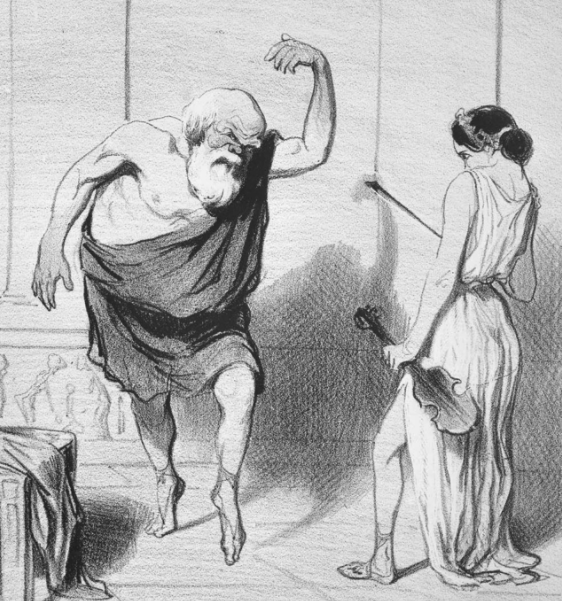
This requires a difficult balancing act. A model can be found in the idea of a Socrates who dances. Socrates criticized the mythic history of his day. But Socrates also danced and played.

Socrates lived in an era of ethical whiplash. A plague had ravaged Athens, along with a brutal war. There was profound moral, political, and religious uncertainty. Socrates was accused of being part of the problem by the Athenian equivalent of Trump’s “1776 Commission.” His accusers claimed he taught unpatriotic doctrines and that he corrupted the youth. They sentenced him to death.

Socrates was legendary for his simplicity and strength. He was a war hero. He walked barefoot in the winter. He drank, but never got drunk. And according to his friends, he danced, even in his old age.

Or so the story goes. This transpired over two millennia ago. Did Socrates really dance? Who knows? But the legend inspires us to seek strength and grace and poise.

Socrates remains a hero because he lived and died with courage, integrity, and good humor. Physical and mental strength helped him endure. Spiritual flexibility helped him thrive. He challenged authority and stuck with the truth. He also knew when to yield and how to maintain his equilibrium.

For those of us who are tired of the squabbling, perhaps the best thing we can do is hold fast to truth while letting loose with a dance. Socrates provides a model of a limber soul that is deeply rooted. The Socratic soul is well-balanced and resilient.

In our disembodied world of social distancing and virtual reality, we rarely dance. Instead, we hunch over our screens and surf our silos of information. It is no wonder that anger and resentment fester. Bodies are built to move. Voices are made to sing. And thought needs the freedom to wander.

Socrates teaches us to defend the truth. But he also takes things lightly. History shows that human nature includes nobility and absurdity, cruelty and grace. It also teaches us that wisdom is a dance.

Should Biden Pardon Trump?

Fresno Bee, January 24, 2021

On his way out the door, Donald Trump pardoned a bunch of his buddies. Trump didn’t pardon himself, as some suspected he would. And now one wonders whether President Biden might consider a pardon for Trump.

At his inauguration, Biden spoke of unity, love and healing. Would a Trump pardon help? This was Gerald Ford’s reasoning when he pardoned Richard Nixon. Ford explained, “the tranquility to which this nation has been restored by the events of recent weeks could be irreparably lost by the prospects of bringing to trial a former president of the United States.”

There is much to think about here. What is the role of justice and pardon in the life of the nation? And in our own lives?

The pardon power is easily abused. Trump pardoned his cronies, including his son-in-law’s father. Bill Clinton pardoned his brother, Roger Clinton. And Arnold Schwarzenegger commuted the murder sentence of the son of a political ally.

The pardon power exists because the judicial system is a blunt tool. The executive can make exceptions that correct failures and excesses — or that recognize the unique circumstances of wrongdoers.

Presidents Ford and Carter commuted the sentences or granted amnesty to tens of thousands of Vietnam era draft dodgers and deserters. After conscription was abolished and the war ended, it seemed odd to punish those who refused to fight.

Not everyone was happy about this. Those who obeyed the law and fought in Vietnam resented this move. It seemed to discredit their own service and sacrifice.

Justice requires fair and equal treatment. It also demands negative consequences for wrongdoing. If you do the crime, they say, you must do the time.

Strict retributivists argue that forgiveness is unjust since it fails to give wrongdoers what they deserve. But justice is not the only thing that matters. Forgiveness is beneficial emotionally and psychologically. It heals resentment and promotes kindness. Mercy can build reconciliation and help create a new future.

The world’s religious traditions often celebrate these values. Some even imagine God as merciful and compassionate. But how does God’s mercy relate to divine justice? If you want to generate an argument, ask a friend whether they think God would forgive Hitler.

Forgiveness is an exception to the rule of punishment. For this reason it appears arbitrary and capricious. It unfolds that way in our own emotional lives. Anger and resentment fester, until one day they fade away. It is often not clear why this happens.

There is a mystery here that theologians call grace. Forgiveness is a gift. To forgive is to give up on anger and the demand for punishment. It is to give in to love, compassion, and other tender-hearted values.

But should presidents and governors have the power to bestow this kind of gift? In the old days of kings and emperors, people thought that the sovereign’s mercy was guided by God. But we know that our leaders are merely human. And we see that the pardon power can be abused for corrupt and venal purposes.

Nepotism and cronyism are obvious problems. It is wrong to use the promise of a pardon to create loyalty in the cover up of a crime. It is also wrong to sell pardons or to pardon political cronies. These corrupt uses of the pardon power make it appear that justice is not blind, but that she is only winking at the rich and well-connected.

This shows us the deep political problem of the pardon power. Its promiscuous usage undermines faith in the rule of law and the fairness of the justice system. In defense of the rule of law, it seems that we must make examples of those who break the law.

After Ford pardoned Nixon, many were outraged at justice denied. The tranquility Ford hoped for failed to materialize. Nixon appeared to have gotten away with his crimes. As a result, Ford’s political power waned.

So after you are done arguing about God and Hitler, turn the conversation to Ford and Nixon — and Biden and Trump. What is the function of justice, punishment, and pardon in the life of our nation? And what is the role of mercy and forgiveness in your own life?

Erotic Untruth and the Violence of January 6

The January 6 attack on the US Capitol gives us a lesson in the futility of violence.

Human beings have a terrifying tendency to kill each other over horseshit (to use a technical term).  Violence typically rests upon a delusion.  The bigger the lie, the worse the violence. 

Religious and ideological warfare are extreme cases.  Terrorism and cult violence routinely occur: with Jonestown, Heaven’s Gate, Aum Shinrikyo, the Manson Family, in Waco with David Koresh, and so on.  There is an analogy linking QAnon to al Qaeda. 

Some of the Trump insurrectionists believed outrageous falsehoods: that Biden and Pelosi were communists; that Covid-19 was a sinister plot; that pedophiles, Satanists, and lizard people had infiltrated the government.  This horseshit was accompanied by other more insidious lies: that the election had been stolen; and that the Congress and Vice-President could overturn the Electoral College. 

A broth of bullshit was brewing when the President said, “Our country has been under siege for a long time.”  He said, “If you don’t fight like Hell, you’re not going to have a country anymore.”  This rhetoric is eschatological and existential.  It is not surprising that the pot boiled.

The rioters believed they were patriots leading a noble revolution.  But they did not seem to think beyond the immediate outburst of violence.  What was supposed to happen next?  And why did they think they could get away with it?

Some have blamed the rioters’ obliviousness on the sense of impunity that comes from white supremacy.  But at bottom this was a product of the delusion of violence.

Violence is mired in immediacy.  It is reactive and episodic.  Violence focuses the mind on the present moment.  Violence promises simplicity, clarity, and consummation.

This promise is false, of course.  But violence is not about truth.  It is about power in the moment.  It is an expression of anger and contempt.  It is not strategic.  It is emotional, exciting, and erotic.

Tangled webs of braggadocio and bullshit typically lead to violence.  Closed networks reinforce delusion and breed a sense of superiority and impunity.  Critical thought is destroyed by anger, fear, and the love of brothers-in-arms.  When the delusions are eschatological, common sense is trampled underfoot. 

We have known that violence is rooted in psycho-social dynamics since Cain killed Abel and Achilles sailed off to Troy.  Freud described how hate and violence are perversely linked to love.  Aggression against “the other” binds us together and gives us meaning. 

It does not matter that our ideology is a lie.  In fact, falsehood binds us tighter together in an erotic dance.  When some “other” challenges our delusions, we strike out.  When those delusions involve love and identity, the other becomes a menace who must be destroyed. 

Religious violence has often worked this way.  Sometimes religious violence involves tangible conflicts about land or resources.  The Crusades had political and economic causes.  But the faithful frequently fight in the name of the fabulous.  The warriors themselves want glory, as well as penance and atonement.  They want to be purged and healed, uplifted and inspired.

And so human beings continue to kill and die in defense of unprovable myths.  The most dangerous myth of all is the myth that links violence to righteousness and redemption.  Prior to Trump’s speech on January 6, Rudy Giuliani proposed “trial by combat.”  This medieval nonsense holds that somehow the gods ensure that the righteous defeat the unholy. 

But violence has nothing to do with morality.  Good guys get killed as easily as bad.  Violence occurs at the level of physical power.  It decides nothing about truth, holiness, or moral worth. 

The myth of violence is essentially pagan.  It reflects a primitive theology.  To view the world as a battlefield supervised by the gods is to ignore a more elevated notion of the divinity.  If there is a God, wouldn’t He want us to reason together rather than to kill each other? 

The solution to the problem of violence is as old as Jesus and Socrates.  Jesus said the peacemakers were blessed.  And Socrates encouraged us to ask critical questions about the horseshit that encourages violence.  The truth is that violence is not reasonable.  Nor is it loved by the gods.