AI and Education: Wonder and the Desire to Learn

Fresno Bee, August 24, 2025

Education is useful in many ways: People need to learn to read and write, and we must also learn social and emotional skills that help us navigate the complexities of life. But education is also intrinsically valuable. It is a fundamental good for thinking beings.

We forget this in a world that views education as a mere means to obtaining a degree or credential, and the prestige that comes with them. When viewed in this way, cheating is tempting — a shortcut to the desired result. Today, the siren song of AI offers another way to avoid the hard work of learning.

Teachers and professors have always fretted about cheating. Now, artificial intelligence poses further challenges. AI can be a useful tool, but when it’s a substitute for genuine thought, it corrupts education.

It is important to prevent shortcuts to genuine thinking and learning. Cheating is wrong because it is dishonest. And it’s unfair to those who don’t do it. But the main problem is that the cheater has not learned anything.

Some discussions of this topic devolve into a cat-and-mouse game of detection and evasion. As teachers try to prevent unethical behavior, cheaters try to avoid getting caught. But this is not enough: Curiosity and wonder are not produced by obedient rule-following. The deeper problem is the general view of education as a mere means to some other end.

This instrumental view of education is typical in contemporary conversations about schools and universities, where folks talk about education in purely economic terms. This approach asks, what is the return on investment? Or, how does education contribute to economic growth?

Those are relevant questions. But the worth of education is not merely its cash value. More important is the way that education transmits culture and meaning. Education facilitates social and moral development. It leads young people to become decent adults and responsible citizens.

Education also directs our minds toward higher things, including the big questions of justice, beauty and truth. To be fully human is to learn to think critically about these perennial questions: What is good? What is beautiful? And what is true?

In wrestling with these questions, we also discover the power and joy of thought itself. Human beings have an innate desire to think and learn. We are curious beings, with brains that seek stimulation. We wonder about ourselves and the world around us. We explore and create. The love of learning makes us fully human.

An education that does not stimulate wonder is mere training — it may be fit for slaves and animals, but it’s not adequate to the nobility of the human spirit.

The sages of the world have noted that people are often as confused about the purpose of education as they are about the meaning of life. Business-minded folks think life is all about profit. Others focus on pleasure and amusement. But the sages suggest that the best life is spent cultivating the mind.

Aristotle celebrated “intellectual enjoyment in leisure.” An example he discusses is music: The music industry generates profits, and music can be pleasantly amusing. But the study of music leads to deeper things — music stimulates the mind and leads to fundamental questions about sound, ratio, creativity and the meaning of aesthetic experience.

The same expansive form of thinking occurs in the proper study of mathematics, literature, history, religion or science. These studies are useful for citizens and workers. But they are also valuable for their own sake, as sources of intellectual enjoyment.

And this is what cheaters and those who instrumentalize education misunderstand: The goal of education is education itself, not the outcome of a grade or a degree. Artificial intelligence is similarly confusing. Machines can quickly distill information. But the joy of thinking is only available to spiritual beings like ourselves. Human beings are driven to learn by our innate curiosity, our passionate creativity and our sense of wonder.

As we return to classrooms this fall, let’s recall the intrinsic value of thinking. Authentic and humane education should stimulate the human spirit. One might suppose that education satisfies a desire for knowledge. But the love of learning is never satisfied. Curiosity is open-ended and insatiable. Education does not merely shed light, it also kindles a fire.

Read more at: https://www.fresnobee.com/opinion/readers-opinion/article311796031.html#storylink=cpy

The Power of Thought and the Wonder of Nature

Fresno Bee, April 14, 2024

Far from being fearful, the total eclipse inspires wonder, awe and humility

Last week’s solar eclipse shows us how far we have come in our understanding of nature. We now predict eclipses with precision. The calculations of modern astronomy are obviously superior to primitive superstitions that saw eclipses as omens or as the work of gods and demons.

Western philosophy and science are often traced back to the ancient sage Thales of Miletus, who was famous for predicting an eclipse in May 585 BCE. Some say that Thales was the first ancient star-gazer to correctly predict an eclipse. I doubt that. Ancient cultures carefully observed the sky. Thales likely learned astronomy from the Egyptians. Nonetheless, the ability to predict an eclipse was a sign of wisdom.

As the saying goes, “knowledge is power.” Understanding the causal story behind an event provides us with power. Broad understanding of nature creates a kind of mastery. And knowledge alleviates the anxiety of the unknown and uncanny. Knowing why things happen makes them less spooky. It also allows us to take action to avoid harm, generate benefits and gain control. This is the promise of science, mathematics and natural philosophy.

Despite this promise, it took centuries of cultural struggle for the scientific method to prevail. Religious institutions often resisted that change. The most famous case is the Inquisition of Galileo, which began on April 12, 1633.

Galileo defended the idea that the Earth moved around the sun — the heliocentric model of the universe. He based this on the astronomical calculations of Copernicus and his own observations of the heavens through telescopic lenses. But the religious dogma of the day held that the Earth was the center of the universe and that the other celestial bodies moved around our fixed world.

Galileo challenged that idea. But he was not an atheist. He thought that science helped elucidate the divine order of things. His scientific observations were meant to read the book of nature as a supplement to the holy book of Christianity. But Galileo’s heliocentric model called some of the Bible into question. Galileo lost his struggle with the church. He was forced to recant.

It took centuries of further development to come up with the present model of the cosmos. Today we know much more about our place in the universe. We know that our sun is one star among the billions in the Milky Way and that our galaxy is one among billions of galaxies. We also know that there are other planets orbiting distant stars. It is likely that eclipses happen on other planets as well, since there are other moons orbiting other planets, even in our own solar system.

And yet, there is something special about an eclipse as it occurs on Earth, since there is a kind of symmetry between the apparent size of the moon and the sun. If the moon were smaller or were farther away, there would be no such thing as a total eclipse. Nor would there be a total eclipse if the sun were larger.

Scientists predict that at some point the sun will grow larger and the moon will move farther away from the Earth. This means that at some point in the distant future, there will no longer be total eclipses on Earth.

That fact should inspire wonder, awe and humility. We are fortunate to live here now. On this planet at this time, our satellite and sun work together in a special way. Even if there are other planets out there with other moons, and other forms of intelligent life, total eclipses may be rare.

It is important to dwell in this kind of wonder and awe. Scientific knowledge shows us how privileged we are to be here, now. It reminds us how fragile our existence is. From this we might develop a kind of humility and insight.

Thales seemed to possess that kind of wisdom. He celebrated the unique beauty of the universe as a divine gift. He said that the mind is swift and powerful, since it is able to expand everywhere. And he claimed that time is the source of wisdom, since it brings everything to light. There are moments of darkness. But if we are patient, persistent and wise, the light may dawn.

Read more at: https://www.fresnobee.com/opinion/readers-opinion/article287610835.html#storylink=cpy

Compassion and Suffering: Tears and Laughter

Fresno Bee, April 4, 2021

Pope Francis once said that compassion is the language of God. Let’s seek it this Easter

Compassion is celebrated by most of the world’s moral traditions. Compassion is the source of human connection. Some think it even goes beyond that. Pope Francis once said that compassion is the language of God. But philosophers worry that compassion is too passive, subjective and melancholic.

The Dalai Lama is an important voice of compassion. He explains that as compassion grows, we develop “both genuine sympathy for others’ suffering and the will to help remove their pain.” Compassion is more than passively feeling the other’s pain. It is also an active response that wants to alleviate suffering.

Buddhist teachings about compassion are often oriented around suffering. A colleague of the Dalai Lama’s, Thupten Jinpa, explains, “At its core, compassion is a response to the inevitable reality of our human condition— our experience of pain and sorrow.”

This is obviously important in a world that includes far too much pain. If we were all more concerned with the suffering of others, the world would be a better place. And while this focus on suffering can seem gloomy, the Buddhists connect compassion with tranquility and happiness. The Dalai Lama says, “The more we care for the happiness of others, the greater our own sense of well-being becomes.”

This may seem paradoxical. But it is only a paradox if compassion is understood as shared suffering. Melancholic compassion is only half of the story. Compassion is also at play in laughter and love-making. Compassion shares joy as well as tears.

To keep compassion too tightly bound to suffering and grief is like having Good Friday without Easter. The point of the Easter story is not to wallow in the darkness, but to re-emerge into the light.

Compassion shares “passion” or emotional experience with others. Our passions are not only negative. Grief, mourning, and despair are certainly important emotions. But wonder and delight are also powerful experiences. Compassion moves us to share the passions of the other person, in sadness and in joy.

Compassion feels good because we are social beings. The receptiveness of compassion is wired into our brains by evolution. As social beings, we enjoy sharing in play, poetry, music, and in the rituals of social life. We do better when we do things in common. Compassionate activity overcomes loneliness and despair. It also allows us to share in playful fun.

One recipe for happiness is found here: if you want to be happy, hang out with happy people who are doing happy things. Happiness — like sadness — is contagious.

Compassion is only melancholic when it is confused with pity. Pity dwells in the negative. We don’t pity people who are doing well. Pity is reserved for the suffering.

The philosopher Immanuel Kant warned against pity. Compassionate pity can “infect” us with the suffering of others, he said. If I suffer because another person is suffering, the result is simply more suffering.

Compassion is better understood as a natural urge to help those who suffer. And while this urge can lead us to act, Kant thought it was insufficient. Sometimes our compassionate urges prevent us from doing our duty. This occurs, for example, when mercy prevents us from punishing those who deserve to be punished. Kant thought that compassion had to be guided by justice.

A similar problem holds for the famous Golden Rule. Love of the neighbor is important. But this does not mean you ought to give the neighbor anything he wants. Love without justice is blind. But justice without mercy is cruel.

A further problem occurs when compassion becomes intrusive. Sometimes we want companionship in our suffering. We cry better (and laugh better) in the company of friends. But sometimes, we simply want to be left alone.

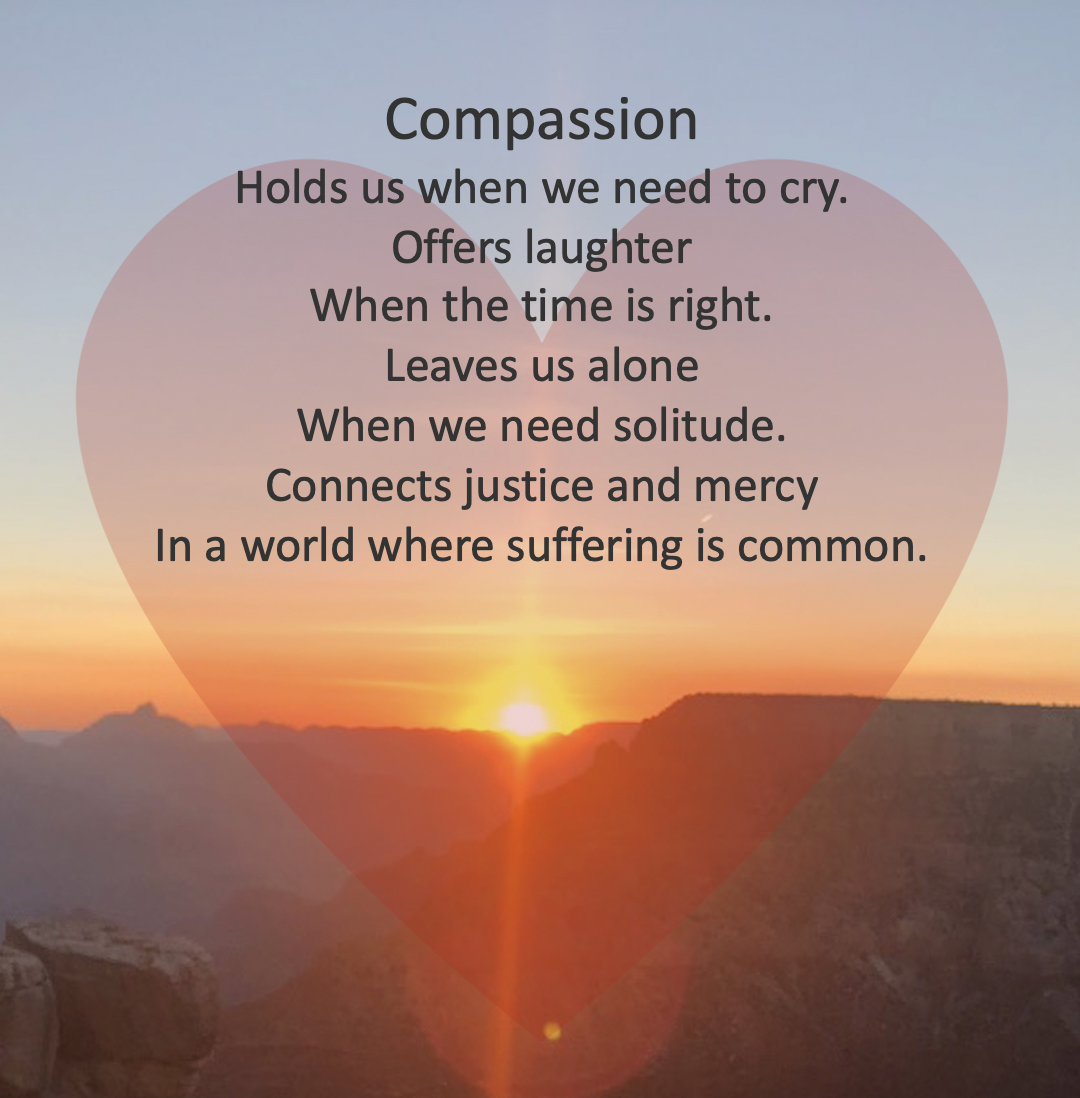
Of course, compassionate people understand all of this. Truly compassionate people have a knack for knowing what is needed. They hold us when we need to cry. They offer laughter when the time is right. They leave us alone when we need solitude. And they try to connect justice and mercy in a world where suffering is common.

Lessons from the Inca Trail about Wonder, Gratitude, and Nature

Searching for wonder in the reality of nature

Fresno Bee, July 29, 2018

Modern human beings are alienated from nature. We live in air-conditioned rooms. We relate to higher things through dry, ancient books. We rarely see the stars or feel the rain. We are rootless.

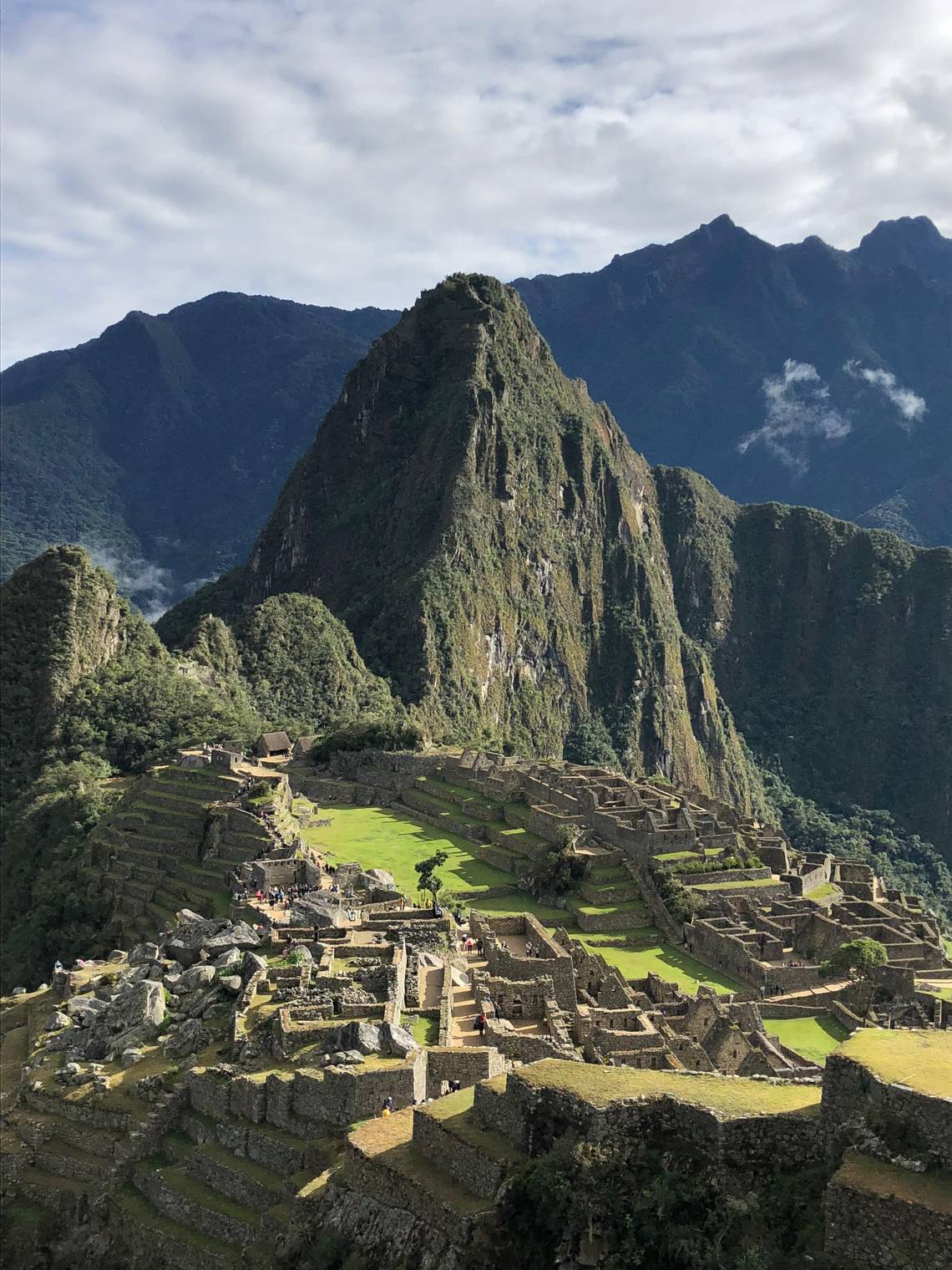
I have been thinking about our alienation from nature after trekking through the Andes of Peru. The trek ran over high mountain passes, where we endured freezing rain and cold, windy nights. We witnessed wild jungles and wandering llamas. And we celebrated the blessing of sunshine, which gave us warmth and the rainbow.

Our guide paused at the entrance to Machu Picchu to give an offering. He gathered three coca leaves into a shape that represents the mountains. He presented this gift to each of the four directions. He left the coca in a secret niche at the Sun Gate.

It made sense to give thanks to the mountains, to the elements and to the coca that made our journey possible. Coca tea helps fight altitude sickness. Its salutary effect is a kind of magic. There is also magic in the sun’s heat, the river’s song, and the rainbow’s glow.

fiala pix.jpg
Machu Picchu, the Incan citadel set high in the Andes Mountains in Peru. Andrew Fiala Special to The Bee

Religion in its best and original sense comes from the sense of wonder before the power of nature. It reminds us that we belong to the earth. We cannot live without land, water, and sun. These elements combine in the plants and animals that nurture us.

Nature is not all ease and comfort. Forest fires are rampaging in this long hot summer. Snow, rain, and cold are dangerous and difficult. But when the rains come or the sun breaks through, we give thanks.

In aboriginal Andean religion, the earth is a spiritual being called Pachamama, the earth mother. The mountains themselves are spiritual beings called Apus. These are powerful and mercurial beings. They can be dangerous or benevolent. To modern ears, this sounds far-fetched. But many cultures speak of mountains as divinities with personalities.

We still name mountains and understand their personas. In Yosemite there is Half Dome and El Capitan. Their presence is palpable. We also recognize that mountains do things. Climbers and backpackers have a saying: “Mountains make their own weather.” Temperatures change quickly. The wind comes on strong. Fire, rain, and snow are sudden in their appearance.

Modern science explains the orographic effect. Mountains interact with moving air masses. Changes in elevation cause changes in temperature that cause precipitation and swirling winds. Mountain weather is easily explained by atmospheric science.

But scientific explanation does not touch the lived sense that mountains are powerful beings. It makes sense to say that the mountains are angry or friendly. Thunder and lightning are threatening. Forest fires are malicious. Floods are cruel. Gentle blue skies and cool mountain streams are gracious and hospitable.

Much of the magic of nature is local. The sun is wrathful in the desert. It is cheerful in the cold high places. The rain is gentle in the valleys. It is vicious at 13,000 feet.

Those who live and work on the land are in touch with the personality of their local geography. Their livelihood comes from Pachamama. Their well-being depends upon the benevolence of the Apus.

There are very few farmers and shepherds left. We are no longer connected to nature.; we no longer belong to her. We do not know where our water and food come from.

The benefit of civilization is obvious. We dam the rivers and control the fires. We farm on an industrial scale. We drive and fly, instead of walking. We live in comfort and safety.

But this benefit is not without its costs. We are uprooted and dislocated. We lose track of who we are and where we belong. We no longer experience wonder or gratitude in their original organic sense.

This is not to say that we could go back to a world of Apus and the Pachamama. The world has moved on. But it is important to remember what we have left behind. We fill our lives with imitations of reality, flickering on screens. Out there in the natural world, the fires and storms still rage. And it is still possible to experience wonder, fear, and joy in the presence of the real.

Wishful thinking at Christmas

At Christmas, maybe a little wishful thinking is OK

Fresno Bee, December 24, 2016

Much of life depends upon voluntary suspension of disbelief. We often set truth and reality aside to play in the fields of fantasy.

Perhaps we are too gullible. Fake news floods our screens. We are awash in bunkum and balderdash. Major dictionaries picked “surreal” and “post-truth” as words of the year for 2016.

Science and logic help us distinguish fact from fiction. But this problem is psychological. We enjoy our humbug. Sensational hoaxes are much more fun than reality. And the will to believe provides us with wonder and joy.

In 1897, the New York Sun famously declared, “Yes, Virginia, there is a Santa Claus.” The editor – with the fantastic name Frances Pharcellus Church – explained, “The most real things in the world are those that neither children nor men can see. Did you ever see fairies dancing on the lawn?”

“Of course not,” he said. “But that’s no proof that they are not there. Nobody can conceive or imagine all the wonders there are unseen and unseeable in the world.”

Mr. Church concluded that faith, fancy, poetry, love and romance reveal the beauty and glory of the world. These things, like Santa Claus himself, are “real and abiding.”

This inspiring essay would fail a critical-thinking class. Lack of proof is not proof. Wishful thinking does not make things true. Imagined wonders are not real just because we want them to be.

A LIFE OF PURE, UNADULTERATED REALITY WOULD BE DISMAL AND DULL.
THE COSMOS CARES LITTLE FOR OUR HAPPINESS. BUT THIS EMPTY UNIVERSE ALSO CONTAINS CHRISTMAS.

And yet, we do not live by truth alone. We love our illusions. We are fascinated by fables and fantasy. Poetry transports us. Music moves us. The unreal worlds of television, film and literature fill our empty hours.

A life of pure, unadulterated reality would be dismal and dull. The cosmos cares little for our happiness. But this empty universe also contains Christmas.

The miracle of birth cannot be reduced to mere biology. Love, beauty and joy transcend material reality. Generosity and forgiveness can break long cycles of violence and hatred. But these wonders cannot be enjoyed unless we believe in them.

On Christmas Eve, the will to believe takes center stage. Christmas stories hinge upon the crisis of faith of an incredulous child. Belief in the unbelievable empowers Santa and his sleigh. Credulity is the ticket to the Christmas wonderland.

The same is true of art. Music is merely sound and rhythm. Poetry is scribbles on a page. Films are flickering, two-dimensional images. We must allow ourselves to be enchanted by these things. And when we give in to the illusion, we encounter meaning that transcends the material world.

Religion and politics also require suspension of disbelief. Bread and wine are transformed. Flags and insignia are not mere cloth. We encounter the sacred and sublime through a leap of faith.

It is easy to dismiss this as humbug. A cynical Scrooge will complain that love is hormonal, justice is power, and truth is the echo of a lie well told. Critical reason bursts the bubbles of the false and fantastic.

THE CHALLENGE IS TO STEER A MIDDLE COURSE. WE NEED TO KEEP WONDER AND HOPE ALIVE.
BUT WE ALSO NEED TO KEEP OUR HANDS ON OUR WALLETS.

But we do not live by reason alone. Poets and playwrights know this, as do shysters and charlatans. And therein lies a significant problem. Like other artists, the con artist plays upon our credulity. He sells us a pack of lies, which we gladly pay for.

The challenge is to steer a middle course. We need to keep wonder and hope alive. But we also need to keep our hands on our wallets.

There are times when it is appropriate to set reality aside and celebrate the play of the imagination. Christmas is surely one of those times. We sing the songs and tell the tales, weaving a fantasy that glows in the child’s wondering eyes. F.P. Church rightly celebrates “the glad heart of childhood.”

We cannot live every day as if it were Christmas. The adult world includes violence, hatred, stupidity and ignorance. Sober thought, grounded in reality, is the cure for these maladies.

But despair is also a problem. Wonder and hope are often in short supply. And cynicism pinches our hearts.

So yes, Virginia, we need to believe in Santa. Tomorrow we’ll be back to battling bull. But today we play with the fairies, creating a world of generosity and love for our children to enjoy.

http://www.fresnobee.com/living/liv-columns-blogs/andrew-fiala/article122726694.html