Religious Liberty

Fresno Bee, Nov. 2, 2025

The Trump administration’s call for a religious revival is worrying

Religious freedom is the first liberty of the First Amendment. As we consider our rights in this time of crisis, we should ponder the meaning of these 16 words: “Congress shall make no law respecting an establishment of religion, or prohibiting the free exercise thereof.” Americans are free to believe whatever we want, but the government should not use its power to support or favor any particular religion.

One wonders then about the White House’s “America Prays” initiative. This is a call to prayer connected with the upcoming 250th anniversary of the Declaration of Independence. When he unveiled the program last month, President Donald Trump explained that “to have a great nation, you have to have religion.” He said, “When faith gets weaker, our country seems to get weaker.” And, “We’re defending our rights and restoring our identity as a nation under God.”

This top-down call for religious revival is worrying. Our political leaders have a “free exercise” right to pray. They are at liberty to discuss religion and promote it, as free citizens. But this becomes problematic when the government leads a religious revival.

Just this week, Sean Feucht, a pastor associated with the Trump administration, revealed that, as the 250th anniversary approaches, “We are planning and plotting to do revival meetings sponsored by the U.S. government all across the nation.” This would include a “giant, massive” worship event at Mount Rushmore.

Feucht may be speaking loosely here with regard to a government-sponsored revival. The government could permit citizens to meet in public for religious purposes. But if the government sponsored a revival, this would violate the First Amendment’s “establishment clause.”

A government-sponsored religious revival will inevitably end up picking sides in disputes about religion. What will non-Christian people think about their tax dollars being spent to sponsor a Christian revival? And even within Christianity, there are deep disagreements. Will the revival include Mormons and Methodists, Catholics and Congregationalists?

And what about the growing number of non-religious people? Around 30% of Americans are not affiliated with any religion. A recent survey from the Pew Center found that 68% of Americans think that religion is “losing influence.”

This general decline of religion helps explain the rise of Christian nationalism. In my recent book on this topic, I explain Christian nationalism as “post-secular backlash.” Some Christians worry that the First Amendment system has allowed too much freedom of religion. They blame our growing lack of religious commitment on a world in which religious liberty has gone too far.

Proponents of Christian revival push back against the way the First Amendment has been applied and understood. Some want to bring back school prayer and teach Bible lessons in schools. But First Amendment cases have often been driven by Christians who want to practice their faith in their own way. Christians have been plaintiffs in recent cases opposing the promotion of the Ten Commandments in schools in Louisiana and the Bible in Oklahoma schools.

These Christians don’t want the government to impose a preferred text, prayer or interpretation of faith. It is worth asking whether we trust government officials — with all their flaws — to shape the faith of the nation.

The American Founders did not. That’s why they emphasize religious liberty. In 1779, Thomas Jefferson authored a “Statute on Religious Freedom” for the state of Virginia. This was passed into law in 1786 with the help of James Madison, who went on to author the First Amendment. The Virginia Statute says, among other things, that it is an “impious presumption” for “fallible and uninspired men” to assume “dominion over the faith of others.”

The word “dominion” is important. History records many struggles for power among religious sects. When governments get involved in these power struggles, it antagonizes some parties, while privileging others.

Perhaps a religious revival could help a nation lost in loneliness, addiction and violence. But which faith will lead the revival? And those who have left religion behind may imagine a different sort of revival: of science and rationality. If there is to be a revival, this should be the work of free citizens. It is not the business of the government.

Read more at: https://www.fresnobee.com/opinion/readers-opinion/article312711431.html#storylink=cpy

Musk and Strangelove: Should we stop worrying and love the wood chipper?

Fresno Bee, Feb. 9, 2025

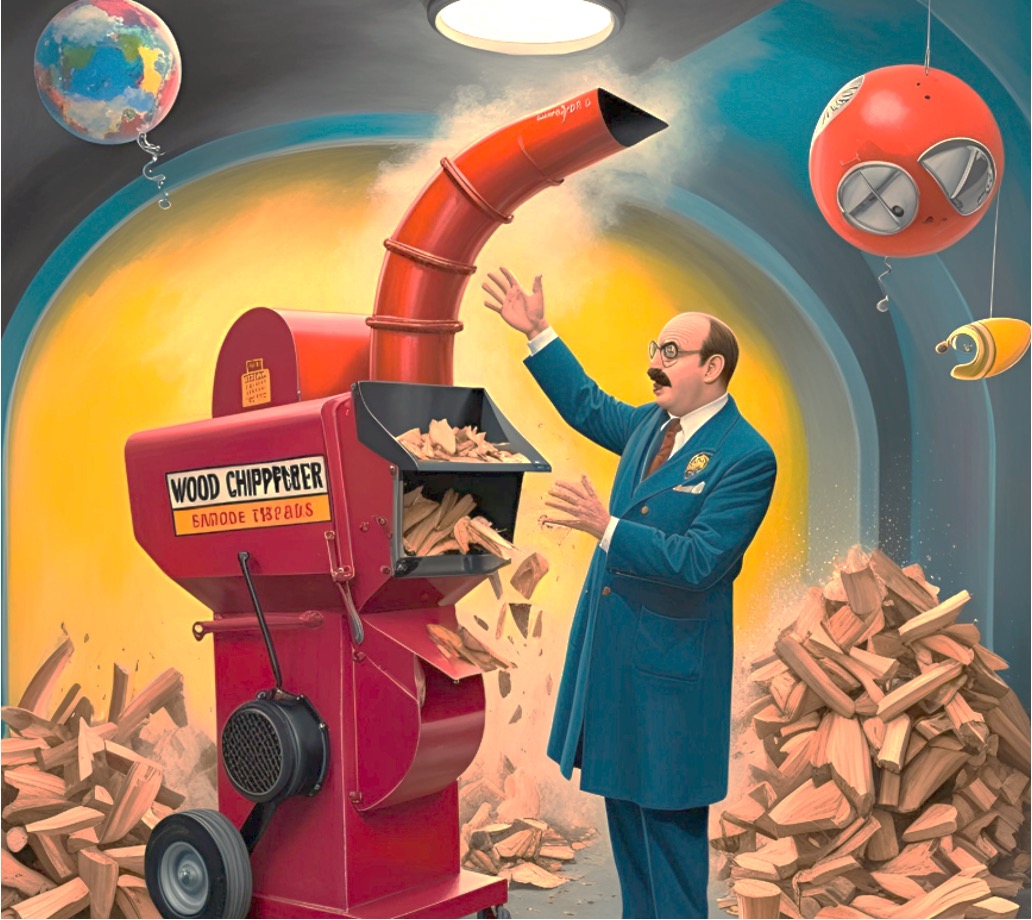
Should we worry about Elon Musk’s mandate to overhaul the government?  Musk is the world’s richest man.  He runs multiple companies.  Despite this workload, he has spare time for the Department of Government Efficiency.  He said this week that “DOGE is the wood chipper for bureaucracy.” 

Some may think Musk’s mandate should have been revoked after the strange Nazi salute incident.  But Musk gave nearly $300 million to Donald Trump’s campaign.  And the President likes him.  “Elon is doing a good job,” according to Trump, who also said, “He’s a smart guy. Very smart.”

This almost seems like some elaborate parody.  That old movie, “Dr. Strangelove,” comes to mind.  Dr. Strangelove was an expert consultant whose arm would spontaneously extend in a Nazi salute.  He had a bizarre plan to repopulate the earth after nuclear doomsday.  The satirical lesson of the film was to “stop worrying and learn to love the bomb.” 

Should we stop worrying?  When Joe Biden left office, he worried about oligarchy and technocracy.  In his farewell speech, he said, “Today, an oligarchy is taking shape in America of extreme wealth, power and influence that literally threatens our entire democracy.”  He further warned against, “a tech-industrial complex that could pose real dangers for our country.” 

Biden, of course, assumed that democracy is valuable in itself.  But is it?  Democracy is unstable and inefficient.  Congressional logjams and partisan bickering make it difficult to get things done.  Elections disrupt the status quo.  And we, the people disagree about what is valuable and true. 

Oligarchic technocrats may think that smart efficiency experts armed with artificial intelligence can do a better job than seasoned bureaucrats and elected officials.  The problem is that we fundamentally disagree about who is smart, and what kind of expertise is valuable.  And as we are seeing, wealth buys access for cronies and kooks, while creating a facade of intelligence.

These are the fatal flaws of so-called “epistocracy,” which is a fancy word meaning “rule of experts.”  This idea goes back to Plato, who thought that the ideal society would be ruled by a wise and virtuous philosopher-king.  But there are no wise and benevolent kings.  We disagree about what counts as wisdom and virtue.  And rich oligarchs are good at pretending to care.

Jason Brennan, a professor at Georgetown University, has defended epistocracy, arguing that democracy fails because it empowers ignorant, disengaged “hobbits” and reckless, ideological “hooligans.” Brennan explains that in a democracy we put our fate “in the hands of ignorant, misinformed, irrational, biased, and sometimes immoral decision makers.”  Brennan’s solution is “rule of the knowers.” 

Expertise is obviously valuable.  We want experienced pilots to fly our planes, and smart dentists to fix our teeth.  But expertise in one domain does not necessarily transfer to another.  We don’t want dentists to fly our planes, or pilots to fill our teeth. 

Nor are experts politically or morally neutral.  Experts are mere mortals.  They have values, interests, and biases.  Smart people disagree about all kinds of things.  And sometimes even smart people do dumb things.

That’s why there ought to be checks and balances.  As James Madison said, “If men were angels, no government would be necessary. If angels were to govern men, neither external nor internal controls on government would be necessary.”  The system of checks and balances is designed for a world of hobbits, hooligans, and cronies.

Moreover, the government is not a business, an airplane, or a dentist’s office.  The law is not a machine to be tinkered with by engineers or a system to be hacked by technocratic geeks.  Rather, the legal system expresses and defends fundamental values.  It is itself the result of historical struggles for justice.  Democratic government ought to reflect the will of the people, as expressed through elections that authorize elected leaders to make decisions on our behalf and in the name of the common good. 

Biden’s warning of doomsday for democracy is worth revisiting.  But by the time Dr. Strangelove takes center stage, it may already be too late.  One hopes that our system of checks and balances is resilient enough to survive the chainsaw.  If not, we may have no choice than to stop worrying and learn to love the wood chipper. 

The Fallacy of a Golden Age

Fresno Bee February 02, 2025

Trump’s ‘golden age’ dream is a fallacy, and the golden chariot is already stuck in the mud.

In his inaugural speech, President Donald Trump said, “The golden age of America begins right now.” Really? History is haphazard. Human beings are flawed. Powers rise and fall. Every action provokes a reaction. There never was — and there never will be — a golden age.

The White House marketing department would beg to differ: It described Trump’s first 100 hours as “Historic Action to Kick Off America’s Golden Age.” On the official White House website, a large, dramatic picture of Trump includes the motto “America is Back.” Under the motto it says, “This will truly be the golden age of America.”

But the golden chariot is already stuck in the mud. Chaos ensued immediately after Trump’s initial frenzy of executive orders, firings and funding freezes. Critics lambasted the January 6 pardons. A federal judge said Trump’s plan to end birth-right citizenship was “blatantly unconstitutional.” And pundits howled about authoritarianism, fascism and the like. In The New York Times, columnist Jamelle Bouie said Trump “wants to remake the government in his image. He wants to be king.”

Maybe that royal fantasy is at the heart of all the golden age rhetoric. Trump likes glitzy, gold-plated regalia. But I’m not convinced there is any grand strategy behind Trump’s gilded dreams. It seems more like he is throwing stuff against the wall to find out what sticks.

And that’s pretty much politics as usual: You try something. You see what you can get away with. The opposition pushes back. The lawyers get to work. And, in four years, we do it all over again.

The greed, graft and grime of humanity reduces any talk of a golden age to absurdity. In proclaiming a utopia, you will provoke inevitable backlash. Human beings are contrarian. If you say it’s perfect, I’ll say it’s flawed. We nay-say out of spite — or just for fun. Politicians turn this dialectic into performance art.

At any rate, the world is more complicated than Trumpian alchemy admits. Human lead cannot be turned into gold. The philosophers tell us that the crooked timber of humanity cannot be made straight. Applying gilded paint to crooked wood cannot conjure up a golden age.

The Founding Fathers understood this. The Constitution is designed for flawed humanity. As I explained in my book, “Tyranny from Plato to Trump: Fools, Sycophants and Citizens,” the Framers understood that human beings were not angels. They wanted to prevent the apotheosis of any mortal human being as tyrant or king. That’s why they instituted the separation of powers. As James Madison explained, “Ambition must be made to counteract ambition.”

The Framers also warned against the naïve fantasy of a golden age. Alexander Hamilton suggested it was a “fallacy” to ignore the “imperfections, weakness and evils” of humankind. He asked: “Is it not time to awake from the deceitful dream of a golden age, and to adopt as a practical maxim for the direction of our political conduct, that we, as well as the other inhabitants of the globe, are yet remote from the happy empire of perfect wisdom and perfect virtue?”

Trump is pushing the limits of Constitutional checks and balances. But those safeguards are already pushing back. Let’s hope they are sturdy enough to withstand this onslaught. It can help to study Hamilton’s claim that the gilded pipe dream is devious and dangerous.

The hallucination of utopia is at the root of many evils. It can lead to complacency or fanaticism, but none of us is perfectly wise or virtuous. And in the real world, there is no substitute for humility and hard work.

Hamilton warned that unwise leaders cause chaos when personal ambition runs amok. As he puts it, leaders “have, in too many instances, abused the confidence they possessed; and assuming the pretext of some public motive, have not scrupled to sacrifice the national tranquility to personal advantage or personal gratification.”

Which leads us back to the present pandemonium. It is ironic that the muck of the moment was introduced by Trump’s ambitious plan for a golden age. One hopes the president realizes that leadership is not marketing. It requires prudence and expertise. In a democracy, it also depends upon compromise and consultation. Wisdom humbly admits imperfection, and virtue is more substantial than any gilded dream.

Read more at: https://www.fresnobee.com/opinion/readers-opinion/article299445559.html#storylink=cpy

January 6: American Democracy and the Challenge of Tyranny

Fresno Bee, January 9, 2022

The American political system remains in crisis, one year after the Jan. 6 riot. A recent poll shows that 40% of Americans believe that the 2020 election was illegitimate. The same poll indicates that a majority of us fear the future will bring more political violence.

This is alarming. But polarization and distrust are par for the course in the American system. This dysfunction is a feature of the system, and not a bug. Conflict was hard-wired into a system that was set up to safeguard against tyranny.

I explore this idea in more detail in my forthcoming book, “Tyranny from Plato to Trump.” The American founders were focused on preventing tyranny. They were less interested in efficiency than in preventing the consolidation of power.

The question of whether our system is working depends upon what we think this system is supposed to be doing. If we think the government is supposed to respond to the will of the majority, we will be disappointed. But if we think that the American system is intended to prevent tyranny, then the virtue of its dysfunctional design becomes apparent.

The problem of tyranny is an ancient one. In the ancient world, political power was often consolidated in the hands of a strongman. Sophocles warned against the hubris of Oedipus. Plato warned that tyrants were predators who preyed upon their own people.

The American founders studied ancient philosophy and literature. They accused the British king of behaving tyrannically. When they set up the American system of government, they were interested in preventing tyranny by establishing the Constitution’s separation of powers. James Madison defined tyranny as the “accumulation of all powers” in the “same hands.” The solution is a system in which divided powers limit each other. As Madison put it, “Ambition must be made to counteract ambition.”

The good news about the American system is that its checks and balances worked to prevent Donald Trump from consolidating power. Local officials refused to comply with Trump’s effort to overturn the 2020 election. The House impeached the lame duck president. The courts provided independent confirmation of the integrity of the election. Members of Congress certified the election, led by Vice President Mike Pence. And when the Capitol was assaulted by an angry mob, those insurrectionists were arrested, put on trial and convicted.

All of this is part of a slow and messy process. This is the way the American system is designed to work. It moves slowly and incrementally. It is not easy for a strongman to take control in this system and purge his enemies. Nor is it easy for democratic majorities to enact radical change. There is too much friction built into the system for quick and radical solutions.

Some people don’t like this sluggish system. Some long for a nimble system that can react quickly to emergencies. A number of people even seem to desire a savior who would ride to the rescue with a flaming sword.

But the people’s desire for a savior can be exploited by would-be tyrants. In response to emergencies, the people are often willing to sacrifice ethics in the name of expedience.

History teaches us that there are no saviors. It shows us that when power is concentrated, corruption is sure to follow. Atrocities occur when reaction outpaces rationality.

The U.S. Constitution is not perfect. It was flawed at the start, since it permitted slavery. A civil war was fought to eliminate that peculiar form of tyranny. Other corrections and improvements followed.

It took centuries to improve this system. More work remains to be done. One obvious problem is the inordinate power of small states. Citizens of small states such as Wyoming and Rhode Island have much more representational power than citizens of California. And citizens of Washington, D.C. and Puerto Rico have no real representation.

We ought to continue to improve the system. But this is tedious work. Progress will be slow in coming. And there will be no perfect result.

This will bother those who dream of utopia. But utopias do not exist. The human condition does not permit perfection. There are no political saviors. And the dream of a savior can easily become a tyrannical nightmare.

Rename Schools After Ideas Not People

Fresno Bee , November 14, 2021

As local districts consider renaming schools, I suggest not naming them after people. Human beings are flawed. No one is perfect enough to have his or her name immortalized on a building.

Renaming is already underway in our region. Forkner Elementary in Fresno is being renamed for Roger Tartarian. The school’s original namesake was responsible for racial redlining that excluded Armenians, such as Tartarian. Meanwhile, people in the Central Unified School District are calling for Polk Elementary to be renamed. President James K. Polk was a slave owner who led U.S. expansionism during the Mexican-American war.

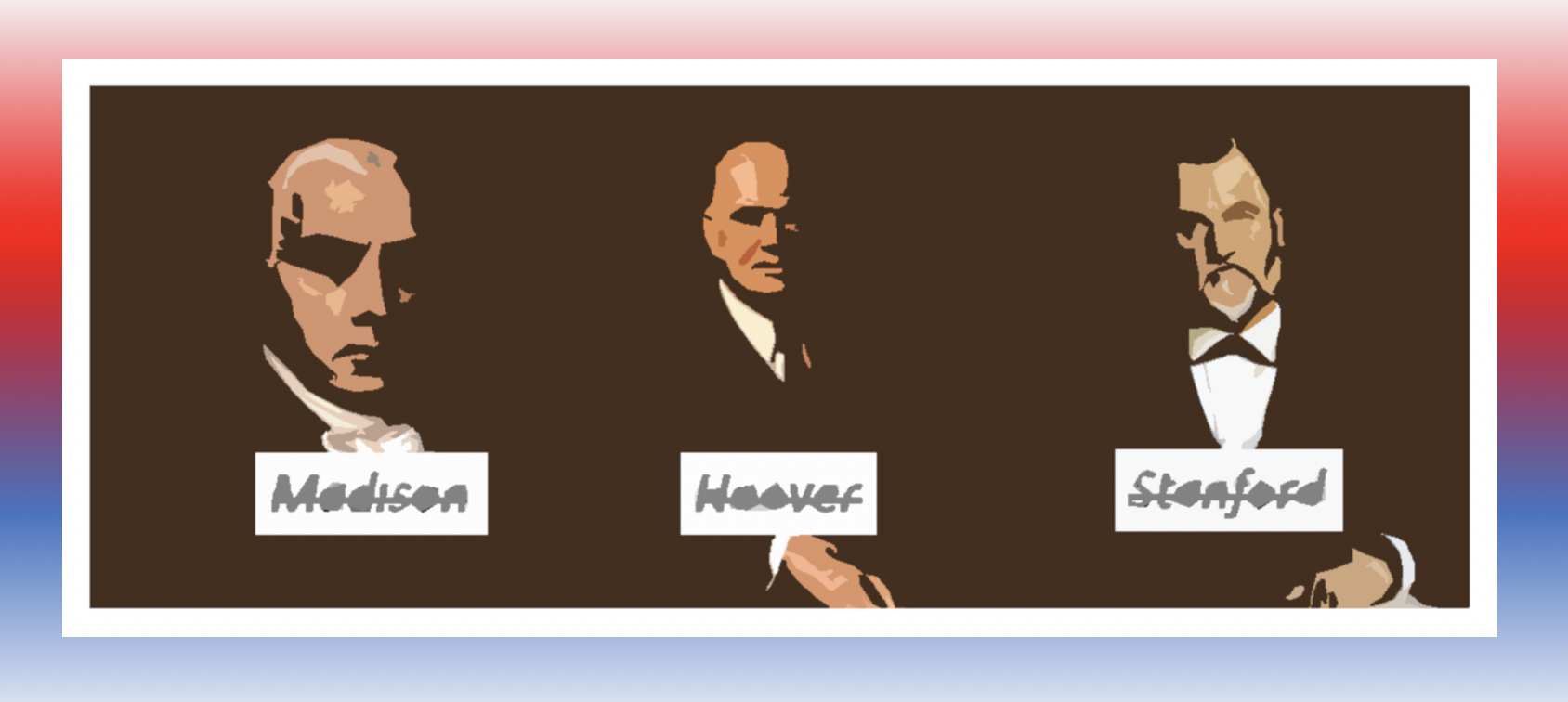
If you scratch the surface of many names, you’ll find problems. Herbert Hoover High School is named for a U.S. president who is typically blamed for the Great Depression. He has also been accused of racism. In 1932, W.E.B. Dubois said, “no one in our day has helped disenfranchisement and race hatred more than Herbert Hoover.”

At Stanford University there is an institute named after Hoover. The Stanford name is also controversial. Leland Stanford named the university after his dead son, Leland Stanford Jr. The elder Stanford was the governor of California — and a racist. In his inaugural address in 1862, Stanford said, “the settlement among us of an inferior race is to be discouraged, by every legitimate means. Asia, with her numberless millions, sends to our shores the dregs of her population.”

There may be some pure souls whose names deserve to be immortalized. But the naming process is often corrupted by wealth and power. It is the rich and powerful who put their names on buildings — or on entire universities. In America, we often confuse wealth and power with virtue.

Given this, it is strange that we continue to name buildings, universities, and even cities after people. Speaking of cities, the capitol of Wisconsin is named for James Madison, the father of the U.S. Constitution. But Madison was also an unrepentant slave owner. In Madison, Wisconsin today, they are trying to rename James Madison Memorial High School. Such are the ironies of American history.

One benevolent purpose in naming places after people is to memorialize role models. Role models are important. We learn through imitation. If you want to learn to play a sport or an instrument, you should imitate what good athletes and musicians do. But no human role model is perfect.

The case of Aaron Rodgers comes to mind. He is widely admired for his skill as quarterback. But his integrity and intelligence have been called into question due to his anti-vax views.

I’m disappointed, but not surprised by Rodger’s failure. Rodgers is good at throwing a football. Why did we expect him to make good decisions about medicine? We don’t expect doctors to be good quarterbacks. We each have our virtues — and our vices.

The same limitations hold true even of past presidents. They are skilled at politics. But it’s naïve to think they are flawless moral exemplars.

Each one of us is a creature of our own time. Past values influence the behavior of past icons. As our values evolve, former heroes fall from grace. This is inevitable. It is natural to reassess past heroes in light of current knowledge.

A further problem is polarization. In our polarized world, there are even disputes about the integrity of icons such as Gandhi and Martin Luther King Jr. We disagree about role models because we disagree about everything. Imagine the partisan outrage that would erupt if a school were to be named after Clinton, Bush, Obama, or Trump.

To avoid all of this, we might name schools after concepts — as I suggested in a previous column. This would be less polarizing. It would avoid the game of “gotcha” through which heroes are toppled.

I previously suggested naming schools after concepts such as “Liberty,” “Independence,” “Imagination,” and “Kindness.” We might also consider “Truth,” “Justice,” “Democracy,” “Fairness,” or “Responsibility.” How about Curiosity Elementary, Integrity Middle School, or Human Rights High School?

Finally, let’s include young people in these conversations. There is power in names and in naming. Students could be inspired and empowered by this opportunity. In doing the research and engaging the process, young folks can learn important lessons about history, democracy, and the power of names.