Conspiracy Theories and Intellectual Black Holes

Fresno Bee, Sept. 7, 2025

Conspiracy theories are everywhere. Before Labor Day, the internet buzzed with the rumor that President Donald Trump was dead. He proved his existence by showing up at a press conference, where he called the rumor of his demise “fake news.”

Yet Trump has trafficked in fake news himself: At the end of May, the president shared a conspiracy theory on Truth Social claiming that former President Joe Biden had been executed in 2020 and replaced by a robotic clone.

One wonders why people get caught up in this nonsense. Perhaps we are bored, or maybe we are paranoid. But conspiracy theories have a strange pull upon us. We can be sucked into the orbit of what some philosophers call a “black hole” of knowledge and information.

The solution is simple: It involves critical thinking and calmness of soul. Stay calm, be smart and avoid intellectual black holes.

Conspiracy theories are the result of a process in which the search for meaning runs aground on a world that is often strange and inexplicable. Wishful thinking satisfies our desire for things to make sense. Communities of gullible people reinforce outlandish ideas. This process is aggravated by secrecy, distrust, isolation, polarization and suspicion.

When powerful forces act behind closed doors, we suspect conspiracy.

As alienation grows and cynicism spreads, it is natural to think that something sneaky is going on. This is exacerbated by an information ecosystem that is full of misinformation and nonsense, and it’s made worse by interested parties who profit by feeding our delusions.

Our innate curiosity and desire to make sense stimulates conspiratorial speculation. We want to know how and why things work. When the answers aren’t obvious, we invent them. When the facts displease us, we construct alternatives. The search for meaning can lead into internet rabbit holes.

No one is entirely immune to this process — we all long for explanations of the inexplicable. Wishful thinking feels good, and it’s fun to speculate about hidden forces guiding the world.

This is how superstition works. Fear of black cats and broken mirrors is similar to a fear of secret governmental forces. Those who see ghosts and demons will likely see other mysterious powers pulling political strings. The desire to explain suffering, evil and death leads people to postulate sin, karma and other magical mechanisms as drivers of the world.

But it is not true that everything happens for a reason — there are no masterminds pulling the strings. Human beings are usually more incompetent than omnipotent. The world is indifferent to our desire to make meaning. Sometimes things work out well, other times, they fall apart. Events occur without any explanation other than probability, coincidence and random chance.

The philosophical cure for conspiracies is well known, and involves wisdom and moderation. We need better thinking and greater emotional control. A soul in turmoil cannot think clearly, nor is it possible to see the truth when you are stuck in the orbit of a black hole of baloney.

It would be wonderful if we could create a society in which distrust, alienation, disinformation and polarization were not so pervasive. But that ideal is beyond our reach. Freedom of speech and of the press are important values, whose side-effects are rumors, gossip and nonsense.

The real solution is education: We can benefit from training in critical thinking and emotional regulation. In wondering whether some conspiracy is true, we need to ask ourselves what it would take to know it, and whether other explanations are more plausible.

We should also monitor our intake of information. Knowing that intellectual black holes exist can help us avoid them. It is useful to understand that interested parties prey upon gullible minds. In the end, we are each responsible for thinking better and for slowing the spread of hogwash that pollutes the information ecosystem.

Read more at: https://www.fresnobee.com/opinion/readers-opinion/article311973215.html#storylink=cpy
The Trump Indictment: On Lying, Fraud, Incompetence, and Delusion

Fresno Bee, August 6, 2023

Trump’s indictment spotlights the nature of lying and duties of leadership 

The recent Donald Trump indictment should cause us all to worry about the stability of our democracy.

The leading Republican candidate for president is charged with three conspiracies: to defraud the United States, to obstruct official government proceedings, and to deprive people of their right to vote. It is undisputed that Trump actively attempted to overturn the 2020 election. But Rep. Jim Jordan (R-Ohio) said in response, “President Trump did nothing wrong!”

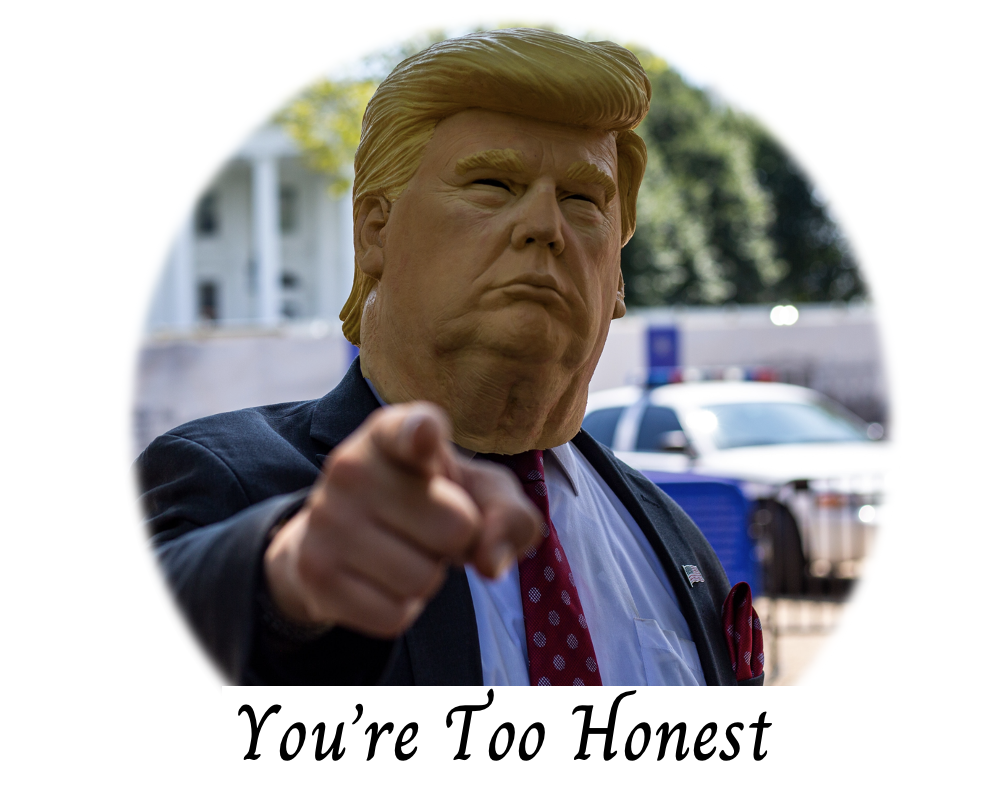
The indictment claims that Trump “knowingly” lied in the conspiracy to overturn the election. The indictment uses the word “knowingly” 36 times. It declares that Trump’s claims of election fraud were false, and that “the Defendant knew that they were false.” The indictment is full of examples purporting to show that Trump knew he was lying, or should have known. Among these is an interaction in which Trump said to Vice President Mike Pence, “You’re too honest.”

I have no idea whether Trump will be convicted, or what will happen in 2024. But the case prompts difficult questions about lying, leadership, and the future of our country.

Lying involves deliberate deception, which assumes that the liar knowingly tells falsehoods. But if an accused liar is confused, stupid, or out of touch with reality, is he really lying? The most convincing liars never flinch. Some liars lie to themselves. And pathological liars believe their own lies.

It’s not really lying if a person is brain-damaged or brainwashed. Mentally deficient folks lost in delusion are not lying. Nor are those caught up in conspiracy theories or cults really lying. These dupes inhabit a self-reinforcing web of falsehoods that sees the truth-tellers as lying enemies.

Punishment is misplaced for people lost in delusion. It also seems cruel to punish a brainwashed cult member. We might forgive these folks and offer them compassion. But we should not put them in positions of power

We expect our leaders to be intelligent, honest, and virtuous custodians of truth. There are no guarantees that truthful people will be elected. That’s why we have a system of checks and balances, and regular elections.

The Trump indictment accuses the former president of subverting that system. But what if he really believed the election was fraudulent? If Trump knew the election was legitimate, then he is a liar and a danger to democracy. If it was not legitimate, then Trump is a heroic truth-teller and champion of democracy.

Many loyal Trumpians believe that the election was actually stolen. Recent polls from Monmouth and from CNN show that about a third of Americans, and two-thirds of Republicans, believe the 2020 election was fraudulent. This explains why Trump’s defenders think the Justice Department has been “weaponized.” Trumpians do not think Trump is lying about the election. They see the current indictment as an anti-Trump conspiracy.

The indictment shows how claims of fraud were systematically refuted. So, it seems obvious that Trump is wrong to claim otherwise. But the Trumpians won’t believe the facts laid out in the indictment.

And what if Trump believed his own lies because he is pathological, delusional, or brainwashed by the right-wing echo-chamber? This question is important both because it is connected to possible punishment and because it tells us something about the character of the man who is likely to be nominated for the presidency by the Republican party next year.

If Trump lost, but he really believed the election was stolen, then he did not knowingly lie — and there is no deliberate fraud. Maybe he just couldn’t believe he lost. Maybe he is a pathological liar who believes his own lies. Maybe he was caught up in a cult-like world of right-wing conspiracy. Or maybe he is a senile old man, unable to discern the truth. But these excuses mean that Trump should never be elected again.

If Trump knowingly lied, then he is corrupt and culpable. If he didn’t know he was lying, then he is deluded or incompetent. And in either case, if we assume that the 2020 election was legitimate, Trump seems to lack the virtue and honesty we expect of our leaders. Trump loyalists see things otherwise, which is why our country is on the verge of disaster.

Read more at: https://www.fresnobee.com/opinion/readers-opinion/article277966113.html#storylink=cpy