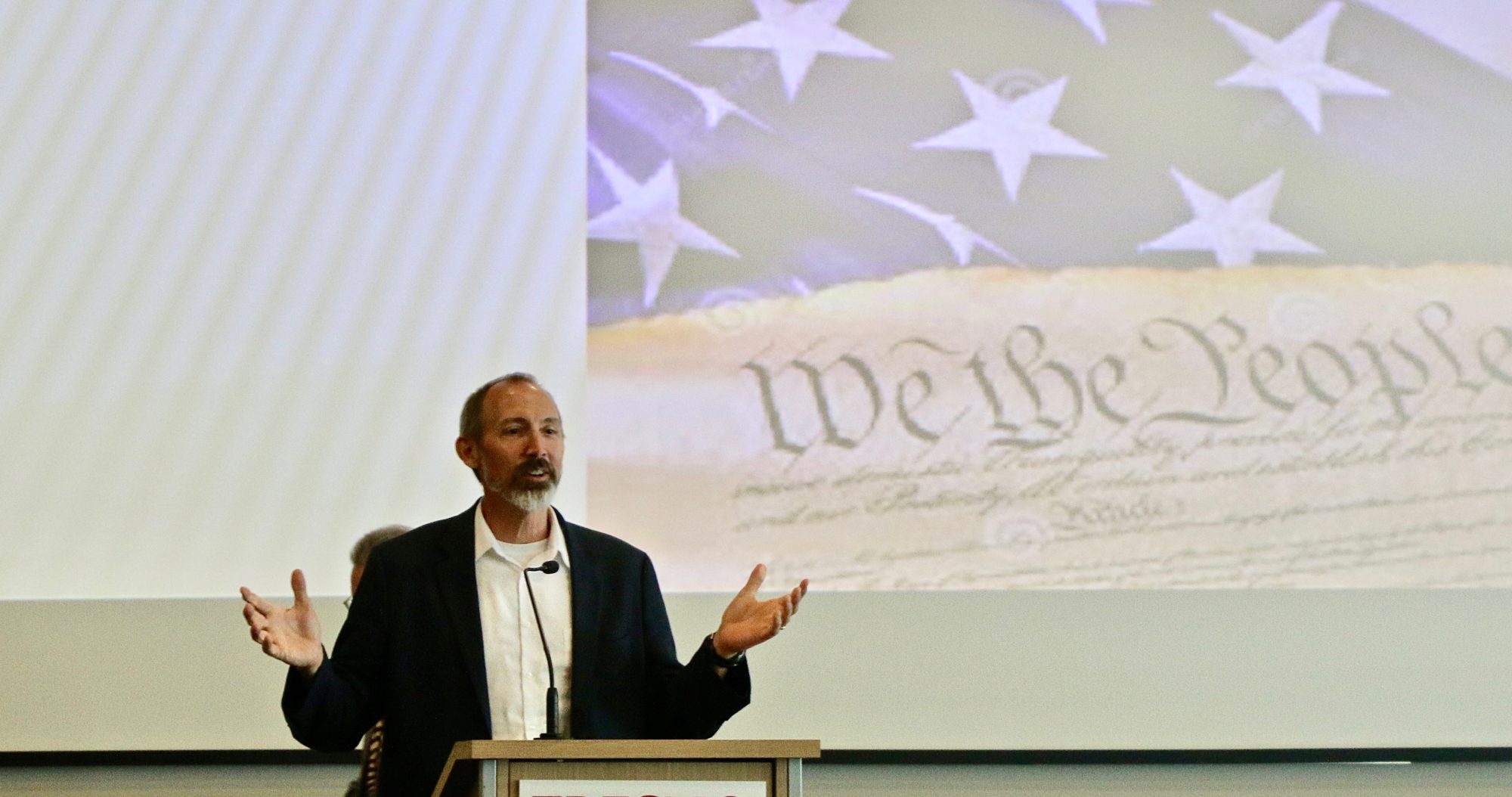
Contemplating the arts

Take time to contemplate the arts in this trivial digital age

Fresno Bee September 6, 2014 

Poetry, philosophy, literature and art are uniquely human activities. Other animals play, sing and even dance. But no other animal contemplates its own existence.
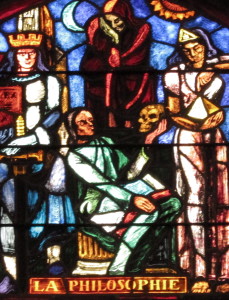
IMG_1346 - Version 2
Philosopher Contemplating Death

In our quick digital era, one wonders whether there is time for contemplation. Speed and multitasking can undermine focus needed to study a poem, observe a work of art or digest a philosophical insight.

Our digital tools give us unprecedented opportunity to explore the humanities. We can download the great works of literature and philosophy and carry them with us in phones and tablets. We can publish our own reflections with the click of a mouse. Art works are easily copied and forwarded.

This could be a golden age of philosophical reflection and poetic insight. There are hidden backwaters of the Internet where poetry, philosophy and art flourish. But much of the mainstream flows in another direction. The Internet deluges us with foolish factoids, meaningless memes, pornographic pictures and vicious videos. The rising tide of trivia can easily sweep us away.

Our attention is divided by the pace and flow of information. Even conversation suffers: We text instead of call. We dread the spiraling buffer sign and multitask while we wait. Our attention bounces along among scattered bits of quickly moving data.

Speedy multitasking is not all bad. In some cases, a brief text is all you need. When you only want data, a quick download is great. The trivia passing through our gadgets can be surfed and skimmed.

But careful, slow and deliberate attention is important. Life’s most meaningful moments deserve our time and undivided attention: falling in love, giving birth, growing old, dying. Unhurried, sustained reflection is a mature human ability, as is the ability to listen, read and think.

It takes time and concentration to understand Shakespeare or Plato or Picasso. Deliberate, undivided effort is needed to write a poem, construct an argument or analyze a work of literature. The same intellectual skill is needed in the sciences, in law and in other fields. But the humanities are unique in forcing us to slow down, breathe deeply and contemplate.

Shakespeare once compared his love to a summer’s day. That’s a fact (download Sonnet 18 and you’ll see). But what does it mean? Summer days are slow and luxurious. Unfortunately, beauty fades, as does summer. Is there hope? Shakespeare hints that poetry holds beauty in place against the ravages of time.

Does the Internet also preserve us against swift-footed time? You could post Shakespeare’s sonnet on your website along with your other pictures and memes. But copying and pasting is not understanding. Meaning cannot be downloaded. There is no app for insight.

Good poetry is precise. Haiku can be inspiring. Shakespeare’s sonnets are 140 syllables long. Concise communication is a useful art. But we’ve shaved this down to tweets of 140 characters. And we’ve compressed the time we need to reflect upon the meaning of things, while filling the void with data.

Data transfer is to thinking as sex is to love. Human beings could exchange DNA in a quick genetic data dump. But love is much more than this. Love is a mysterious communion of souls haunted by a whiff of eternity. It involves contemplation: You linger, savor and dream about your beloved.

The same is true of poetry, philosophy and other attempts to fathom the human spirit. Lingering, savoring, dreaming and contemplating are the modes and moods of the humanities. Through them we rise above the manic din of data exchange and hover for a moment in defiance of swift-footed, devouring time.

Our electronic exchanges are like quick splashes of water that run off dry land without sinking in. Philosophy, poetry and the arts are stickier, gentler and denser. When given time and attention, they provide deep irrigation for the human spirit.

It is not surprising that the value of the humanities is best expressed in metaphor. Metaphors force us to slow down and think. It is not enough to simply state that the humanities are valuable in themselves — that’s a fact to be posted, tweeted and repeated. We also need to see that poetry, philosophy and art provide an oasis of contemplation in a desert of data.

Read more here: http://www.fresnobee.com/2014/09/05/4107180_ethicstake-time-to-contemplate.html?rh=1#storylink=cpy


Passion, Heat, and Nirvana

When passions heat, learn to spiritually stop, drop and roll

Fresno Bee, August 29, 2014

We live in a flammable world.  Wildfires scorch the countryside. Anger boils over in the streets. Proverbial powder kegs are hidden everywhere.IMG_2402

Stability and peace are temporary in a world ruled by heat and fire.

Our language is full of fiery imagery. Plagues, protests, wars and ideas can “spread like wildfire.” Fads catch fire and take off. An interest is sparked. A torch is passed. People and ideas burn out.

Ancient civilizations viewed fire as elemental. Some Greek philosophers described the world as an eternal, living fire. The Stoics taught that the universe was periodically consumed in a cosmic conflagration.

In the Bible, God is described as a burning bush and a consuming fire. Jesus said that he had come to set fire to the earth. Christians still speak of being set ablaze by the Holy Spirit and the fire of faith. But fire is also associated with the devil. This indicates our ambivalence about fire. It is both good and evil.

The Buddhist tradition warns against playing with fire. The Buddha once said that all things are on fire: the world, the body and the mind. Liberation is found in taming passion and its pyrotechnics. Nirvana can be understood as blowing out a flame, while leaving its light.

Fire and passion can enliven and destroy. We are both masters of fire and its victims. Passion is the energy of life. But it can disrupt peace. Jealousy, resentment, infatuation and greed can smolder and burst into flames. But ambition and the “fire in the belly” give meaning and purpose to life.

Civilization is a process of domesticating both fire and passion. Homo erectus used fire more than half a million years ago. But homo sapiens used it to take over the earth. We burned forests to clear land for farms. We captured fire and controlled it, eventually learning to burn coal, gas and oil. These combustibles fueled the industrial revolution.

But dangers remain. Famous fires burned down Rome, London and San Francisco. Inflamed passions continue to spark conflict and disorder. And every fire leaves behind smoke and ash. The fires of the industrial revolution produced a smoldering climate. Passionate violence has left smoldering ruins across the world.

Fire prevention and management can provide a guide for living. Put out little fires before they blaze into raging infernos. Clear away the junk and undergrowth that can feed the flames. Prevent sparks from flying when possible. Keep a tight lid on your really flammable stuff. Make sure you know where the fire extinguisher is. And when passion flares up, take a deep breath and spiritually stop, drop and roll.

Once a fire is blazing ethical questions arise. We might attempt to fight fire with fire, as the saying goes, lighting backfires, bringing in the big guns, and unleashing awesome firepower. You may have to destroy some things in order to save others. But that is not always just or wise. Escalation is a worry, as is blowback.

Sometimes it is wise to let fires burn themselves out. A small controlled fire can consume the fuel that could cause a larger conflagration. Just as fever helps cure disease, outbursts of furious rage can burn up emotional energy.

There is some wisdom in those traditions that fear the flames of passion. But the fire in the belly is not always bad. The key is to harness our spiritual energies, just as we do with the controlled explosions of the internal combustion engine. Ambition, pride and the desire for justice need a productive outlet.

Fire and life have co-evolved. The burning sun is the source of life. And every human birth begins in hot-blooded desire. Our passion makes life interesting and worth living.

The giant sequoias provide a lesson. Their thick resilient skin keeps them standing through centuries of forest fire. Their seeds need fire to germinate. Like the sequoia, fire and passion can make us stronger and help us give birth to new growth that emerges from the flames.

Some dream of a calm, cool world. But icy equanimity can’t sustain life. We inhabit a flammable planet. Our bodies and souls are combustible. Wisdom lies in knowing when to light a flame and when to blow one out.

Read more here: http://www.fresnobee.com/2014/08/29/4095153_ethics-when-passions-heat-learn.html?sp=/99/1355/&rh=1#storylink=cpy


Trying Times, Luck, Compassion

Trying Times Remind Us About Luck

Fresno Bee, August 9, 2014  IMG_0687

As the horrors of this summer unfold – war, disease and refugee children – we should reflect on how lucky we are. If you had been born in Central America, the Middle East or West Africa, your life would be quite different. Of course, you don’t have to travel far to see bad luck. Violence, illness and homelessness occur here, too.

Einstein once said, referring to the deep structure of reality, that God does not play dice. But it does seem that a dice-playing divinity rules our lives. Life and death, success and failure, are often simply matters of luck. Happiness and destitution hinge on the roll of the cosmic dice.

Some believe that a wise and benevolent providence guides our lives. From this point of view, even bad luck works out for the best in the long run. That’s a nice idea. But it is hard to understand why God allows some to thrive while others suffer. If we can’t discern the reason behind our fortunes or misfortunes, we might as well chalk it up to chance.

Americans like to believe that winners make their own luck. Walt Whitman boldly stated the American faith in self-made luck: “Henceforth I ask not good-fortune, I myself am good-fortune.” Whitman told us to take to the road to find our fortune. To get lucky, you do have to open your heart to the world and embrace opportunities when they arrive. This hopeful idealism makes sense in an open and welcoming world.

But for some, the dice are loaded against them. The plight of the children fleeing Central America reminds us that roads are often closed and that welcome mat can be pulled in. A similar problem stacks the deck against the children of Africa and the Middle East. We might admire the courage of refugees who take to the road to find a better life. But the homeless wandering our streets remind us that fortune is hard to find on the open road.

Hard work and determination cannot guarantee survival for unlucky children born into war, poverty and disease. These afflictions prey equally upon the smart and the stupid. Industrious folks may have a slight advantage in Gaza, Liberia or Honduras. But talent and tenacity can’t overcome the chance occurrences of history and geography.

We don’t choose where or when we are born. Nor do we choose our genetic endowment or cultural heritage. The most important facts of our biographies are entirely beyond our control and subject to the cosmic lottery.

The existentialist philosophers coined the term “thrown-ness” to describe the human condition. We are thrown_like dice_into the world. We find ourselves in a place and time, in a body, and living a life that we did not create or choose. Each moment of our lives involves another throw of the dice.

Our only power is in choosing how to react to the rolling dice. Virtue and character appear in the way we navigate the winds of fortune. We can give up in despair and resign ourselves to fate. Or we can resolve to work hard, despite the odds. But at the end of the day, you don’t control the way the dice fall.

Understanding the role of luck in life should make us more modest about our triumphs and less ashamed of our defeats. Every great achievement contains an element of chance that calls pride into question. Seeing that every loss includes some bad luck can moderate feelings of blame or regret.

The truth of luck is that it is always changing. It can be difficult to appreciate good luck, when you are worried about losing it. But admitting the fragility of good fortune can lead you to savor the sweetness of success. And understanding that bad luck does not last forever can give you solace while you wait for your fortunes to change.

In the end, to understand luck is to develop compassion. The unlucky have usually done nothing to deserve their misfortune. Another roll of the dice and it could be you digging through the rubble, burying your beloved or fleeing poverty. Mercy, kindness and generosity are needed in a hard luck world where, it seems, the gods do play dice.

Read more here: http://www.fresnobee.com/2014/08/12/4066312/trying-times-remind-us-about-luck.html#storylink=cpy


Death Penalty and War

What do we want when it comes to war or the death penalty?

Fresno Bee, July 26, 2014

Federal judge Cormac Carney recently ruled that California’s dysfunctional death penalty is cruel and unusual because those who are sentenced to death are rarely executed. Since 1978 only 13 people have been executed in California, while more than 900 people have been sentenced to death. The average time spent on death row is 25 years. Execution in California is a matter of luck, not justice.

DP

Carney argues that the arbitrariness of the death penalty means that this punishment is not working to deter crime. Nor is it working as retribution. Neither of these moral purposes is fulfilled when executions are infrequent and random. Carney does not deny that the death penalty can be justified. Rather, he maintains that the current system does not live up to its own standards.

Carney’s argument raises the challenge of idealism and perfectionism in thinking about state-sponsored killing. He concludes that if the execution system does not live up to the ideal, we ought not employ it. One obvious response would be to fix the dysfunction in the system and make it less arbitrary. But until that is done, the judge ruled that executions are cruel, unusual and unconstitutional.

We usually don’t demand this sort of perfectionism. Schools, marriages and sports leagues rarely live up to our ideals. However, we don’t abolish them. Instead, we aim to reform them to bring them closer to the ideal.

Usually it is not wise to let the perfect become the enemy of the good. Perfectionism sets up a false dilemma: either perfection or abolition. The perfectionist false dilemma can lead us to jettison valuable but imperfect things. It can also cause us to give up the effort to reform and improve.

But state-sponsored killing seems to require a special and more perfect justification. If we are bothered by the arbitrary and capricious nature of the death penalty, then we should be even more worried about arbitrary and random killing in war. Consider the problem of collateral damage in war. Enemy soldiers are legitimate targets of justified warfare. But noncombatants — innocent civilians — are not supposed to be killed. Unfortunately, modern wars kill noncombatants in large numbers.

Defenders of the morality of war argue that civilian killing is permissible so long as armies do not deliberately target civilians. Critics of war reject this subtle moral point.

Critics argue that bad luck and accidental factors cannot justify the killing of the innocent. Following Carney’s reasoning about the death penalty, a critic might conclude that war ought to be abolished until we can ensure that wars are fought without creating collateral damage.

The analogy between war and the death penalty is not seamless. We presume, for example, that the convicted criminal is guilty of a crime and deserves to be punished, even though some death row inmates have in fact been exonerated. On the other hand, we presume that noncombatants are innocent and do not deserve the harm they suffer, even though the mothers and children of soldiers can work behind the lines to support the war effort.

A form of skeptical pacifism can result when we insist on perfectionism with regard to state-sponsored killing.

Until state-sponsored killing becomes less capricious and more deliberately targeted, the pacifist will say, states ought not kill.

Those not convinced by this argument will have to reconcile themselves to the apparent conflict between the arbitrary and random nature of state-sponsored killing and perfectionist idealism about justice.

A perfectly just system of state-sponsored killing would only kill those who deserve death and it would kill them in a fair and consistent way. A perfect system of state-sponsored killing would not bomb children or apply the death penalty in haphazard ways. It would give people what they deserve. And it would bring about good consequences. But of course, in a perfect world we would not need executioners or armies.

This line of thinking leaves us with a difficult decision. Should we demand perfection, or can we accept something less than perfection when it comes to war and the death penalty? This is a crucial and serious question for democratic citizens, since in a democracy state-sponsored killing is ultimately done in our names and on our behalf.

Read more here: http://www.fresnobee.com/2014/07/25/4040930/ethics-what-do-we-want-when-it.html#storylink=cpy


Bears, Bugs, and Backpacking on the John Muir Trail

Wilderness reminds us we’re not the center of everything

Fresno Bee, July 12, 2014 IMG_0469

I am writing this while hiking the John Muir Trail. The Sierra backcountry is beautiful and humbling. The wilderness reminds us that we are not in charge of the world.

When my children were young and we would go camping, I used to joke that after dark, the government turned off the rivers and waterfalls. We are so used to our civilized world, with its regular and predictable system of amenities, that city kids can make believe that rivers have on-off switches.

The wild world is, however, beyond our control. There are no on-off switches in the wilderness. The wind blows, the rain falls and bears come to camp. The marmots and mosquitoes go about their business. We like to think that we are the center of creation. But our narcissism is quickly corrected by a night under the stars. The Milky Way does not glow for us.

There is an old riddle about whether a tree that falls in the woods makes a sound. Of course it does. But usually only the deer and chipmunks hear it. Wild noises resound without any human presence. The birds don’t sing for us. Croaking frogs and chirping crickets don’t croon for our pleasure. And trees fall every day in hidden groves beyond human perception.

The natural world is profoundly indifferent to us. Even in your front yard garden, snails, weeds and worms are busy with their own lives. We work hard to control this wild vitality. But without constant vigilance, wild nature will soon destroy our handiwork.

The business of the birds and the bees proceeds without us. One day we saw two squirrels mating. We stopped to watch. But I felt somehow immodest. The squirrels live, mate and die here. We are just visitors, passing through their homes.

The wildflowers are blooming in the high country. We wandered through meadows rich with color. It is tempting to think that this beauty is on display for us. But flowers don’t bloom for human eyes. Like the squirrels, they are concerned with living and reproducing. Their beauty is not for us.

Not all wild things are charming or beautiful. The backpacker’s bane is the mosquito. These little vampires can quickly ruin a lovely campsite. But the mosquito’s bloodlust is not directed at us. If we were not passing through their habitat, they would find other prey.

One evening a bear came to camp. He sniffed us and circled our camp as we whistled and yelled, working hard to scare him off. I had the distinct impression that he was curious about us, wondering what these humans were doing in his home.

Some people do not to like wild things and wild places. A cold, windy, rainy night at 10,000 feet is no spring picnic. And sleep doesn’t come easy when you know that the bear knows where you are camped. But it helps to know that these wild things are just going about their own business. They do not intend to harm us. We merely happen to be in the way.

A philosopher and fellow backpacker once told me that he was more afraid of the other people he meets on the trail than he was of the snakes and bears lurking in the bush. Animals are merely wild, he explained. But human beings can be wicked.

Most of our fellow backpackers have been kind, generous and interesting. But humans demand recognition. The intensely human urge to be recognized by other human beings can lead to violence. Wars, rape and mass murder are human creations, malicious manifestations of the narcissistic need for recognition. Mosquitoes and bears only want a bite to eat. They don’t want to enslave, convert or conquer. Our species demands recognition, which leads to domination. That may be why we need governments. It may also be why we are so suspicious of them.

The backcountry buzzes and blooms without concern for human needs and interests. One lesson from this is humility, which deflates our vain desire to dominate and be recognized. The bears and bugs carry on without us. The rivers run without our permission. And the sound of falling trees is not made for human ears.

Read more here: http://www.fresnobee.com/2014/07/11/4020947/ethics-wilderness-reminds-us-were.html#storylink=cpy