
American Anti-Tyranny and the Villains of Easter

Fresno Bee, April 20, 2025

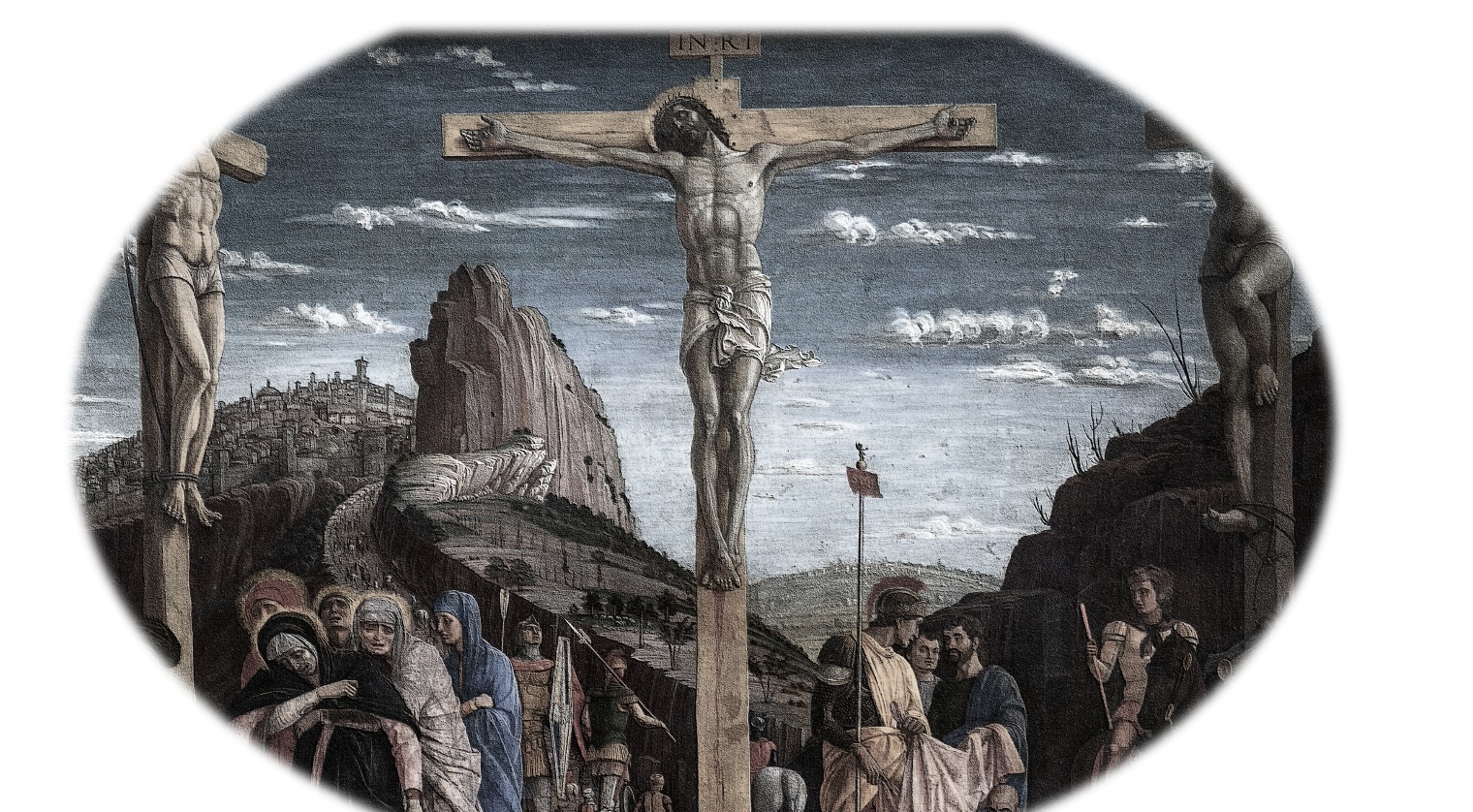
For Christians, Easter is ultimately about the empty tomb and its promise of resurrection. But before the resurrection, there was the cross, which was widely viewed as a symbol of a terrifying system of imperial tyranny, a frequent instrument for executions during the Roman empire. Setting aside the miracles and the metaphysics, Easter offers an anti-tyrannical political message.

The Easter narrative warns against the dangers of greed, complicity and despotic power. It condemns the collusion of sycophants and the callous brutality of the mob. The story of Jesus’ execution exposes an entire system of unjust imperial rule over a subjugated people.

One of the villains of Easter is Judas, a money-grubbing thief who betrayed Jesus to the authorities. Another villain is Herod Antipas, who was also responsible for beheading John the Baptist. But it was Pontius Pilate, the authoritarian Roman ruler of Judaea, who conducted the trial of Jesus and was legally responsible for his crucifixion. That trial involved a bizarre ritual in which the mob was asked who it wanted to save. The mob cried out for Jesus to be crucified, while calling for the release of Barabbas, an insurrectionist.

All of this teaches a lesson about the need for a rules-based system of justice. Such a system would outlaw cruel punishments, such as scourging and crucifixion. It would prevent authoritarian rulers from consolidating the power to convict and punish. It would not defer to the stupid passions of the mob, nor would it depend upon the greed of paid informants. In general, it would avoid the excesses of swift imperial justice in favor of due process and the rule of law.

Such a system would be similar to that which is found in our own beleaguered constitutional system. The American Constitution guarantees freedom of religion, speech and the press, along with the right to assemble and petition. It prohibits unreasonable searches and seizures, requires due process of law and stipulates that those accused of crimes should be able to confront the witnesses against them. It also prohibits excessive fines, and cruel and unusual punishments.

This means that if a Jesus-like figure were to appear on the American scene, he would be free to preach and lead a movement, even if it infuriated religious and legal authorities. His followers would be free to protest, write and criticize the policies of the church and the state. And if this figure or his followers were accused of crimes, they would have basic rights that protect them against arbitrary detention. In our system, prisoners cannot be mocked or manhandled, or cruelly killed.

None of this was true in ancient Roman Judaea. The Roman authorities ruled with an iron fist. Crucifixion was intended to send a message to rebels and rabble-rousers. And while some of the locals may have thought that they could play along with imperial power, the Romans eventually destroyed the Jewish temple in Jerusalem. They also rounded up and killed Peter and Paul, and other Christians.

The American founders understood the dangers of imperial power run amok. In 1775, John Adams claimed that a republic was “a government of laws, and not of men.” He further said, “An empire is a despotism, and an emperor a despot, bound by no law or limitation, but his own will.”

Soon enough, in 1776, the Americans broke with England, claiming that the king had become tyrannical and despotic. The arbitrary and authoritarian application of the power to punish was viewed as a sure sign of tyranny. Among the complaints against King George listed in the Declaration of Independence are depriving people of “the benefits of trial by jury,” and “transporting us beyond seas to be tried for pretended offenses.”

Unfortunately, our own government is now transporting people to foreign countries without due process. We are also threatening to occupy Greenland and annex Canada. Easter provides a cautionary tale for the present moment. It reminds us of the need for due process and the rule of law, and about the dangers of imperial excess.

The Easter narrative also calls for sympathy for the victims of unjust power. If it seems that we are more Roman than Christian these days, it can help to recall that the hero of Easter is Jesus and not Pontius Pilate.

Read more at: https://www.fresnobee.com/opinion/readers-opinion/article304438096.html#storylink=cpy

What Artificial Intelligence Cannot Do

Self Reflection

Fresno Bee, April 5, 2025

Artificial intelligence is already changing the world. But will it change our humanity?

Bill Gates recently predicted that AI will soon be widely employed to supplement and even replace a lot of labor that currently requires human experts. This may include accountants, teachers, doctors and computer programmers. Any profession that requires repetitive information processing and rule-following expertise can be supplemented or replaced by AI.

This may free up human intellect to engage in more creative and imaginative tasks. It may also leave humans with more time to focus on interpersonal and relationship-based work. But there are also AI “therapists” and “friends” available online. AI companions are always available. The AI friend, Replika, touts itself as “always here to listen and talk. Always on your side.”

The convenience and efficiency of AI will lead to its widespread use. AI never sleeps — it never tires, or becomes fed up or impatient, unlike real human companions.

As AI development increases, it will be used to create even more powerful technology. This technological acceleration has led some experts to predict that artificial general intelligence will soon be created (something akin to human thinking but faster, tireless and not prone to laziness, procrastination or daydreaming). Others think the creation of artificial general intelligence is decades off; some say it is impossible.

As AI transforms into artifical general intelligence, it could be applied (or apply itself) to generating even more intelligent machinery. Some fear the creation of artificial super intelligence, a fear fueled by fictional sci-fi dystopias in which artificial super intelligence takes over and kills or enslaves humans.

Leaving that nightmare aside, there is no doubt that AI is already changing the meaning of a variety of human tasks. This will continue to happen as the technology becomes so efficient that resistance is futile. This may sound ominous, but it happens all the time as technologies improve.

The inexorable efficiency of technology explains why we prefer to ride rather than walk. It’s why we send texts instead of writing old-fashioned letters. The efficiency imperative will likely lead us to replace inefficient human beings with efficient AI in many parts of life. Why bother to write a report if AI can do it for you faster and better? Why bother to wake a real friend in a crisis in the middle of the night when AI is there to chat?

Of course, some people still write letters or walk. And there is a kind of pleasure to be found in completing your own tax form, or in writing computer code. But those quaint human activities are now a matter of choice. They represent a kind of boutique curiosity, chosen not for efficiency but for some other reason.

This is where the human element returns. Many things are valuable not because they are efficient, but because they are good, beautiful, intellectually challenging or uniquely human.

Friendship is like that: An AI-companion may be more efficient at giving advice in difficult times, or at keeping us entertained. But real human friendship is valuable for other reasons. Human friendship is not simply a one-sided exchange in which we use the other person for our benefit. Rather, friends make demands upon us. Their impatience reminds us to slow down. Their needs give us reason to look beyond our own.

The demands that other humans make upon us are infinitely more valuable than the cult of efficiency can imagine. Other human beings are part of who we are. When a friend or family member triumphs, we swell with pride for them. When they suffer, we suffer with them. And when they die, they take a part of us away with them.

AI will never replace the deeply inefficient existential reality of love, suffering and mortality. AI is fast, convenient and always available. But it cannot supplant the difficult experiences and troublesome relationships that make us fully human. Efficiency is a machine-based good. But human life is not mechanical. The wonder of existence is found in the tragic and often beautiful mess that is human nature.

To be human is not to be efficient. Rather, it is love, suffer and die. And that’s what no machine can ever do.

Read more at: https://www.fresnobee.com/opinion/readers-opinion/article303416756.html#storylink=cpy

Trumpian Eroticism and the Politics of Passion

Fresno Bee, March 9, 2025

How Donald Trump and Elon Musk inspire passions feared by America’s Founding Fathers

American politics has become deeply erotic. Often, this manifests as love — as when Elon Musk recently tweeted, “I love Trump, as much as a straight man can love another man.” In his recent address to Congress, President Donald Trump said: “People love our country again, it is very simple.” He extolled the “faith, love and spirit” of the American people, who “will never let anything happen to our beloved country.”

To say that Trump is an erotic leader does not mean he is “sexy.” Rather, the point is that he provokes. Trump inflames the emotions — whether you love him or hate him. He is the kind of person about whom it is nearly impossible to remain indifferent. He arouses rather than enlightens.

The erotic element shows up in various ways. Fealty and devotion of the Muskian sort are obviously forms of love. Nepotism and cronyism are erotic ways of distributing power to faithful friends and family members. In such arrangements, it does not matter whether things are fair or reasonable, nor does it matter whether people are good. Rather, what matters is love and connection.

Trump is making American politics a game of seduction and power — a spectacle driven by passion. Part of this is public performance. As Trump was berating Ukrainian President Volodymyr Zelenskyy the other day, he said, “This is going to be great television.” The play of passion is enthralling and compelling: you can’t look away.

In a comment on the Zelenskyy episode, Canadian novelist Stephen Marche suggested we are witnessing “rule by performers,” and what he calls “histriocracy,” the rule of the “histrionic,” — the melodramatic, theatrical or emotional. Indeed, Trump is a master of spectacles, and he knows how to keep us watching.

The erotic art of arousal can be useful in business and in politics. But it is quite different from a more sober-minded or rational approach to the world.

The distinction between the erotic and the rational is as old as Plato, who worried that unbridled eros (sexual love or desire) would destroy a good city, and that passion would undermine justice. He warned that when eros rules a city (or a soul), it is like being drunk or mad. The rule of the erotic leads to lawlessness, frenzy and tyranny. Plato hoped rationality could control the passions, but he knew that eros was a powerful force.

Sober-minded folks view political discourse as an earnest discussion of justice, virtue and truth. Rational politics is sincere, honest and moderate. In the Platonic government, careful thinkers would deliberate using logical arguments that rest upon a bedrock of first principles and unassailable truths.

Passionate politics is different. It values histrionic performances that elicit emotional responses. Here, the participants seduce and cajole with the goal of achieving popular acclaim — which is, after all, a kind of love. The erotic approach rejects sedate sincerity in favor of impassioned public displays of power and affection. Erotic politics is more interested in glory than in goodness, and it encourages inspiring fantasy rather than dull deliberation.

Political eros is chaotic and unreasonable. Sometimes, it even becomes vulgar and obscene. The risk that passion will become excessive is part of what makes it exciting and fun. That’s why sober-minded rationalists don’t understand its allure and worry that the excitement of eros will lead to dangerous excess.

John Adams once warned about the “overbearing popularity” of “great men.” He said, “Ambition is one of the more ungovernable passions of the human heart. The love of power is insatiable and uncontrollable.”

Adams and the other Founding Fathers created a system of checks and balances to restrain the erotic element. Rationalists like Adams think that laws should rule, rather than love. They view passionate personalities as dangerous, and in need of restraint.

Eroticism sees such sober rationalism as boring and shallow. Typically, devoted lovers remain enamored of their charismatic champion — despite their flaws and lawlessness — and because of his passion. Indeed, those flaws may make this figure more beloved.

In erotic politics, people are wedded to the person of the leader, warts and all. This astounds sober-minded defenders of virtue and the rule of law. But in erotic politics, it makes perfect sense to remain devoted to the beloved, since love is love, no matter what.

Read more at: https://www.fresnobee.com/opinion/readers-opinion/article301565739.html#storylink=cpy

The Power of Naming

Fresno Bee, Feb, 23, 2025

If Trump can rename the Gulf of Mexico, why can’t a trans person adopt a new name and pronoun?

Philosophers have long wondered about the nature of names.  Is there any essential way that words connect to the world?  Or are names merely arbitrary conventions made up for personal or political purposes? 

Donald Trump’s magical sharpie directs our attention to this perennial problem.  Trump’s signature on Executive Order 14172 (“Restoring Names That Honor American Greatness”), apparently suffices to rename things.  He turned Alaska’s Denali back into Mt. McKinley.  And he imposed a previously unheard-of name, “Gulf of America,” on the waters east of Mexico. 

In response, Mexico has threatened to sue.  And Americans are left wondering.  What is the true name of these things?  And who gets to decide? 

Most philosophers think names are merely conventional, and that there are no “true names.”  But mystics suggest that the true name of a thing provides a direct connection between word and object.  As one of Plato’s characters suggests, a thing’s true name is given by the gods.

A version of the “true name” idea can be found in Trump’s executive order about gender identity, which is named, in part, “Restoring Biological Truth To the Federal Government.”  The Order states that there has been an “ongoing and purposeful attack against the ordinary and longstanding use and understanding of biological and scientific terms.”  It states that “gender ideology” has resulted in “invalidating the true and biological category of ‘woman’.” 

But according to “ordinary and longstanding use and understanding,” the Gulf of Mexico is the name of the body of water in question. If the president can rename it by fiat, why can’t a person adopt a preferred pronoun or gender category in the same manner?

Naming is often about power, privilege and control. A biblical myth says that God gave Adam the power to name things along with dominion over the world. He who bestows names also owns and dominates them.

There is a kind of royal or religious prerogative in naming, christening and dubbing. Elaborate ceremonies are required to establish names and titles, and make subsequent changes. We see this in weddings, christenings and other rituals.

When power shifts, things are often renamed. The renaming is part of the point of acquiring power. The conqueror, after all, has the right to name what he has conquered.

Sometimes names are overtly practical. A “computer” computes and an “automobile” propels itself. A “bicycle” has two wheels, while a “tricycle” has three. Utilitarian and prosaic names function like “true names,” directly expressing the meaning of things.

But naming is often arbitrary and even whimsical. Elon Musk changed “Twitter” to “X,” which is also the name of one of his sons. Congressman Earl “Buddy” Carter has (absurdly) proposed renaming Greenland as “Red, White and Blueland.”

Some names have deep significance, as when a child is named after a departed loved one. Others inspire and edify. But other names are silly or insulting (as in the effort to rename Greenland).

Behind the words, of course, is the thing itself. This point was immortalized by Shakespeare, who asked, “What’s in a name? That which we call a rose, by any other name would smell as sweet.” Juliet’s love for Romeo is more substantial than their parents’ feud about names, titles and power. Juliet begs Romeo to refuse and deny his family name so that it will no longer be an obstacle to their relationship. Romeo responds by announcing he will be newly baptized under the name of “love.”

This angsty teenage romance reveals something deep and true: Authentic things — love, beauty and self-identity — exist beyond names. Disputes about names are contrived by the powerful to control, dominate and limit. But the names shouldn’t matter as much as the thing itself in all of its raw truth and natural glory.

Plato wondered whether we have direct access to the “real existence” of “things without names.” Perhaps we do. For swimmers in the seas east of Mexico, the name of the gulf they’re in is likely irrelevant. When Juliet and Romeo die in each other’s arms, their loving embrace transcends their family names.

But the history of the world is a struggle for the power of naming. That struggle begs us to consider what is true, what is real and who has the authority to name things.

Read more at: https://www.fresnobee.com/opinion/readers-opinion/article300673459.html#storylink=cpy

Seeking Wisdom in the Trump-Storm

It is easy to become anxious as political chaos churns. The present turmoil can cause us to lose sight of basic truths. But enduring values provide shelter from the storm.

The pursuit of wisdom offers tranquility in tumultuous times. Philosophy and religion are essential these days. Solace can be found in a wide variety of what I call (allong with my co-author Doug Soccio), “Archetypes of Wisdom.”

One useful source is Stoicism. Seneca explains: “It is only philosophy that makes the mind invincible, and places us out of the reach of fortune… This it is that reclaims the rage of our lusts, and sweetens the anxiety of our fears.”

The present moment is a time of misfortune, rage, and anxiety. Headlines blare with crises and scandals. Constitutional guardrails are breached, as a servile Congress plays patty-cake with its rubber stamps. Bizarre ideas are broadcast from the White House. Every day brings some new outrage.

The chaos of the present appears to be strategic. Trumpism has been described by The Guardian as a “chaos machine.” The chaotic strategy was explained by Steve Bannon as “flooding the zone with shit.” Bannon more recently said that every day of the new Trump regime should be a “day of thunder.” Keeping people in a defensive and reactive posture prevents organized response.

Anxiety is an impediment to wisdom. Careful, deliberate thought supplies a source of calm in the blizzard of bullshit. For some it may help to have the anchor of faith. But nonreligious people can find serenity in philosophy, even as the tempest rages.

Pope Francis offered a recent bit of serene sagacity. In a letter to American bishops he repudiates a narrow and mean-spirited approach to immigration. Francis insists that the essence of Christianity is universal love: “Jesus Christ, loving everyone with a universal love, educates us in the permanent recognition of the dignity of every human being, without exception.”

The Pope appears to be replying to Vice President J.D. Vance’s defense of Trumpian deportations. Vance had invoked the Catholic concept of ordo amoris (the ordering of love) to defend his “America First” ideology. Vance explained, “You love your family and then you love your neighbor, and then you love your community, and then you love your fellow citizens in your own country, and then after that, you can focus [on] and prioritize the rest of the world.”

The Pope rebutted Vance, explaining, “Christian love is not a concentric expansion of interests that little by little extend to other persons and groups… The true ordo amoris that must be promoted is that which we discover by meditating constantly on the parable of the “Good Samaritan” (cf. Lk 10:25-37), that is, by meditating on the love that builds a fraternity open to all, without exception.”

Much more could be said about Christian love and the parable of the Good Samaritan (I’ve discussed some of this here and here). But what I want to emphasize is the temperate, transcendental tone of the Pope’s remarks—and the importance of this philosophical debate about love and dignity.

Philosophy and religion look beyond the squabbles of the present moment. In speaking of the “infinite and transcendent dignity” of the human person, the Pope invokes a set of values that rises above the petty disputes of the day. The Pope’s cosmopolitan ethic transcends national borders and political parties. His focus is on fundamental claims about universal human rights.

Pope Francis also rebukes political power. In his letter, he says, “What is built on the basis of force, and not on the truth about the equal dignity of every human being, begins badly and will end badly.” He explains that it is a distortion of genuine social life to focus on “the will of the strongest as the criterion of truth.”

These ideas are not unique to Francis or Catholicism. Plato also rejected the idea that power was the criterion of truth and justice. And the call for love of the neighbor and respect for human dignity can be found in other religious traditions, and in the secular notion of human rights. Eleanor Roosevelt tied these ideas together, saying, “We can establish no real trust between nations until we acknowledge the power of love above all other power.”

Let’s conclude with a call to seek insight in religion, philosophy, and the great archetypes of wisdom. The antidote to chaos is wisdom that transcends the moment. When the zone is flooded with shit, we rise above by remembering that true and good things endure. We should love our neighbors and strive to be just. The bullshit of the powerful, and the thunder of the loudmouths can be overwhelming. But when the storm is over, wisdom, truth, and justice will remain.