Fake News and Media Literacy

It’s actually easy to tell real journalism from fake news. Here’s how

Fresno Bee, April 28, 2017

The fuss over fake news continues to unfold. In February President Trump accused The New York Times, NBC, ABC, CBS, and CNN of being fake news and the enemy of the American people. This week he said the “fake media” were falsely reporting that he had changed his position on the Mexican border wall. He also explained away recent reports about his low approval ratings as “fake news.”

President Trump seems to think that stories he doesn’t like are phony. But truth is independent of our desires. Not liking something does not make it false.

Journalists – like everyone else – have biases and opinions. But there is an important difference between biased stories and bogus ones. Every story has an angle. But objective reporting rests firmly on the ground of facts. Legitimate news organizations avoid lies and fabrications.

The objective truthfulness of real news provides the template that fake news imitates. Fake news stories are counterfeit. They look like real news. They appear to provide objective facts. But they do not. Rather, they try to sell us something.

Infomercials are fake news. Internet “click bait” is fake news. Newspaper advertisements written to look like news reports are fake news. The tabloids lining the grocery store checkout are fake news. Political propaganda is fake news.

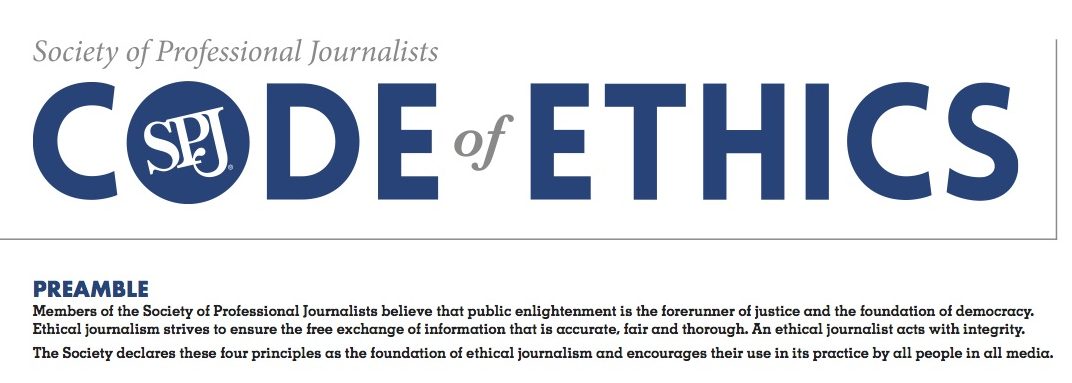
Professional journalists do not produce fake news. The journalist’s code of ethics has four guiding ideas. Seek truth. Minimize harm. Act independently. And be accountable and transparent.

Mainstream news organizations sometimes exaggerate with attention-grabbing headlines and titillating teasers. But real journalists want to get the facts right. When they get things wrong, they admit it – or get fired.

It is not always easy to differentiate fake news from real news. That’s why we need substantial training in media literacy. We need to teach kids how to read a newspaper and how to avoid being suckered by online click bait. Kids need to learn the difference between objective news reports, the opinion page, commercials and outright propaganda.

We all need to understand that YouTube and other Internet sources offer suggestions based upon what the computer thinks we want to see. Some tech firms are proposing a technological fix for this particular problem. Google and Facebook are working to combat fake news by changing how search and news notification functions work.

The technological fix is good. But the problem of sorting out fact from fiction will remain with us. Fake news is an ancient problem. Socrates was executed because false rumors were spread about him. Charlatans and quacks have always taken advantage of the gullible and the ignorant.

Wisdom teaches skepticism and self-restraint. A story that is too good to be true is likely not true. We are often beguiled by our biases. We want to believe things that flatter our egos and reinforce our deepest beliefs. Psychologists call this “confirmation bias.” But wanting something to be true does not make it so.

So while technological solutions can help reduce the proliferation of fake news, the real solution is critical thinking and self-examination.

The most obvious key is to seek out multiple sources of information. You should also compare what you read or hear against commonly held background knowledge. Critical media consumers also ask some of the following questions:

▪ Who is speaking, what is the source of their authority, and what biases do they have?

▪ Is the story trying to sell me something or advance an agenda?

▪ Who is the intended audience? What is included in the message or left out?

▪ How does this story connect to other things I already know?

▪ What more would I need to know to evaluate this properly?

These kinds of questions should guide our reading of books, our evaluation of scientific reports, and our understanding of speeches, sermons and sales pitches. The process of sifting and winnowing is liberating and edifying. Critical thinkers make informed decisions in all aspects of their lives.

Critical thinking is essential for citizens in a democracy. In order to effectively participate in the project of self-government, we need to be able to distinguish between the phony and the factual. Let’s hope that the fake-news furor stimulates a renewed commitment to media literacy, objective reporting, and basic common sense.

http://www.fresnobee.com/living/liv-columns-blogs/andrew-fiala/article147400744.html

Choose the simple life

Living in harmony with the Earth is a matter of simplicity

Fresno Bee, April 21, 2017


The recipe for living in harmony with the Earth is simple. We should reduce consumption and minimize our impact on the ecosystem. This is not easy to do in a culture of mass consumption.

We enjoy fast cars and air travel. We fill our large houses with manufactured goods. We have closets full of clothes, garages full of toys and an appetite for imported foods. We like comfort and pleasure.

Consumer culture is fun. Our economy is based upon the expectation of continued growth. New gadgets and gizmos create needs we didn’t know we had before. Marketing and promotion manufacture desires and leave us wanting more. It is hard to say no to consumption when everyone else is enjoying the goods of consumer society.

It is counter-cultural to talk about decreasing consumption. But simplicity has long been advocated by prophets and philosophers as a pathway to liberation. As an added bonus, a simple life is also good for the environment.

MARKETING AND PROMOTION MANUFACTURE DESIRES AND LEAVE US WANTING MORE.
IT IS HARD TO SAY NO TO CONSUMPTION
WHEN EVERYONE ELSE IS ENJOYING THE GOODS OF CONSUMER SOCIETY.

Thoreau and simplicity

In the American tradition, Henry David Thoreau is the great advocate of simplicity. Thoreau thought that enlightenment grew from simplification. He claimed that civilized people would “leave off eating animals.” He said, “water is the only drink for a wise man.” He thought that we often live like ants, our lives being “frittered away by details.” The solution is simplicity – a word that he repeated as a mantra in his book “Walden.”

It turns out that the vegetarian diet that Thoreau advocated is also environmentally friendly. Reduced meat consumption decreases the size of your carbon footprint. The same is true with regard to other exotic foods. Coffee, alcohol and imported foods have ecological costs.

Thoreau was not in favor of eating as a recreational activity. We eat more than we need to survive. Extravagant variety makes for delicious dining. But this is not healthy for us or for the planet. Obesity, diabetes and heart disease are problems, as well as climate change.

The solution is to realize that what’s good for the body is also what’s good for the planet and for society. Simple foods – raw and local fruits and vegetables – are nutritious. Vegetarian cuisine can be delicious – and fun.

There is adventure in experimenting with the variety of meatless foods. Sharing with others can spice up our lives. Happy dining has less to do with what you eat than with who you eat it with.

Walking or biking

Another Earth-friendly step is to drive less. Driving is easier and often more convenient. But there is adventure in riding the bus, including an opportunity to have more intimate contact with people in your community.

A walk or bike ride is good for the heart and the mind. Walking and biking show you the the world from a different perspective and a different pace. Broaden your horizons by leaving your car at home.

We can also reduce our use of consumer goods. Big homes inspire us to fill them. Big-box stores encourage mass consumption. And big cars are perfectly constructed to carry all of that stuff back home.

A WALK OR BIKE RIDE IS GOOD FOR THE HEART AND THE MIND.
WALKING AND BIKING SHOW YOU THE THE WORLD FROM A DIFFERENT PERSPECTIVE AND A DIFFERENT PACE. BROADEN YOUR HORIZONS BY LEAVING YOUR CAR AT HOME.

But there are activities other than shopping that can provide satisfaction. Have a picnic or visit a park. Join a sports league. Participate with a political group. Or visit a library. You’ll make new friends, learn new things and see the world in a different way. You will also save money.

Consumer capitalism provides pleasure. But it does not produce lasting happiness or a good life. Technological innovation makes some things easier. But there are diminishing returns. Cars are great. But traffic soon becomes a problem. Email is great, until we experience inbox overload. Easy access to delicious food is wonderful. But obesity and diabetes are dangerous. And so it goes.

Inner peace and spiritual growth cannot be generated by external means. This is the common teaching of the world’s philosophical and religious traditions. Simplicity was taught by ancient Greek philosophers, Asian sages and Christian ascetics.

Our consumer culture is not sustainable in the long run. There will be 8.5 billion people on Earth by 2030. We can’t all live as mass consumers. But we would be happier if we would reduce consumption. And the Earth would benefit if we would learn to find satisfaction in simple things.

http://www.fresnobee.com/living/liv-columns-blogs/andrew-fiala/article145900294.html

Year in ethics 2016

2016 was a year of ups and downs in ethics

Fresno Bee, December 31, 2016

This was a stimulating year for ethical reflection. Incivility marred the election. Scandals emerged. And haters continued to hate.

But good Samaritans took risks to help others. Just this week, two students, Emily Elmerick and Sydney Antles, rescued crash victims from drowning in a canal on Highway 41.

Such courage should be applauded. We should also celebrate the steadfast decency of the majority of people who worked hard and paid their taxes.

Common decency often goes unnoticed. Nor do we notice the steady progress we are making toward alleviating poverty, improving health and advancing literacy around the globe.

Instead we fixate on hot button issues. This year, transgender rights and Black Lives Matter grabbed headlines. Assisted suicide became legal in California. Some states restricted abortion rights. And marijuana legalization was in vogue. Any of those issues will provoke heated conversation.

SELF-DRIVING CARS NEED MORAL ALGORITHMS TO GUIDE THEM. BIOTECHNOLOGY IS OPENING A NEW WORLD OF GENETIC ENGINEERING. THE SIXTH MASS EXTINCTION IS BEING CAUSED BY POACHING, POLLUTION AND HUMAN POPULATION PRESSURE. GLOBAL TEMPERATURES AND CO2 LEVELS ARE AT ALL-TIME HIGHS.

Major moral problems loom on the horizon. Self-driving cars will require moral algorithms to guide them. Biotechnology is opening a brave, new world of genetic engineering. The sixth mass extinction is being caused by poaching, pollution and human population pressure. Global temperatures and carbon dioxide levels are at all-time highs.

Despite these new challenges, some things don’t change. California voters retained the death penalty. War, crime and terrorism continue to afflict us. And men continue to disrespect women.

This year, we heard Donald Trump brag about grabbing women’s genitals. Anthony Wiener sent more lewd photos. New allegations emerged against Bill Cosby, Roger Ailes and others.

Meanwhile, the White House’s glass ceiling remains intact. Some blamed misogyny, racism and xenophobia for Hillary Clinton’s failed presidential bid. Others saw conflicts of interest in the Clinton Foundation, dirty deeds in the DNC and that pesky email scandal.

The sports world was a welcome distraction from politics. The Cubs inspired hope, as did Olympic champions. The moral highlight of the Rio Games occurred when Abbey D’Agostino helped an injured Nikki Hamblin complete the 5,000 meter race.

But the Olympics were marred by Russian cheating scandals and fear of Zika. Social unrest in Brazil haunted the Games just as racial tensions in the U.S. prompted Colin Kaepernick’s flag protests.

Sex scandals emerged in USA Gymnastics and in British soccer clubs. And in Rio, Ryan Lochte got drunk and vandalized a service station. He lied about it and got caught, demonstrating that the cover-up is often worse than the crime.

NEPOTISM AND GREED ARE A VOLATILE MIX, WHICH IS KEEPING ETHICS WATCHDOGS ON ALERT AS DONALD TRUMP HEADS TO WASHINGTON, D.C. CRITICS WARN OF POTENTIAL CONFLICTS OF INTEREST.

In addition to liquor and lust, greed also caused moral disaster. Several corporate scandals emerged this year. Wells Fargo opened phony accounts for 2 million customers. The scandal has spread to Prudential insurance. Thousands of employees were fired, and CEO John Stumpf stepped down.

Profiteering was a problem for makers of the EpiPen, whose price rose by hundreds of percent in recent years. The CEO of the company that makes the EpiPen is Heather Bresch. Her father is a U.S. senator. Her mother headed the National Association of State Boards of Education, which urged schools to purchase these devices.

Nepotism and greed are a volatile mix, which is keeping ethics watchdogs on alert as Donald Trump heads to Washington, D.C. Critics warn of potential conflicts of interest. Others, such as Newt Gingrich, argue that a billionaire president should not be bound by customary ethics regulations. Meanwhile, prosecutors have blocked Trump’s attempts to close his charitable foundation, since it is under investigation.

So what have we learned this year? Most scandals involve the same basic causes: sexual desire, drunkenness, overweening pride, a penchant for secrecy and deception, conflicts of interest, and the unbridled pursuit of profit.

The basic lessons of ethics are simple. Keep your ego in check and your pants on. Value sobriety and self-control. Tell the truth. Keep your promises. Don’t cheat. Respect people and treat them fairly. Don’t enrich yourself or your family at the expense of others. And apologize when you do something wrong.

As we enter the new year, let’s resolve to be moderate, humble, honest and kind. Let’s remember that decent people and good Samaritans do exist. Let’s celebrate the progress we have made in improving ourselves and our world. And let’s be slow to blame and quick to forgive, since everyone is tempted by pleasure, profit and pride.

http://www.fresnobee.com/living/liv-columns-blogs/andrew-fiala/article123792204.html

Wishful thinking at Christmas

At Christmas, maybe a little wishful thinking is OK

Fresno Bee, December 24, 2016

Much of life depends upon voluntary suspension of disbelief. We often set truth and reality aside to play in the fields of fantasy.

Perhaps we are too gullible. Fake news floods our screens. We are awash in bunkum and balderdash. Major dictionaries picked “surreal” and “post-truth” as words of the year for 2016.

Science and logic help us distinguish fact from fiction. But this problem is psychological. We enjoy our humbug. Sensational hoaxes are much more fun than reality. And the will to believe provides us with wonder and joy.

In 1897, the New York Sun famously declared, “Yes, Virginia, there is a Santa Claus.” The editor – with the fantastic name Frances Pharcellus Church – explained, “The most real things in the world are those that neither children nor men can see. Did you ever see fairies dancing on the lawn?”

“Of course not,” he said. “But that’s no proof that they are not there. Nobody can conceive or imagine all the wonders there are unseen and unseeable in the world.”

Mr. Church concluded that faith, fancy, poetry, love and romance reveal the beauty and glory of the world. These things, like Santa Claus himself, are “real and abiding.”

This inspiring essay would fail a critical-thinking class. Lack of proof is not proof. Wishful thinking does not make things true. Imagined wonders are not real just because we want them to be.

A LIFE OF PURE, UNADULTERATED REALITY WOULD BE DISMAL AND DULL.
THE COSMOS CARES LITTLE FOR OUR HAPPINESS. BUT THIS EMPTY UNIVERSE ALSO CONTAINS CHRISTMAS.

And yet, we do not live by truth alone. We love our illusions. We are fascinated by fables and fantasy. Poetry transports us. Music moves us. The unreal worlds of television, film and literature fill our empty hours.

A life of pure, unadulterated reality would be dismal and dull. The cosmos cares little for our happiness. But this empty universe also contains Christmas.

The miracle of birth cannot be reduced to mere biology. Love, beauty and joy transcend material reality. Generosity and forgiveness can break long cycles of violence and hatred. But these wonders cannot be enjoyed unless we believe in them.

On Christmas Eve, the will to believe takes center stage. Christmas stories hinge upon the crisis of faith of an incredulous child. Belief in the unbelievable empowers Santa and his sleigh. Credulity is the ticket to the Christmas wonderland.

The same is true of art. Music is merely sound and rhythm. Poetry is scribbles on a page. Films are flickering, two-dimensional images. We must allow ourselves to be enchanted by these things. And when we give in to the illusion, we encounter meaning that transcends the material world.

Religion and politics also require suspension of disbelief. Bread and wine are transformed. Flags and insignia are not mere cloth. We encounter the sacred and sublime through a leap of faith.

It is easy to dismiss this as humbug. A cynical Scrooge will complain that love is hormonal, justice is power, and truth is the echo of a lie well told. Critical reason bursts the bubbles of the false and fantastic.

THE CHALLENGE IS TO STEER A MIDDLE COURSE. WE NEED TO KEEP WONDER AND HOPE ALIVE.
BUT WE ALSO NEED TO KEEP OUR HANDS ON OUR WALLETS.

But we do not live by reason alone. Poets and playwrights know this, as do shysters and charlatans. And therein lies a significant problem. Like other artists, the con artist plays upon our credulity. He sells us a pack of lies, which we gladly pay for.

The challenge is to steer a middle course. We need to keep wonder and hope alive. But we also need to keep our hands on our wallets.

There are times when it is appropriate to set reality aside and celebrate the play of the imagination. Christmas is surely one of those times. We sing the songs and tell the tales, weaving a fantasy that glows in the child’s wondering eyes. F.P. Church rightly celebrates “the glad heart of childhood.”

We cannot live every day as if it were Christmas. The adult world includes violence, hatred, stupidity and ignorance. Sober thought, grounded in reality, is the cure for these maladies.

But despair is also a problem. Wonder and hope are often in short supply. And cynicism pinches our hearts.

So yes, Virginia, we need to believe in Santa. Tomorrow we’ll be back to battling bull. But today we play with the fairies, creating a world of generosity and love for our children to enjoy.

http://www.fresnobee.com/living/liv-columns-blogs/andrew-fiala/article122726694.html

Christmas culture wars

Let’s avoid Christmas culture wars and be charitable

Fresno Bee, December 17, 2016

At recent rallies Donald Trump has announced, “We are going to start saying Merry Christmas again.” In Wisconsin, Trump spoke from behind a podium with the words “Merry Christmas USA” emblazoned on the front.

Meanwhile, the American Civil Liberties Union forced Knightstown, Ind., to remove a cross from the town Christmas tree. The Christmas culture wars are raging again.

The Constitution provides some guidance. The First Amendment guarantees your right to say “Merry Christmas,” “Happy Hannukah,” or “Bah humbug.” You can plant a cross, a menorah, or a Festivus pole in your yard. However, the First Amendment prevents the government from imposing religion upon us.

But what about Christmas trees? The Indiana town removed the cross but left the tree. Christmas trees seem sufficiently secular to pass constitutional muster.

That tells us something about the meaning of “Merry Christmas.” The phrase can be a religious dog whistle. But it can also have a secular meaning.

Christians want to keep Christ in Christmas. For some, “Merry Christmas” is a proclamation affirming that Christ was born to save us from our sins. But most people are probably not thinking about theology when they offer a friendly “Merry Christmas.”

No yuletide greeting is entirely unproblematic. “Happy holidays” seems inclusive. But it leaves atheists out, since they don’t believe in “holy days.” “Season’s greetings” is more inclusive. But prickly pious types may take offense at such an insipid salutation.

Christ is certainly the root of “Christ-mas.” But what about the word “merry”? Even that word can be offensive since it contains a veiled hint about intoxication. The second-most-famous use of the word is in the phrase “eat, drink, and be merry,” where it points toward drunkenness.

Christmas parties are made merry with mulled wine and martinis. Some enjoy mimosas on Christmas morning. Christmas began as a drinking party. It developed from the Roman Saturnalia, a time of drunken merriment associated with the winter solstice.

Some Christians oppose gaiety. Christmas merriment was banned in England in the mid-17th century by Puritans under Oliver Cromwell. American Puritans such as Cotton Mather condemned the “mad mirth” of Christmas. For Puritans, salvation is serious business. Merriment in this world distracts us from the need to be saved from sin.

Can’t escape religious diversity

This brief history reminds us of religious diversity. Some view this world as a vale of tears. Others embrace the joys of life. We disagree about theology, the value of happiness and the meaning of life.

And that is why we need the First Amendment to the Constitution to guarantee religious liberty and prevent government from imposing religion upon us.

Religious diversity is a fact. According to the Pew Center, only 63 percent of Californians are Christian. Twenty-seven percent are not religiously affiliated. The remaining 10 percent include Buddhists, Hindus, Jews, Muslims, Shamanists, Sikhs and others.

Some non-Christians enjoy a secular version of Christmas. The Pew Center reports that 81 percent of non-Christians celebrate Christmas. Santa Claus, Christmas trees, and eggnog do not require faith in birth of a savior in Bethlehem.

Significant diversity exists even among Christians. Catholics and Protestants celebrate Christmas on Dec. 25. Orthodox churches celebrate it in January. Other Christians – Adventists, for example – believe Christmas celebrations are unbiblical.

Many roots to Christmas traditions

Christmas is not in the Bible, after all. The disciples did not commemorate Jesus’ birthday. Mistletoe, elves and reindeer were adopted from pagan sources, as was Santa Claus.

Christmas is also a product of pop culture. It includes Charlie Brown, Rudolph and Bing Crosby. We might note that Bing’s famous song “White Christmas” was penned by Irving Berlin, a Jewish composer. Berlin also wrote “God Bless America,” by the way.

It is a unique American blessing that we are free to say “Merry Christmas.” But we should use our freedom wisely. Liberty without compassion quickly becomes obnoxious.

Let’s be charitable with regard to religious phrases and symbols. It is rude to force a holiday greeting down someone else’s throat.

“Merry Christmas” is not a threat or a command. It is a toast to be said with a smile, not a sneer. It is an offering of hospitality, not an expression of hostility. In these dark winter months, we need less-malevolent mulishness and more making merry.

http://www.fresnobee.com/living/liv-columns-blogs/andrew-fiala/article121328108.html