Coronavirus Pandemic is Not a War

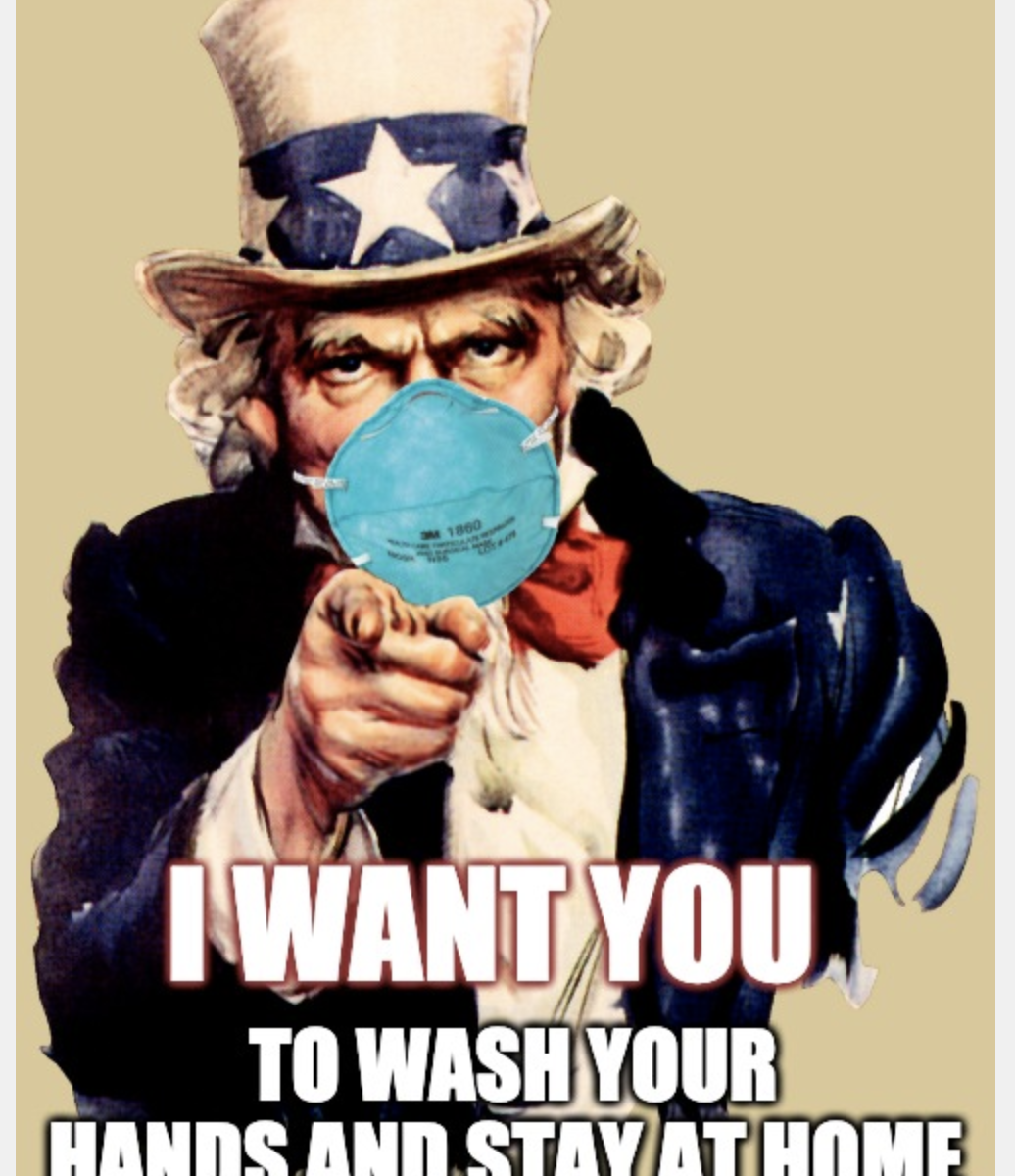
Wash Hands Stay Home

A pandemic is not a war.

To call the pandemic a war shows a failure of imagination. 

President Trump claimed he is a wartime presidentThe Governor of North Carolina said, “This pandemic is a war, and we need the armor to fight it.”  Finance gurus want to issue coronavirus war bonds.  Foreign policy pundits are saying absurd things like, “We need to fight a holding action on the economic front.”  The Head of NATO said we are fighting “a common invisible enemy.”

This is nonsense.  Wars are intentional actions that deliberately kill human beings.  An enemy is a person serving a government.  War is a political act involving the conscious decisions of moral agents.

A virus is a force of nature.  It has no intentionality.  A pandemic has no political agenda.  There are no enemies here.  There is no one to negotiate with.  There will be no peace treaty. 

The war metaphor makes us think in nationalistic terms.  But a pandemic is a global problem.  Nationalism prevents cooperative action.  We don’t need a wartime president.  We need a global team of scientists and doctors.  

The war analogy creates a morbid fascination with body counts.  This leads to lame statistical analogies.  People have compared pandemic deaths to the numbers killed in wars.  The Surgeon General said this will be “our Pearl Harbor moment, our 9/11 moment.”

These comparisons are uninformative.  Better comparisons would consider those killed by other infectious diseases, say AIDS or Ebola. 

This fascination with body counts implies that that we “win” when the count goes down.  But each death represents an infinite loss.  Dead people are not tally marks on some perverse scorecard.  Instead of counting body bags, let’s talk more about grief, mourning, and resilience.

The myths of war, as I have argued elsewhere, make it seems that a soldier’s death is vindicated by victory and the justice of the cause.  But in a pandemic, there is no justification or vindication. 

The rhetoric of war also gets infused with patriot and religious language that becomes propagandistic. 

When President Trump sent the Navy ship, Comfort, to New York,, he published a patriotic video and tweeted:With the courage of our doctors and nurses, with the skill of our scientists and innovators, with the determination of the American People, and with the grace of God, WE WILL WIN THIS WAR .”

Again, the idea of a war to be won is absurd.  Also absurd is the idea that the grace of God is involved in this, or in any battle.  Hurray for the doctors and scientists.  But the real work is about healing and mitigation, not about defeating an enemy.  This is an unglamorous effort, conducted one person at a time in sick beds and hospitals.  The American people don’t need to put on armor or steel themselves for battle.  We need to stay home, wash our hands, and wear masks in public.

Unfortunately, our imaginations are infected by militarism.  Patriotism is tightly woven around war.  We cheer on the war machine, despite morally problematic and endless wars.  If the “war” against coronavirus is like the war in Afghanistan, we are in trouble. 

Nor do we think enough about peace-building.  The pandemic calls for cooperative cosmopolitanism and creative community transformation.  Public health is not war.  It is peace-work. 

War rhetoric has led us astray before.  The “war on drugs” created a punitive system of mass incarceration, while thousands continue to die.  Drug overdoses killed 67,367 people in 2018.  The war on drugs failed because it should not have been a war. 

Instead of combat, we needed compassion.  People turn to drugs because of pain, depression, or a lack meaning and purpose.  The solution to the drug pandemic is a peaceful campaign of caring for those who suffer.

A similar rhetorical shift is needed for the coronavirus.  Let’s support the care-givers by giving them the equipment they need.  Let’s build inclusive infrastructure to support social-distancing in a time of economic turmoil.   Let’s provide compassionate care for those who suffer and grieve.  And let’s encourage the wartime president to stay out of the way of cosmopolitan science and the peaceful work of public health. 

Virtue and Moral Leadership in Interesting Times

Fresno Bee, April 5, 2020

An old curse says, “May you live in interesting times.” These are those times. Let’s hope we develop the wisdom to survive the curse of chaos.

This curse is subtle and understated. It has been attributed to an anonymous Chinese sage. But it likely came from Britain, the land of understatement and the stiff upper lip. Picture Monty Python’s Black Knight, with his arm cut off, saying, “Tis but a scratch, a mere flesh wound.”

The White House warned this past week that between 100,000 and 240,000 Americans will die. Without social distancing and other measures, there could be between 1.5 million and 2.2 million deaths.

Those who think we can simply get back to normal are not paying attention. California school kids will not be able to return to their campuses this school year. Rep. Devin Nunes said the decision to “cancel” school is “overkill.” But closing schools seems a reasonable way to prevent a million deaths.

At any rate, school is not canceled. It is moving online. So these will certainly be interesting times for teachers, parents and students. Let’s help them rise to the occasion. Instead of denial and unrealistic calls for a quick return to normal, kids need computers. Educators need training. And parents need a new model for helping their kids succeed.

Above all, we all need imagination, dedication and courage. Interesting times help us discover what we are made of. We don’t know where our strength lies until it is challenged. Leadership does not emerge until it is tested.

We need our leaders to unify behind a straightforward call for the better angels of our nature. The rhetoric of the American tradition can help. Thomas Paine said, “these are the times that try men’s souls.”

Paine wrote those words in December 1776, as Washington’s army was facing a difficult winter. Paine said that the time of summer soldiers and sunshine patriots was over. He wrote, “Let it be told to the future world, that in the depth of winter, when nothing but hope and virtue could survive, that the city and the country, alarmed at one common danger, came forth to meet and to repulse it.”

We need statesmen to issue a similar call for hope and virtue today. This springtime may be among the worst in American history. More Americans will die from this disease than died during the Vietnam and Korean wars. The economy has tanked. None of us have ever experienced anything this “interesting” before. We need inspiration.

We also need something to do. Most of us have nothing to do besides grouse and complain. We sit on the sidelines, while the nurses and doctors risk their own health to save the afflicted. Let’s cheer them on and give them the supplies they need. But let’s stop the partisan bickering.

Our passivity creates a paradox. For most of us, the best thing we can do to make the world a better place is simply stay home. This is among the most difficult aspects of our predicament. Virtue seems to require bold action. But in this case, it calls for inaction.

The world’s traditions have often warned against passivity. They say that idle hands are the devil’s playthings. Laziness and sloth are vices. And virtue evokes images of a life of brave effort. Today, inaction is a virtue and activity is a vice.

Can we develop a kind of virtuous passivity? We might cure partisan rancor if we would learn the virtues of silence and patient hope. This is a difficult lesson for Americans. But it is deep in the heart of the world’s wisdom traditions.

During these interesting times let’s rediscover the virtues of quiet and simplicity. This is an opportunity to cultivate calmness and explore solitude. Let’s look within instead of judging others. And let’s encourage our leaders to do the same.

Note to readers: A California law that went into effect Jan. 1 limits freelancers like myself to 35 articles per year. I will be going to a less regular cycle, writing for The Bee only every other week. I will post more regularly on my blog (www.andrewfiala.com). You can also follow me on Twitter (@PhilosophyFiala).

Updates to Fiala blog

For several years I have been writing weekly for the Fresno Bee. Beginning in April 2020, I will be cutting down on the number of weekly columns that I publish in the Bee. The reason for this a new California law that limits the number of contributions that a freelancer can publish in a given venue.

As a result I am planning a more active presence on the blog on my website (www.andrewfiala.com) and on Twitter and Facebook.

I have recently updated my Facebook page: https://www.facebook.com/PhilosophyFiala/

You can follow me there.

The Power of Truth

As the doctors and scientists struggle to contain the coronavirus, there has been confusion and disinformation coming out of the White House. And still the partisanship and polarization regarding truth continues.

They say this is a post-truth era.  But the truth is that human beings have never really been fond of truth.  When was the “truth era,” exactly?  During the “good” old days of racism, sexism, and colonialism?  And what about the long history of religious superstition and scientific ignorance?  Truth has usually been in short supply.

Given the long history of untruth, it is not really surprising that the Washington Post reports that President Trump has made over 16,000 false or misleading statements since taking office three years ago.  He is not the first liar to live in the White House, only the greatest.  The President, of course, claims that the Post is fake news.

But so what?  We’ve got other things to worry about.  For many of us, life is good.  We’ve got smartphones and Youtube, Instagram and all-star games.  The consumer society is pleasant.  We even get a perverse thrill watching the outrage flow from Washington.

Or at least we did, before the coronavirus. Maybe we are ready to return to truth, to a view that is informed by science instead of partisan spin.

But let’s face it, when it comes to truth, we mostly don’t care.  If you put together a wish list of the things you want in life, would truth make the list?  My guess is that for most people, truth would not make the list.  We are mostly content to live with white lies, unproven superstitions, and unfounded ideologies.  Very few feel compelled to challenge powerful lies or the lies of the powerful.

It is not that truth is somehow weaker than falsehood.  Rather, the issue is that truth and falsehood are usually less important to us than other things.  Mostly we want love, friendship, money, and peace of mind.  A few idealistic people want justice or universal harmony. 

But even the idealists will accept a few lies on their way to utopia.  Many people are simply not motivated by the love of truth.  And others subordinate the love of truth to their love of other things.

I have been thinking about truth, while re-reading Vaclav Havel’s essay “The Power of the Powerless,” which is about dissent under totalitarianism.  Havel was a Czech dissident.  He was imprisoned for his views.  But he went on to become the President of post-Soviet Czechoslovakia. 

Havel advocates for living within the truth.  But he explains how easy it is to live within a lie.  While his focus is on Soviet-bloc totalitarianism, he offers a prescient warning about the combination of totalitarianism and consumerism.  Over forty years ago, in 1978, he called out “the omnipresent dictatorship of consumption” fueled by advertising and a “flood of information.” 

He also understood that most people simply play along with the prevailing ideology.  Under old-school totalitarian regimes, the dissidents were jailed, tortured, and worse.  But Havel points out that mostly, people play along because everyone else is playing along.  We find a sense of belonging and purpose in joining with others under an ideological umbrella. 

Havel explains, ideology as “a veil behind which human beings can hide their own fallen existence, their trivialization, and their adaptation to the status quo. It is an excuse that everyone can use.” 

This explains much about the power of partisanship and the failure of truth to capture our attention.  We sense that life is out of balance.  But rather than confronting our dis-ease directly, we retreat to a familiar ideology and find comfort within it.  Truth is irrelevant when what we seek is security and a sense of belonging. 

But Havel also gives us hope.  At some point, people simply stop playing along.  They stop repeating the party line.  Someone points out that the emperor has no clothes on.  And soon those who played along look like fools.  Living within a lie only works if the lie is universally accepted. 

The voices and symbolic gestures of the dissidents draw attention to the lies.  Those dissidents will be punished, attacked, and suppressed.  But in the long run, Havel’s own story reminds us that there is hope that the dissident can disrupt the system with the power of truth.  And the present crisis reminds us that truth is often a matter of life and death.

Imagining a better economy after the Covid crisis

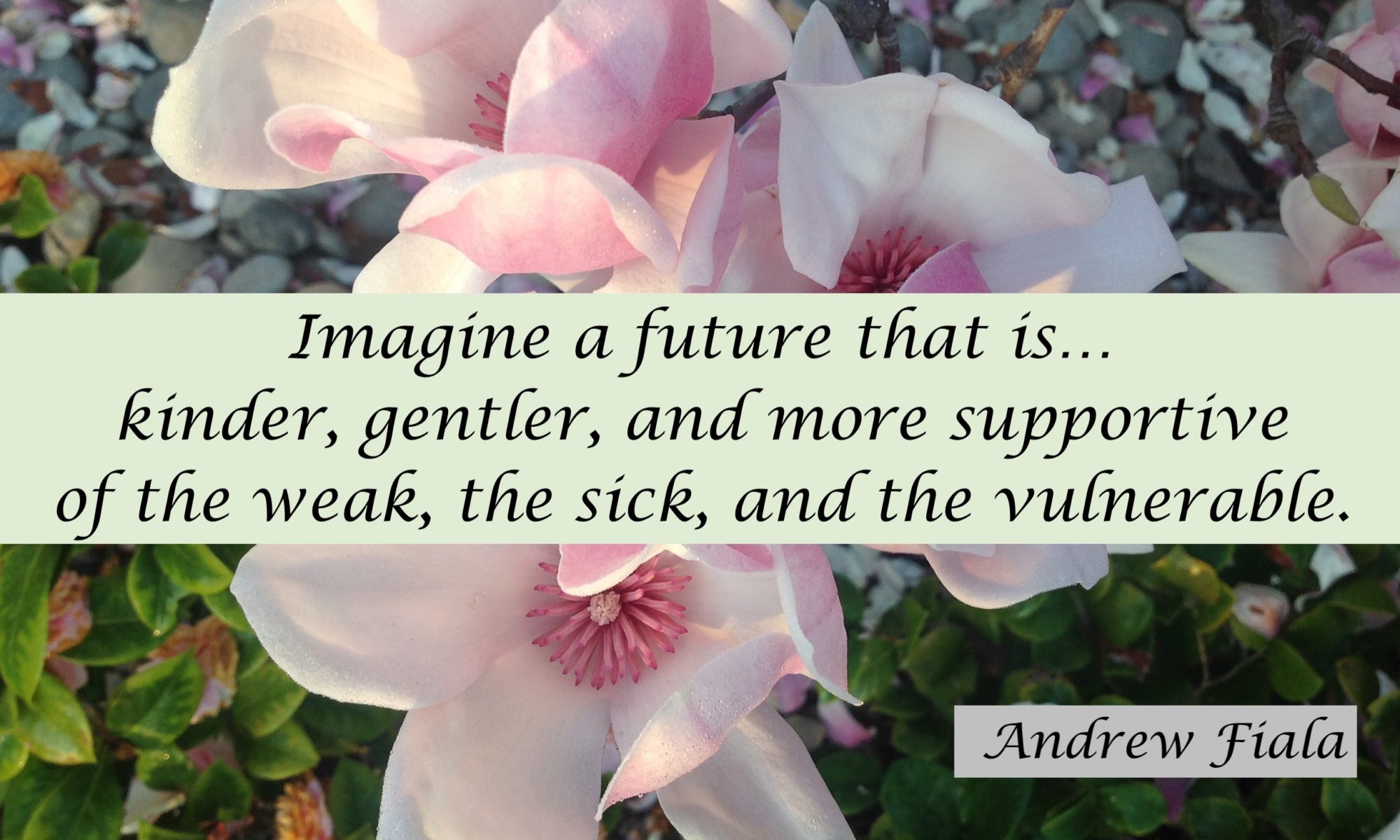
Imagine kinder future

Fresno Bee, March 27, 2020

The president wants to resurrect the economy by Easter. The scientists say it is too soon to get back to normal. But is getting back to normal really the solution?

Easter is a celebration of transformation. Maybe we should imagine a transformed economy on the other side of the corona crisis. We could even imagine the kind of economy that Jesus would hope for: an economy that prioritizes caring for the poor, the sick and the downtrodden.

The government is going to give direct handouts to people and extend unemployment benefits. Now is a good time to consider the idea of universal basic income. The stock market collapse is killing people’s retirement savings. Now is a good time to imagine how we might ensure a decent retirement for everyone. The pandemic also gives us a reason to consider disparities in public health and access to health care. And social distancing is an opportunity to rethink making a living and living well.

Henry David Thoreau said that there was more to life than making a living. He asked us to imagine “how to make getting a living not merely honest and honorable, but altogether inviting and glorious.” It may be too much to ask for an economy that is honest, honorable, and glorious. But we could benefit from a less materialistic approach to life.

The frantic pace of consumer society helped propel the pandemic. In a simpler time, people lived in small towns and villages, more in tune with nature, more connected to friends and family. A more localized economic model might impede future pandemics.

But reverting to pre-industrial life is not a viable solution. Instead of going back, let’s imagine how we might leap forward. A new vision of human life is made possible by the infrastructure that is helping us through this crisis.

People have rapidly shifted to working remotely. A generation ago, this would not have been possible. Universities have quickly gone online. Students have vacated dorms and professors teach from home. People don’t waste time commuting. Pollution is down as a result. Perhaps we have stumbled upon a new paradigm in business and education.

We are adapting in other ways. This week a couple in Green Bay, Wisconsin got married. Because of social distancing they had to invite their friends to participate via Facebook Live. That’s a cool idea, facilitated by technology. We are rapidly evolving how we work, play, learn, and love.

Or consider shopping and entertainment. The home delivery economy is thriving. There is a surge in grocery deliveries and restaurant carry-out. Movie theaters are closed. But we’ve got big TV’s and streaming content. Perhaps we’ll exit this crisis with new habits of consumption and amusement.

We may also reconsider the extent to which shopping and entertainment drive our economy and daily lives. This viral sabbatical provides an opportunity to spend more time with family, to re-learn the art of conversation, and to rediscover simpler pastimes, such as reading and playing cards. In my neighborhood, more people are taking walks with their families. It would be great if some of these new habits hung around.

But long walks and card games are not the only solution. The younger generation already spends a lot of time online chatting and gaming. Old folks have been forced to join in. Vulnerable and isolated oldsters need to turn to technology to keep in touch with friends and family. Social distancing will drive us further toward electronic social networking.

These are interesting times. Crises create opportunities for innovation. We need a vision of a post-corona economy that is not simply a return to normal. A new normal can build upon what we’ve discovered under quarantine about making a living and living well. Let’s imagine a new economy that conserves earth resources, avoids future pandemics, and enhances spiritual and mental health.

It may seem too soon to talk about life after corona. The scientists tell us it is too soon to reopen the economy. But now is the time to imagine a post-corona future that is kinder, gentler, and more supportive of the weak, the sick, and the vulnerable. Let’s not resurrect bad habits. Instead, let’s seek transformation and renewal.