Amateurs, Morons, and Professionals

There’s an ironic critique of amateurs in The Big Lebowski. Walter (played by John Goodman) keeps complaining about “f***ing amateurs.”  But Walter is an amateur.   He is a caricature of the great American “do-it-yourself” ethos. 

He claims that other people don’t know what they are doing.  But neither does he.  And so Walter keeps f***ing things up.

Some things ought to be left to the professionals.  A professional has specialized training, lots of experience, and a certain talent or skill.  But Americans distrust professionals.  We think that since we are all created equal, we should be able to do-it-ourselves.

Our suspicion of professionalism has some connection with Trumpism, the anti-vax movement, and the American distrust of science.  Professionals are elites.  But we don’t like elites.  We’d rather diagnose our own diseases and interpret the data for ourselves.  We think we are smarter than the doctors, the scientists, and the “mainstream media.”

As we’ve seen, this can lead to disaster.

The conflict between professionalism and amateurism is an ancient one.  Plato criticized democracy as a rule of amateurs.  According to Plato, this is a terrible idea.  Plato’s ideal republic is a nation run by professionals.  He describes a rigorous training method for selecting the rulers.  And he suggests that tyrants have not successfully completed the program.

Tyrants are the worst of the amateurs.  The etymology of the word “amateur” gives us a clue.  The root of the word is “love” (ama-).  Tyrants love power.  But they don’t want to develop the skill, virtue, and expertise necessary to rule.  They grab power without training themselves in wielding it wisely. 

This is not to suggest that all amateurs are tyrants.  There is something admirable about a dedicated amateur.  Amateurs do things because they love them.  They are not in it for the money or the fame.  But a virtuous amateur understands that some things ought to be left to the professionals. 

Things have changed quite a bit in recent decades when it comes to the difference between amateurs and professionals.  The Olympics, for example, used to ban professional athletes.  And while amateur athletes are inspiring, the pros are better.

In some fields, the professionals have been kicked to the curb.  In other fields, increased specialization makes it impossible for amateurs to survive.  Often this is about money: who makes it, who controls it, and where it flows.

At one time, Youtube was a place for amateurs to share videos.  But Youtube went commercial and the professionals staged a comeback, elbowing out the amateurs in pursuit of advertising revenue. 

Similar struggles have played out in other corners of the economy.  Ride-sharing apps like Uber compete with professional cab drivers.  Airbnb circumvents the professionals at Hyatt and Hilton.  Amazon allows self-published authors to reach a wide audience.  And so on.

Each of these stories is complicated.  In some cases, the rise of the amateurs has allowed for an outburst of creative entrepreneurship.  In other cases, you end up with crappy self-published books and weird cars driving you around town.

There is also lots of confusion about what’s true, what’s real, and what’s beneficial.  The Covid-19 debacle shows us what’s at stake.  Rather than trust the scientists, the amateurs are playing doctor. 

Early in the pandemic, non-experts claimed that Covid-19 was no worse than an ordinary cold or flu.  Then the amateurs doubted professional advice about masks and social distancing.  And now the non-professionals are skeptical of vaccines.  Meanwhile, the pandemic rages on.

Plato was right that in an ideal world we’d put the professionals in charge.  But in a democratic country that values individual liberty, the amateurs will resist.  The solution is better education.  But that’s a long-term and ongoing solution. In the meantime, we’re left with a mess. 

At one point in The Big Lebowski, the Dude (Jeff Bridges) says to Walter: “Walter, I love you, but sooner or later, you’re going to have to face the fact you’re a goddamn moron.” This is us. Let’s face the fact that we are a bunch of amateurs and morons, mucking things up. What’s not to love?
Drought, Fire, and Traffic: Lessons from Yosemite

Fresno Bee, August 1, 2021

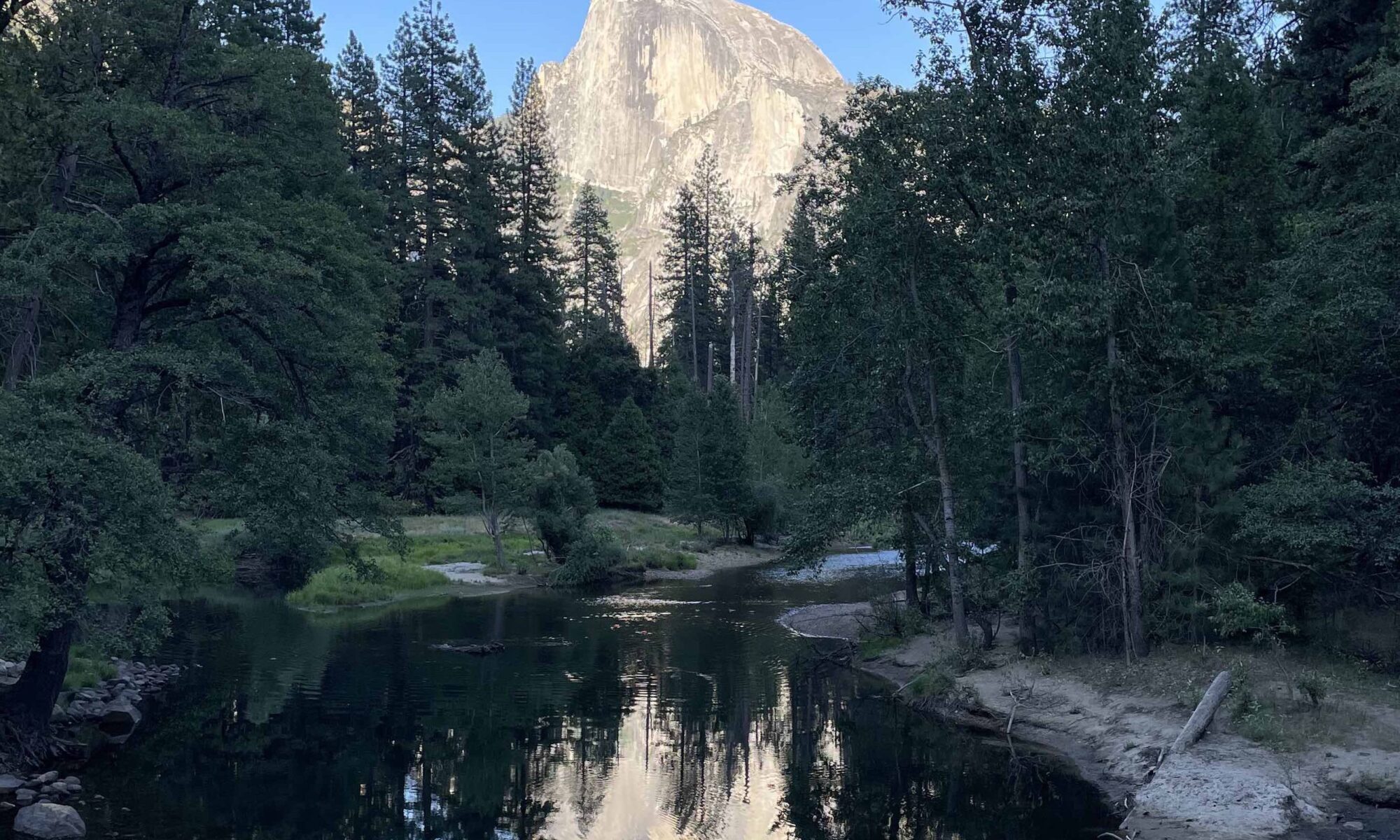
Half Dome is as sublime as ever. But it presides over a valley where California’s drought is obvious. When I visited Yosemite this past week, the Merced River was barely flowing. Vernal Falls was a trickle. And Yosemite Falls was a dry dribble. We’re running out of water, folks.

If you drive to Shaver Lake, you see another warning about our hot, dry future. Last year’s fire left a scorched and desolate landscape. A few green shoots are returning. Forests are resilient. But their resilience is measured in decades. The forest will not return in my lifetime.

Our grandchildren will inherit a world of drought, fire, and heat. The climate is changing. The American West is drying up, including the mighty Colorado. As the land dries out, the fires will be worse.

Last week in this column, I talked about the “tragedy of the commons.” When we fail to cooperate, we end up with bad outcomes. This happens with regard to vaccines and masks. The drought provides another worrying example.

The California Water Resources Control Board met recently to consider cutbacks on water allocations. If the state imposes restrictions, they will be unpopular. Farmers will protest, as will back-yard gardeners.

The pandemic has shown that scarcity breeds polarization and conflict. In lean times, people get grumpy.

The good news is that we can learn to do better. It is easy to single out the anti-mask, anti-vax crowd. But the majority of people educated themselves and did the right thing.

Environmental issues will require similar cooperative evolution. Those of us who grew up in a cooler, wetter world will resent the restrictions of the hot future. But our grandchildren will be better at this than we are. They will have no other choice.

Spiritual and ethical evolution will be needed in a world where lots of people are competing for scarce water. If we don’t learn to cooperate, things will get worse.

A recent change in Yosemite provides a bit of hope. These days you need a reservation to visit the park. The reservation system is a response to pandemic social-distancing. They say it is only temporary. But it has solved Yosemite’s long-standing overcrowding problem.

When I visited Yosemite in May, before the reservation system started, it was impossible to park. The trails were packed. The traffic barely moved. Yosemite’s epic traffic is another example of the tragedy of the commons. When there are no limits on cars, there is gridlock, and everyone suffers.

When I visited recently after making a reservation, it was much better. The traffic was light. Parking was easy. The trails were uncrowded.

Of course, the reservation requirement is a pain. You can’t take a spontaneous trip to Yosemite anymore. In the old days, you could hike up Half Dome whenever you wanted. Now you need a reservation just to drive into the park.

It’s not hard to imagine a future where a visit to Yosemite always requires a reservation. Grumpy old timers will grouse and complain. For those of us who grew up with free and easy access, this stinks. But we will adapt, if we understand that these restrictions and limitations are in everyone’s interest.

There are reasons to hope. Human beings can learn and improve. This is a slow process. And meaningful change often only comes at the last minute. But we can evolve and respond with intelligence and compassion.

Scarcity can fuel the growth of elitism and inequality. This is why compassion and justice are needed. The reservation system makes it harder for working-class people to enjoy Yosemite. A similar problem holds for water and other resources. Rich people can buy their way out of scarcity, while poor people suffer.

Again, the pandemic provides an example. Wealthy professionals profited from low interest rates, a real estate boom, and jobs that allow telecommuting. It was poor and working-class people who suffered the worst impacts of the pandemic.

Let’s learn from that. As we respond to a hot, dry future, we must avoid exacerbating inequality. Rich people should not be allowed to cut the line or consume more than the rest of us. Water is a common good. And everyone should have access to majestic places like Yosemite.

Covid Karma: The Mask Debate Evolves

Fresno Bee, July 25, 2021

Masks are back, along with protests against them. Fresno County public health officials recommend that everyone wear masks again in public. This includes kids in schools, which prompted parents in Clovis to protest the need for kids to wear masks.

The resurgence of COVID is the vexing result of vaccine skepticism. Experts have explained that this is now a pandemic of the unvaccinated. This is frustrating for vaccinated people. We hoped the vaccine would get us back to normal. But that only works if everyone gets vaccinated.

Unvaccinated people are still supposed to wear masks. But anti-vaxxers are also likely to be anti-maskers. Unvaccinated and unmasked people are at risk. And it is through them that the virus spreads and mutates.

Political polarization is part of the problem. A report from the Kaiser Family Foundation shows that Republicans are less likely to get vaccinated than Democrats. But not every vaccine-skeptic is Republican. And some Republicans believe in vaccines and masks. Ignorance, fear, and selfishness are non-partisan problems.

Vaccine skepticism is more complicated than political ideology. Some religious people refuse vaccines on dogmatic grounds. Some people are allergic or have other health conditions that rule out vaccination. And vaccinations for children remain problematic.

This subtlety is ignored when people start casting blame upon the unmasked and unvaccinated. Some go so far as to invoke a kind of karmic comeuppance for the unvaccinated. I have heard more than one person say something like, “Well, it’s those unvaccinated folks own fault. They deserve what they get. I hope they hurry up and die so we can get back to normal.”

The people who say this usually say it with a wink and a whisper. They take it back quickly, claiming it is a joke or that they don’t really mean it. But it’s an awful thing to say.

This cringe-worthy blame game is a symptom of a profound social malfunction. The anti-vaxxers don’t trust the public health system. The pro-vaxxers don’t have any sympathy for the anti-vaxxers. As the pandemic continues, anger and exasperation are more common than kindness and compassion.

This dysfunction is similar to other rips in our unraveling social fabric.

Productive social life requires thick webs of cooperation. In a well-functioning society, cooperation is contagious. Successful cooperation makes people more cooperative. Cooperators are rewarded. As we share the goods of social life, we become even more cooperative.

But when cooperation breaks down, there is a vicious cycle fueled by distrust and animosity. This has been described by psychologists and philosophers in terms of “the prisoner’s dilemma” and “the tragedy of the commons.” The basic problem is that when we fail to cooperate, we end up with worse outcomes.

This helps explain a number of political and moral problems. Consider climate change. If other people are consuming mass quantities of fossil fuels, why should I cut back? As the climate heats up and the other guy is guzzling gas, I may lose the motivation to regulate my own consumption.

Or consider the controversy about the integrity of the 2020 election. If the other party is stealing elections or undermining confidence in democratic elections, then why should I cooperate? When trust erodes, democracy collapses.

Similar worries hold for COVID restrictions. Those who cooperated for the past year did so with the expectation that if everyone cooperated, things would get better. But the non-cooperators have undermined that hope.

This is a dangerous moment. We risk losing the buy-in of the folks who cooperated in the first place. Their virtuous behavior has not been rewarded. So, the motivation to cooperate fades.

One solution to this problem is moral. If the minor inconvenience of covering my mouth in public can save people’s lives, then I should mask up. Blame and karma ought to play no part in this moral calculation.

But moral concern is not the only thing that motivates us. Our emotions are also involved. That’s why we also need inspiration and hope. More people need to be inspired to get vaccinated. Those who wear masks need to be praised for their virtue. And those who are vaccinated need to be reassured that their cooperation was not in vain

There is No American Religion

Fresno Bee, July 18, 2021

New poll shows 23% of Fresno County residents don’t affiliate with an organized religion

American religiosity is declining and diversifying. A recent Census of American Religion from the Public Religion Research Institute confirms a trend scholars have noted for decades. There is really no such thing as a typically American experience of religion. And lots of people have rejected organized religion.

This is what religious liberty looks like. In this country, you can change religions, marry someone from a different faith, or simply stop going to church. You can also openly criticize religion without fear of prosecution for blasphemy or apostasy.

Other countries lack this kind of liberty. When the State Department issued its annual report on religious liberty in May, Secretary of State Antony Blinken said, “Religious freedom, like every human right, is universal. All people, everywhere, are entitled to it no matter where they live, what they believe, or what they don’t believe.”

Blinken identified Iran, Burma, Russia, Nigeria, Saudi Arabia, and China as nations that harass religious minorities and punish religious dissenters. He accused China of committing genocide against its Muslim Uyghur minority.

American religious liberty is a rare and precious thing. But it is also messy and complicated. It means that we lack religious unanimity. It means that quacks can start cults. It means that some people will turn their backs on religion. It means that we all need to work harder to understand each other and the value of our freedom.

This is not good news for Christian nationalists who want the U.S. to be a Christian nation. Of course, the idea is problematic. Christianity is a big tent with substantial diversity. This includes many Christians who reject the idea of Christian nationalism.

A widely shared statement from “Christians Against Christian Nationalism” says that Christian nationalism distorts “both the Christian faith and America’s constitutional democracy.” They argue that Christian nationalism is idolatrous. And the First Amendment prohibits the establishment of any religion as the national religion.

Christianity is the identification of 70% of Americans, according to the PRRI Census. But Christianity is complex. It includes Protestants and Catholics, the Orthodox and the Mormons. The census also broke religious affiliation down by racial and ethnic lines, distinguishing, for example, between Black Protestantism, Hispanic Catholicism, and White Evangelical Christianity. One wonders how much there is in common between a white Mormon living in Utah, a Black Baptist living in Georgia, and a Hispanic Catholic living in Fresno.

Furthermore, nearly one in four Americans (23%) is not affiliated with an identifiable religion. Fresno County is typical in this regard with the same percentage of non-affiliated people (23%) as the rest of America. The Central Valley is generally more religious than the rest of California. In San Luis Obispo County, 36% are unaffiliated, for example. California is generally more diverse and less religious than the Midwest or the South.

The unaffiliated are not necessarily atheists. Only 6% of Americans claim to be either atheist or agnostic. Unaffiliated people may be spiritual, but not religious. These folks believe in God or spirits, but are not members of any specific religious community.

One interesting data point is that there are as many atheists and agnostics as there are adherents of all non-Christian faiths combined. Jews, Muslims, and Buddhists each account for 1% of the population. Hindus came in at 0.5% (Sikhs were not accounted for separately).

This census confirms that this is a big country, where people are free to believe whatever they want. But religion cannot be ignored as a social force. There are regional differences. And religious differences track race, ethnicity, and political party affiliation.

This census implies that change will continue. Young Americans are more diverse than older generations. In the 18-29 age cohort, only 54% are Christian, 36% are unaffiliated, with non-Christians making up the rest.

This suggests an optimistic outlook for the future of religious liberty. Young people are exercising their liberty and creating a future that will contain more religious diversity than their grandparents encountered. Young people will need guidance as they re-weave the religious fabric of the nation. They need education about religious diversity and religious liberty. But the youth can also lead the way by showing the rest of us what freedom looks like.

Satanism and QAnon: Playing the Devil’s Advocate

Do our leaders worship Satan? How would we know? And what would that mean?

Fifteen percent of Americans believe Satan worshipers are in charge.  The Public Religion Research Institute (PRRI) found this in a recent study about the QAnon conspiracy.  This belief is more prevalent among Republicans: 23% of Republicans claim that “the government, media, and financial worlds in the U.S. are controlled by a group of Satan-worshipping pedophiles who run a global sex trafficking operation.”

I find this hard to believe.  But then again, I find it difficult to believe in Satan at all.  I also think it would be absurd for anyone to worship Satan—both because there is no Satan—and because if he did exist, he would not be worthy of worship. 

The whole thing is a theological, ethical, and sociological mess. 

Perhaps those who say this are actually trolling the researchers.  Do 48 million Americans (that’s 15% of our population), really believe that Satan worshipers are running the country? 

This opens the question of what it means to really believe something.  A related question is about how we could know what anyone really believes.

Let’s begin with the absurdity of Satan.  The most obvious argument against Satan is the existence of a benevolent and all-powerful God.  Satan does appear in the Bible.  God empowers Satan to torment Job, for example.  But would a good God really do this?  Why would a good God create a devil who torments us?

Creative theology attempts to make sense of this and the general “problem of evil.”  One solution is to claim that evil is the absence of good and not the active power of some supernatural being.  Texts that personify evil in Satan must be reinterpreted as allegories or parables.

But lots of Americans appear to have a more literal belief.  The Gallup Poll reports that 61% of Americans believe in the devil.  A survey from the Pew Center found that 58% of Americans believe in Hell.  So maybe it is not surprising, that millions of Americans believe our leaders worship Satan.

Perhaps enlightened theology and secular critiques of religion could help cure QAnon belief.  But some non-religious people (11% according to PRRI) also claim that Satan-worshippers run the country.  A full-fledged atheist who does not think Satan exists could believe, I suppose, that others worship the non-existent devil.  This could be an ad hominem accusation, like making fun of someone by claiming they believe in fairies and leprechauns. 

This leads to questions about the sociology of belief and religious tolerance.  How can we presume to understand what strangers really believe?  Could anyone know that ruling elites worship Satan?  And what would that actually mean?

One rule of thumb is that it is wise to avoiding judging the beliefs of others.  Religious belief is complex, changeable, and internally diverse.  Religious people disagree among themselves.  Many believers are ignorant about or indifferent to the dogmas of their own religion.  We also fail to understand other people’s beliefs.

Satanists even disagree among themselves.  A group calling itself the Satanic Temple advocates empathy, reason, and secular values.  They reject the supernaturalism of another group called the Church of Satan.  The Satanic Temple appears to be Satanism without Satan.

This is probably not what QAnon believers have in mind.  But then again, how do we know what the QAnon-ers really believe about the supposed Satan-worship of ruling elites?  And how would a QAnon-er actually know what the ruling elites really believe?

These vexing questions should encourage us to be cautious and tolerant.  It is difficult for any of us to figure out what we actually believe.  It is presumptuous and rude to claim to know what someone else believes—or to condemn it as evil.  And in the U.S., the First Amendment guarantees our right to believe whatever we want.  Indeed, toleration in the United States appears to extend even to Satan worship.

QAnon will likely fade away as a fever dream of the Trump era.  But the tendency to vilify the beliefs of others will remain.  Part of the cure involves religious liberty and toleration.  Another remedy is to think critically: to play the devil’s advocate in posing critical questions about Satan, God, and what we think we know about religion.