Can War Be Justified? A Debate

Announcing my new co-authored book, Can War Be Justified? , a debate with Jennifer Kling, professor of philosophy at the University of Colorado, Colorado Springs.

In this book, we debate this question, drawing on contemporary scholarship and new developments in thinking about pacifism and just war theory. Fiala defends the pacifist position, while Kling defends just war traditions. Fiala argues that pacifism follows from the awful reality of war and the nonviolent goal of building a more just and peaceful world. Kling argues that war is sometimes justified when it is a last-ditch, necessary effort to defend people and their communities from utter destruction and death. Pulling from global traditions and histories, their debate will captivate anyone who has wondered or worried about the morality of political violence and military force. Topics discussed include ethical questions of self-defense and other-defense, the great analogy between individuals and states, evolving technologies and methods of warfighting, moral injury and post-traumatic stress disorder, broader political and communal issues, and the problem of regional security in a globalizing world. The authors consider cultural and religious issues as well as the fundamental question of moral obligation in a world saturated in military conflict. The book was written in the aftermath of the war on terrorism and includes reflection on lessons learned from the past decades of war, as well as hopes for the future in light of emerging threats in Europe and elsewhere.

The book is organized in a user-friendly fashion. Each author presents a self-contained argument, which is followed by a series of responses, replies, and counter-arguments. Throughout, the authors model civil discourse by emphasizing points of agreement and remaining areas of disagreement. The book includes reader-friendly summaries, a glossary of key concepts, and suggestions for further study. All of this will help students and scholars follow the authors’ dialogue so they may develop their own answer to the question of whether war can be justified.

Artificial Intelligence, Authenticity, and the Soul of Writing

Fresno Bee, March 5, 2023

Maybe I wrote this column. Maybe artificial intelligence did it. Does it really matter?

I asked ChatGPT to write an essay on the ethics of artificial intelligence. ChatCPT is an artificial intelligence device that is all the rage. The AI did a pretty good job. Its prose lacks a point of view. But its grammar is impeccable. And it is quick. It wrote a decent essay in a matter of seconds, highlighting concerns about AI, including the problems of bias, privacy, accountability, transparency and security.

It failed to note the problem of authenticity and cheating. This has been a significant concern among educators. Students are already using AI to write papers and do homework. One ironic recent case involves a student who used AI to “write” a paper on ethical issues involving artificial intelligence.

The cheating problem has human solutions. Teachers will need to re-conceive how they assess student learning. Students already cut and paste, and download papers. Desperate students can even hire surrogate writers. AI will make this easier — and cheaper. In response, we should emphasize oral presentations and in-class writing.

A further concern involves the possibility that AI will contribute to the demise of journalism and other professions that involve the written word. In the near future, newspaper columns, political speeches, novels, and film scripts could be written by AI.

My ChatGPT session noted this under the general category of “employment and economic impact.” It explained, “AI has the potential to disrupt industries and change the nature of work.” This understates the problem. Writing is an essential part of human culture. More than the loss of jobs is at stake. Rather, this is about the role of writing in human life.

Human writing involves perspective and personality. The ChatGPT seems to have been programmed to avoid taking perspectives. When I asked it about abortion, it began with a disclaimer saying, “As an AI language model, I cannot take a moral stance on whether abortion is right or wrong, as this is a complex and deeply personal issue that involves a wide range of factors and perspectives.” It then laid out several concerns from multiple perspectives with regard to the ethics of abortion.

Something similar happened when I asked it about Putin’s invasion of Ukraine, Republican plans for Social Security reform, and whether Biden is a good president. After a disclaimer, it recounted arguments on various sides of these issues. But it did not offer an opinion. This is clearly a matter of programming. This particular AI was programmed to avoid taking a side. One wonder what might result if an AI were programmed differently. I’ll bet it would be easy to program a computer to churn out Republican or Democratic boiler plate.

What’s missing here is human judgment — and the accountability that comes along with authenticity. Good human writing involves more than merely laying out a list of facts. It is also a way of exposing one’s commitments and one’s soul. Opinionated writing assumes that the writer behind the prose stands for something. And we hold authors accountable for their words. This process of soulful writing is part of what philosophers call authenticity.

Authenticity involves responsibility and personal engagement. Words belong to people. And we judge persons in terms of what they say and write. Human writing conveys a sense of who the writer is, what they feel, and what they value. Writing moves us because we imagine real people behind the words, who suffer, enjoy, celebrate, or grieve.

This spiritual element is connected to style and voice. And so far as I can tell, ChatGPT has not been programed to have a style, a personality, or a “soul.”

And yet, when I asked it how Hemingway would describe a bullfight, it came up with a paragraph featuring the “wild fury” of a charging bull, with horns “glinting in the sun.” As far as I can tell, Hemingway never put it quite this way. But frankly the AI surprised me with its story-telling prowess.

And no doubt, AI will improve. In the not-too-far future, movies, novels and opinion columns may be written by artificial intelligence. As far you know, this column was written by a human. But how would you know? And why would it matter?

Read more at: https://www.fresnobee.com/opinion/readers-opinion/article272686500.html#storylink=cpy

What the stickiness of nonbelief says about the ‘religious instinct’

Reading Time: 4 minutes

A recent article in the Guardian suggested several reasons for the general decline in religion. It may have something to do with the hypocritical moralizing of religious patriarchs and the changing values of a younger generation. The mandatory church closures of the Covid pandemic seem to have accelerated church attrition. But non-religion is not a passing fad. Non-religion is both sticky and contagious. As a critical mass of people come out of the nonreligious closet, others will follow, and will likely stay out. Social scientists suggest that people who become nonreligious tend to stay that way and pass their nonreligion on to the next generation.

If this is true, then our way of understanding religion as a natural function of human experience needs to be revised. Religious belief was once taken for granted as fulfilling a kind of natural human instinct. But as nonbelief is normalized, the assumption that human beings have a natural religious instinct no longer makes sense.

The sociology of non-religion

Sociologists have been studying the rise of the nones for a couple of decades. Studies of “nonversion” (conversion away from religion) remind us that there are lots of individual stories and no single cause for the decline of religion. And yet, non-religion seems to be both contagious and sticky.

To say it is contagious means that it catches on. When people are exposed to non-religion and realize it is an option, they may choose it. To say it is sticky means that once people become nonreligious, they tend to stay that way. Linda Woodhead, professor of sociology of religion, explains the generational stickiness of religion as follows: “For people who say they were raised Christian, there is a 45 percent chance they will end up identifying as nones, but for those raised with ‘no religion’ there is a 95 percent probability that they will stay that way. Thus, ‘no religion’ is currently ‘sticky’ in a way Christianity is not.”

As non-religion grows, it comes to seem normal and unexceptional. Phil Zuckerman concludes his study of why people reject religion as follows. “Obviously many people, from various walks of life, can live without religion—in fact, prefer as much. This bald fact strongly counters the notion that all people—as people—are somehow intrinsically religious or that religion is some sort of necessary, universal, or inextricable component of the human condition.”

People who say they were raised Christian have a 45% chance of ending up identifying as nones. But those raised with ‘no religion’ have a 95% probability of staying that way. Thus, ‘no religion’ is currently ‘sticky’ in a way Christianity is not.

DR. LINDA WOODHEAD, PROFESSOR OF SOCIOLOGY OF RELIGION
LANCASTER UNIVERSITY

How natural is the religious instinct?

This runs counter to a theory that sees religion as a “natural” feature of human thought and culture. Scholars used to take it for granted that religion was a central and universal aspect of human experience. That assumption was sometimes supplemented by a neuro-physiological and evolutionary approach that claimed that religion is hard-wired in the brain.

Nicholas Wade called this “the faith instinct.” He claimed that even though non-belief is spreading “the religious instinct, the inherited propensity for ritual and belief, is still wired into the human mind as much as ever before.” Pascal Boyer is another important defender of this idea. He suggests that processes in the brain make religious belief “natural.” Boyer concluded, “Disbelief is generally the result of deliberate, effortful work against our natural cognitive dispositions — hardly the easiest ideology to propagate.”

But Wade and Boyer seem to ignore the contagious and sticky nature of disbelief. It only really takes “deliberate, effortful work” to break away from religion when religion is taken for granted. Once religion is off the table, disbelief and nonreligion may in fact seem more “natural.” Perhaps some very general disposition toward ritual activity and transcendent experience exists. But these social and cognitive functions need not manifest themselves in “religious” ways.

Behind this claim is the insight that social conditions matter with regard to what we take for granted as normal, natural, or plausible. In a world with increased non-religion—and in a world in which political power is not used to prop up religion—it may turn out that religion is not so natural after all.

The history of non-belief

Non-belief has a long but easily-overlooked history. Indeed, the history of religion includes the effort to convince non-believers to believe. The famous Psalm (14:1) about “the fool [who] says in his heart ‘there is no God’” provides a clue. This text only makes sense in a world where such non-believing “fools” exist.

Nonbelief is clearer among the ancient Greeks. Socrates is not exactly an atheist but he was killed for his lack of traditional belief. The Cynics were more explicit in their disdain for religious practice and belief. And there were famous atheists such as “Theodorus The Atheist” who had an influence on the Epicurean school.

Tim Whitmarsh has argued that atheism was not uncommon in the ancient world. One problem in documenting this, however, is that nonbelievers don’t build temples or erect statues commemorating their gods. Ancient religious and political powers built the pyramids and the Parthenon, which can make it look as if religion is pervasive and all-powerful. The same is true of Medieval European art and architecture.

But this may be changing with the democratization of art, architecture, and thought. Today, every atheist with a blog leaves a trace. Artists don’t need church patronage. And cities are no longer organized around a central cathedral.

New forms of nonreligious meaning are easily created and disseminated in our world. Nonreligious people can easily avoid religion. And nonbelievers are not persecuted or killed, as they were in the time of Socrates.

SEE ALSO: Phil Zuckerman, “Is atheism unnatural?

Hope for the future of non-religion

Things are better today for nonbelievers. But it was not always easy to be a nonbeliever. In the U.S., Schools used to teach Bible lessons and lead prayers. The prevailing view until recently was that religion was natural and that nonreligion was aberrant. Things are different now, thanks to the growth of secularism.

Challenges remain. The Supreme Court seems more sympathetic to religion. But nonreligious people need not fear being burned at the stake as they once were. The fact that non-religion is both sticky and contagious explains why. As more people leave religion, it is likely that this change will persist and spread. The current critical mass of nonreligious people makes it easier for other nonbelievers to come out of the closet. Hopefully, this will also make it more difficult to stuff us all back into that pigeonhole.
Violence is the problem, not the solution

Fresno Bee, Feb. 5, 2023

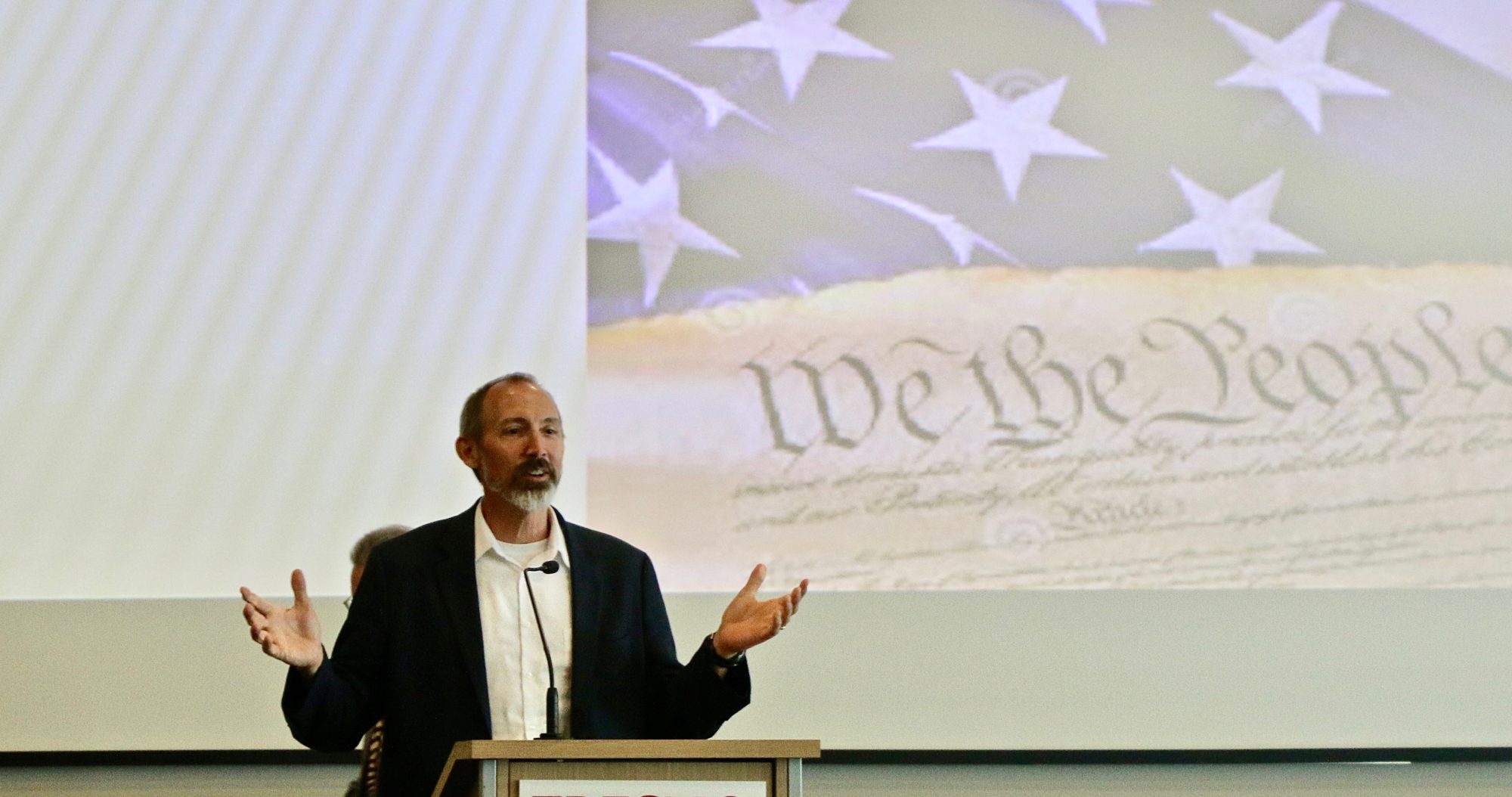
Violence is the thread linking recent shootings to the beating death of Tyre Nichols in Memphis. Our culture is addicted to violence. We feel guilt and remorse, the morning after a bender of violence. But we fall back into the same bad habit.

Violence energizes and excites. The thrill of violence was apparent in accounts of the Nichols beating. One Memphis cop said, “I hope they stomp his ass.” Another bragged, “I jumped in and started rocking him.” The buzz of battle is intoxicating.

Not every cop behaves this way. And violence has been turned against police, most recently here in Selma. These atrocities are a sign of a world gone wrong.

The seductive power of violence is leading us astray. Violence is titillating. Its adrenaline rush is why we cheer on brutal hits on the football field and in the boxing ring. The excitement of violence entices us to watch endless hours of violence on our video screens. It’s not surprising that every so often, someone goes berserk in a world habituated to violence.

We won’t root out violence until we confront how it seduces and warps the human spirit. And we won’t overcome violence until we develop other habits.

Band-aid solutions can help reduce harm. We can limit access to guns. We can prohibit militant police tactics. And we can jail those who commit violence. But people need better habits of kindness, patience, and compassion. A band-aid stops the bleeding. But the disease remains untreated.

The world’s moral and religious traditions teach that violence is wrong. Jesus taught his followers to turn the other cheek and love their enemies. Asian traditions celebrate “ahimsa,” a fundamental commitment to nonviolence.

But our culture is fascinated by violence. We watch it and play at it. We spend our money on it. And when violence causes problems, like a gambling addict, we double down, somehow thinking that more violence can solve the problem.

The civil rights icon James Lawson once said, “Our county is trapped, embedded, addicted to the mythology of violence.” Addiction is about pleasure, habit, and meaning. Our addiction to violence is about the kinds of thrills we enjoy. And it is about the kinds of habits we cultivate.

The mythology of violence encourages us to believe that power and prestige, strength and courage, are linked to violence. It teaches us to think that “might makes right.”

But none of this is true. It is false that violence solves problems and is the source of power. Human power comes from respect and love, rather than fear and physical domination. Human strength and courage are expressed through empathy and compassion, not through violence and brutality. And it is simply not true that “might makes right.”

If you overpower an enemy, nothing has changed in the realm of ideas. This is why regime change rarely works in foreign affairs. Violence begets backlash and resistance. We change people’s hearts by appealing to their better angels, not by attacking their bodies.

Physical violence arises from our most basic animal instincts. Wolves bare their teeth and fight without forethought. The violent male takes over the pack. Some humans behave this way as well. But physical dominance is impermanent. The alpha wolf only rules for a season or two. Physical dominance leaves no legacy other than blood, and resentment.

But the wolf doesn’t think about that. He is impelled by instinct and focused on the fight. Violence is the rush of the here and now. It is indifferent to tomorrow. And that’s why it is subhuman. Human beings moderate their behavior while imagining a life that extends into the future. But violence ignores the future. It is a thrilling outburst of a brutal immediacy.

Of course, in the human world, the violent brutes are punished. The momentary rush of violence is subject to the patient reality of human justice, which transcends the law of the jungle. We are not animals or superheroes, despite what we see at the movies.

The lessons of nonviolent humanity must be taught and re-taught. Violence is the problem, not the solution. Love, compassion, and human intelligence provide a higher path. And a culture addicted to violence needs new habits and sources of meaning.

Read more at: https://www.fresnobee.com/opinion/readers-opinion/article272052452.html#storylink=cpy

Anti-woke education wars and democratic schools

Reading Time: 4 minutes

The anti-woke education wars are a symptom of a broken community. We don’t agree about schools because we don’t agree about the value of education or about what it means to be American. This is a fraught time to be a teacher, as polarization and distrust reach into school board meetings, libraries, and classrooms. It’s also a difficult time to be a parent and a student, in a world where schools are a focal point of political divisiveness.

The anti-woke school movement

The Trump era was a time of polarization, and Donald Trump’s divisive message has not abated. The former President recently warned that American schools have been “taken over by radical Left maniacs.” He announced that if he were re-elected, he would ban federal funding for any “school or program pushing critical race theory, gender ideology, or other inappropriate racial, sexual or political content onto our children.” Trump’s anti-woke alarmism seems to echo and amplify what we are hearing from Florida, where Governor Ron DeSantis, has been waging a war against woke.

Trump took this to another level, however, when he suggested in his recent speech that what was being taught in the schools was antithetical to “Judeo-Christian values.” He said that woke ideology resembled, “an established new religion.” Trump concluded, “If we have pink-haired communists teaching our kids we have a major problem.”

I doubt that many pink-haired maniac teachers are trying to establish a new religion, or subvert Judeo-Christian values. The teachers I know, and have worked with, are acutely aware that we live in a diverse world. They often avoid discussing race, religion, and gender because they know that these things are divisive in a world that is increasingly polarized.

The shifting First Amendment

Most teachers are aware that the First Amendment to the US Constitution prohibits them from imposing a religion at school. The Establishment Clause of that amendment means that Judeo-Christian values cannot be pushed in schools. Nor can any other religious ideology.

Yet recent Supreme Court rulings make it easier for educators to bring religion into school. A recent case (Kennedy v. Bremerton) involving a Christian coach leading a prayer at a football game was decided in favor of the coach, who claimed that the First Amendment’s Free Exercise Clause gave him the right to pray with students. In an essay about this for OnlySky, I suggested that this opens the door to a contest of religious views in the schools.

That’s not an optimal outcome. It would be better if the Establishment Clause were interpreted more firmly to keep religion out of schools. But in the present legal environment, the result appears to be that conflicts of religion will creep into the educational space.

Are Trump’s warnings about “woke-ism” as a religion a case of the chickens coming home to roost? Hardly. I doubt many teachers are actively pushing any religion, woke or un-woke. But our legal system is shifting and the world is becoming more polarized, making conflict more likely.

What are schools for in a democracy?

None of this will be resolved easily or soon. The Court has shifted its understanding of the First Amendment, and polarization makes it harder to find common ground. This is especially true with regard to questions about the purpose of education in a democracy.

This politicized debate includes the fundamental question of whether schools exist to teach what parents want them to teach or serve some other social purpose. A school board member in Iowa got lots of pushback when they said, “The purpose of a public ed is to not teach kids what the parents want. It is to teach them what society needs them to know. The client is not the parent, but the community.”

Despite the pushback, this idea is not absurd. It can be traced back to Plato, who thought that education was about the well-being of the whole community. Plato went so far as to suggest taking kids away from their parents in order to give them a proper education. This proposal should be read in light of the fact that Plato’s ideal republic is more dictatorship than democracy.

But defenders of democratic education have made a similar point. John Dewey, America’s most important philosopher of democracy, put it this way:

Democracy has to be born anew every generation, and education is its midwife. Moreover, it is only education which can guarantee widespread community of interest and aim. In a complex society, ability to understand and sympathize with the operations and lot of others is a condition of common purpose which only education can procure.

John Dewey, “The Need of an Industrial Education in an Industrial Democracy”

Dewey’s point is that in modern democracies, education brings diverse people together, helps them to understand each other, and encourages them to discover a sense of common purpose and identity. Parents may want their children to be protected from this. But it is good for society for kids to become citizens of a broader community made up of diverse others.

Our broken community

Of course, the problem is that the American community has been corroded by polarization, identity politics, disinformation, and distrust. What after all, is the American community? We don’t seem to know anymore. And if we don’t know what the community is and what it stands for, then we will not be able to agree about the value of education.

There is a paradox lurking here. The solution to our broken community is an education that can help us understand our shared values. But that solution will only work if there are shared values to be understood. And it is becoming apparent that we don’t agree: about who we are, what we value, and what we want our kids to learn. The next generation will pay the price of more polarization and fragmentation unless the adults can agree about what it means to be an American, and why American schools exist.