Finding Hope Beyond the Political

Or Why We Need Philosophy, Religion, and Art

Political life is limited and ultimately unsatisfying.  When we focus on the external and horizontal dimension of political life, we are bound to be frustrated.  But there are other dimensions and sources of meaning, beyond the political.

The despair of the political

The world is unjust.  Good people often suffer in misery and obscurity.  And bad folks become rich and powerful.  The social and political world is messy and frustrating.  Our imagined ideals fail to become real.  And although progress can be made, there is backlash and unfulfilled expectations. 

We inherit a broken world that conflicts with our idealism.  The dream of justice runs aground on the shards of these fragments.  The more we want to repair these ruins, the more hopeless things appear.  We also disagree about who ruined this world, why it is broken, and how it ought to be fixed. 

This sense of grievance and longing explains why the passion of the political can become shrill, dogmatic, and polarizing.  Political intensity feeds off dissatisfaction.  And when these deep emotions are frustrated long enough, there is the risk of despair.  The passion of the political dwells in the thought that if these ruins cannot be repaired, all is lost. 

Clinging to hope

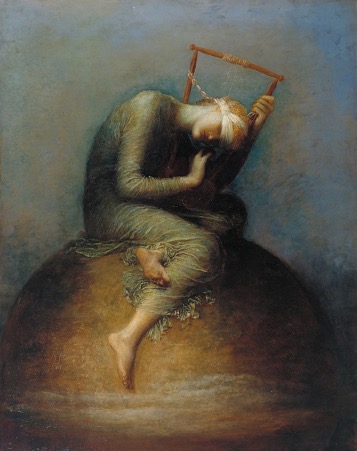
To fight the despair that haunts politics, political rhetoric is often infused with what Barack Obama called “the audacity of hope.”  The best and most inspiring political speech reminds us of an imagined future in which the ideal will be actualized.

Martin Luther King, Jr. provides a well-known example.  He was aware of the problem of political despair.  In response to the disappointments of the civil rights movement, King said, , “The only healthy answer lies in one’s honest recognition of disappointment even as he still clings to hope, one’s acceptance of finite disappointment even while clinging to infinite hope.”  And: “Our most fruitful course is to stand firm, move forward nonviolently, accept disappointments and cling to hope.”

King warned that disappointment in the face of injustice can lead to bitterness, self-pity, cynicism, nihilism, and other “poisons” of the soul.  His remedy was to “cling to hope.”  This phrase is interesting.  To cling is to hold on, to try to remain committed, even as the storm rages.

Thinking in more than one dimension

As a Christian, King found a source of hope beyond the storm.  King’s hope was oriented toward another dimension, a source of meaning that exists in a realm beyond the political.  This is what Rev. Jeremiah Wright (who inspired Obama’s idea of the audacity of hope) called “the vertical dimension.”

Politics is one dimensional.  It views the self and the other on a merely horizontal dimension, failing to take into account other dimensions of life and experience.   This is bound to be dissatisfying because human beings live in more than one dimension. 

The vertical dimension is often understood in religious terms, as an axis oriented toward the divine.  But secular folks can also discover an inner dimension connected with love, beauty, or other sources of meaning found in the human experience.  The most important of these non-political axes are called art, religion, and philosophy (borrowing a set of concepts from Hegel). 

Now there is a tendency among some thoroughly political (or politicized) folks to reduce art, religion, and philosophy to politics.  Marxists explain the “ideological” in terms of material and economic conditions.  Feminists and race-conscious theorists also sometimes interpret art, religion, and philosophy from a liberatory framework.  Conservatives do this as well, when they think that art, religion, and philosophy ought to support some preferred nationalistic ideal. 

But the wonder of art, religion, and philosophy is that they burst the bounds of any politicized and reductive account of human reality.  The artist, the mystic, and the sage exist in a different dimension, oriented toward values and ideas that are not reducible to questions of justice or power. 

The example of comedy and tragedy

This may sound abstract.  So let’s consider two familiar artforms: the comedic and the tragic.  Comedy can be political.  It can be used both to liberate and to oppress.  But sometimes the comedic reveals the absurdity of existence.  And laughter can be an end-in-itself. 

Tragedy can also be employed for political purposes: to tell a story about oppression or the “triumph of the will.”  But tragedy also transcends the political.  It makes us shudder to wonder about death, evil, pride, murder, and betrayal.  Sophocles has the chorus say in Antigone (line 332): There are terrors and wonders on earth, and none is more terrible or wonderful than we humans. 

When a comedic artist reveals absurdity, we are directed beyond the political dimension toward broader reflection on the human condition.  When we laugh, and play along, we are engaged in a world of imagination, on a dimension apart from the political. The same is true, when we are moved by tragedy to see the terror and the wonder of human existence.  This act of imagination gives us a glimpse of a dimension of experience that is beyond the political. 

This act of imagination can be a source of hope, repair, and reconciliation.  It can also renew the spirit and gives us the energy to return to our struggles with better perspective, and a clearer sense of self. 

Hope beyond politics

Now a critic may suggest that this experience of transcendence comes from a position of “privilege” that is conveniently able to ignore the challenges of political reality.  But the move beyond the political is not an excuse for political indifference.  We are political animals, as Aristotle said.  And we cannot simply ignore injustice and the struggles of political life. 

But we all possess the power of human imagination.  And we can all find consolation and hope when we open our minds to those other dimensions of human experience that transcend the political.
The gift of being born: Reflecting on natality and gratitude on Mother’s Day

Fresno Bee, May 14, 2023

Mother’s Day is for gratitude. Our mothers nurtured and supported us. We thank them for the fact of our own births. We should also thank our mothers for modeling the art of kindness, and the power of love.

Life is precious, rare and interconnected. It’s not accidental that we speak of Mother Earth and Mother Nature. There is no other planet that supports life. And life on this planet unfolds through a long chain of mothers, extending back into prehistory.

That process of generation and birth shows us the depth of our interconnected existence. We are not born alone. And life is not only a struggle for survival. It is also a warm embrace that pays itself forward. The nurturing arms that received us into this world show us the sustaining power of lovingkindness.

The Dalai Lama once said, “When we’re born, our mothers show us compassion. This is a natural response that has nothing to do with spiritual practice. Without that kindness we wouldn’t survive. So, our lives start with an experience of kindness and compassion.”

Philosophers have directed our attention to the importance of birth and being born. This is the idea of our “natality,” which is the opposite of mortality. We are mortal beings who die. But we are also interdependent beings who were born, and who give birth. Every human being emerges from the body of another, who literally carried us within her. Remembering this strange mammalian fact can make us humble, grateful and kind.

The concept of natality was brought to light by Hannah Arendt. Arendt was a German Jew who escaped from Nazi-occupied Europe. She arrived as a refugee in New York. She wrote extensively about totalitarianism and evil. The world is not all sweetness and light. And some people are born with cruel mothers, or their mothers are cruelly taken from them.

And yet, hope appears in the concept of natality, and the fact of our interdependence. Arendt celebrated the possibility of new birth and new beginnings. “The miracle that saves the world,” Arendt explained in 1958, “is ultimately the fact of natality.” When cruelty, stupidity and violence threaten to tear things apart, we can hope that new humans will be born and better ideas will arise. The terror of death is real. But so too is the promise of birth.

Natality involves hospitality. In some extreme cases, hospitality rescues refugees from cruelty and death, as in the case of those fleeing a genocide. But even in ordinary circumstances, we make the world better by welcoming strangers. Indeed, our mothers welcomed us into their bodies. They received us into the world, suckled us, nurtured us, and devoted themselves to us. That welcoming and receptive aspect of maternity is a central feature of our humanity.

This is not exclusively female. Men can welcome and receive. And fathers can be loving and kind. But there is humbling wisdom to be learned in the mysterious unfolding of maternity and birth.

Even the strongest king came into this world naked and defenseless. The first moment of every human life is an act of welcome. To be human is to be received, as a gift. We exist because our mothers loved us first.

Christianity makes natality a central part of the cosmic story. Each person is created in God’s image. And even the savior was born of a woman. The story also tells us that the savior and his mother fled persecution after his birth. The gospel of love grows out of the story of a refugee and his mother.

One need not be a Christian to understand this. It is discovered deep in the milk of human kindness. But we forget our interdependence. Too often, we refuse to welcome strangers. We build up our defenses, and exclude those who need our kindness. Maybe we are trying to fend off death. Perhaps we hope that in defending our turf, we might live forever. But death comes to us all. Mortality is a fact.

Yet natality is also a fact. Tomorrow, a new generation will be born. Our task is to welcome those newcomers, as our mothers welcomed us; to love our neighbors, as our mothers loved us.

Read more at: https://www.fresnobee.com/opinion/readers-opinion/article275327426.html#storylink=cpy

The war on drag and the art of authenticity

Fresno Bee, May 7, 2023

The war on drag is like the war on drugs. It is a wedge issue that riles some folks up, while hurting the vulnerable. But most Americans have a live-and-let-live attitude. As long as no one is violating my freedom, why should I care if others dress in drag?

The commotion over drag is oddly melodramatic. And drag is often a campy kind of schtick. The villain in the current comedy appears as a mustache-twirling baddy, tying a drag queen to the railroad tracks. This would be funny, if it weren’t the tip of an authoritarian iceberg of homophobia.

Now, I don’t find drag entertaining. But I don’t go to strip clubs, either. I find cos-play mostly ridiculous, whether it is the moaning and groaning of pornography, or the fancy feathers of drag. The same goes for folks who dress up like superheroes for “Comic con.” That’s not my cup of tea.

But if cos-play is fun for you, why should anyone stop you? And in a sense, most of life is cos-play. We cut and shave our hair. We put braces on crooked teeth. We dress up for work and for family photos.

And every spring, college professors put on robes and silly hats for the graduation parade. That’s also a kind of campy performance art. I don’t like it very much. But every year, I don my goofy hat and play along. And if someone wants to wear a wig and a dress for a drag parade, who am I to judge?

I understand the worry of the drag critics who are concerned that kids in our culture are exposed to unhealthy ideas about sex, love, and standards of beauty. But in this regard, pornography is more dangerous than drag, since drag announces itself as parody, while porn does not. And in a free country, bans and prohibitions seem, well, un-American.

Education about love, sex, and beauty is a better solution. We need to promote healthy, loving sexual relationships, and realistic standards of beauty. And we should celebrate virtues like honesty and authenticity.

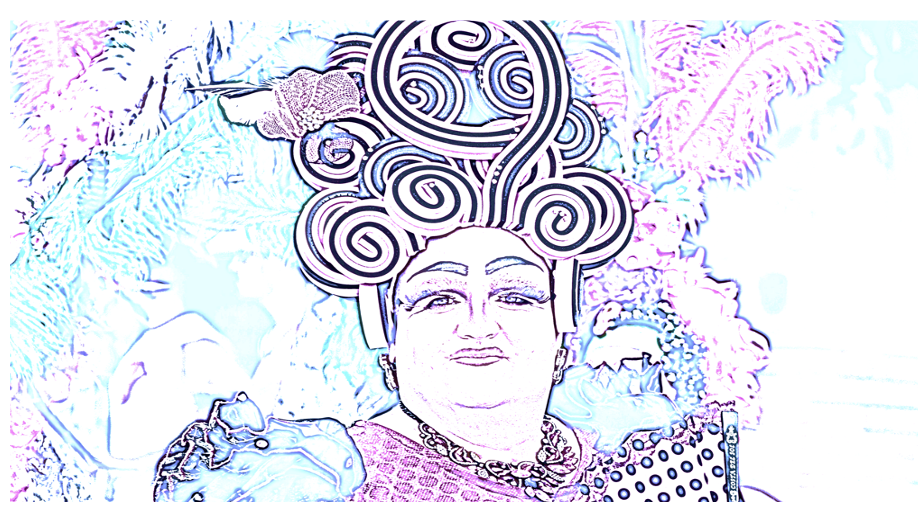
But authenticity is a tricky thing when it comes to gender and beauty. Drag makes fun of authenticity. When a drag queen dresses up like a buxom bleach-blond woman with fake eyelashes and ruby red lips, it makes you wonder about the authenticity of women with breast implants, fake eyelashes, and ruby red lipstick.

Drag exposes gender as an external performance. It reduces femininity to hair, breasts, and clothing. But those superficial externalities hide the authentic human person, who exists in a world of spirit that is distinct from the body.

And yet we might well wonder whether there really is an authentic self beneath the wigs and the clothes? Christians claim that we are made in the image of God. And the existentialists encourage us to become our authentic self. But what then should we do about our crooked teeth, and those hairs growing in weird places? Can we fix up our broken, fragile bodies? Or must we accept the body as given, warts and all?

These are the deeper conversations prompted by the drag war. What is the true self? What is the difference between artifice and authenticity? And should a freedom-loving people censor any of the arts?

Drag shows are, after all, performance art. One conservative critic of drag, Darel E Paul, traces what he calls “the queering of mainstream American culture” back to Oscar Wilde. Paul sees drag — and what he calls “queerness” — as an “anti-natural work of art.”

But art is always anti-natural. Art improves upon nature. No real woman has the breasts of the women in porn. And none of us look like the filtered images on Instagram. And yet, we model our own bodies on the images we see in art, pornography, and advertising.

This is what Oscar Wilde meant when he famously said, “Life imitates art far more than art imitates life.” When we shave and primp and dress up, we model ourselves on some ideal we’ve seen in art or advertising. And if there is no way to distinguish the authentic from the artificial, then why not let people play dress up, and have a little fun?

Read more at: https://www.fresnobee.com/opinion/readers-opinion/article275068041.html#storylink=cpy

Social inertia and hero worship in the Trump-Biden era

Fresno Bee, April 30, 2023

Is any person indispensable? The answer is no. But individuals tend to cling to power and position. And we tend to project our hopes and dreams onto our heroes. This is natural. But the result is unenlightened and undemocratic.

Wisdom teaches that we are all mortal, fallible and replaceable. And the “great man” view of the world tends toward authoritarianism. In democracies, “We, the people” are in charge, not any individual. Hero worship turns mere mortals into idols. And often we are stuck with our champions, unable to free ourselves from their grip on power.

This leads to suboptimal outcomes. For example, the 2024 presidential race will likely see a rematch of Trump v. Biden. This is not very exciting. Each is flawed. Each is replaceable. But our political system fixates on individuals, allowing faded heroes to cling to power.

Related examples include the question of California’s senior senator, Diane Feinstein, and her age, and the ethics scandals plaguing Justice Clarence Thomas. Thomas and Feinstein are not indispensable. The country would be better off if they would resign. Talented others are waiting in the wings.

But Supreme Court justices have lifetime tenure. And in the U.S. Senate, there is de facto lifetime tenure. There are reasons for tenure. But tenure works best when the tenured folks are wise and virtuous, and do not cling to power.

A rule of physics says an object in motion will stay in motion, unless acted upon by some external force. A similar rule appears to be true of society. Social inertia means that a person in power will tend to stay in power, until someone pushes them out.

This is also true in entertainment and the news media. That’s why it was surprising when Tucker Carlson and Don Lemon were canned. We get used to familiar voices droning on the TV. They become part of the furniture, until something shoves them out of the room.

Once someone gets a foot in the door, they mostly never go away. Those insiders keep getting gigs because the marketing teams prefer predictable has-beens, rather than the risk of investing in new talent. Social inertia means we stick with the devil we know, as that old saying goes.

And let’s face it, true genius is exceedingly rare. For every Mozart, Shakespeare or Lincoln there are thousands of wannabes. Most of us are mediocre. And the individuals in power are mostly schmoes like us. We are, all of us, functionaries of larger systems. We got our jobs because of the luck of being in the right place at the right time. And we stick around because of the inertia of social life.

That doesn’t mean that the mediocre masses are not useful worker bees. But we are, for the most part, replaceable. The same is true of the powerful schmoes who run the world.

Maybe it is our own mediocrity that causes us to fall in love with heroes and worship them. We long to rise above the crowd. And so, we project our dreams onto those who seem superior. But love is a dangerous emotion, especially in politics.

In the 19th century, hero worship was rationalized. Thomas Carlyle gave us the great man theory of history and politics. He suggested that the history of the world is the biography of great men. One version of this idea holds that certain exceptional individuals have charisma, talent, and genius which they use to influence the course of history. A related theory offered by Hegel holds that some “world-historical individuals” embody the “spirit of the age.”

But this view of history is undemocratic and authoritarian. Every human hero has feet of clay and an expiration date. When the great man of the moment is finally shoved aside, the masses will move on and we will find new icons to attach our dreams to.

This may be a deflating way to look at the world. But it is also liberating. It should free up the parties and the corporations to take risks and encourage new talent. It’s true that there are few geniuses. But each of us has the capacity to contribute something. And there are new heroes waiting to rise to the occasion, if they are only given the chance.

Read more at: https://www.fresnobee.com/opinion/readers-opinion/article274808881.html#storylink=cpy

The Trump lover: How a dangerous political emotion undermines democracy

Reading Time: 5 minutes

Why do Republicans stick with Donald Trump?

The rational thing would be for Republicans to find another champion of their ideas who is not tainted by overwhelming character flaws and indictments. Perhaps the Party leaders are making a rational calculation about the need to appease the Trumpian base. But that calculus is inextricably linked to the strange devotion of the Trump lovers. And Trump love, like other political love affairs, is a danger to democracy.

Love is a dangerous political emotion. Love is not subject to rational calculation. Rather, it is about identity, devotion, and faith. There were Obama lovers, and Clinton lovers. But today it is Trump love that is the problem. Trump love exposes a quasi-religious aspect of political life, related to hero worship and idolatry. Human beings love heroes who personify our values. This often involves wishful thinking, as we project our desires onto our beloved. This process of projection can become a kind of idolatry, as the beloved hero becomes a symbol of identity, value, hope, and dreams. And it does not matter whether the hero actually loves us or embodies our values. Rather, we see what we want to see, reflected in our image of the beloved idol.

This is a dangerous process in democracies, as it runs counter the idea that voters should be focused on policies and ideas. It also makes compromise, negotiation, and rational deliberation difficult. When people base their political allegiances on love and identity, electoral loses are harder to stomach, and the opposition looks like an enemy.

Stronger than lover’s love is lover’s hate

Idolatry is a common occurrence in religion, and in politics. Sometimes this is a benign kind of hero worship. But the Western religious tradition is full of warnings against worshiping false gods. The tendency toward the love of idols is related to a theory of religion that is associated with Ludwig Feuerbach. Feuerbach suggested that we see in God our own image, a projection of our love for ourselves.

And therein lies the danger: self-love is a powerful and destructive force. Idol worship is often emotional and irrational. This can become dogmatic, as true believers go to great lengths to prop up their cherished idols. We all do this from time to time. Abused wives stick with their abusive husbands. Faithful fans worship celebrities, even when those pop icons prove to be jerks.

We get defensive about those we love. When others attack our idols exposing their flaws, we may turn against the truth-tellers and call it fake news. Idolatry becomes dangerous when those who attack our idols are viewed as enemies of everything we hold dear.

The danger of love is well-known in Greek tragedy. Euripides’ Medea comes to mind, which is a play about love, jealousy, and violent revenge. At one point the chorus says, “Stronger than lover’s love is lover’s hate.” And Medea’s revenge is gruesome, for as she explains, “hate is a bottomless cup.”

Sycophancy as prelude to idolatry

The Trump story is also about calculating sycophancy. One of the interesting characters in this drama is Senator Lindsey Graham, whose role in the drama is that of a sycophant. Back in 2015, Senator Graham called Trump “a race-baiting, xenophobic, religious bigot.” But Graham later became one of Trump’s faithful sycophants. And even though Graham suggested he was done with Trump after the January 6 assault on the Capitol, Graham has more recently sucked back up to Trump.

As Trump was indicted in New York last week, Graham said in a TV interview: “This is going to destroy America. We’re going to fight back at the ballot box. We’re not going to give in.” Senator Graham moves from the man to the collective here, saying “we” are going to fight and refuse to give in. And here he appeals to the Trump lovers who seem to think that Trump is the party and that attacks on Trump are attacks on them.

Senator Graham’s sycophancy is clever and strategic. He sucks up and ingratiates himself, hoping to obtain a little power and glory for himself. But Graham’s flip-flops on Trump show some part of him knows better. As I explained in much more detail in my book, Tyranny from Plato to Trump, sycophants are blameworthy because they know they are selling out.

Sycophancy is a common human failure. There are brown-nosers in the Democratic party, in our businesses, and in our families. Power is alluring. And it is easy to be seduced into holding your nose, and sucking up.

The ‘indisputable champion’ of the true believers

But the suck-up is not a true lover. Sycophancy remains a step away from idolatry. Senator Graham does not appear to be one of the true Trump lovers. But there are those who are.

Consider The Young Republican Club of New York, who offered a statement following Trump’s indictment that made the love of Trump very clear. They said, “President Trump embodies the American people—our psyche from id to super-ego—as does no other figure; his soul is totally bonded with our core values and emotions, and he is our total and indisputable champion.”

Referring to Trump’s indictment these Young Republicans said “Let anyone who celebrates this downfall of our republic be forever branded a traitor to our nation. No one who mocks the people’s will can claim the title of an American.” And: “President Trump assured us that he was our retribution. Now we must return the rejoinder: our victory will be the joint vindication that our great President Donald J. Trump and our American people both deserve. This is Total War.”

This is not the sycophantic flattery of those who need to hold their noses. Rather, the Trump lovers think the smell of their champion is pure and true. They blame the taint on the enemies of their beloved. This can quickly become dangerous: as a “total war” against the “traitors to our nation.” Love transforms the idol who is worshipped into a focal point of identity, who must be defended against all enemies. And with Medea in mind, one wonders about the ferocity of the lover’s desire for retribution.

Democracy without enemies

Greek tragedies usually end badly. But there are lessons to be learned. The key is enlightenment, including wisdom about love and its misbegotten role in political life. Democratic deliberation should be about policies and ideas. It should include compromise and negotiation. But love makes this difficult, if not impossible.

Mistaken love can sometimes be cured by turning on the light. As the facts emerge, rational beings can be persuaded by the truth. But love, faith, and idolatry are often recalcitrant. When dogmatists are pushed, they harden the armor of their belief, constructing ad hoc hypotheses to prop up their idol. One of these props is the claim that those who attack their beloved are evil enemies.

There may be no way to persuade the most dogmatic of the Trump lovers that Trump love is a danger to democracy. But one strategy is to re-affirm the idea that democratic deliberation is not a battle of idols, who require love and devotion. We should also assure the true believers that an attack on their idol is not an attack on them. The Trump lovers are not evil enemies. They are fellow human beings, struggling to make sense of a world that includes love, hate, and delusion.