Mister Rogers on peace, empathy, and make-believe

Fresno Bee, December 1, 2020

A Mister Rogers renaissance is under way. This soft-spoken pacifist and vegetarian is a counter-cultural force in the age of Trumpian bluster, militaristic swagger, and fast-food excess.

Fred Rogers thought kindness should extend to everyone in the neighborhood, including nonhuman animals. In an interview in Vegetarian Times in 1983, Rogers said, “It’s hard to eat something you’ve seen walking around.” He also said, “I don’t want to eat anything that has a mother.”

Rogers imagined a world in which peace and love triumphed over war and hate, a vision grounded in his own Christian faith. One recent book calls him a “dyed-in-the-wool pacifist,” highlighting the anti-war lessons Rogers delivered from Vietnam to the war on terror.

This may seem like something from the land of make-believe. But the path to peace begins with kindness to animals.

The key to this process is empathy. Empathy is the ability to sense what another creature is experiencing. Empathy can be developed with practice. One way to help kids develop empathy is to have them care for animals.

But empathy is only a part of ethics. We could care for animals and eat them, after all. We could also understand that other people are suffering but remain indifferent to their pain.

Empathy helps us see things from the other’s point of view. The moral question is what we do about what we see.

You can understand, for example, that the homeless man on the corner is suffering. This may move you to give him money. But you may worry he would spend the money on drugs. You might also think that his suffering is his own fault. Or you may have other obligations to attend to.

Moral judgment goes beyond empathy. This applies in thinking about animals. Once we see that animals can suffer, the moral question is whether their suffering matters and to what extent.

Most people think that animal suffering does not count for much. Even if animals suffer, most humans believe that this suffering is outweighed by human pleasures. We know that pigs are as smart as dogs. But we like bacon. Or we are unable to imagine a world without bacon.

But our thinking slowly evolves as we imagine things differently. California is leading the nation in new reforms aimed at alleviating animal cruelty. In October, California became the first state to ban fur sales. California also prohibited the use of bears, tigers, elephants, and monkeys in circuses, among other reforms.

The fur ban is a policy that Rogers supported a few decades ago. Animal fur is no longer necessary for warmth. We have come up with other ways to clothe ourselves. Something similar holds for circus animals. We have decided to find other ways to entertain ourselves that do not involve cruelty to animals.

Now some skeptics will claim that animals do not suffer and that empathy for animals is absurd. A skeptic might claim that to think that animals suffer is misguided anthropomorphism — a mistaken projection from the land of make-believe.

But Rogers taught us a lot about the power of make-believe. He once explained the power of make-believe in this way: “You can think about things and make believe. All you have to do is think and they’ll grow.”

Empathy begins with a kind of make-believe. When we project ourselves into the experience of another, we use our imaginations. Once empathy makes the connection, the next step is to imagine a world in which there is less suffering — a world beyond animal cruelty and a world beyond violence and war.

Peace-makers have always had very active imaginations. Fred Rogers explained his vision of the world in a commencement speech in 2002 where he said that the deepest part of the self is oriented around the following: “Love that conquers hate. Peace that rises triumphant over war. And justice that proves more powerful than greed.”

We don’t live in a world like that yet. Not everyone shares this vision of a more compassionate world. But we are making progress. The first step is learning empathy. The next step is teaching our children, as Rogers did, that they have the power to imagine a better world.
Gratitude, Gladness, and Thanksgiving

Fresno Bee, November 24, 2020

Gratitude lubricates social relations. To say thanks is to express gladness. But gratitude is also a spiritual capacity that lightens and energizes. Some call it the wine of the soul. When we drink it, we want to share it with others.

Social rituals revolve around thankfulness. We thank people throughout the day for small favors. We thank dinner guests for passing the salt. We thank the guy holding open the door. Entertainers thank the audience for their applause, which is how the audience says thanks. We even thank people we pay — the clerks, waiters, and bartenders.

Behind social grace lies a deeper spirit of gratitude. Gratitude is sincere and heartfelt gladness. It is humble, hopeful, and happy. The opposite of gratitude is greed and arrogance. Ungrateful people want the world to serve their selfishness. Whatever they get leaves them grumpy because they always want more.

Gratitude is content with whatever comes. The positivity of gratitude is psychologically beneficial. Gratitude helps us manage stress, discover patience, and see opportunity. There is a positive feedback loop that comes from acknowledging good things.

Gladness produces gratitude while gratitude gladdens. In a dark world, gratitude opens a glowing glade of gladness. Grateful spirits glow. They hold back the darkness by kindling energy and light.

Nietzsche once said that great art begins in the overflowing fullness of gratitude. Creative energy flows from gratitude. The eyes of gratitude are welcoming. The arms of the grateful are ready to build and embrace. The artists of gratitude affirm life and the universe itself.

Gratitude may be cultivated. One technique is to keep a gratitude journal or to otherwise count your blessings. Recalling the things that make you glad can help you overcome negativity. Gratitude grows when we recognize that life is a gift, an opportunity, and a precious good.

In religious traditions gratitude is ultimately directed toward God. When George Washington created Thanksgiving in 1789 he called upon Americans to offer thanks to “that great and glorious Being, who is the beneficent Author of all the good that was, that is, or that will be.” The American Thanksgiving feast is part of a long tradition of giving thanks to God.

But the attitude of gratitude can be experienced outside of any particular religious framework. We might call this existential gratitude. One can be thankful to be alive without thanking anyone in particular. Religious people may find this to be empty. But secular and non-religious people can benefit from existential gratitude.

Gratitude is linked to humility and wonder. Grateful people recognize that their gladness is not entirely their own doing. Fate, luck, and history determine our fortunes. Your existence is the product of a chance meeting of your parents. Your continued life depends upon an ecosystem, a social system, and a legal and political system that are beyond your control.

In religious terms, our existence is a miraculous gift from God. In nonreligious terms, our existence is something to wonder about — a unique opportunity to make meaning in a vast and empty universe.

But perhaps all of this only makes sense for people who are actually thriving. What about the sick, disabled, poor, grieving, and oppressed? Should they be grateful as well?

Well, there is hope that everyone can discover gratitude in the middle of suffering and loss. But frankly, it is rude to suggest that the downtrodden should be grateful for what they’ve got. Other people’s gratitude is none of our business.

But when we recognize that others may have less to be grateful about, we move beyond gratitude toward compassion. If gratitude helps us see that our own cup is full, compassion moves us to share what we have with those who are thirsty.

Gratitude without compassion is like breathing in without breathing out. Gladness reaches beyond itself. That is why we say thanks so often in our daily lives. Gratitude overflows in smiles and prayers, and in our ritual acts of thanksgiving.

Tolerance, Liberty, and Thoughtfulness

Fresno Bee, November 17, 2020

Saturday is the International Day for Tolerance, which the United Nations has recognized since 1995. The United Nations explains that tolerance is “respect, acceptance, and appreciation” of diverse cultures and ways of life.

That’s a lovely idea. But tolerance is tricky. Do we have to tolerate intolerance? Can we censor those who express hateful and intolerant ideas? There are no easy answers here. And it is important to remember that censorship has often been used by churches and states to promote intolerance.

A guiding value for tolerance is liberty. To tolerate others is to leave them alone to pursue their own good in their own way. But harm provides a limit. If someone is harming you or violating your liberty, you need not tolerate them.

Is hateful speech harmful? That depends — on history, context, behavior, and intention. Hate is as complicated as love. And it does not exist in a vacuum. It is connected to anger, greed, impatience, violence and despair.

Nor does tolerance stand alone. It is connected to justice, courage, prudence, honesty and other virtues. These virtues ought to be woven together. But the goal of unifying the virtues is an aspiration that is difficult to achieve in our broken world.

Tolerance requires that we refrain from judging. But honesty requires that we speak our minds. Tolerance encourages us to leave others alone. But love compels us to intervene. And justice requires that we defend the innocent.

Genuine tolerance considers these complications and seeks a delicate balance. Intolerance operates differently. Intolerance simplifies. Intolerance reduces complexity to a binary choice between black and white.

The palette of tolerance includes more colors. Tolerance grows when the imagination expands to see the depth of human diversity. Tolerance is taught through art, literature, history and philosophy. We learn tolerance when we study other languages, when we listen to new music, and when we read the poetry of other cultures.

Hellen Keller understood this. She said, “The highest result of education is tolerance.” She explained that genuine education “teaches us to unfold the natural sympathies of the heart.”

Those natural sympathies must be grounded upon a claim about human rights. Every human person has an equal right to respect. No person or group is inherently better (or worse) than any other. There is a kind of humility associated with tolerance that is quite different from the arrogant pride of racism and ethnocentrism.

Tolerance is also linked to curiosity and compassion. Tolerant people are interested in what other people think, believe, and experience. They put themselves in the place of the other. The Golden Rule of tolerance is to tolerate others as you would have them tolerate you.

Some 350 years ago, John Locke stated that toleration was “agreeable to the Gospel of Jesus Christ.” Intolerant religion demands external conformity. But Locke said that this was of no use in creating genuine religious belief. “All the life and power of true religion consist in the inward and full persuasion of the mind; and faith is not faith without believing.” Each person’s salvation is up to her. As Locke explained, “God will not save men against their will.”

Locke’s thinking had an impact on the American founders. The founders were not perfect. They tolerated slavery. But they also gave us the First Amendment. And Thomas Jefferson boldly stated that he would never “bow to the shrine of intolerance.” He rejected the arrogance of those who would exercise “tyranny over religious faith.”

During the intervening centuries, we have learned to be more tolerant of differences of religion, as well as sexual orientation, ability and race. We have also become more intolerant of racism, sexism and religious intolerance.

We are still figuring out where to draw the line. Some fuzzy issues remain, which require us to think carefully about all of our values. And this is the point: tolerance requires thought. The United Nations Declaration on Tolerance says, we teach tolerance by helping young people “develop capacities for independent judgment, critical thinking and ethical reasoning.”

Tolerance is a virtue of thinking people. We are not born knowing how to be tolerant. Rather, we learn tolerance as we expand our imaginations and understand the complexity of our common humanity.

Lessons from the Inca Trail about Wonder, Gratitude, and Nature

Searching for wonder in the reality of nature

Fresno Bee, July 29, 2018

Modern human beings are alienated from nature. We live in air-conditioned rooms. We relate to higher things through dry, ancient books. We rarely see the stars or feel the rain. We are rootless.

I have been thinking about our alienation from nature after trekking through the Andes of Peru. The trek ran over high mountain passes, where we endured freezing rain and cold, windy nights. We witnessed wild jungles and wandering llamas. And we celebrated the blessing of sunshine, which gave us warmth and the rainbow.

Our guide paused at the entrance to Machu Picchu to give an offering. He gathered three coca leaves into a shape that represents the mountains. He presented this gift to each of the four directions. He left the coca in a secret niche at the Sun Gate.

It made sense to give thanks to the mountains, to the elements and to the coca that made our journey possible. Coca tea helps fight altitude sickness. Its salutary effect is a kind of magic. There is also magic in the sun’s heat, the river’s song, and the rainbow’s glow.

fiala pix.jpg
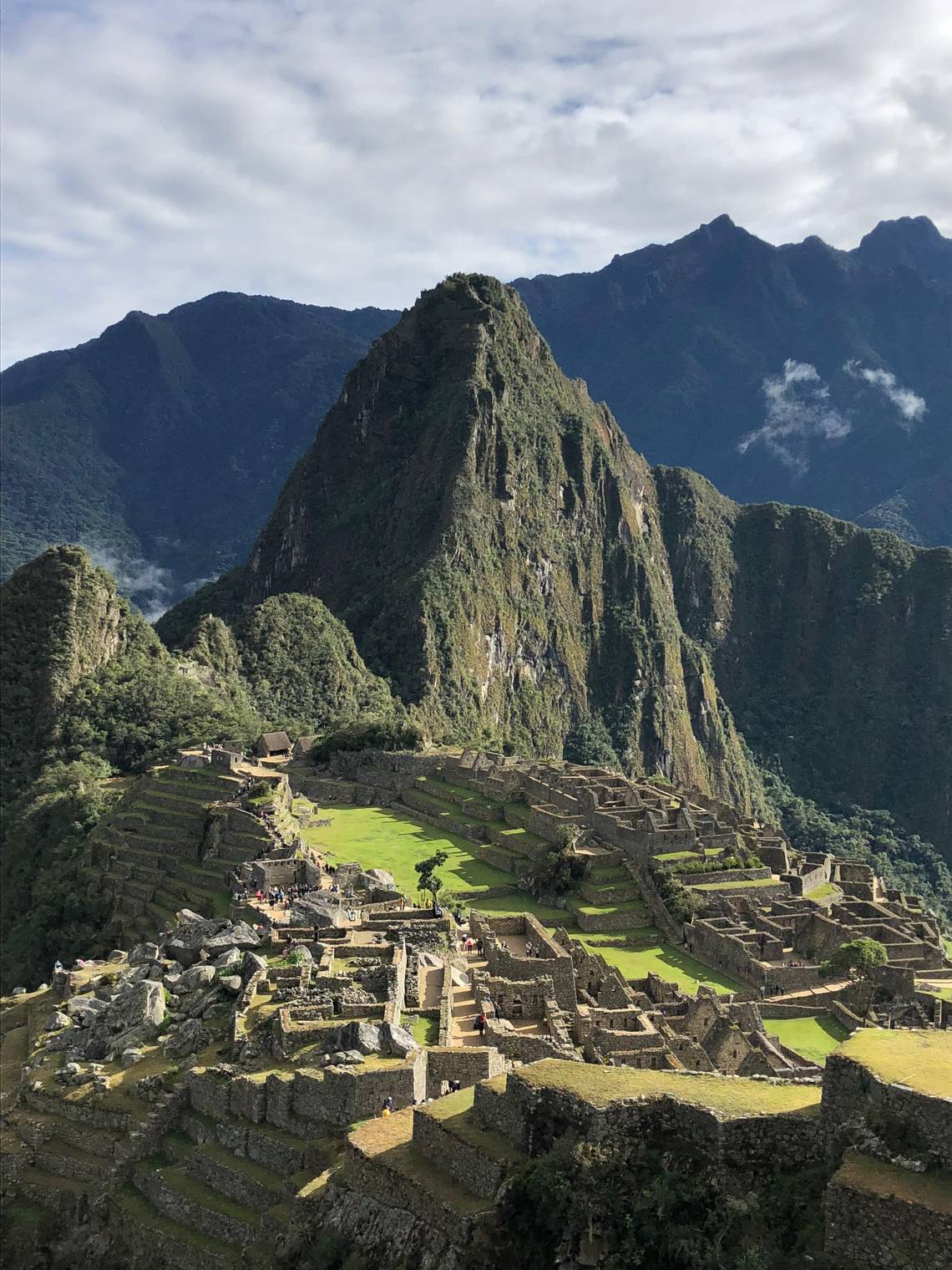
Machu Picchu, the Incan citadel set high in the Andes Mountains in Peru. Andrew Fiala Special to The Bee

Religion in its best and original sense comes from the sense of wonder before the power of nature. It reminds us that we belong to the earth. We cannot live without land, water, and sun. These elements combine in the plants and animals that nurture us.

Nature is not all ease and comfort. Forest fires are rampaging in this long hot summer. Snow, rain, and cold are dangerous and difficult. But when the rains come or the sun breaks through, we give thanks.

In aboriginal Andean religion, the earth is a spiritual being called Pachamama, the earth mother. The mountains themselves are spiritual beings called Apus. These are powerful and mercurial beings. They can be dangerous or benevolent. To modern ears, this sounds far-fetched. But many cultures speak of mountains as divinities with personalities.

We still name mountains and understand their personas. In Yosemite there is Half Dome and El Capitan. Their presence is palpable. We also recognize that mountains do things. Climbers and backpackers have a saying: “Mountains make their own weather.” Temperatures change quickly. The wind comes on strong. Fire, rain, and snow are sudden in their appearance.

Modern science explains the orographic effect. Mountains interact with moving air masses. Changes in elevation cause changes in temperature that cause precipitation and swirling winds. Mountain weather is easily explained by atmospheric science.

But scientific explanation does not touch the lived sense that mountains are powerful beings. It makes sense to say that the mountains are angry or friendly. Thunder and lightning are threatening. Forest fires are malicious. Floods are cruel. Gentle blue skies and cool mountain streams are gracious and hospitable.

Much of the magic of nature is local. The sun is wrathful in the desert. It is cheerful in the cold high places. The rain is gentle in the valleys. It is vicious at 13,000 feet.

Those who live and work on the land are in touch with the personality of their local geography. Their livelihood comes from Pachamama. Their well-being depends upon the benevolence of the Apus.

There are very few farmers and shepherds left. We are no longer connected to nature.; we no longer belong to her. We do not know where our water and food come from.

The benefit of civilization is obvious. We dam the rivers and control the fires. We farm on an industrial scale. We drive and fly, instead of walking. We live in comfort and safety.

But this benefit is not without its costs. We are uprooted and dislocated. We lose track of who we are and where we belong. We no longer experience wonder or gratitude in their original organic sense.

This is not to say that we could go back to a world of Apus and the Pachamama. The world has moved on. But it is important to remember what we have left behind. We fill our lives with imitations of reality, flickering on screens. Out there in the natural world, the fires and storms still rage. And it is still possible to experience wonder, fear, and joy in the presence of the real.

Lessons about Politics from The Fall of the Inca

Is Russian interference in election the latest example of history repeating itself?

Fresno Bee, July 22, 2018


The story of the fall of the Incan empire is a cautionary tale, teaching that great empires can be destroyed by a small group of unscrupulous actors. It is worth considering this as we reflect upon the Russian hack of the American election of 2016.

Americans are at one another’s throats. Some have accused the president of treason. Others are in denial. With a few technological tricks, the hackers have succeeded in destabilizing our democracy.

History is full of sneak attacks, including Pearl Harbor and 9/11. But the attack on the Inca in 1532 by the conquistador Francisco Pizarro may be the most monumental.

Pizarro had only 180 men when he arranged to meet with the Inca emperor Atahualpa in the heart of Incan territory in the town of Cajamarca. Atahualpa arrived with a small entourage, leaving his army of 80,000 men outside the town. He expected a diplomatic exchange. Pizarro’s men were concealed in the town, waiting in ambush.

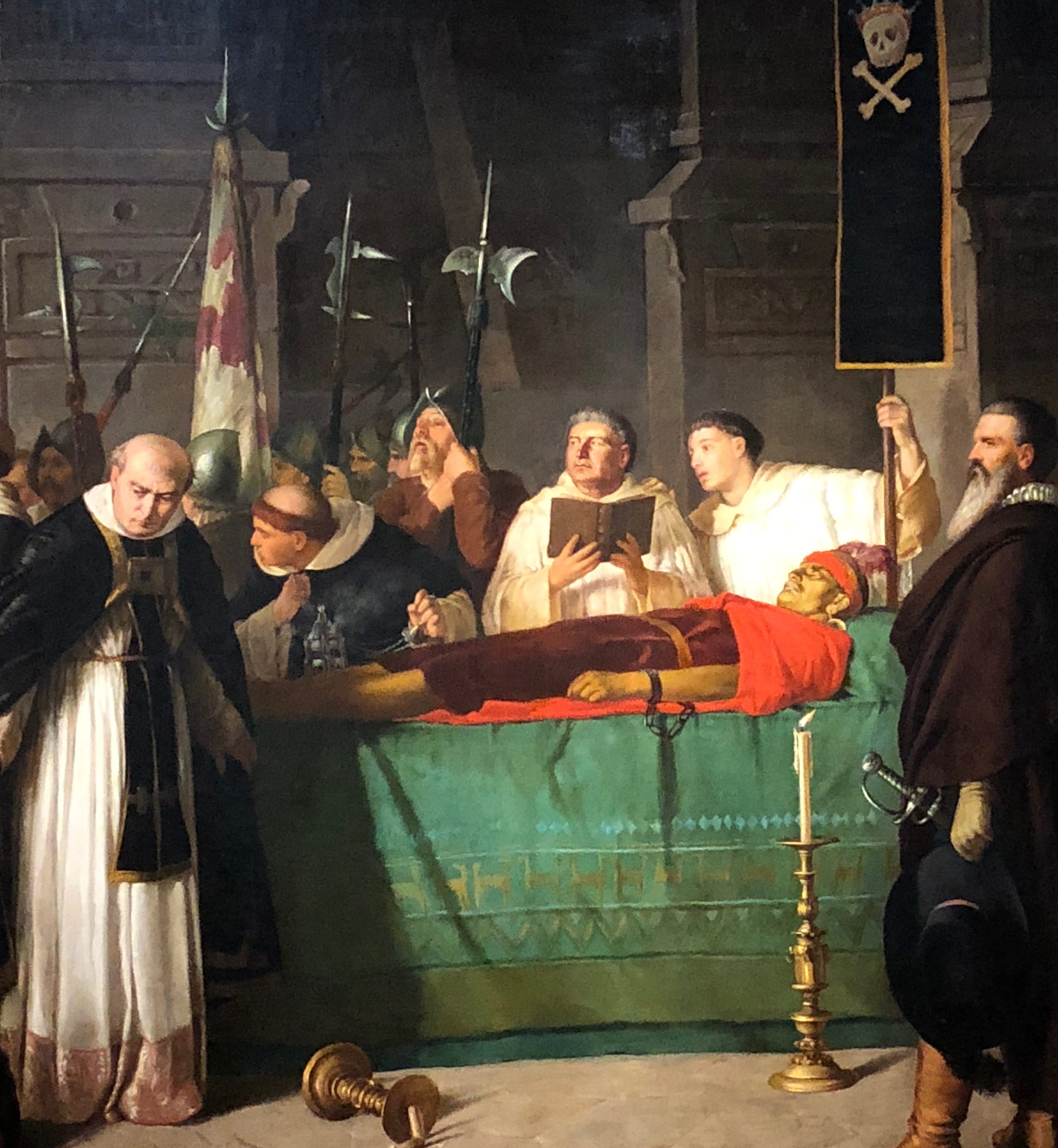
Pizarro and the Death of the Inca by Luis Montero

A Dominican priest presented the Inca with a Bible, demanding that he convert. Atahualpa threw the Bible to the ground. Pizarro’s men emerged from their hiding places. Spanish gunpowder and steel overwhelmed the Inca forces.

Pizzaro captured Atahualpa and held him for ransom. A large ransom of gold and silver was paid. But Pizarro murdered Atahualpa anyway. The empire soon fell.

I am writing this from Cuzco, Peru. This beautiful mountain town was the capital of the Incan empire. Ancient walls still exist as a forlorn testament to Incan power. The Incan empire was one of the largest in human history. It extended along the spine of South America, from Ecuador to Chile. Today only ruins remain.

From the standpoint of the Inca, the Spanish were foreign terrorists. They arrived uninvited on the shores of America. They brought new diseases. They demanded conversion to a strange religion. They stole vast quantities of gold and silver. And in the battle of Cajamarca, they violated the norms of diplomacy by ambushing and capturing the king. They even violated the ransom agreement.

Lesson to be learned

The lesson here is that devious and ruthless violence can decapitate a naïve power. The Inca seemed to be so sure of their power that they did not take the Spanish threat seriously. That is why Atahualpa walked into the ambush. Atahualpa’s demise is a warning against hubris.

The Inca failed to believe that the Spanish would have the audacity and immorality to do what they did. Nor were the Inca prepared for the new weapons and technologies that the Spanish possessed. The Spanish took advantage of Incan complacency.

History shows that all empires fall. Through the conquest of the Americas, Spain created one of the largest empires on earth. But the Spanish empire eventually fell. So too did the British Empire. And the Soviet Union. No power lasts forever, especially if it is not vigilant.

About that Russian interference

This brings us back to Russian interference in the U.S. election. The American democratic system depends upon the integrity of the electoral system. If citizens do not trust this system, it will fail.

But a small, technologically advanced group of foreign agents effectively ambushed our democracy. We are more divided than ever. And the biggest threat is that some are still in denial about the threat to our democracy.

The violence and weapons are different in the present case than in the fall of the Inca. But the common threads are the audacity of the attack, the use of new technology, and the strategy of assailing the heart of the empire. In the Inca case, you capture the king. In the current case, you undermine citizens faith in the electoral system and the integrity of our leaders.

History never repeats itself exactly. But there are lessons to be learned. The Spanish played dirty in Peru. They were sneaky and merciless. They broke their promises. And they won.

The solution is vigilance and overcoming hubris. Atahualpa should not have trusted Pizarro. If he were less assured of his power, he might have avoided the ambush. If he had avoided the trap or taken effective countermeasures, Pizarro would have failed. And in Cuzco today the walls might still support Inca temples instead of the Catholic churches built upon them.