Ethical Whiplash and Learning to Dance Like Socrates

Fresno Bee, January 31, 2021

Rapidly shifting values create confusion and distrust. To live well in tumultuous times you need strong character and a supple spine. Stability and strength should combine with flexibility and the creative imagination. As we seek our way in chaos, we need to learn how to think critically and also how to dance.

This is an era of ethical whiplash. The Trump-Biden seesaw has been bewildering. One bizarre manifestation was the appearance and disappearance of President Trump’s 1776 Commission report.

On Monday, Jan. 18, President Trump released a diatribe against the liberal academy, written by conservative pundits. Among other things, the report concluded that American universities are “hotbeds of anti-Americanism, libel, and censorship that combine to generate in students and in the broader culture at the very least disdain and at worst outright hatred for this country.

Historians panned the Trump report. The American Historical Association said that its authors “call for a form of government indoctrination of American students, and in the process elevate ignorance about the past to a civic virtue.” As soon as Joe Biden was inaugurated, on Jan. 20, the report disappeared from the White House website.

These gyrations are disorienting. This tumult at the top breeds cynicism, polarization, anger, and even violence.

The solution is to combine toleration with love of truth, to think deeply but also to take things lightly. Historical and ethical truth should resist the shifting winds. But these truths are complicated. So as we search for truth, we must also learn to leave each other alone and take disagreement in stride.

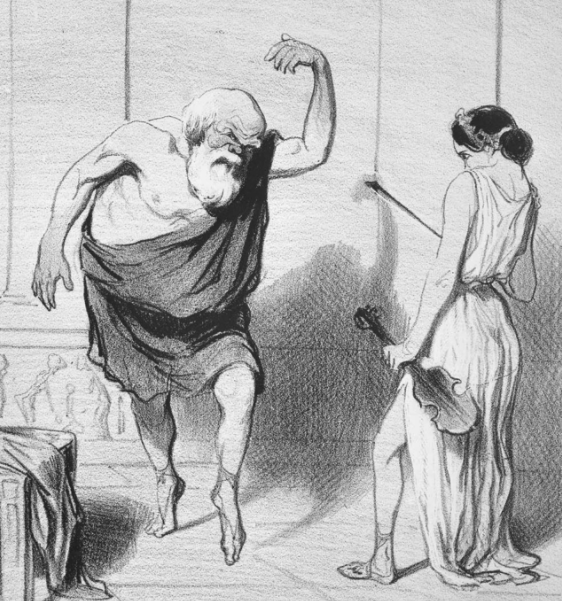
This requires a difficult balancing act. A model can be found in the idea of a Socrates who dances. Socrates criticized the mythic history of his day. But Socrates also danced and played.

Socrates lived in an era of ethical whiplash. A plague had ravaged Athens, along with a brutal war. There was profound moral, political, and religious uncertainty. Socrates was accused of being part of the problem by the Athenian equivalent of Trump’s “1776 Commission.” His accusers claimed he taught unpatriotic doctrines and that he corrupted the youth. They sentenced him to death.

Socrates was legendary for his simplicity and strength. He was a war hero. He walked barefoot in the winter. He drank, but never got drunk. And according to his friends, he danced, even in his old age.

Or so the story goes. This transpired over two millennia ago. Did Socrates really dance? Who knows? But the legend inspires us to seek strength and grace and poise.

Socrates remains a hero because he lived and died with courage, integrity, and good humor. Physical and mental strength helped him endure. Spiritual flexibility helped him thrive. He challenged authority and stuck with the truth. He also knew when to yield and how to maintain his equilibrium.

For those of us who are tired of the squabbling, perhaps the best thing we can do is hold fast to truth while letting loose with a dance. Socrates provides a model of a limber soul that is deeply rooted. The Socratic soul is well-balanced and resilient.

In our disembodied world of social distancing and virtual reality, we rarely dance. Instead, we hunch over our screens and surf our silos of information. It is no wonder that anger and resentment fester. Bodies are built to move. Voices are made to sing. And thought needs the freedom to wander.

Socrates teaches us to defend the truth. But he also takes things lightly. History shows that human nature includes nobility and absurdity, cruelty and grace. It also teaches us that wisdom is a dance.
Should Biden Pardon Trump?

Fresno Bee, January 24, 2021

On his way out the door, Donald Trump pardoned a bunch of his buddies. Trump didn’t pardon himself, as some suspected he would. And now one wonders whether President Biden might consider a pardon for Trump.

At his inauguration, Biden spoke of unity, love and healing. Would a Trump pardon help? This was Gerald Ford’s reasoning when he pardoned Richard Nixon. Ford explained, “the tranquility to which this nation has been restored by the events of recent weeks could be irreparably lost by the prospects of bringing to trial a former president of the United States.”

There is much to think about here. What is the role of justice and pardon in the life of the nation? And in our own lives?

The pardon power is easily abused. Trump pardoned his cronies, including his son-in-law’s father. Bill Clinton pardoned his brother, Roger Clinton. And Arnold Schwarzenegger commuted the murder sentence of the son of a political ally.

The pardon power exists because the judicial system is a blunt tool. The executive can make exceptions that correct failures and excesses — or that recognize the unique circumstances of wrongdoers.

Presidents Ford and Carter commuted the sentences or granted amnesty to tens of thousands of Vietnam era draft dodgers and deserters. After conscription was abolished and the war ended, it seemed odd to punish those who refused to fight.

Not everyone was happy about this. Those who obeyed the law and fought in Vietnam resented this move. It seemed to discredit their own service and sacrifice.

Justice requires fair and equal treatment. It also demands negative consequences for wrongdoing. If you do the crime, they say, you must do the time.

Strict retributivists argue that forgiveness is unjust since it fails to give wrongdoers what they deserve. But justice is not the only thing that matters. Forgiveness is beneficial emotionally and psychologically. It heals resentment and promotes kindness. Mercy can build reconciliation and help create a new future.

The world’s religious traditions often celebrate these values. Some even imagine God as merciful and compassionate. But how does God’s mercy relate to divine justice? If you want to generate an argument, ask a friend whether they think God would forgive Hitler.

Forgiveness is an exception to the rule of punishment. For this reason it appears arbitrary and capricious. It unfolds that way in our own emotional lives. Anger and resentment fester, until one day they fade away. It is often not clear why this happens.

There is a mystery here that theologians call grace. Forgiveness is a gift. To forgive is to give up on anger and the demand for punishment. It is to give in to love, compassion, and other tender-hearted values.

But should presidents and governors have the power to bestow this kind of gift? In the old days of kings and emperors, people thought that the sovereign’s mercy was guided by God. But we know that our leaders are merely human. And we see that the pardon power can be abused for corrupt and venal purposes.

Nepotism and cronyism are obvious problems. It is wrong to use the promise of a pardon to create loyalty in the cover up of a crime. It is also wrong to sell pardons or to pardon political cronies. These corrupt uses of the pardon power make it appear that justice is not blind, but that she is only winking at the rich and well-connected.

This shows us the deep political problem of the pardon power. Its promiscuous usage undermines faith in the rule of law and the fairness of the justice system. In defense of the rule of law, it seems that we must make examples of those who break the law.

After Ford pardoned Nixon, many were outraged at justice denied. The tranquility Ford hoped for failed to materialize. Nixon appeared to have gotten away with his crimes. As a result, Ford’s political power waned.

So after you are done arguing about God and Hitler, turn the conversation to Ford and Nixon — and Biden and Trump. What is the function of justice, punishment, and pardon in the life of our nation? And what is the role of mercy and forgiveness in your own life?

Rebellion, Fantasy, and Nihilism

Fresno Bee, January 10, 2021

The mob’s attack on the Capitol was a juvenile outburst of rebellion doomed to fail.

What we witnessed on Wednesday was a juvenile outburst of rebellion. A motley mob stormed the Capitol without a plan or strategy. The violence was disorganized. This was a desultory insurgency instigated by a leader who lives in a fantasy world, where ranting and raving masquerade as thinking.

The image of Shakespeare’s King Lear comes to mind. As Shakespeare put it, nothing comes of nothing. This shambolic coup offers a warning about nihilism and a lesson about power and rebellion.

There is in the human soul an impulse toward anarchy. We bridle against restraint. We want the world to conform to our own image. This impulse is often destructive and nihilistic.

The rebel is a toddler angry at his parents. He is an adolescent lashing out at the world. Rebellion can do short-term damage. But the rebel’s ferocity is feckless. Juvenile rebellion cannot effect lasting change.

The rebel paints the world in black and white, leaving no room for compromise. He has no desire to build because he is focused on burning things down. He has no strategy because in his fantasy, the world should revolve around

The rebel fails to understand that this is a world of highly organized systems of power. There really is a deep state. It cannot be transformed by random outbursts of violence or emotion.

Power is tightly woven in complex webs involving political bureaucracies, transnational corporations, educational institutions, religious traditions, and so on. Political change in the modern world requires strategy based in this reality. This is slow and complex work. Random protest is toothless in the face of the bureaucratic state and institutionalized power.

The would-be revolutionaries of the 21st century — on the left and on the right — are deluded if they think this system can be opposed by disorganized explosions of anger. In the long run, the cops and the courts will win every time.

Political change requires an organized, fact-based approach to the world that avoids wishful thinking. Almost always this involves compromise and working to find common ground in a shared conception of the world. Most of what the party of Trump has done since the November election has been futile because it is based on the fantasy that Trump actually won the election. Lies have limited power. They eventually run aground on reality.

Juvenile rebellion is prideful and angry. Sometimes it is simply thrill-seeking. Other times it is a violent convulsion of despair. Almost always it is based in an unrealistic view of self and world. This leaves the juvenile rebel strangely susceptible to lies, conspiracy theories, and authoritarian politics.

The rebel feels that the world ought to satisfy his desires. When it does not, he gloms onto a savior or hero who makes him feel powerful. The rebel seeks out lies that feed his ego. This can evolve into a cul-de-sac of conspiracy, where the truth gives way to a reflection of the rebel’s own self-image.

Most rebels grow up and grow out of this nihilism. When rebellion comes of age, it mellows and deepens to discover a larger truth. A good explanation of this is found in Albert Camus’s book “The Rebel.” Camus describes how rebellion becomes nihilism. From nihilism, totalitarianism can emerge. Those who believe in nothing are susceptible to anything. But if we keep growing and looking for reality, rebellion can give birth to solidarity, justice, love, generosity, and wisdom.

The impulse of rebellion will always be with us. But it must be educated and sublimated. Artists and entrepreneurs nurture the spark of anarchy. So too do religious mystics and scientific geniuses. The creative imagination smashes barriers. But it does not destroy for the sake of destruction. Rather, it aims to build something out of nothing.

The energy of anarchy is youthful and exuberant. Without guidance this energy circulates in nothingness. When rebellion remains stupid, it is merely destructive. But when the spirit of rebellion is informed by truth, there is hope for justice, compassion, and wisdom. For this to happen you need a strategy that accepts reality. Instead of ranting into the storm with King Lear, you need to harness the wind and put it to work.

Vigilance, Patience and Hope: The Drive Toward Enlightenment

Fresno Bee, December 27, 2020

On the longest night of the year, we drove through the fog looking for starlight. Other people had the same idea of driving uphill to see the conjunction of Jupiter and Saturn. In a parking lot in Prather, carloads of masked stargazers emerged from the fog and looked toward the heavens, seeking the Christmas star.

We are all looking for inspiration these days. If you rise above the fog, there are wonders to be found.

The last time the planets lined up like this was 800 years ago. The stars move at their own pace. We must learn to wait and keep our eyes open. The philosopher Marcus Aurelius said that stargazing washes away the filth of the earth. The cosmos teaches patience and perseverance.

This was a star-crossed year. Disease killed people and jobs. Our democracy teetered on the brink of disaster. Let’s drink a toast to all we’ve lost and endured. Let’s also learn from the light that shined in the darkness. If there is wisdom in the gloom, it comes from the values of the Enlightenment. It was science and law that prevented 2020 from being darker than it was.

When the Black Death hit Europe in the Dark Ages, astrologers blamed it on a triple conjunction of Jupiter, Saturn, and Mars. We know much more today about the stars and about disease. We know how to prevent contagion and predict the weather. We peer into the molecular basis of life and into the depths of space. We build vaccines and satellites. Let’s give thanks to the scientists who shed light.

One of the wonders of 2020 was the growth of virtual reality. Satellites, computers, and cell phones kept us connected in the gloom. Without these technologies, social distancing would have been impossible. Let’s give a shout out to the wizards of Silicon Valley.

Telecommunication transformed the field of education. Difficulties remain, including educational inequity and a digital divide. But students are learning in ways that could not have been imagined last year. Hurray for the educators — and the students and parents — who pioneered a new model of teaching and learning.

Our civic values were challenged in unprecedented ways. The year began with impeachment. It ended with outrageous falsehoods about a stolen election. This was a year of protests and anger. We are more polarized than ever. Racial animosity afflicts us. There is corruption in the halls of power.

But citizens enlightened ourselves about history and the Constitution. And ethical professionals held back the darkness. Lawyers and judges remained committed to their code of ethics. Soldiers, cops, and firefighters did their duty. Business leaders supported justice and the common good. Nameless bureaucrats served with honor and integrity. Enlightenment depends upon the good work of citizens and civil servants.

As this pestilential year comes to a close, what should we resolve for the future?

I propose we need to affirm the value of vigilance. “Eternal vigilance is the price of liberty,” they say. This is common sense for those who drive through fog. We must be mindful and alert. Watchful care is the key to enlightenment.

Vigilance is the moral of Albert Camus’s novel, “The Plague.” That book is an allegory about the plague of totalitarianism in the 20th century. Camus noted that plagues stimulate enlightenment by opening our eyes. We must learn “a vigilance that must never falter.” The good man, Camus said, “is the man who has the fewest lapses of attention.”

The stewards of civilization must be watchful, as we drive toward the light. New diseases are waiting to infect us. A random sneeze can start a pandemic. Tyrants and crooks wait to take advantage. Indifference leads to disaster.

Enlightenment is not something that just happens. Our scientific and technological prowess is the result of centuries of cultural evolution. Our legal system has a similar heritage. And the work of education is never done.

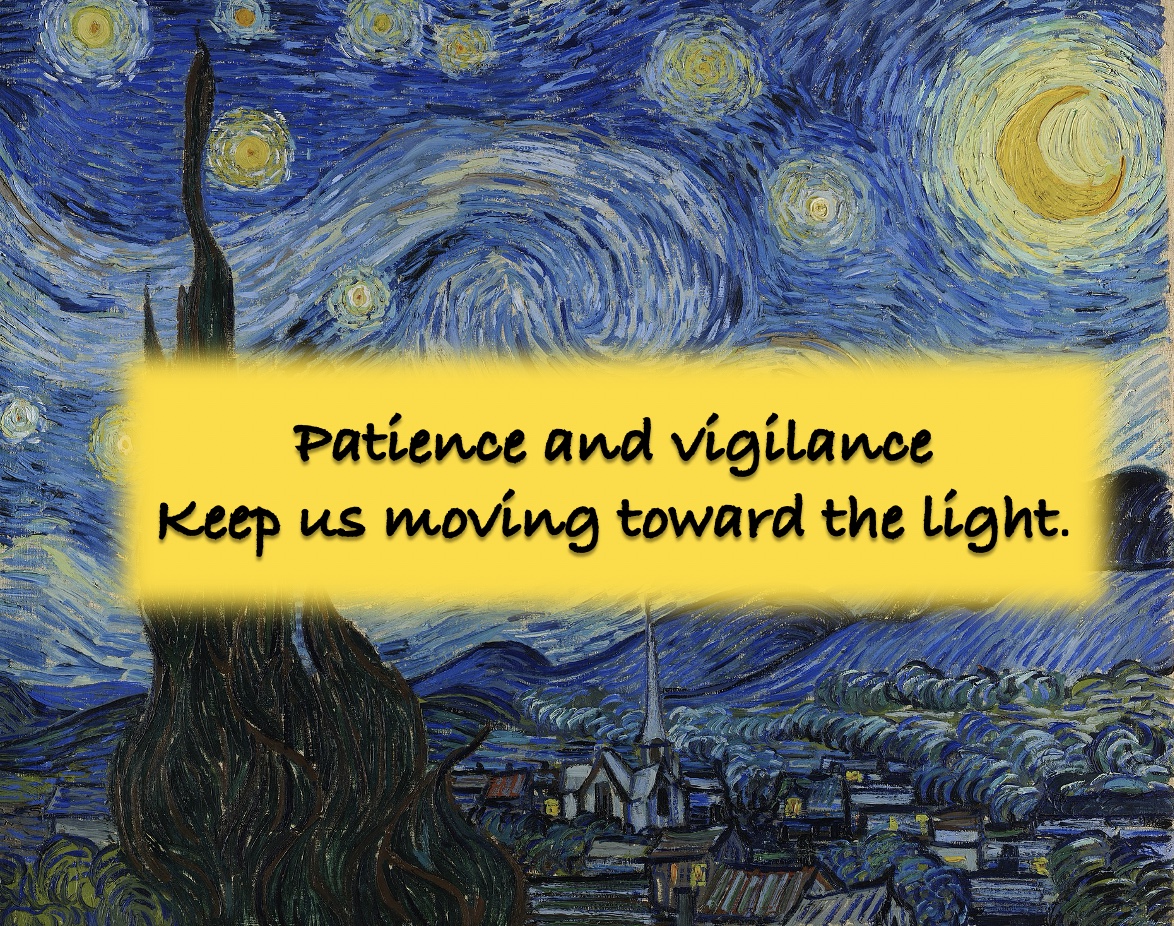
On sunny days, it’s easy to let your guard down. When the fog comes, it is easy to lose hope. But there are stars above the haze. Good and decent people live nearby. Science and reason provide hope in the darkness. Patience and vigilance keep us moving toward the light.

Democracy is like Santa Claus. It only exists if we believe it does.

Fresno Bee, December 13, 2020

Democracy is like Santa Claus. It only exists if we believe it does. Many Americans would like to say, “Yes Virginia, there was a legitimate election.” But the Scrooges are saying, “Bah, humbug.”

A number of Americans believe that the election was stolen. One poll reports that half of Republicans believe Trump “rightfully won” the election. Another poll found that 62% of Republicans say it’s “very likely” that the election was stolen by Democrats.

This means that when Joe Biden is inaugurated, many will view him as a shopping mall Santa, sitting on a throne of lies.

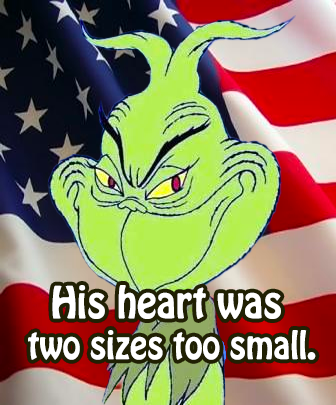
We are at a dangerous crossroads. If what the president says is true, the Democrats have stolen our republic. If what the president says if false, then he is the Grinch hijacking our democracy.

It is difficult to tell how serious this is. It is one thing to say you don’t believe in Santa. It is another thing to stop celebrating Christmas.

We’ll see how this cookie crumbles after the Electoral College votes and someone is inaugurated. Will the nonbelievers choose to act on their disbelief? If so, let’s hope that their actions are nonviolent. To protest non-violently is the nonbelievers right, grounded in the First Amendment. But violence is extra-constitutional and revolutionary.

Nonbelievers might stop paying taxes, for example. Of course, tax resisters will be prosecuted. But that is the point. Nonviolent protesters go to jail to protest a corrupt system.

I am not advocating this. I happen to believe the state election officials, the courts, and other experts who concluded that the election was legitimate. But this whole system is based upon faith.

Like Christmas, democracy is a ritual and a pageant. At some point we make a leap of faith and choose to play along. People have a right to stop playing along. But there are consequences.

One famous defense of playing along begins by saying, “Yes, Virginia, there is a Santa Claus.” Francis P. Church said that Virginia and her 8-year-old friends had been “affected by the skepticism of a skeptical age.” He defended the importance of “childlike faith” in magic, poetry, fantasy and romance.

Government also involves fantasy and faith. A flag is a piece of cloth. A law is merely words on a page. These things come alive when we believe in them.

Francis Church wrote that the best things are those we cannot see. He spoke of Santa Claus as a metaphor for the hidden wonders of the world — for love and beauty, meaning and transcendence.

He could as well have been talking about democracy. Like Christmas, democracy exists in the minds of men and women. It only exists when we play along. When people stop playing along, the fantasy ends. If enough people stop playing along, the whole thing collapses.

Perhaps skepticism is warranted in this skeptical age. We know that there really is no Santa Claus. And as the partisans squabble, it is increasingly difficult to believe in the idea of America. Maybe it is time to wake up from the dream of e pluribus unum.

But it’s worth asking what we would wake up to, if we stopped playing along. If we give up on the dream of democracy, what would replace it? If we stop believing in America, then what?

Christmas is a good time to think about what we believe.

Do we believe in country more than party?

Do we have faith in democracy or not?

Christmas is also a time of transformation.

After the Grinch stole Christmas, he was surprised. The Grinch thought that if he stole the tree and the presents, the Whos of Whoville would have nothing to celebrate. But they came together and sang anyway. And the Grinch’s heart grew.

The Grinch learned that Christmas doesn’t come from a store. He learned that Christmas “means a little bit more.”

When we wake up from this nightmare winter, will we learn something similar?

The future looks bleak. But this is also a season of hope.

So let’s hope that if there are protests, they remain nonviolent.

Let’s hope that we can sing in harmony again.

And let’s hope that the Scrooges and Grinches will decide to play along.