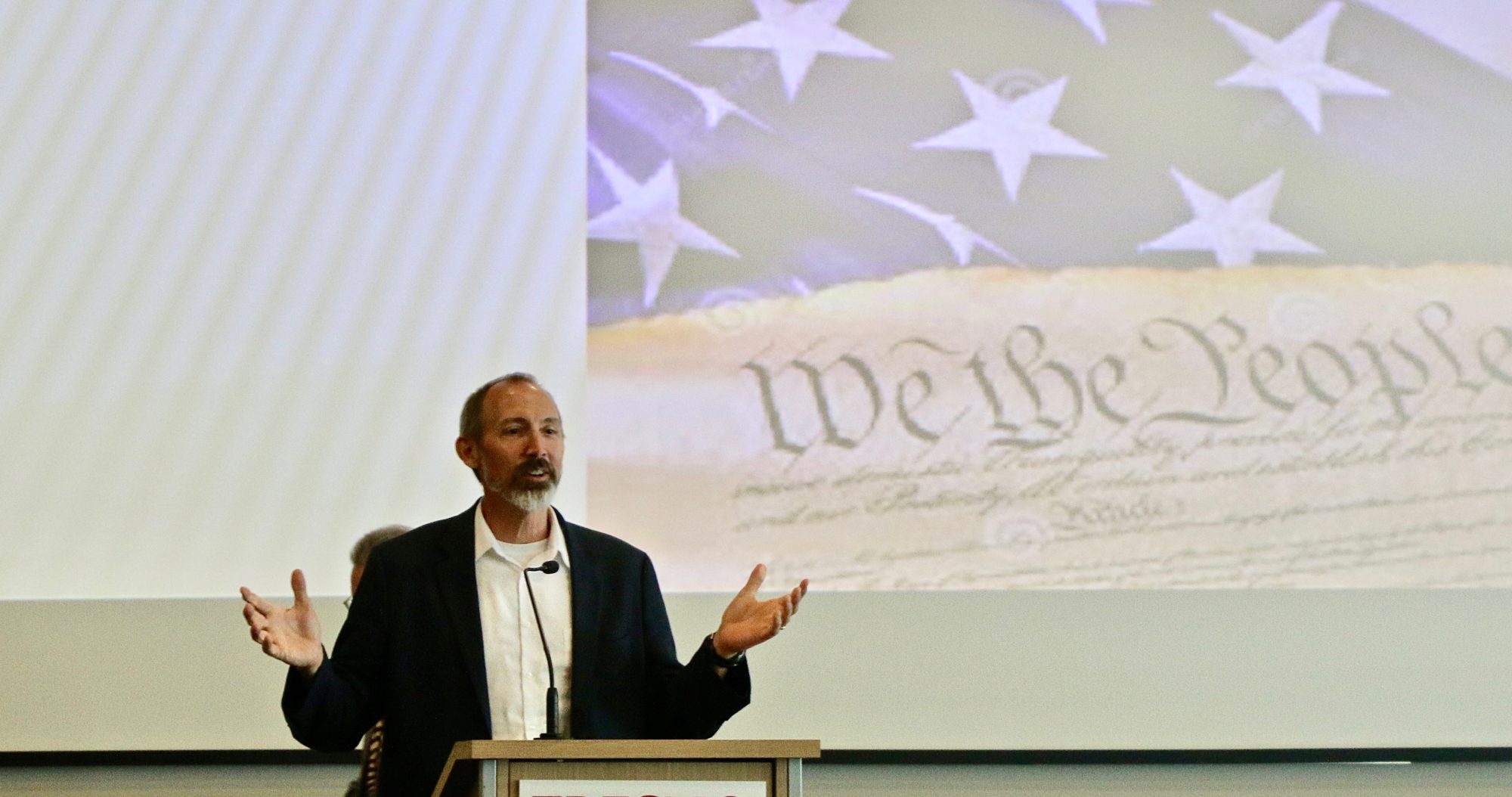
Impeachment, The Constitution, and Civics

Is the United States heading for an impeachment crisis?

Fresno Bee, September 10, 2016


Democracy is both inspiring and appalling. This year in California we will vote on initiatives involving the death penalty, firearms, taxes and health care. We also will vote on whether marijuana should be legal and whether porn actors should wear condoms.

There is no guarantee that voting will produce wise and virtuous outcomes. Porn addicts and potheads will cast votes alongside priests and police officers.

The national race does not inspire confidence in the electoral process. The primaries have given us two flawed candidates for president. Each accuses the other of mendacity and incompetence. With this level of animosity before the election, dysfunction likely will follow. Some commentators have suggested that there will be an impeachment crisis in the next few years, no matter who gets elected president.

Democracy can produce good outcomes. Smart and sincere voters can elect virtuous officials who are dedicated to the common good. But the fact of diversity means that we will disagree about what we mean by virtue and the common good. And so democracy also gives us gripes, grievances and gridlock.

THE PRESENT ELECTION PROVIDES A WONDERFUL TEACHABLE MOMENT. CIVICS EDUCATION INCLUDES A DISCUSSION OF THE VIRTUES AND VICES OF DEMOCRACY AS WELL AS ANALYSIS OF THE STRUCTURE AND HISTORY OF THE CONSTITUTION.

Philosophers have often criticized democracy. Plato warned that democracy can quickly turn to tyranny, as the people elect tyrants who make populist promises while plotting to take advantage.

John Adams, our second president, shared Plato’s worry. He warned about the dangers of direct democracy. He said: “Remember democracy never lasts long. It soon wastes, exhausts, and murders itself. There never was a democracy yet, that did not commit suicide.”

The framers of the U.S. Constitution tried to remedy the flaws of democracy by giving us mixed government with a separation of powers. That idea goes all the way back to the ancient Greeks. A mixed government is not very efficient. But it aims to prevent tyranny by frustrating the machinations of those who lust for power.

Another remedy focuses on educating citizens. This idea was dear to Thomas Jefferson. In a letter to James Madison in 1787, Jefferson wrote that education of the common people is the best way to secure liberty.

A similar argument is made in a forthcoming book by educational and moral theorists Nel Noddings and Laurie Brooks. The book “Teaching Controversial Issues” maintains that critical thinking and moral education are essential for democracy.

NO NATION IS PERFECT.

The authors argue that democratic schools should encourage critical thinking rather than blind obedience. We need to give young people the tools to analyze and evaluate controversial topics, while inspiring them to remain committed to the common good. The goal “is to develop thoughtful, well-informed citizens for a participatory democracy.”

The present election provides a wonderful teachable moment. Civics education includes a discussion of the virtues and vices of democracy as well as analysis of the structure and history of the Constitution.

It is easy and fun to celebrate the myths of uncritical patriotism. But the truth is more complicated. No nation is perfect. There are no utopias. The flaws in political systems reflect flaws in human nature. People are not perfect. Nor are the systems we construct.

On Sept. 17, 1787, when Benjamin Franklin made a motion to approve the Constitution, he acknowledged that there was no perfect constitution. Human beings always bring with them “their prejudices, their passions, their errors of opinion, their local interests, and their selfish views.” So no human constitution can ever be perfect.

But rather than leaving us discouraged, this should invigorate us. There is work to be done to improve the world. In the end, we get the democracy we deserve. We build the world we live in with our questions and criticism as well as our votes.

Read more here: http://www.fresnobee.com/living/liv-columns-blogs/andrew-fiala/article100862147.html#storylink=cpy

Kaepernick, Racism, and Football

Can we look past Kaepernick and actually talk about race?

Fresno Bee, September 3, 2016

The Kaepernick kerfuffle is an example of how moral discourse works in the Twitter era. San Francisco 49ers quarterback Colin Kaepernick refused to stand during the national anthem.He explained, “I am not going to stand up to show pride in a flag for a country that oppresses black people and people of color.”

The response was typical. Donald Trump suggested Kaepernick should find another country. Fans burned Kaepernick’s jersey. Supporters spoke of Kaepernick’s right to free speech. A group of veterans for Kaepernick defended his “right to sit down.”

Instead of talking about the race problem in America, the conversation shifted to Kaepernick’s refusal and his right to free speech. Soon enough people were criticizing Kap’s socks. He wore seemingly anti-police socks during practice.

racism-2014How bizarre. Racial injustice continues to be a problem without a solution. Poverty and prison plague the black community. Unarmed black men are shot by police. Riots break out. And here we are talking about a quarterback’s socks.

Rather than talk about race and justice, we prefer to change the subject. It’s easier to cast stones at a celebrity than to think about complex questions of social justice.

Kaepernick has the right to sit out the anthem or wear socks of his own choice. But defending that right does not confront the tough question of racial injustice and inequality. We skim the surface and avoid the depths.

Of flag salutes and other rituals

And so it goes with flag salutes and other rituals. They are nice. But they are only skin deep. We can mouth the words without meaning them.

At least Kaepernick appeared to be thinking about the meaning of the flag he chose not to salute. Of course, we cannot dig into the secret recesses of his mind. Nor can we plumb the souls of the athletes and fans who stand and salute.

The conscience is a deep well where we ruminate on meaning. Songs, salutes and socks rest on the surface. The commitments of the heart are independent of the motions of the body. To get to the heart of the matter we need to talk, listen and think.

Standing for the flag is fine. But flag salutes are symbolic, not substantial. Some claimed Kaepernick was disrespecting the troops. But we support the troops most directly by paying our taxes.

Which brings us back to football, which has a strong commitment to supporting the troops. Until last year, the league itself didn’t pay taxes, since it was listed as a tax-exempt nonprofit. To be fair, local franchises pay taxes. But the NFL itself did not, even though the commissioner earned $30 million to $40 million a year.

At any rate, it is strange that the football industry has become a public good, wrapped in the flag, when it is a profitable private enterprise. This is no stranger, I suppose, than the fact that Budweiser renamed its beer “America” this summer and covered the label with patriotic slogans. Budweiser is owned, in case you are wondering, by a foreign beverage corporation named InBev.

Many layers of patriotism

This is a reminder of the complexity of flags and patriotism. Patriotism can be heartfelt and sincere. Or it can be thoughtless jingoism. Patriotism may also be conscientious loyalty to a nation’s highest moral principles. And in some cases patriotism is a useful marketing strategy.

The Roman author Juvenal worried that the Romans were too focused on “bread and circuses.” Today it is football and beer. Trivial distractions undermine thoughtful and sincere citizenship. They keep us too preoccupied to have meaningful conversations about morality, justice and the common good.

And so we mock easy targets and ignore the hard questions. Kaepernick is a millionaire with weird socks sitting alone on the bench. It’s easy to malign the man. But the difficult question of race in America remains on the table.

That question is connected to complex social, psychological, economic and political questions. Like every other important question, the racial problem needs long and careful deliberation. But we ignore that complexity when we blast away on Twitter.

Marketing and propaganda make us think that the truth is obvious and easy to understand. In reality, important ideas take a lifetime to figure out. And flags, socks and songs only touch the surface of things.

Andrew Fiala is a professor of philosophy and director of The Ethics Center at Fresno State:fiala.andrew@gmail.com

Read more here: http://www.fresnobee.com/living/liv-columns-blogs/andrew-fiala/article99549522.html#storylink=cpy

Music At Glacier Point

In  moments of musical beauty, anger melts, hatred dissolves, peace dawns

Fresno Bee, August 27, 2016

WITHOUT HOPEFUL SPLASHES OF JOY, LIFE WOULD BE DULL AND MEANINGLESS.

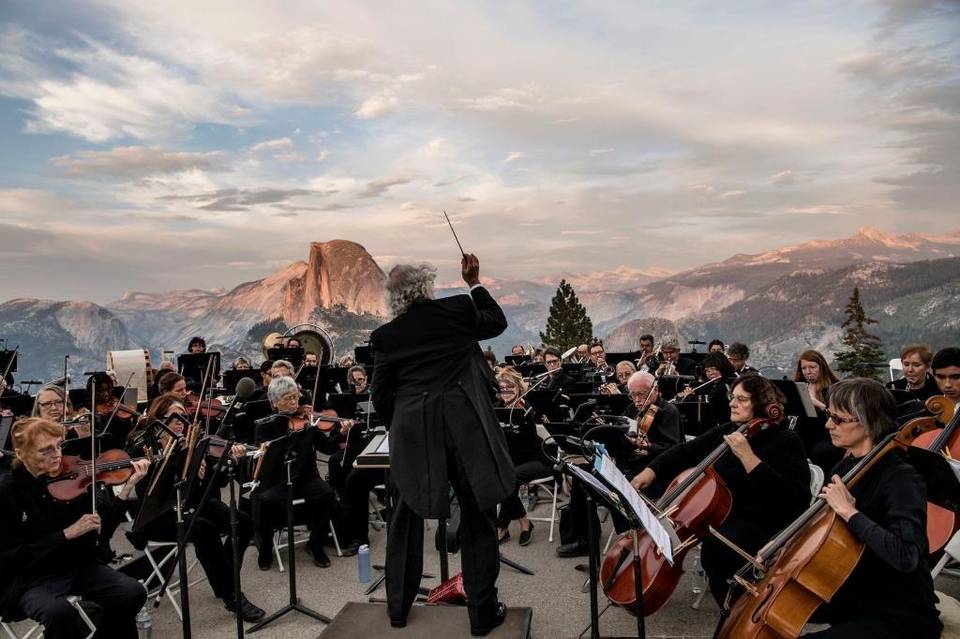
Last Sunday, the Mariposa Symphony Orchestra performed at Glacier Point in Yosemite National Park. Perched on the edge of a cliff, the orchestra played original pieces composed in honor of Yosemite and the centennial of the National Park Service.

As Half Dome blushed in the setting sun, Yosemite’s granite gorges resounded with song. At dusk, a bat danced above the bassoons. After the last echo faded, a shooting star flashed into view. It quickly vanished into darkness.

img_0469-1Beauty is fleeting. It shines and echoes for a moment. Then it is gone. Youthful brilliance becomes old age. Summer sun gives way to winter winds. Music always returns into silence.
The fragility of beauty is a reminder of mortality. But beauty also soothes and reassures. Wonder and joy arouse our better angels. Natural splendor and human art make life worth living.

The concert at Glacier Point honored the 100th anniversary of the National Park Service, whose work conserves the wild wonders of our continent. Some Park Service employees also play in the Mariposa orchestra. How cool for those rangers to serenade the park they love.

The arts and Yosemite

One might think it odd to stage a symphony at Glacier Point. But according to Yosemite spokesman Scott Gediman, “From the signing of the Yosemite Grant to the present day, the arts have played a significant role in the creation and continued interest in preserving these public places.”

Yosemite sparkles in Ansel Adams’ photos. It is illuminated by John Muir’s prose. Yosemite has a new artistic champion in Les Marsden, the conductor of the Mariposa orchestra.

Marsden composed a complex cycle of four pieces to honor Yosemite and the Park Service. Marsden’s compositions are classically American, reminiscent of Aaron Copland. The music told the history of the national parks. It imitated wind, water, fire and animal life.

As Marsden’s dynamic baton came to rest and the music faded into silence, you could hear crickets chirping and birds singing. I was struck by the thought that human art is a response to nature’s call. The human imagination swells in the presence of Half Dome. Birdsong tickles our ears. Thunder quickens the heart. And Yosemite Falls provokes laughter and shouts.

WITHOUT HOPEFUL SPLASHES OF JOY, LIFE WOULD BE DULL AND MEANINGLESS.

Poetry, painting and music reflect the wonders of the world. Human art transcends matter. Without the soaring responsiveness of the human spirit the earth would be quiet and dull.

John Muir said, “Everybody needs beauty as well as bread, places to play in and pray in, where nature may heal and give strength to body and soul alike.” Muir explained that gardens and parks satisfy our “natural beauty-hunger.” We plant flowers, tend our gardens, and visit parks looking for inspiration and consolation.

Muir claimed that natural beauty comforts “nerve-shaken, over-civilized people.” For Muir, mountain parks are “fountains of life.” Their sublime wonder stirs the spirit.

Fountains of life

Art and music are also fountains of life. The arts encourage us to savor the world.

One of my colleagues, Thomas Loewenheim, the conductor of the Fresno State SymphonyOrchestra, has confessed his hope that music provides a path toward peace. I think he is right. Music, beauty, art and nature encourage us to transcend our petty differences. They lift us beyond ourselves and bring us together in awe, reverence and delight.

Stand on Glacier Point. Immerse yourself in poetry. Fill your lungs with song. Dig your fingers into the soil. Smell the wonder of flowers. Or simply listen to the birds. The aesthetic mood encourages us to breathe more deeply – to listen, see and feel.

In moments of beauty, anger melts, hatred dissolves and peace dawns. Winter storms will come to the high country. Fires will burn the hills. And madmen rage in the lowlands. But peace is found in beauty. And hope is found in the fragments of color, song, granite and water that we carry in our hearts.

Without hopeful splashes of joy, life would be dull and meaningless. Hallelujah for Yosemite. Hurray for Marsden and the Mariposa symphony.

And thank goodness for the men and women of the Park Service, whose work has preserved nature’s wonders for 100 years. Here’s hoping that the artists, rangers and natural wonders of our world will continue to inspire and console for another century.

Read more here: http://www.fresnobee.com/living/liv-columns-blogs/andrew-fiala/article98045307.html#storylink=cpy

For the Love of Teaching

Teachers truly love a very tough profession

Fresno Bee, August 20, 2016


34344c9935257c1be6c213aa5443ea6fTeachers love to teach. Ideas thrill us. We share the excitement of our students’ achievements. We enjoy helping people master skills and understand concepts. And we believe that our efforts give birth to a better world.

Like any worthwhile activity, teaching is stressful and difficult. It is intimidating to face a college lecture hall full of hundreds of students. It is tough to keep high school kids engaged. It isn’t easy to nurture elementary school kids every day of the week.

There is high turnover among beginning teachers. In Los Angeles, according to a recent report, 40 to 50 percent of K-12 teachers leave the classroom within five years. Teacher shortages are a problem in Fresno and across the country. The long-term solution is for society to value teachers. Teachers should also spread the good news of the joy of teaching.

Not everyone is cut out to be a teacher. Teaching is a craft that is learned through sweat and tears. When I taught high school, I was overwhelmed with insecurity. My first years in the college classroom were filled with anxiety and doubt. More than 20 years later, I still fret and worry.

Teachers need compassion, organizational skills and intense focus. Teaching depends upon mastery of the subject matter, quick wit and the ability to improvise. It also requires an ethical commitment to the well-being of those we teach.

Great teachers facilitate a metamorphosis of the mind. Jeremiah Conway, a philosophy professor in Maine, describes this as a kind of magic. In a book entitled “The Alchemy of Teaching,” he explains, “Teaching is fundamentally about human transformation.” He concludes, “Participating in such transformation is one of the great delights and responsibilities of teaching.”

Parents certainly don’t want just anyone molding our children’s minds. We want ethically grounded teachers who love our children and understand their fragility. We want teachers who take their responsibilities seriously.

TEACHING IS A NOBLE AND NECESSARY PROFESSION.

Transformative teaching is not mere instruction. Its goal is not obedient compliance or mechanical repetition. Rather, transformative teaching aims to conjure something new into existence – knowledge, virtue and love of learning.

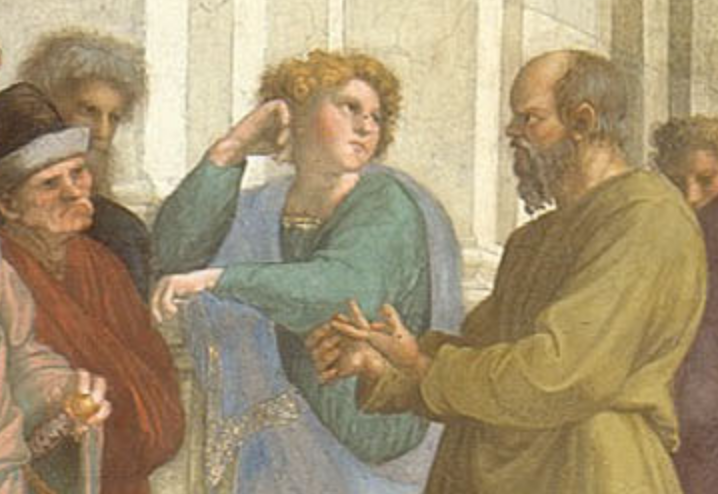
The model for transformative teaching is Socrates. Socrates described himself as a midwife who facilitated a magical birthing process. When teaching works, young people grow into full-fledged human beings.

Low wages, heavy workloads and external pressures can kill the joy of teaching. Institutional constraints can reduce teaching to mere instruction. The move to computerized instruction presumes that computer programs can do much of the work.

Some skills can be taught by mechanized instruction. But personal transformation and moral growth are properly facilitated by human interaction. We learn art from inspired artists. We learn the scientific method from devoted scientists. We learn good sportsmanship from decent coaches. We learn to love history by listening to passionate historians. And we learn how to be human from mentors who represent the best of humanity.

In order to recruit the next generation of teachers, society needs to celebrate the smart, devoted, and moral human beings who fill our classrooms. Teachers are among the most important workers in our nation. They transmit the knowledge, skills, and values of our civilization. Teaching is a noble and necessary profession.

We also need to explain the joy of teaching. Successful teachers find meaning and delight in teaching. Teachers often feel called to teach. But inspiration is momentary. Teachers are lifelong learners who work to hone their craft. That effort is sustained by a sense of responsibility toward students and the community.

Teachers are often quiet about their love of teaching. Perhaps we are reluctant to admit that we’ve found meaningful work in a world of drudgery. We are not comfortable these days talking about work as a calling or vocation. But where your talent and joy provide a service to the world, that’s where you are summoned.

Not everyone has the talent or demeanor to be a teacher. Some give up or burn out. But most teachers love to teach.

Each new school year begins as a great romance. We get butterflies. We obsess about lesson plans. We dream of books, experiments and ideas to be shared. We happily greet our students, humbled by our responsibility. And we hope that through our efforts a better future will be born.

Read more here: http://www.fresnobee.com/living/liv-columns-blogs/andrew-fiala/article96554047.html#storylink=cpy


The Olympics, Inequality, and the Spirit of Sport

Inequities sometimes overwhelm the Olympic ideal

Fresno Bee, August 13, 2016


The most important moral message of the Olympics is found in the spirit of the swimmers in the outside lanes and the runners at the back of the back. They get no glory. But they give it their all.

U.S. swimmer Missy Franklin, left, cries as she’s comforted by teammate Maya Dirado after Franklin failed to qualify in the semifinals of the women’s 200 backstroke at the Olympic Aquatics Stadium in Rio de Janeiro, Brazil, on Thursday, Aug. 11, 2016

Almost everyone runs at the back of the pack. There is only one Michael Phelps. The rest of us could quit, cheat or complain – but we don’t. We – the decent majority of weekend warriors and ordinary mortals – discover joy in effort and honor in doing our best.

They say practice makes perfect. But no one is perfect. There is always room for improvement. We are never done practicing. Life is ongoing exertion. The key is to learn to love our labors.

This message is often lost in our focus on medal counts and the achievements of extraordinary Olympians such as Phelps. But the glory of victory is only a small part of the Olympics. The more important message is that the people of the world can play fairly together.

The inventor of the Games, Pierre de Coubertin, imagined a new philosophy called “Olympism” that promoted world peace through international sport. He wanted to create international solidarity through friendly competition.

With roots in Greek myth, Olympism is a philosophy of life that seeks harmony of body, will, mind and world. It demands respect for universal ethical principles. And it celebrates “the joy of effort.”

The Olympic charter states, “The goal of Olympism is to place sport at the service of the harmonious development of humankind, with a view to promoting a peaceful society concerned with the preservation of human dignity.”

Controversies surrounding the Rio Olympics make this seem like a dream. Doping scandals and polluted water are the tip of the iceberg. In addition to athletic greatness, the Olympics disclose social dysfunction, greed, injustice and inequality.

In one symbolic scene, protesters halted the Olympic torch procession. Police used tear gas and rubber bullets to clear a path for the torch. The poor and suffering masses want dignity, not gold medals.

Indeed, the daily medal count discloses global inequality. The globe’s athletic powerhouses are also its economic giants. Victory depends upon economic opportunity in addition to talent and tenacity.

The world’s poorest nations have few athletes. They rarely win. Some impoverished athletes abandon their homelands to compete for other nations. Rich countries such as Bahrain and Qatar import athletes from poor African nations.

Another problem is commercialism and greed. Olympic profits are not fairly shared. NBC expects hundreds of millions of dollars in ad revenue from the Rio Games. The athletes do not get a share in these profits.

The president of the IOC earns more than $250,000 a year. American coaches and sports directors earn even more. The executive director of USA swimming earns $837,000 per year. American swimmers earn a maximum stipend of $42,000. Athletes in less-popular sports and in poorer countries get much less.

Such is the world we live in. It would be nice if sports could solve our problems. But our athletic endeavors reflect the realities of a world that is afflicted by inequality, injustice, conflict and greed.

And yet, the masses continue to run, practice and strive. The vast majority of decent people do not cheat, quit or complain. Instead, we lace up our shoes and get to work. We enter the race, understanding that we have no chance of winning. But we keep on running.

The basic decency and tenacity of the vast majority is the most hopeful aspect of the human spirit. Most of us honor effort and fair play. We find joy in practice. And we strive to do our best.

Olympism imagines sport as a solution to global conflict. This is an inspiring vision. But sport is not a panacea. Athletes are human beings. And sporting events are human creations. They reflect who we are.

The problems exposed in Rio indicate that there is much work to be done in the world to eliminate injustice, inequality and other social problems. There is always work to be done.

Life is ongoing practice, sweat and tears. We don’t work because we expect to win. Rather, our efforts define our identities and give us joy, even in defeat.

Read more here: http://www.fresnobee.com/living/liv-columns-blogs/andrew-fiala/article95304872.html#storylink=cpy