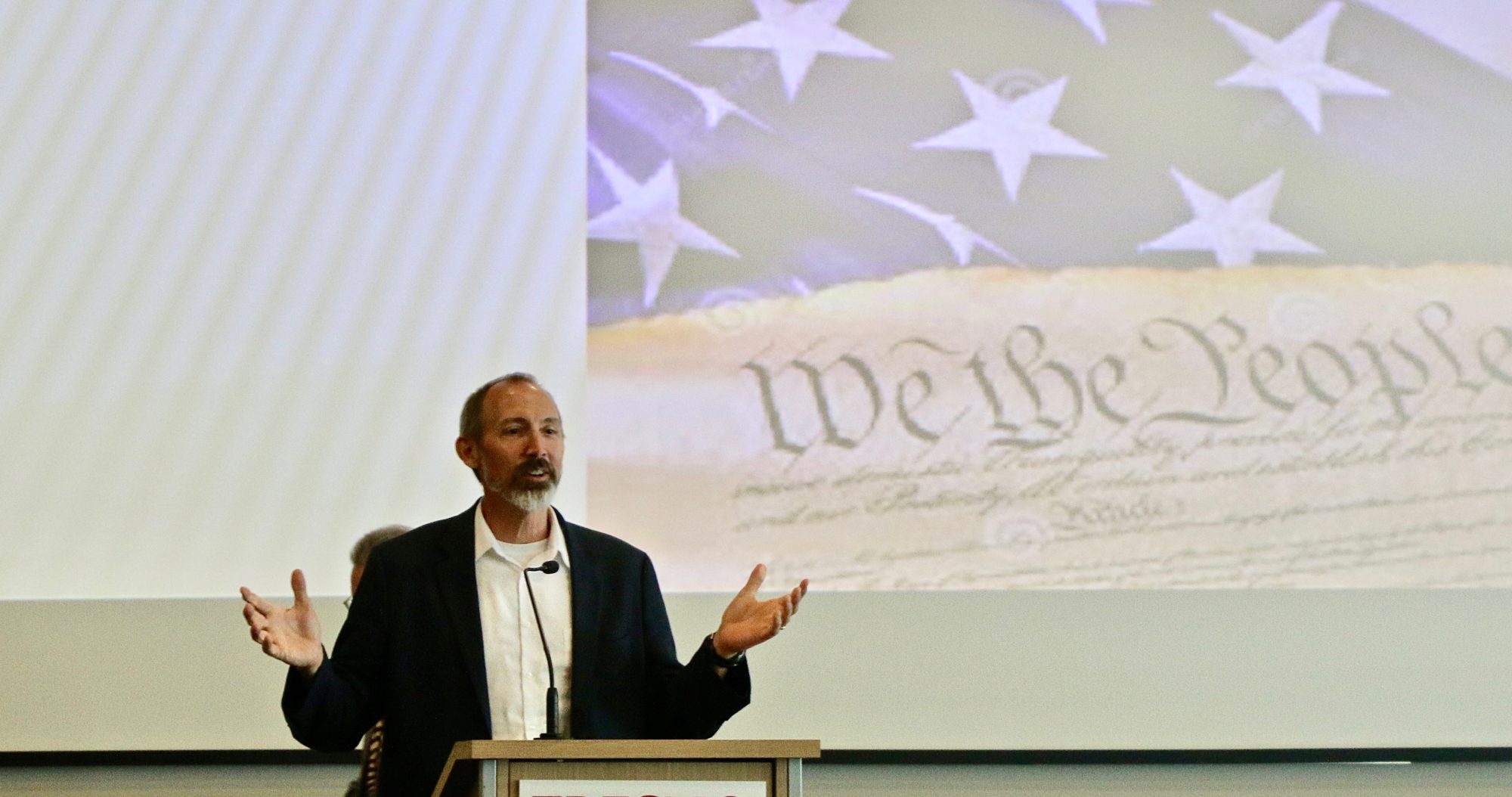

Lessons from the Inca Trail about Wonder, Gratitude, and Nature
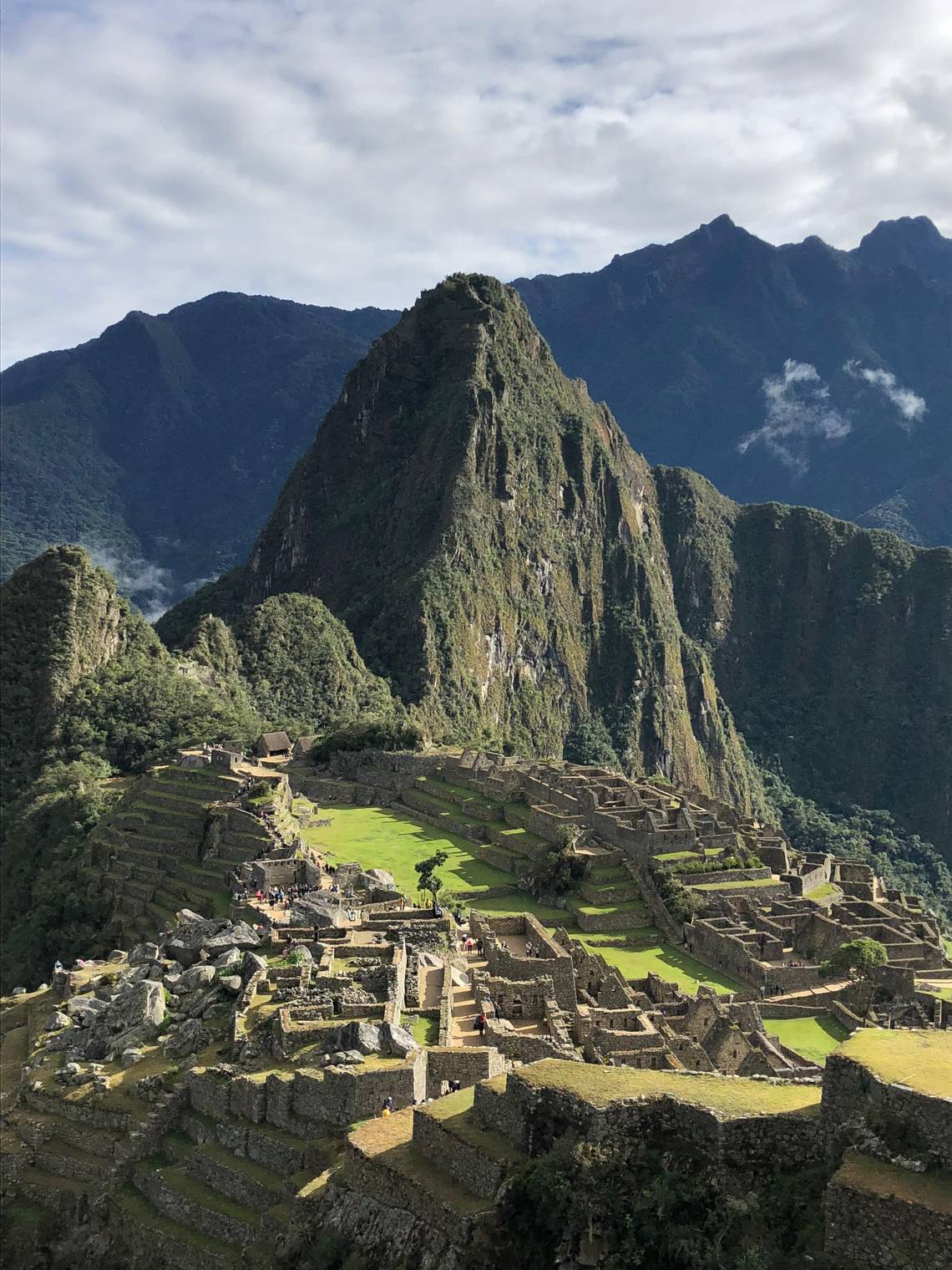
Searching for wonder in the reality of nature
Fresno Bee, July 29, 2018
Modern human beings are alienated from nature. We live in air-conditioned rooms. We relate to higher things through dry, ancient books. We rarely see the stars or feel the rain. We are rootless.
I have been thinking about our alienation from nature after trekking through the Andes of Peru. The trek ran over high mountain passes, where we endured freezing rain and cold, windy nights. We witnessed wild jungles and wandering llamas. And we celebrated the blessing of sunshine, which gave us warmth and the rainbow.
Our guide paused at the entrance to Machu Picchu to give an offering. He gathered three coca leaves into a shape that represents the mountains. He presented this gift to each of the four directions. He left the coca in a secret niche at the Sun Gate.
It made sense to give thanks to the mountains, to the elements and to the coca that made our journey possible. Coca tea helps fight altitude sickness. Its salutary effect is a kind of magic. There is also magic in the sun’s heat, the river’s song, and the rainbow’s glow.

Religion in its best and original sense comes from the sense of wonder before the power of nature. It reminds us that we belong to the earth. We cannot live without land, water, and sun. These elements combine in the plants and animals that nurture us.
Nature is not all ease and comfort. Forest fires are rampaging in this long hot summer. Snow, rain, and cold are dangerous and difficult. But when the rains come or the sun breaks through, we give thanks.
In aboriginal Andean religion, the earth is a spiritual being called Pachamama, the earth mother. The mountains themselves are spiritual beings called Apus. These are powerful and mercurial beings. They can be dangerous or benevolent. To modern ears, this sounds far-fetched. But many cultures speak of mountains as divinities with personalities.
We still name mountains and understand their personas. In Yosemite there is Half Dome and El Capitan. Their presence is palpable. We also recognize that mountains do things. Climbers and backpackers have a saying: “Mountains make their own weather.” Temperatures change quickly. The wind comes on strong. Fire, rain, and snow are sudden in their appearance.
Modern science explains the orographic effect. Mountains interact with moving air masses. Changes in elevation cause changes in temperature that cause precipitation and swirling winds. Mountain weather is easily explained by atmospheric science.
But scientific explanation does not touch the lived sense that mountains are powerful beings. It makes sense to say that the mountains are angry or friendly. Thunder and lightning are threatening. Forest fires are malicious. Floods are cruel. Gentle blue skies and cool mountain streams are gracious and hospitable.
Much of the magic of nature is local. The sun is wrathful in the desert. It is cheerful in the cold high places. The rain is gentle in the valleys. It is vicious at 13,000 feet.
Those who live and work on the land are in touch with the personality of their local geography. Their livelihood comes from Pachamama. Their well-being depends upon the benevolence of the Apus.
There are very few farmers and shepherds left. We are no longer connected to nature.; we no longer belong to her. We do not know where our water and food come from.
The benefit of civilization is obvious. We dam the rivers and control the fires. We farm on an industrial scale. We drive and fly, instead of walking. We live in comfort and safety.
But this benefit is not without its costs. We are uprooted and dislocated. We lose track of who we are and where we belong. We no longer experience wonder or gratitude in their original organic sense.
This is not to say that we could go back to a world of Apus and the Pachamama. The world has moved on. But it is important to remember what we have left behind. We fill our lives with imitations of reality, flickering on screens. Out there in the natural world, the fires and storms still rage. And it is still possible to experience wonder, fear, and joy in the presence of the real.
Lessons about Politics from The Fall of the Inca
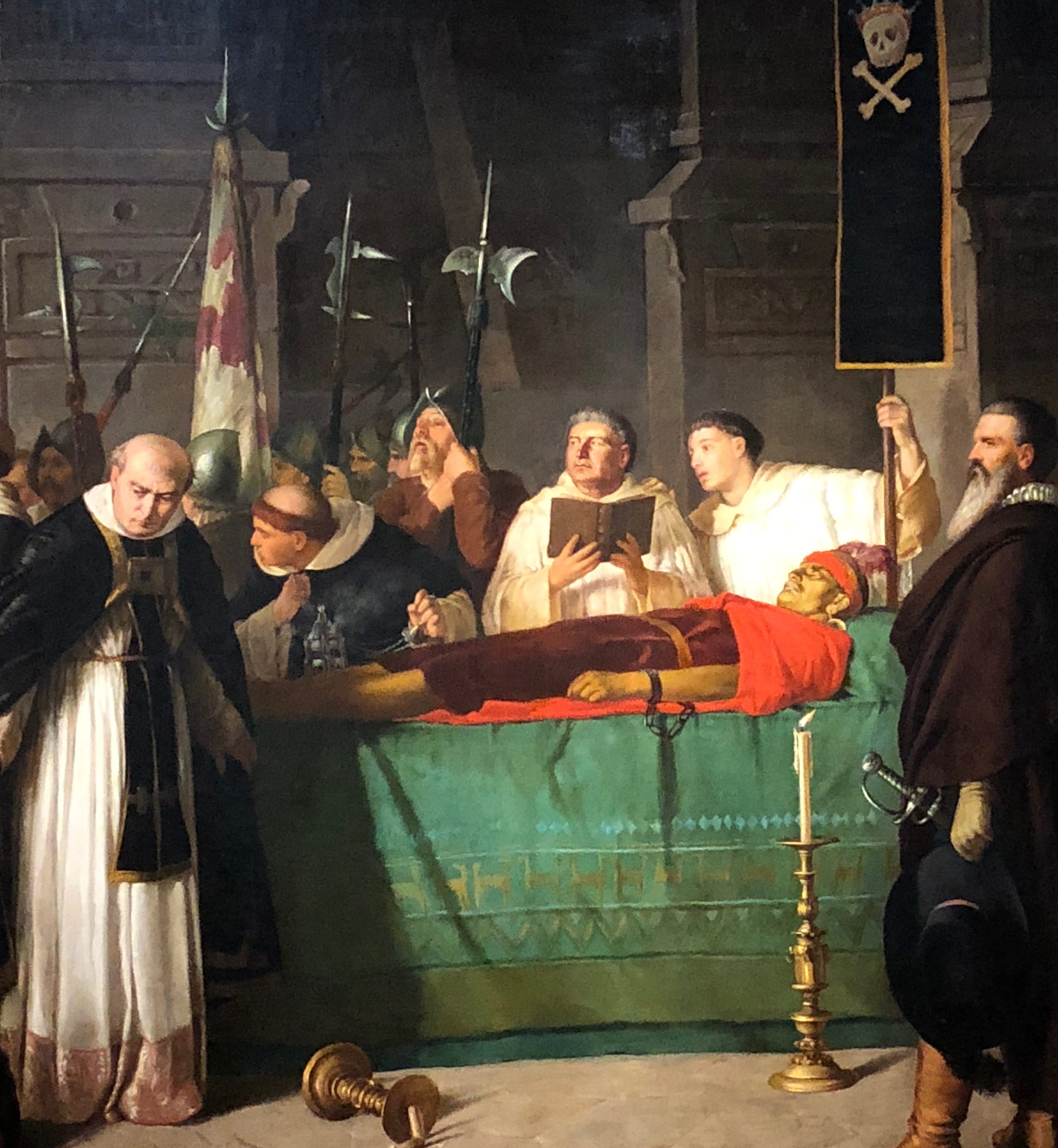
Is Russian interference in election the latest example of history repeating itself?
Fresno Bee, July 22, 2018
The story of the fall of the Incan empire is a cautionary tale, teaching that great empires can be destroyed by a small group of unscrupulous actors. It is worth considering this as we reflect upon the Russian hack of the American election of 2016.
Americans are at one another’s throats. Some have accused the president of treason. Others are in denial. With a few technological tricks, the hackers have succeeded in destabilizing our democracy.
History is full of sneak attacks, including Pearl Harbor and 9/11. But the attack on the Inca in 1532 by the conquistador Francisco Pizarro may be the most monumental.
Pizarro had only 180 men when he arranged to meet with the Inca emperor Atahualpa in the heart of Incan territory in the town of Cajamarca. Atahualpa arrived with a small entourage, leaving his army of 80,000 men outside the town. He expected a diplomatic exchange. Pizarro’s men were concealed in the town, waiting in ambush.
A Dominican priest presented the Inca with a Bible, demanding that he convert. Atahualpa threw the Bible to the ground. Pizarro’s men emerged from their hiding places. Spanish gunpowder and steel overwhelmed the Inca forces.
Pizzaro captured Atahualpa and held him for ransom. A large ransom of gold and silver was paid. But Pizarro murdered Atahualpa anyway. The empire soon fell.
I am writing this from Cuzco, Peru. This beautiful mountain town was the capital of the Incan empire. Ancient walls still exist as a forlorn testament to Incan power. The Incan empire was one of the largest in human history. It extended along the spine of South America, from Ecuador to Chile. Today only ruins remain.
From the standpoint of the Inca, the Spanish were foreign terrorists. They arrived uninvited on the shores of America. They brought new diseases. They demanded conversion to a strange religion. They stole vast quantities of gold and silver. And in the battle of Cajamarca, they violated the norms of diplomacy by ambushing and capturing the king. They even violated the ransom agreement.
Lesson to be learned
The lesson here is that devious and ruthless violence can decapitate a naïve power. The Inca seemed to be so sure of their power that they did not take the Spanish threat seriously. That is why Atahualpa walked into the ambush. Atahualpa’s demise is a warning against hubris.
The Inca failed to believe that the Spanish would have the audacity and immorality to do what they did. Nor were the Inca prepared for the new weapons and technologies that the Spanish possessed. The Spanish took advantage of Incan complacency.
History shows that all empires fall. Through the conquest of the Americas, Spain created one of the largest empires on earth. But the Spanish empire eventually fell. So too did the British Empire. And the Soviet Union. No power lasts forever, especially if it is not vigilant.
About that Russian interference
This brings us back to Russian interference in the U.S. election. The American democratic system depends upon the integrity of the electoral system. If citizens do not trust this system, it will fail.
But a small, technologically advanced group of foreign agents effectively ambushed our democracy. We are more divided than ever. And the biggest threat is that some are still in denial about the threat to our democracy.
The violence and weapons are different in the present case than in the fall of the Inca. But the common threads are the audacity of the attack, the use of new technology, and the strategy of assailing the heart of the empire. In the Inca case, you capture the king. In the current case, you undermine citizens faith in the electoral system and the integrity of our leaders.
History never repeats itself exactly. But there are lessons to be learned. The Spanish played dirty in Peru. They were sneaky and merciless. They broke their promises. And they won.
The solution is vigilance and overcoming hubris. Atahualpa should not have trusted Pizarro. If he were less assured of his power, he might have avoided the ambush. If he had avoided the trap or taken effective countermeasures, Pizarro would have failed. And in Cuzco today the walls might still support Inca temples instead of the Catholic churches built upon them.
The World is Getting Smaller
We’re growing closer. For proof, check out World Cup rosters and McDonald’s in Peru
Fresno Bee, July 12, 2018
The world is more integrated than ever. Consider how far we have come. A hundred years ago Europe was at war, colonial power still existed, racism was legal, and women were not allowed to vote.
Progress is never guaranteed. There are danger signs, as trade wars develop and old alliances are threatened. But it is difficult to imagine a return to the bad old days of colonialism, militarism, and legal discrimination.
I’m writing this from Lima, Peru, where I am participating in the biannual congress of the International Society for Universal Dialogue. This conference includes scholars from a variety of countries, who come together to talk about the prospect for developing a more just and humane world.
This organization began at the end of the Cold War to bring scholars together from East and West. It has evolved to become a global conference that includes speakers from all continents, religions, genders, and races.
The World Cup has been playing in the background as we meet. Throughout the city of Lima, football fans congregate in small cafes and bars to watch the games. Peru lost its opportunity in the qualifying rounds. But World Cup fever predominates. Sport is a unifying force.
The semifinals were an all-European affair featuring Belgium, Croatia, England, and France. Europeans invented this game. But South America teams also excel, while Asia and Africa are catching up.
The French team includes a number of players with African heritage. Our small world is mixed and integrated in ways that would have been unimaginable 100 years ago. Old-school ethnic nationalism has become absurd.
Europeans and Americans still dominate the globe as a result of prior colonial power. Economic globalization often means domination by European and American corporations. Coca-Cola and Budweiser are World Cup sponsors. But so, too, are Qatar Airways and Hyundai.
This economic mixing is apparent in Peru. Lima has McDonald’s, Starbucks and KFC. But there are also Chinese restaurants, French patisseries and Sushi bars alongside the local cuisine.
On the drive from the Lima airport, huge signs welcome Pope Francis who visited Peru in January. Francis is from Argentina, which is another sign of the times. He is the first Latin American pontiff.
When the Pope was in Peru he pointed out that there was much work to be done to build a just and humane world. There are slums in Lima and poverty in Peru. Political corruption is a problem. As is violence, racism and intolerance.
But we are making progress. And the way forward must include a continued commitment to those universal values that unite us. Science and scholarship are already global. Scholars are united around shared principles of reason and evidence.
After long decades of outright discrimination against women in the academy, women are now invited to the table. So too are scholars and scientists from the developing world. We can build upon that spirit of inclusion.
We can also build upon the values found in sport. These include ideas about fair play and sportsmanship. Athletic excellence is recognized as a value that transcends race, nationality and gender.
Not everyone is happy with globalization. President Trump’s “America First” agenda points in a different direction. So too does the British “Brexit.”
But the American tariff war and the difficulty of pulling off a clean Brexit show us how integrated the world has become. It is not possible to build a wall, flood the moat, and pull up the bridges.
Our world is too interrelated to disentangle the forces of progress. The French soccer team is not going to purge itself of its African players. Women are not going to give up their place in the voting booth or in the academy. And Sushi is here to stay in Peru.
The political news is often grim. But tune in to the World Cup – or visit another country – and you’ll see a common and hopeful humanity. There are kind, generous and hard-working people everywhere. Most of us understand that the present is better than the past. We do not want to return to racism, sexism and militarism. And we understand that there is much work to be done to build a more just and equitable future.
Misogyny, Sexism, and Sex Abuse: Lessons from Machiavelli and Plato
From the White House to town square, men try to dominate without moral restraint
Fresno Bee, December 10, 2017
Sexual misconduct was not invented by the current generation. Before Al Franken and Matt Lauer there was Bill Cosby. In Greek myths the gods often raped young women. Plato wrote a book about the ethics of sex and love, called “The Symposium.”
Men have always desired the godlike power to take what they want with impunity. Male dominance ignores moral restraint. It wants power, pleasure and glory.
 One spokesman of misogyny is Machiavelli. In an infamously sexist passage in “The Prince,” Machiavelli says that fortune is a woman. If you want to win fortune, you need to beat and abuse her, like you would batter a woman you want to control. Machiavelli teaches that glory comes to those who are audacious and violent.
The Machiavellian man brags about his prowess. He even boasts about what he has not done, manipulating truth in order to manufacture status. The Machiavellian also manipulates people. He grabs and gropes, swaggers and swears. When accused of misdeeds, he lies and dissembles.
We see numerous examples across the country of men getting caught with their pants down. Some have apologized. Others have resigned or been fired. But the hard-boiled Machiavellians continue to deny and denounce.
The most egregious examples come from the Oval Office. Recall Bill Clinton’s famous false denial, “I did not have sexual relations with that woman.” Other men would have withdrawn in shame. But not Clinton, who shrugged off impeachment.
WE SEE NUMEROUS EXAMPLES ACROSS THE COUNTRY OF
MEN GETTING CAUGHT WITH THEIR PANTS DOWN.
Our current Machiavellian-in-chief bragged on tape about grabbing women’s crotches. President Trump has recently suggested that the voice on the tape was not really him, despite the protestations of his accomplice, Billy Bush.
For a Machiavellian, there is no fact that can’t be massaged to serve his purposes. The Machiavellian never flinches. He trades punch for punch. He mocks and belittles his enemies. He traffics in false and inflammatory material. He accuses others of stupidity, fakery and immorality. If he apologizes, his words are insincere. When he makes promises, he offers flattery without substance.
Unfortunately, the Machiavellian strategy pays off. It often works to be a jerk. It often seems that the more shameless one’s deceits, the more glory one attains.
Perhaps the tide is turning on this. But progress will be slow. This problem has been with us for thousands of years.
Plato understood that sex and politics were often at odds with morality. Good men are often destroyed by evil liars. And shameless gropers often keep what they grab.
The Platonic man does not fit well in the world of male dominance. He is reflective and retiring, modest and private. He does not boast. He is not willing to sacrifice his integrity to achieve victory. He is conscious of his own failures. His primary concerns are truth, justice and virtue.
LET’S TEACH OUR SONS TO BE
BETTER MEN THAN THE MACHIAVELLIANS CURRENTLY ON DISPLAY.
The Platonic man sees no value in taking what is not freely given. He values honesty, friendship and love. He won’t pander. He won’t lie or spread false rumors. He thinks that glory without goodness is not worth the price.
The Platonic man does not view sex and power as ends in themselves to be obtained by any means necessary. Indeed, Plato suggested that lust for sex and power often lead us astray. He taught that sex without restraint is rapacious and that power without justice is tyranny.
The Platonic ideal is constantly at war with the Machiavellian urge. Education and constant effort are needed to develop men of character, who are caring, truthful, just and wise. Young men must be taught to keep their pants zipped.
While we might forgive the immature mischief of an adolescent, we cannot ignore the immoral machinations of mature men. The worst aspect of the Machiavellian man is that he makes groping and glory-seeking a way of life. He models depravity and makes it appear to be good. The tragic fact of political life is that so many Machiavellians have so much power.
The solution is moral education and the empowerment of women. Listen to women’s complaints. And condemn male dominance and misogyny. The point is easy to make today as the rogue’s gallery of gropers continues to grow. Let’s teach our sons to be better men than the Machiavellians currently on display.
http://www.fresnobee.com/news/local/article188839694.html