Freedom is Frustrating and Pride Provokes

Fresno Bee, Oct. 31, 2021

Life in a secular democracy can be frustrating. In our country, we disagree about nearly everything. Our lack of agreement is a sign of the health of our democracy. Liberty is disruptive. The confusing complexity of our secular world is worth celebrating.

Consider the controversy about an LGBTQ pride club at Fresno Pacific University. Fresno Pacific is a Christian school. It denied an application for a student pride club. The university president, Joseph Jones, explained that establishing a pride club “was not consistent with the Confession of Faith of the university.”

The Fresno Pacific Confession of Faith says, “God instituted marriage as a lifelong covenant between a man and a woman for the purpose of companionship, encouragement, sexual intimacy and procreation.” Fresno Pacific is affiliated with the Mennonite Brethren Church, a church that is opposed to homosexuality and extramarital sex.

As a religious institution, Fresno Pacific has an exemption from Title IX, the law that is supposed to prohibit sex discrimination. The Department of Education explains that “Title IX does not apply to an educational institution that is controlled by a religious organization to the extent that application of Title IX would be inconsistent with the religious tenets of the organization.”

All of this came as a surprise to student journalists who reported about it in the Fresno Pacific school newspaper. An important part of this story is about courageous student journalism. The good news is that the student journalists at Fresno Pacific were free to pursue this story.

Another part of the story is the fact that the national Campus Pride organization lists Fresno Pacific on its website as among “the absolute worst, most unsafe campuses for LGBTQ Youth.” Campus Pride is free to publish its list. Students can complain. And the campus will likely continue its policies.

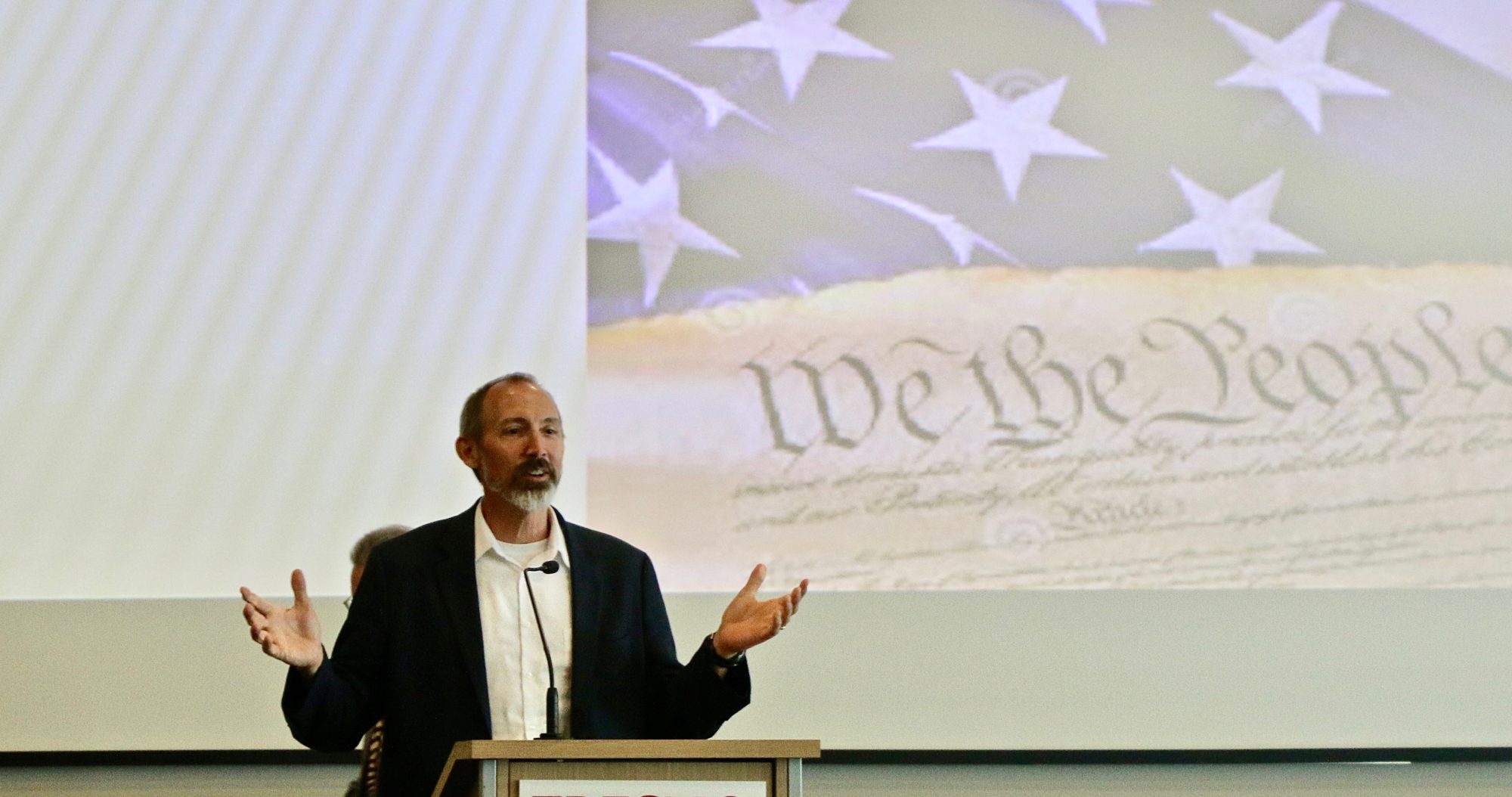
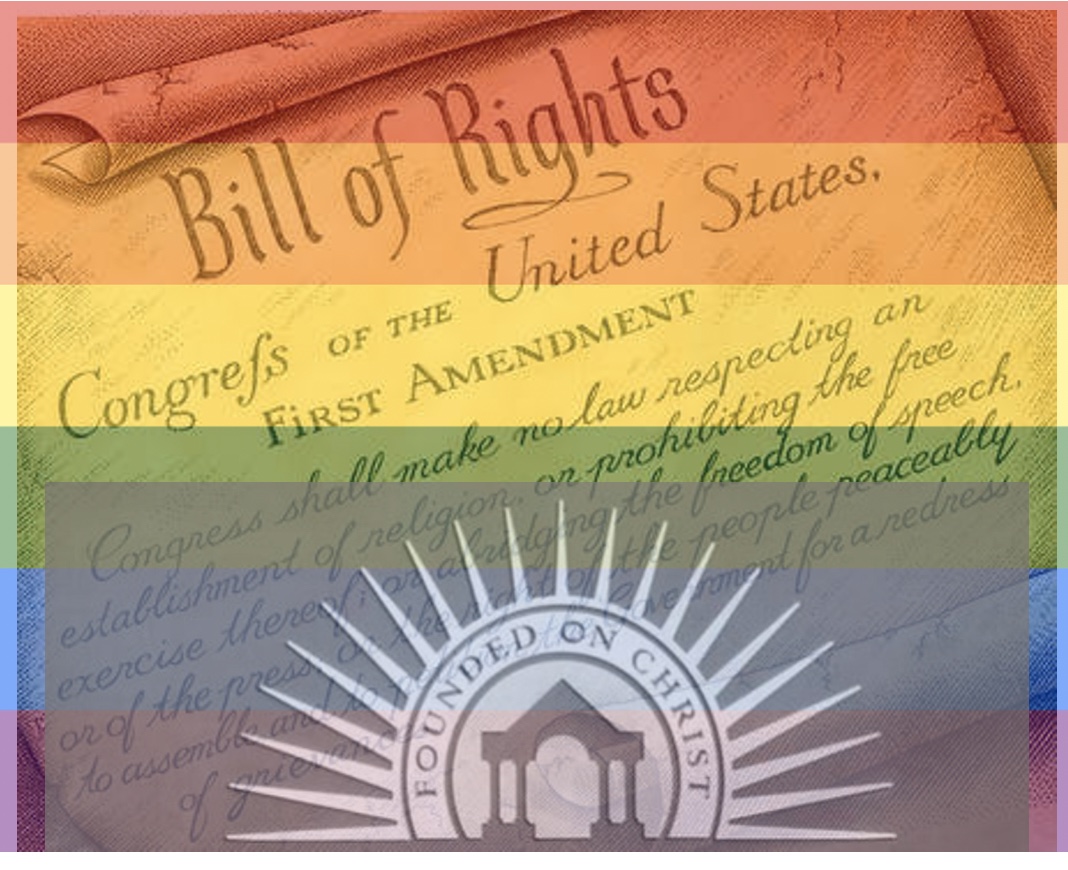
The First Amendment is the touchstone here. It guarantees religious liberty as well as freedom of speech, freedom of the press— along with the right to assemble and to petition the government. In the United States, religious organizations have a significant degree of freedom. Journalists are free to report on these things. Ordinary citizens are free to cheer or jeer in rallies in the streets. And if you want to change the law, you can speak to your congressional representative.

The Fresno Pacific case is the kind of thing that happens in secular democracies. The story undoubtedly involves anxiety and acrimony for those directly involved. There will be disagreements about what should happen next. But the story reminds us that the First Amendment is alive and well in our country.

The liberties enumerated in the First Amendment give rise to controversies that span the political spectrum. Wherever your sympathies lie, you are bound to be outraged and offended by someone in a world that is organized under the First Amendment.

On the one hand, anti-vax and anti-mask protesters make First Amendment appeals and disrupt school board meetings. Some Trumpians have celebrated the protests of Jan. 6, linking it to the kind of assembly protected by the First Amendment. This shows us an important limit. You can rally and protest. But violence is not protected.

On the other hand, LGBTQ people have a right to speak out against Fresno Pacific. And in our world, religion is strictly regulated in public schools. One interesting recent case involves a high school coach in the state of Washington who was fired for leading his players in prayer. Among the issues in that case is an atheist family who complained that the coach did not provide their son with adequate playing time because he refused to pray.

And so it goes. There will always be plenty of controversies to keep the lawyers busy and the critics buzzing. The political philosopher Robert Nozick famously said, “liberty disrupts patterns.” We might add that liberty also disrupts social harmony and peace of mind.

Some may prefer a world where everyone conforms and obeys. But that’s not America. Thomas Jefferson once said, “I would rather be exposed to the inconveniences attending too much liberty than those attending too small a degree of it.” And if you don’t agree, in our country you are free to say so.
An Atheist at the Parliament of the World’s Religions

I participated in the (October 2021) meeting of the Parliament of the World’s Religions on a panel focused on compassion as a religious and non-religious value. I represented the non-religious point of view in conversation with Dr. Peter Admirand (Dublin City University, and my co-author on Seeking Common Ground), Dr. Veena Howard (a scholar of South Asian religions and my colleague at Fresno State), and Dr. Laura Novak Winer (a rabbi and a professor at Hebrew Union College ).

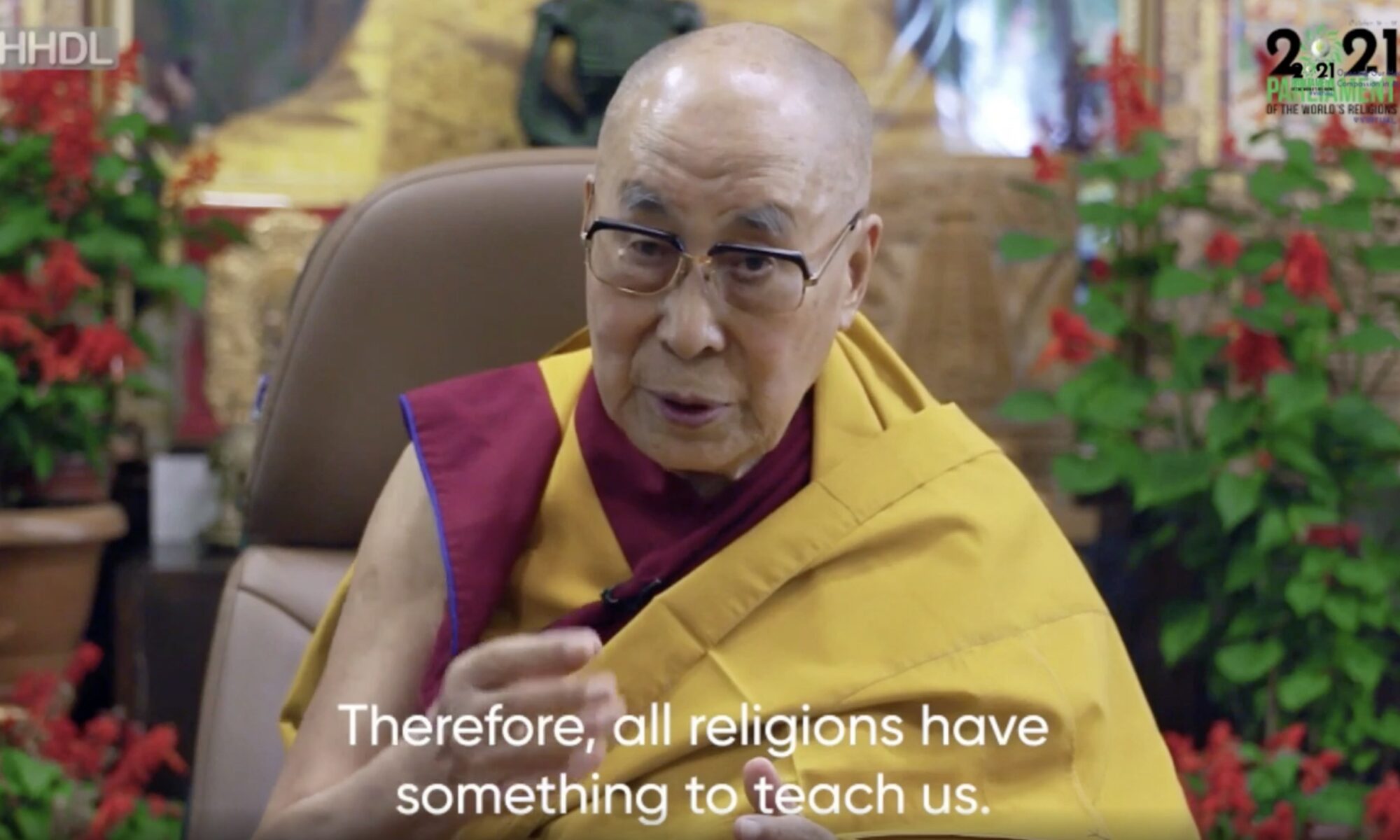
Earlier that morning, the Dalai Lama had addressed the Parliament. He said, “all religions have something to teach us.” And, “the essence of all religious teaching is compassion.”

Dalai Lama at Parliament of World’s Religions 2021

This important claim asks us to think critically about the long history of religious violence and intolerance. It may be the case that compassion is taught in every religion. But religious people can fail to be compassionate.

The same point is true, of course, for non-religious people. Secular regimes can lack compassion. And atheists can be cold-hearted.

But there is a place for compassion in atheism. Atheists emphasize the fact of human mortality. We all suffer and die. There is no sense in adding to the cruelty of the world. Rather, we should avoid violence and spread good will.

Atheists should acknowledge that human brains and bodies have evolved to include a substantial place for compassion and communal feeling. We are social animals thrown onto a small planet in the middle of the vastness. We should find way to laugh and sing and mourn together (an idea I’ve explored in my book Compassion).

These shared experiences are a focus of religious life. One need not accept the metaphysical pronouncements of religious traditions in order to understand that compassion is good for us and that love and community help us live well.

Unfortunately, the philosophical tradition has often looked askance at compassion. Kantian morality is focused on universal duty detached from emotion. Such an approach may dismiss compassion as a soft, emotional value.

Kant also dismissed the extravagant claims of superstitious religion. In defending his idea of a “pure religion” of reason (in Religion within the Boundaries of Mere Reason), Kant espoused a religion “cleansed of the nonsense of superstition and the madness of enthusiasm.”

Humanistic ethics has evolved to include much more than Kantian universality. We know that compassion is an important part of ethics. And we should understand that people find meaning in religion without simply dismissing it as superstition and nonsense.

This is one reason it is important for atheists, humanists, and philosophers to participate in inter-religious and interfaith dialogue. It is not easy to dismiss another person’s faith when you know them as a real person. Interfaith and inter-religious conversations are promoting solidarity in a world that still includes much religious intolerance. Atheists and humanists need to participate in these conversations because there is often intolerance and misunderstanding across the religious/nonreligious divide.

There are challenges, of course. Atheists sometimes seem to enjoy picking fights with religious believers. Religious people sometimes sling mud in the direction of atheism. I think we should all be more tolerant, hospitable, and compassionate.

This does not mean that we ignore the fundamental disagreements between religious and nonreligious people. But it is possible to be compassionate in our disagreements. Each of us is trying to make sense of life. Some find answers in religion, in all of its complex variety. Others turn away from religion entirely. So long as there is no violence, oppression, and hostility, we can co-exist. And if we take the time to listen to one another, we might find common ground in the shared human struggle to learn, love, and live.

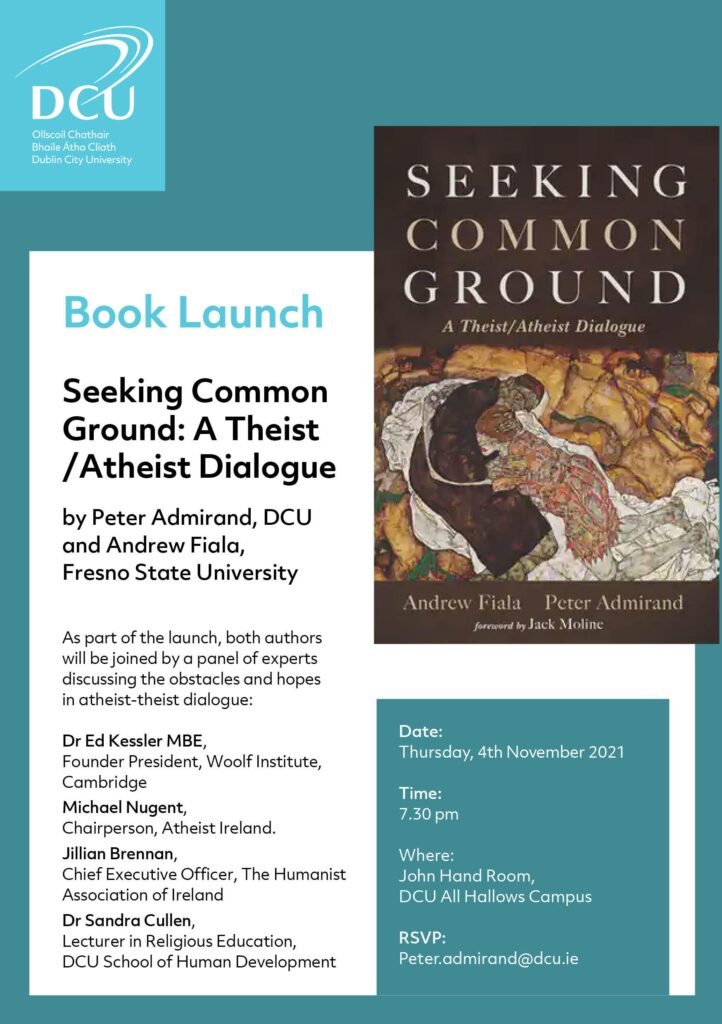
If you are interested in these issues, please join me as I discuss our new book, Seeking Common Ground: A Theist/Atheist Dialogue with Peter Admirand, at a book launch and panel discussion on November 4, 11:30AM Pacific Time. The panel will be in Dublin, Ireland. I’ll join by Zoom. For Zoom details, contact Peter Admirand: peter.admirand@dcu.ie.

Rocket Man Morality

Fresno Bee, October 17, 2021

When Captain Kirk made it to space, I was driving past a panhandler. The Gil Scott-Heron song, “Whitey on the Moon,” came to mind. We’ve got poverty and pandemics. But Shatner’s riding a rocket.

I say this as a fan of “Star Trek” and William Shatner. I’ve cheered on the voyages of the Starship Enterprise. I’ve even enjoyed Shatner’s campy spoken-word recordings — including his bizarre rendition of Elton John’s “Rocket Man.”

But “Star Trek” sold us a fantasy. They forgot to tell us that only the rich and famous will go where no man has gone before. The rest of us will be stuck in traffic, while poor folks beg for cash on freeway off-ramps.

Of course, Shatner can do whatever he wants. Rich old men have the right to burn up their money with rocket fuel. One part of this story is about Shatner’s health and longevity. At 90, Shatner is the oldest person to go into space. It’s amazing that a nonagenarian can blast into orbit. Good for him that he is sturdy enough to ride a rocket.

But in the background of Shatner’s triumph are tragic inequalities. Rich people live long, healthy lives. Poor people do not. A report from before the pandemic indicated that rich American men live an average of 15 years longer than poor American men.

The whole Earth is afflicted by similar gaps. World Bank data show that in “low income” countries, life expectancy is 64 years, while in “high income” countries, it is 81. It doesn’t seem right to fling old geezers into space while people are dying down below.

So, while I’m a Shatner fan, I also want to say shame on him — and on the idea of space tourism. This is conspicuous consumption run amok. The Earth and its humans need help. But the rich are riding rockets.

Blue Origin’s New Shepard rocket latest space passengers from left, Audrey Powers, William Shatner, Chris Boshuizen, and Glen de Vries raises their hands as they talks about snake bites during a media availability at the spaceport near Van Horn, Texas, Wednesday, Oct. 13, 2021. (AP Photo/LM Otero) LM Otero AP
Read more at: https://www.fresnobee.com/opinion/readers-opinion/article255018227.html#storylink=cpy

Those rockets emit massive amounts of pollution. The atmosphere is already full of heat-trapping gases. A tourist flight into space leaves a carbon footprint up to a hundred times worse than an ordinary airplane flight.

In case you were wondering, a ticket into space costs about $200,000. It’s obscene to spend that kind of money on a few minutes of weightlessness and the bragging rights you get from becoming a rocket man.

Despite the cost, the space tourism industry is planning to grow. The ultra-wealthy are doing fine and getting richer. I’m sure the wealthy will keep the rockets busy. There are plans for hundreds of rocket flights per year.

The wealthy will survive the climate crisis without much problem. Rich people already generate more carbon emissions than poor people. The rich will ride out the climate storm in air-conditioned summer homes, while the working poor and the homeless suffer under the heat.

It is probably too late to restrict the space tourism industry. If Elon Musk, Jeff Bezos, and others are prevented from launching their rockets in the U.S., they would just launch them abroad.

That’s where shame comes in. Instead of celebrating space tourists, we should say, shame on them. Rich people should be embarrassed to ride on rockets. It would be better for the rich to donate their 200K to a homeless shelter. Let’s praise them when they do that. And let’s shame them when they binge on rocket fuel.

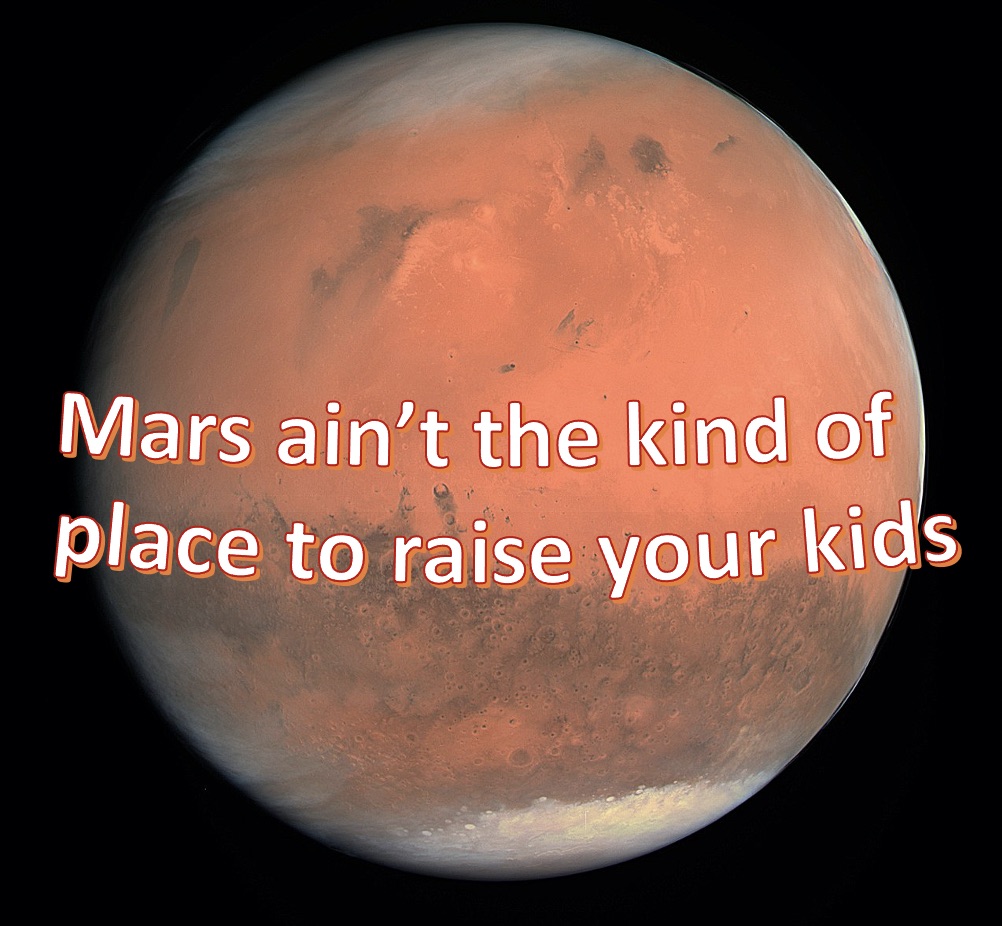
We also need to question the fantasy that Hollywood has sold us about space. There is no home for us in the stars. Elton John’s vision is more realistic. He said, “Mars ain’t the kind of place to raise your kids; in fact, it’s cold as hell.”

To his credit, Shatner described how the rocket flight humbled him. He said that from the rocket’s window he saw “the vulnerability of everything.” That’s important. But you don’t need to ride a rocket to understand that our planet and our neighbors are suffering.

The “Star Trek” fantasy assumes we are wise enough to venture to the stars. But until we fix this world, we have not earned the right to leave it. Scotty can’t just beam us up. There’s nowhere else to go. Every rocket man must land again on this fragile crust and drive home past the haunted and the homeless.

The Wisdom of Nonviolence

Fresno Bee, October 3, 2021

Violence is increasing. Domestic terrorism is rising, including threats against members of Congress. The FBI just published its annual report on crime. The bad news is that violent crime is on the rise.

So let’s reflect on the dumbness of violence. Violence produces bad outcomes. It is also dumb in a metaphorical sense. Violence does not speak, it growls. Like a roaring lion, it does not argue. It merely threatens and attacks.

Violence can be spectacular. It attracts our attention. But violence does not really seek to persuade. Persuasion requires an argument. Violent acts are not arguments. That’s why violence does not create or convert.

The ugly truth about violence is well-known. Gandhi explained it. So did Martin Luther King, Jr. Both advocated nonviolence as the higher road.

Oct. 2 marks Gandhi’s birthday and is an International Day of Nonviolence. Gandhi said that even when violence appears to do good, that is merely temporary. Nonviolence creates lasting change because, as Gandhi explained, nonviolence is a “process of conversion.” Instead of destroying those you hate, nonviolence builds bridges and finds common ground.

Gandhi demonstrated that organized nonviolence can be a powerful force for change. Martin Luther King Jr. put this method to work in the United States.

In his Nobel Peace Prize lecture in 1964, King explained the critique of violence this way: “In spite of temporary victories, violence never brings permanent peace. It solves no social problem: it merely creates new and more complicated ones. Violence is impractical because it is a descending spiral ending in destruction for all.”

This truth is reaffirmed as we reflect on the aftermath of the war on terrorism. After 20 years of war, we wonder whether the war was worth the cost. The war in Afghanistan teaches us that violence is a blunt instrument for transforming hearts and minds.

The “Costs of War” project at Brown University provides a recent summary. Totaling deaths from Afghanistan, Iraq, Syria, and elsewhere, they estimate that almost 930,000 people were killed in the war on terrorism. This includes over 7,000 American military personnel. About 38 million people were displaced as war refugees. The war is estimated to have cost $8 trillion.

We did kill Osama bin Laden and other terrorist masterminds. But terrorists still lurk in the shadows. And the Taliban quickly returned to power. The war did not resolve the social, political, and cultural problems that give rise to terrorism and oppressive regimes such as the Taliban.

War is a destructive force that breeds reactive antagonism. It does not educate, democratize, or humanize. Political violence does not create just or lasting change. Rather, it destabilizes and provokes, causing polarization and pain.

This truth about war and violence is easily overlooked. There is a primal urge to employ violence. We are animals after all. Like the lion, we roar. When pushed, we attack.

The world’s moral traditions teach us to subdue the lion within. We are not merely animals, after all. We are human beings. We can learn to “turn the other cheek” and resist animal aggression. This is the message of Jesus and the Buddha, as well as Gandhi and King.

Our own culture often ignores this message. We celebrate violence. Pop culture is full of gangsters and cops, super-spies and superheroes. Our culture encourages us to falsely believe that might makes right and that in the end the good guys are justified in using violence.

But we are not superheroes. We are fragile and flawed beings. And unlike in a James Bond fantasy, real lives are destroyed when we uncage the lion.

The good news is that we are intelligent beings. We can learn from our mistakes. Violence involves a kind of smug self-certainty. It fails because it treats other human beings as animals and objects to be manipulated by physical force. But human beings are not persuaded by violence. We are motivated by pride and love, reason and morality.

Nonviolence is not always effective. But in the long run it is wiser to keep the lion in his cage. Nonviolence appeals to the better angels of our nature. It treats human beings with the care and respect we deserve.

Solidarity as a Moral Value

Fresno Bee, September 19, 2021

Solidarity is an important focal point of morality. Solidarity involves empathy and emotional connection. But it is not merely a feeling. It is also the understanding that social problems require cooperative solutions. These days many of us feel fragile and insecure. Solidarity offers something solid and enduring in benevolence, justice, and concern for the common good.

The United Nations just published a report described as a “wake up call” for global solidarity. UN Secretary-General Antonio Guterres warns that people are turning their backs on trust, cooperation, and multilateralism. He says, “Humanity’s welfare depends on solidarity and working together as a global family to achieve common goals.” Solidarity arises when we understand that “no one is safe until everyone is safe.”

This echoes the teaching of Pope Francis, who published an encyclical last fall, “Fratelli Tutti,” which basically means that we are all brothers (and sisters). Some want to build walls and retreat into isolation. Francis encourages us to do the opposite. Instead of withdrawing, we should reach out. The pope says that the path to peace and flourishing requires a “global ethic of solidarity and cooperation shaped by interdependence and shared responsibility in the whole human family.”

The COVID-19 pandemic reminds us of our interconnectedness. The virus spread globally. New variants emerge among the unvaccinated. As long as some remain vulnerable, we all remain vulnerable.

The war on terrorism provides another example. Terrorists hiding out in Afghanistan masterminded the 9/11 attacks. Those attacks were a response to American interventions in the Middle East in prior decades. The war on terrorism extends across the globe, involving many allies. It has had far-reaching impacts. We still stand in irritating security lines at the airport. And now we must welcome refugees fleeing Afghanistan.

Or consider climate change. As individuals, we go about our own business, burning fossil fuels. But those individual choices heat up the atmosphere. The result is fire and smoke in California, horrific hurricanes, and rising sea levels that will swamp island nations.

Our struggle with racism provides yet another example. The repercussions of slavery and Jim Crow continue to ripple across our social and political landscape. Historical injustices give birth to contemporary dysfunction. Police brutality in some American cities sparked a global movement against racial injustice.

These examples show that each is connected to the other. If you pull one thread of the social fabric, it changes the whole cloth. We are networked and interdependent. Global and historical interconnections define who we are and what we can become.

Now some people do not like to admit this. They refuse to accept our interconnectedness and insist on living in stubborn isolation. The lonely hermit is a symbol of this kind of refusal. Others draw lines of solidarity that are narrow and exclusive. Some focus on solidarity within their families or within a neighborhood. Others focus on racial solidarity or national solidarity.

Most religious and moral traditions imagine a broader circle of solidarity. Calls for brotherly love spread globally. The parable of the good Samaritan is not only about solidarity with a suffering neighbor. It is also a call to view the world as our neighborhood.

There are remaining difficulties. Solidarity gives us an orientation. But it does not tell us exactly where to go or how to get there. The issues of climate change, racism, terrorism, and the pandemic are complex. Solutions are also complex and evolving. But any viable solution must bear witness to suffering wherever it is found and grow networks of cooperation that are large and inclusive.

When we affirm solidarity we acknowledge that solutions for social problems cannot focus on “us” in opposition to “them.” Any long-term and stable solution to our problems must move beyond “us” and “them.” In solidarity, each of us comes to see that we are responsible for the other. In an interconnected world, what happens to the other impacts me. And my choices and behaviors have ripple effects that extend beyond me.

These ripples fortify us in the face of our common fragility. Life is precarious. But we do not suffer alone. There are problems to be solved. We solve them by opening our doors and reaching out our hands.